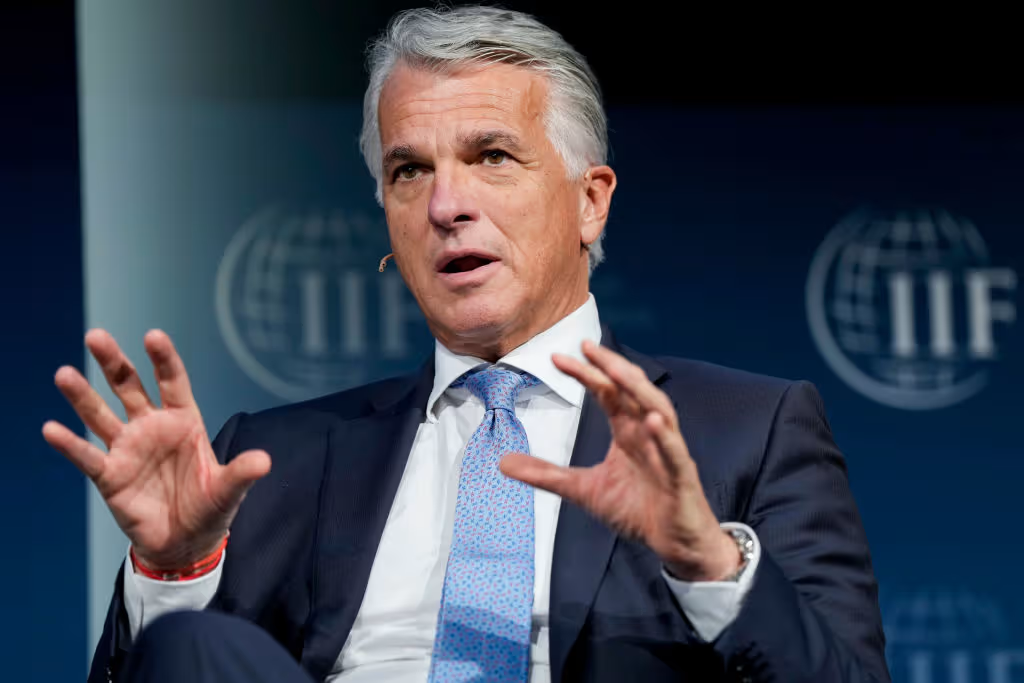
UBS is considering strategic options, including a potential merger or acquisition, to address increased capital requirements and is in discussions with US officials, while also contemplating relocating its headquarters outside Switzerland due to regulatory pressures.
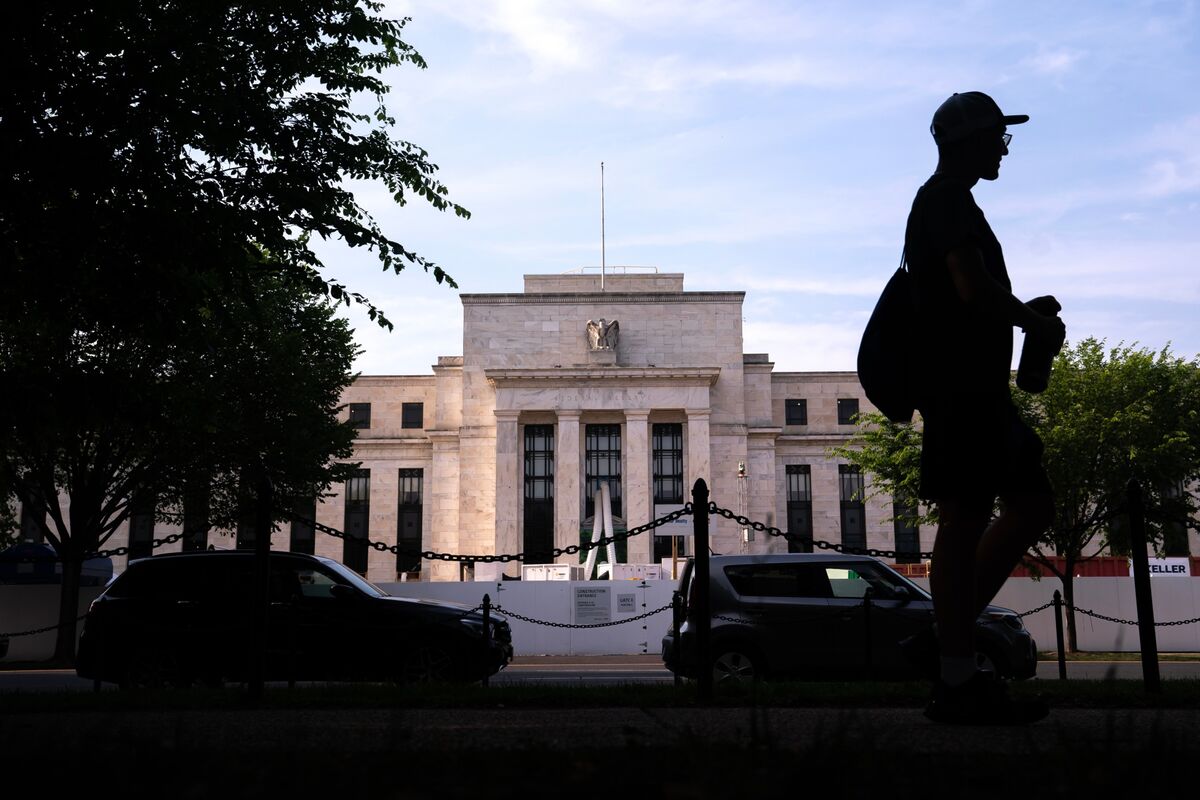
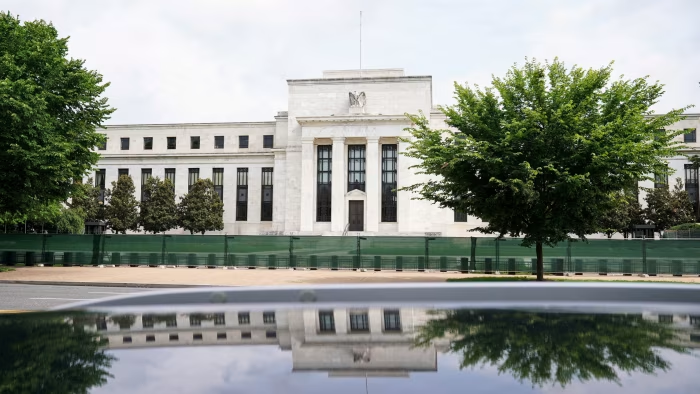
The Federal Reserve announced final individual capital requirements for large banks, effective October 1, based on stress test results, with a proposed rule to average results over two years to reduce volatility. The requirements include a minimum of 4.5%, a stress capital buffer of at least 2.5%, and potential surcharges for the largest banks. Morgan Stanley's buffer is under review, with a decision expected by September 30, 2025.
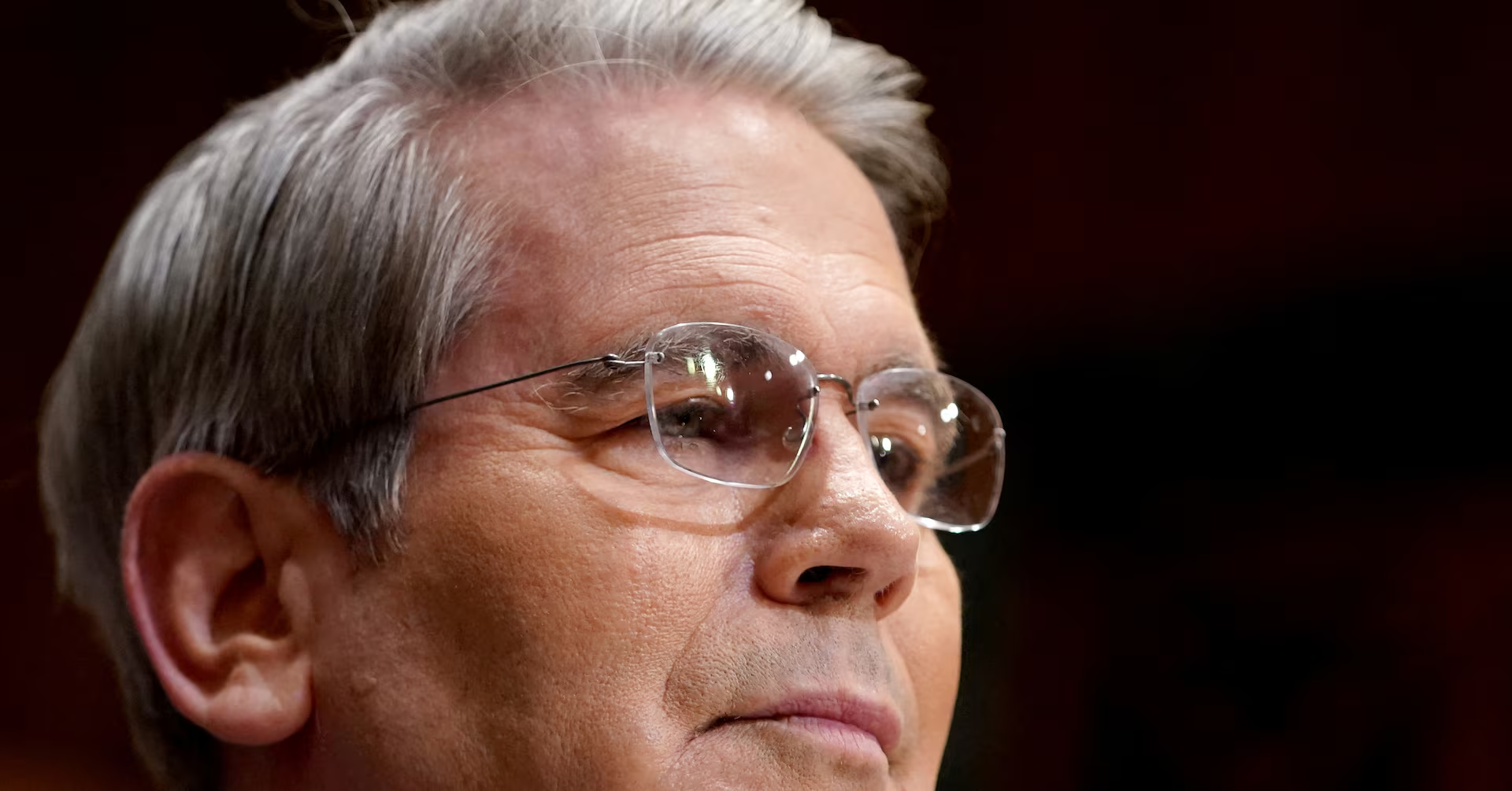
U.S. Treasury Secretary Scott Bessent advocates for comprehensive reforms in the financial regulatory system, criticizing the Biden-era dual capital requirement proposal and calling for reduced capital burdens on banks to promote lending and economic growth, while emphasizing the need for a long-term, innovation-driven blueprint for financial stability.
Treasury Secretary Scott Bessent emphasized the urgent need for comprehensive reform of financial regulation, advocating for a strategic, forward-looking approach that prioritizes community banks, innovation, and economic growth, while criticizing reactionary policies and outdated capital requirements, and calling for modernization and simplification of the regulatory framework.
The Federal Reserve's annual stress test indicates that large banks are well-capitalized and resilient enough to withstand a severe recession, with all tested banks remaining above minimum capital requirements despite projected losses exceeding $550 billion. The scenario, less severe than previous years, includes a global recession with significant declines in real estate and rising unemployment, but improvements in bank performance and model adjustments have contributed to the positive outlook.
The largest US banks, including JPMorgan Chase, Goldman Sachs, and Bank of America, successfully passed the Federal Reserve's annual stress tests, indicating they are well-capitalized to withstand severe economic downturns, which is expected to lead to increased dividends and share buybacks. The tests showed a milder recession scenario than previous years, with banks maintaining sufficient capital levels despite significant hypothetical losses, and the results may influence future regulatory adjustments and bank capital requirements.
U.S. financial regulators, led by the Federal Reserve, proposed reducing the enhanced supplementary leverage ratio (eSLR) for large banks, aiming to ease capital requirements and support market conditions, despite opposition from some officials and advocates concerned about financial stability.
The Federal Reserve proposed relaxing key capital rules for large banks, aiming to enhance their ability to hold Treasuries and support the US Treasury market, though the move faces opposition from some regulators and politicians concerned about financial stability.
The Federal Reserve plans to significantly reduce capital requirements for the largest US banks by easing the supplementary leverage ratio, aiming to improve market functioning and align with international standards, despite concerns about increased risk and potential for future financial instability.
The Federal Reserve proposed easing the enhanced supplementary leverage ratio for large banks, reducing capital requirements to allow banks to hold more low-risk assets like Treasurys, aiming to improve market stability but facing opposition from some officials concerned about safety and risk management.
US bank regulators plan to reduce the enhanced supplementary leverage ratio (eSLR) for large banks by up to 1.5 percentage points to ease constraints on Treasury trading, aiming to bolster market liquidity and stability, with the proposal still open for public comment and potential adjustments.
The Swiss government proposed stricter capital rules for UBS following its acquisition of Credit Suisse, potentially requiring an additional $26 billion in core capital and full capitalization of foreign units, which UBS criticizes as extreme and competitive disadvantages. Shares rose after the announcement, and the reforms aim to strengthen regulation and liquidity access, with a transition period of 6-8 years. The proposals also include measures to bolster the Swiss financial regulator and may influence UBS's business model and location decisions.
The Swiss government plans to require UBS to hold an additional $26 billion in capital following its acquisition of Credit Suisse, aiming to prevent the bank from becoming 'too big to fail.' This move could impact UBS's share buybacks and competitiveness, with the bank lobbying against these stringent requirements, which could raise its CET1 ratio to 17-19%. Despite the challenges, UBS shares rose 6% on the news, and the new rules are expected to be legislated by 2026-2027.
Federal Reserve Vice Chair Bowman outlined a pragmatic approach to banking supervision and regulation, emphasizing tailored oversight, risk-focused supervision, reform of capital frameworks, transparency in application processes, and workforce development to ensure a safe, sound, and innovative banking system.
The Swiss government has proposed new strict capital rules requiring UBS to hold an additional $26 billion in core capital following its acquisition of Credit Suisse, aiming to strengthen its stability but raising concerns about its competitiveness and impact on shareholder returns. UBS supports most proposals but opposes the extreme increase, and the implementation is expected to take several years, with full compliance by 2034.