Tag

Universe Simulation

All articles tagged with #universe simulation

Top Scientific Breakthroughs and Records of 2025
science2 months ago

Top Scientific Breakthroughs and Records of 2025

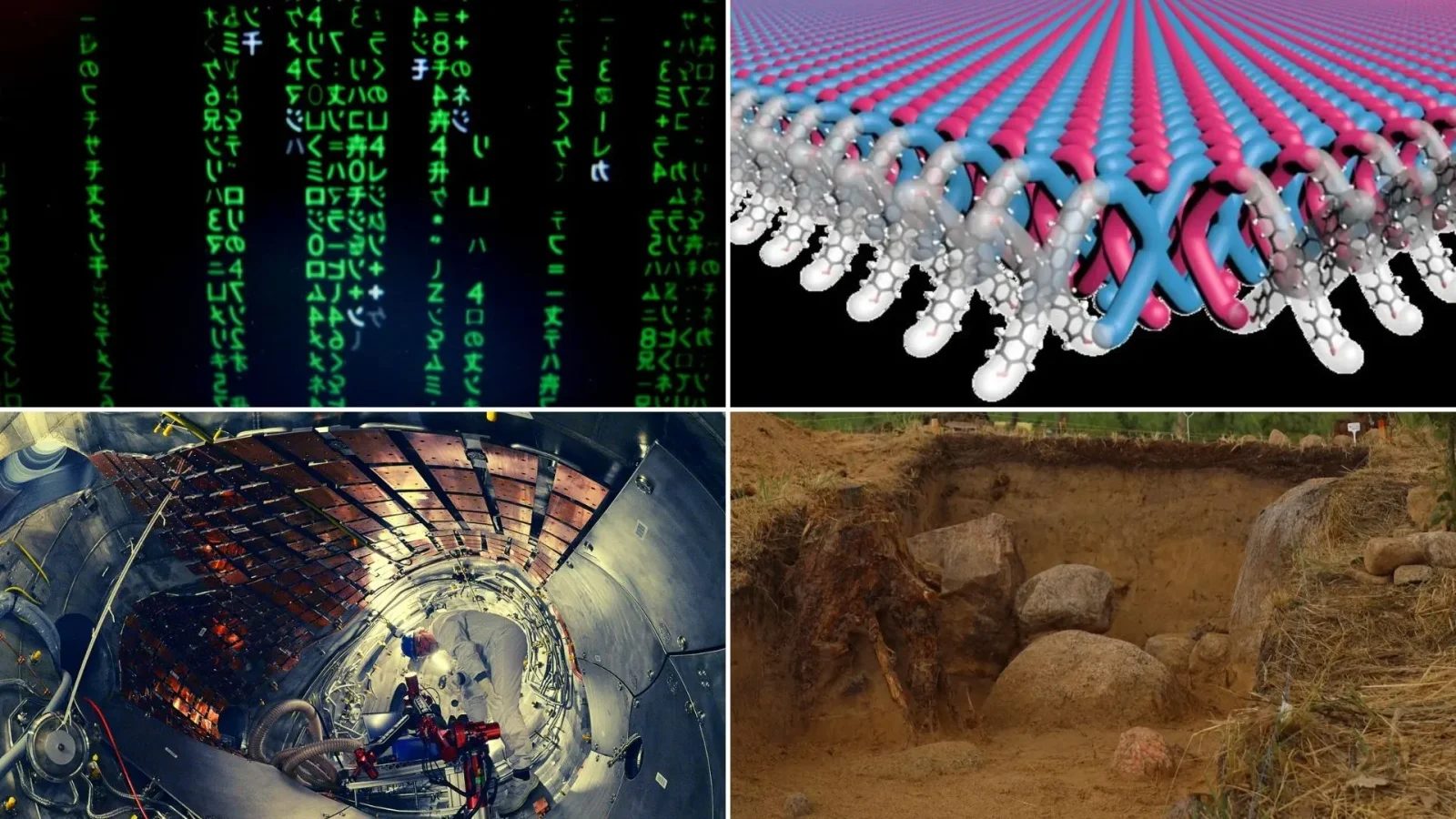
In 2025, groundbreaking discoveries across multiple fields included proving the universe isn't a simulation due to computational limits, developing a highly efficient plastic-to-fuel process, uncovering ancient Neolithic tombs in Poland, rediscovering a rare 'living fossil' mammal in Indonesia, achieving a fusion milestone with helium-3, creating the strongest-ever polymer armor, and solving a century-old wind turbine efficiency problem, all of which significantly advanced human understanding and technology.

NASA's X-59 Supersonic Jet Achieves First Test Flight, Promising Faster Air Travel
science4 months ago

NASA's X-59 Supersonic Jet Achieves First Test Flight, Promising Faster Air Travel

This week in science: NASA's X-59 jet completes its first test flight aimed at reducing sonic booms, researchers reveal a quantum problem that even future quantum computers can't solve efficiently, and a team of physicists mathematically prove that our universe cannot be a computer simulation, addressing popular hypotheses about simulated realities.

Supercomputer Achieves Record-Breaking Universe Simulation
science-and-technology1 year ago

Supercomputer Achieves Record-Breaking Universe Simulation

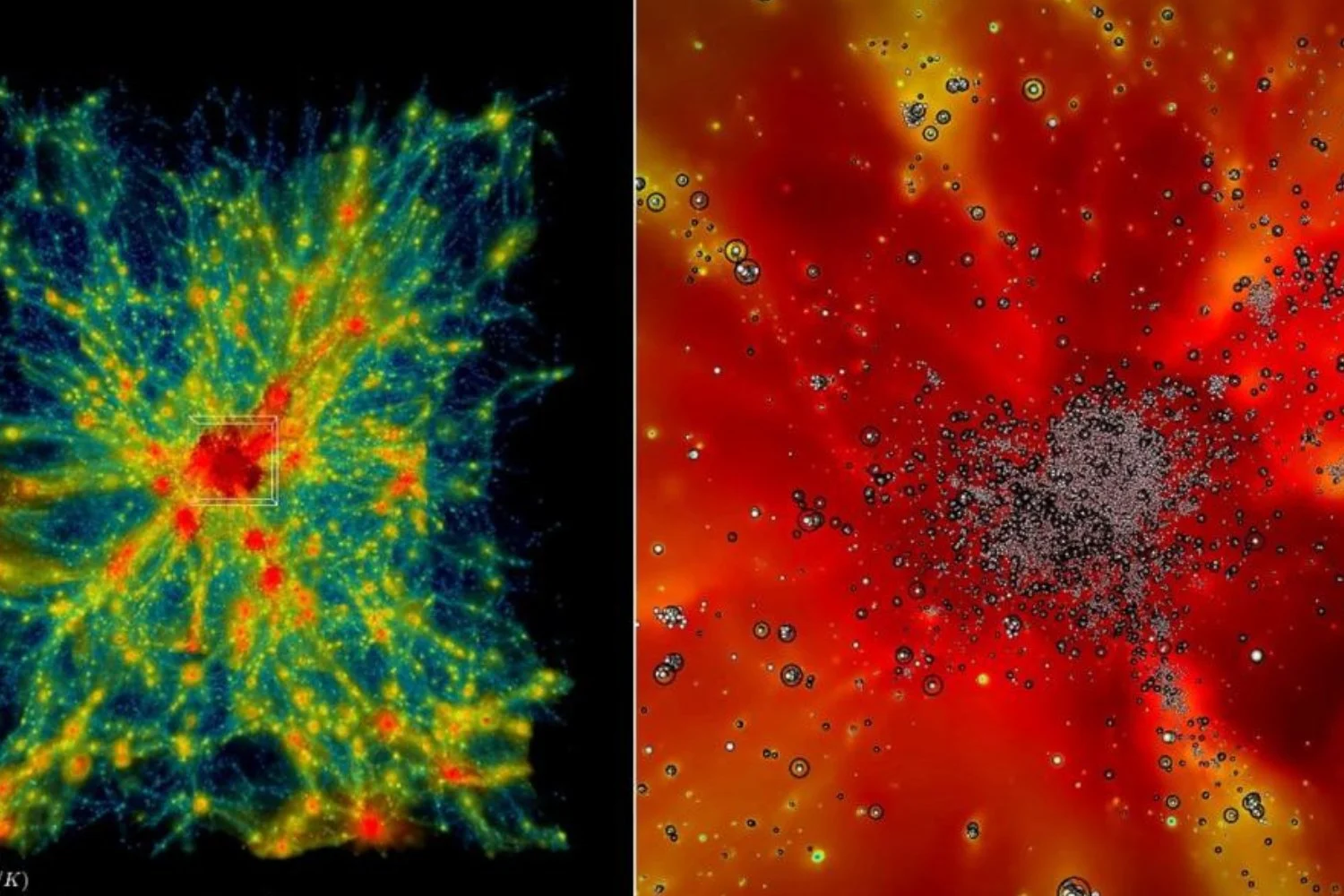
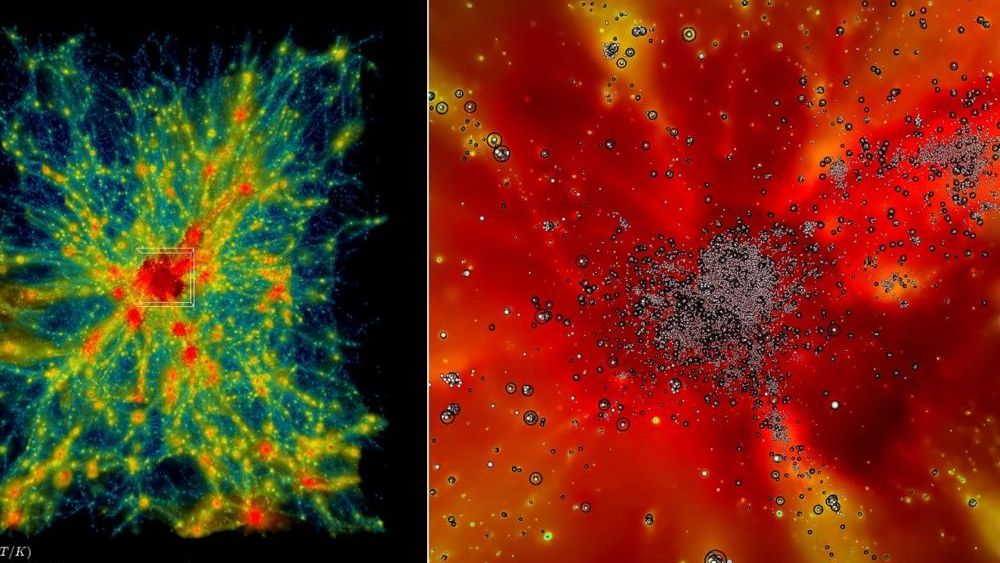
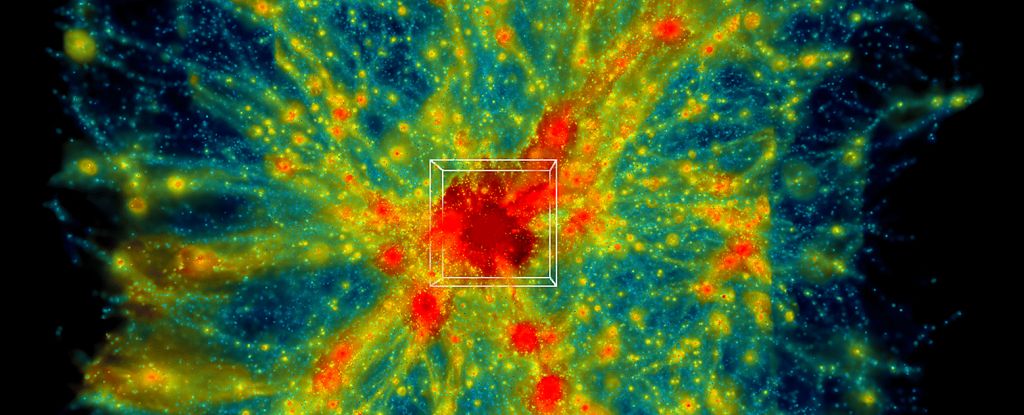
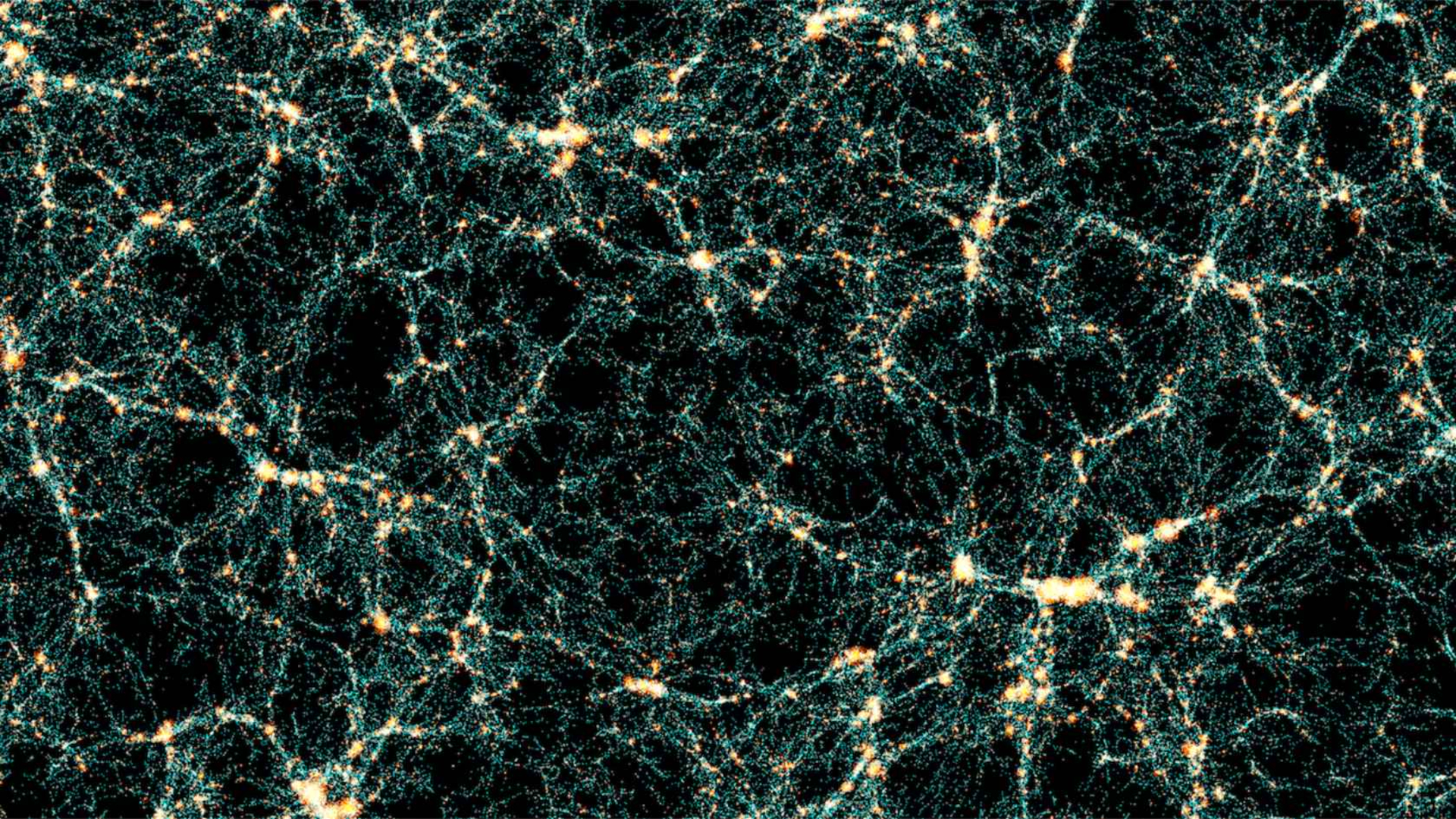
Researchers used the Frontier supercomputer to create the largest universe simulation ever, incorporating both visible and dark matter. This exascale-class machine, capable of a quintillion calculations per second, allows for unprecedented astrophysical simulations, enhancing our understanding of the universe's evolution and composition. The simulation aligns with large telescope surveys and includes complex physics beyond gravity, such as star and galaxy formation. Although Frontier was recently surpassed by El Capitan as the fastest supercomputer, its contributions to cosmology remain significant.

Supercomputer Achieves Record-Breaking Universe Simulation
science-and-technology1 year ago

Supercomputer Achieves Record-Breaking Universe Simulation

The Frontier supercomputer, now the world's second fastest, has conducted the largest-ever simulation of the universe, focusing on cosmological hydrodynamics. This simulation, run by the U.S. Department of Energy's Argonne National Laboratory, aims to model the universe's evolution, including dark matter and dark energy, using the Hardware/Hybrid Accelerated Cosmology Code (HACC). Frontier's capabilities allow for more detailed simulations than previous supercomputers, providing insights into the universe's structure and potentially challenging existing cosmological models.

Frontier Supercomputer Sets New Record in Universe Simulation
science-and-technology1 year ago

Frontier Supercomputer Sets New Record in Universe Simulation

The Frontier supercomputer at Oak Ridge National Laboratory has achieved the largest simulation of the Universe to date, covering over 31 billion cubic megaparsecs. This ExaSky project aims to enhance understanding of the Universe's evolution and the nature of dark matter by simulating both gravitational and other physical interactions, including star and galaxy formation. The simulation's scale and complexity mark a significant advancement in cosmological hydrodynamics, promising future insights into cosmic phenomena.

"AI's Potential in Unraveling the Mystery of Dark Energy"
science-and-technology2 years ago

"AI's Potential in Unraveling the Mystery of Dark Energy"

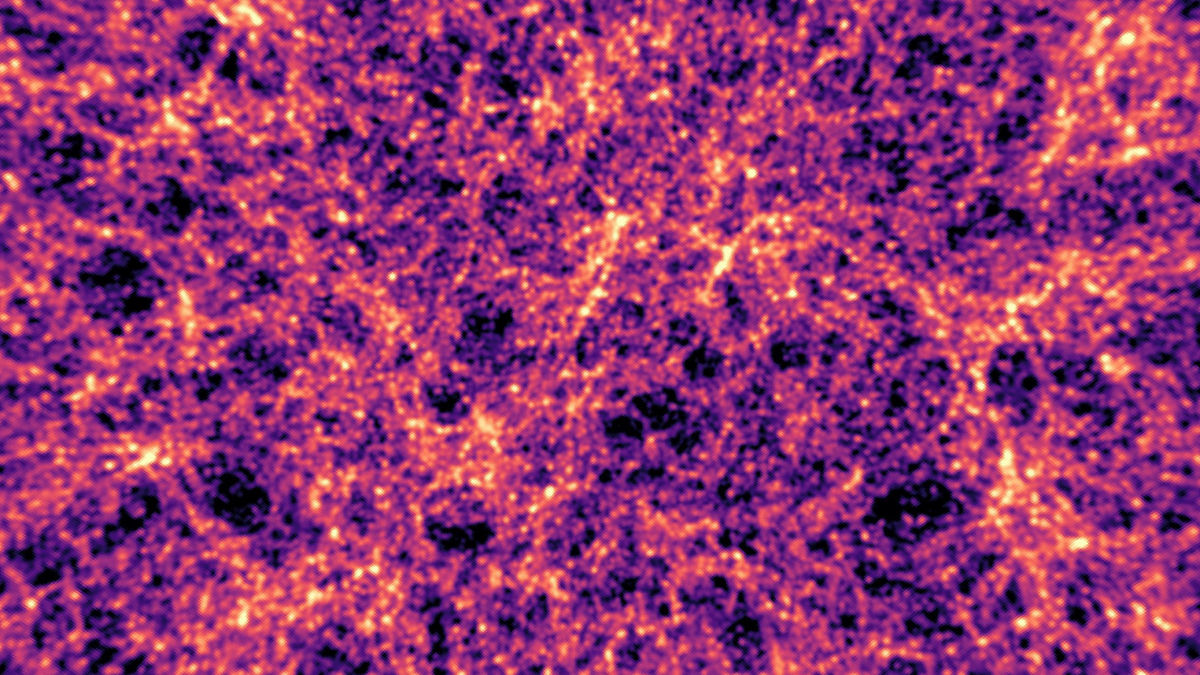
Scientists are using artificial intelligence (AI) to better understand dark energy, the mysterious force driving the universe's accelerated expansion. By employing AI techniques to create a supercomputer simulation of the universe, researchers have achieved unprecedented precision in measuring dark energy, doubling the precision compared to traditional methods. This approach has provided insights into the dynamics of dark energy and validated certain models of cosmic evolution while ruling out others. However, the mystery of dark energy and the cosmological constant remains, as the vast disparity between theory and observation persists. Nonetheless, the use of AI in analyzing simulated models of the universe shows promise in uncovering important clues about dark energy.