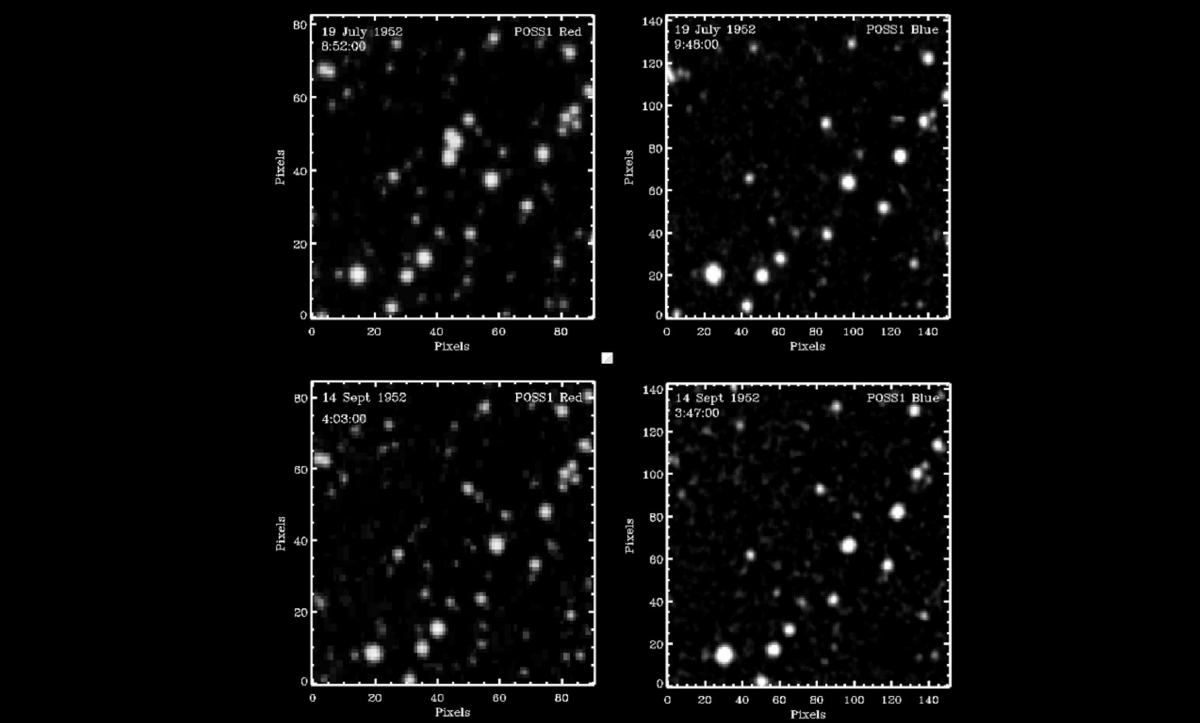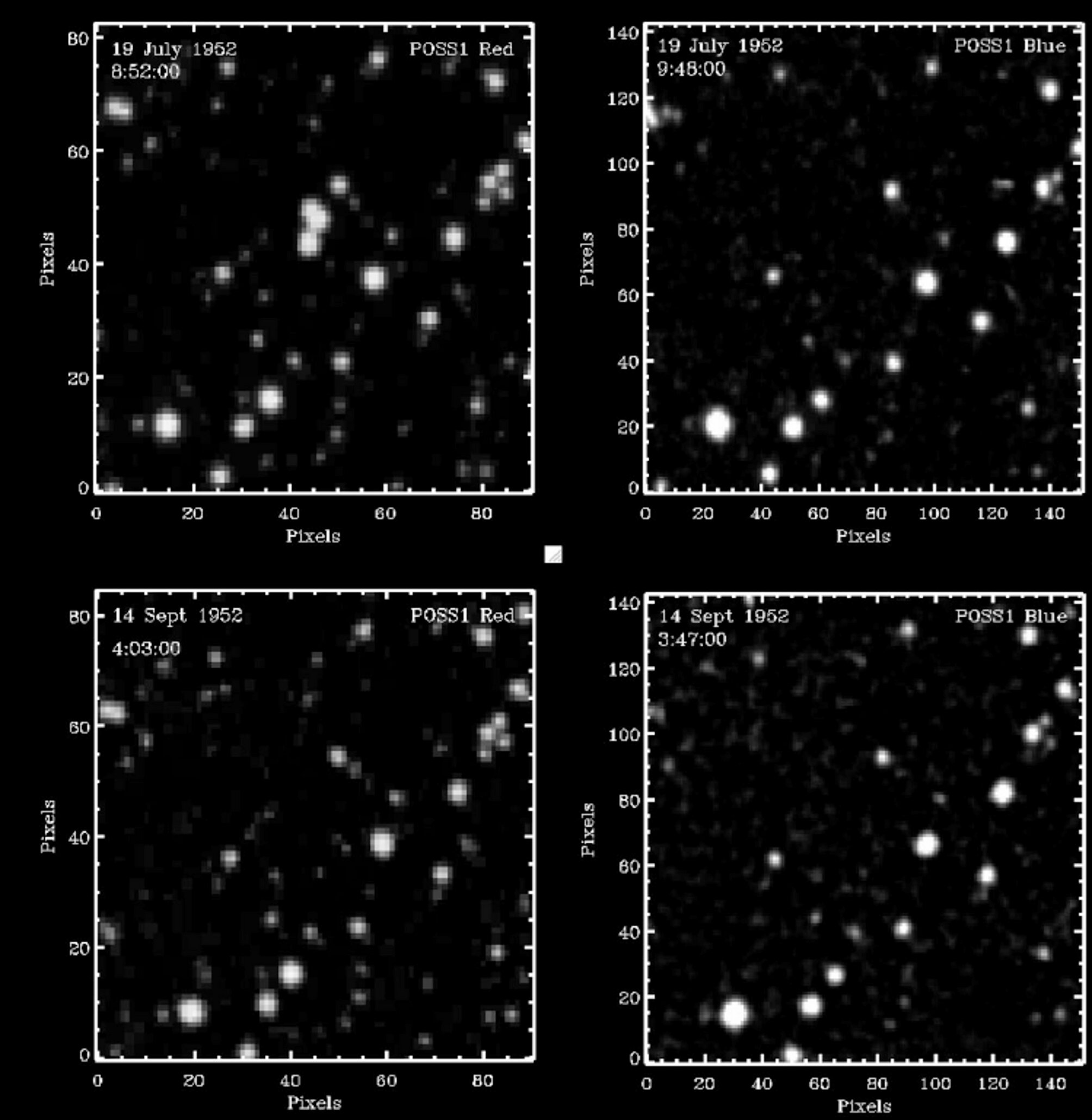
Researchers analyzing historical astronomical photographs found mysterious transient lights from 1949-1957, which correlate with nuclear tests and UAP reports, suggesting a possible link between nuclear activity and unexplained sky phenomena, though alternative explanations exist.
A study finds a statistical link between mysterious sky lights, UAP sightings, and nuclear testing in the mid-20th century, suggesting these phenomena are real and potentially connected to nuclear activity, based on archival astronomical data and eyewitness reports.
A study analyzing historical sky photographs from 1949-1957 found a significant correlation between mysterious transient objects, nuclear weapons tests, and UAP reports, suggesting a potential link between these phenomena, though their exact nature remains unknown.
A study analyzing historical sky survey data found small but significant associations between short-lived star-like transients, nuclear weapons testing, and reports of unidentified aerial phenomena (UAP), suggesting potential links that warrant further investigation.
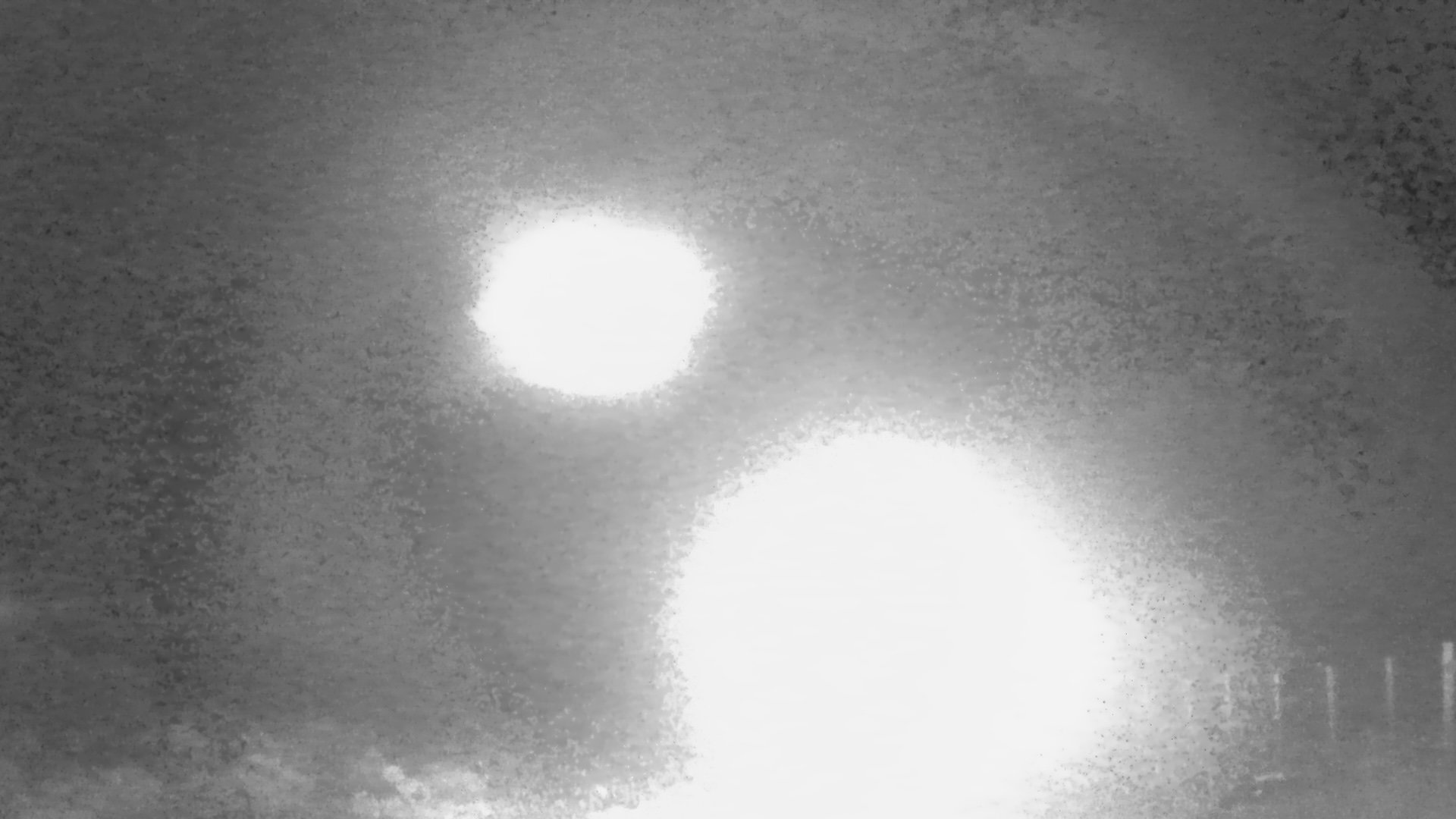
A wildlife camera in Chile's Patagonia captured unexplained lights, possibly plasmoids or unidentified aerial phenomena, sparking scientific interest and ongoing investigation, with no conclusive explanation yet.
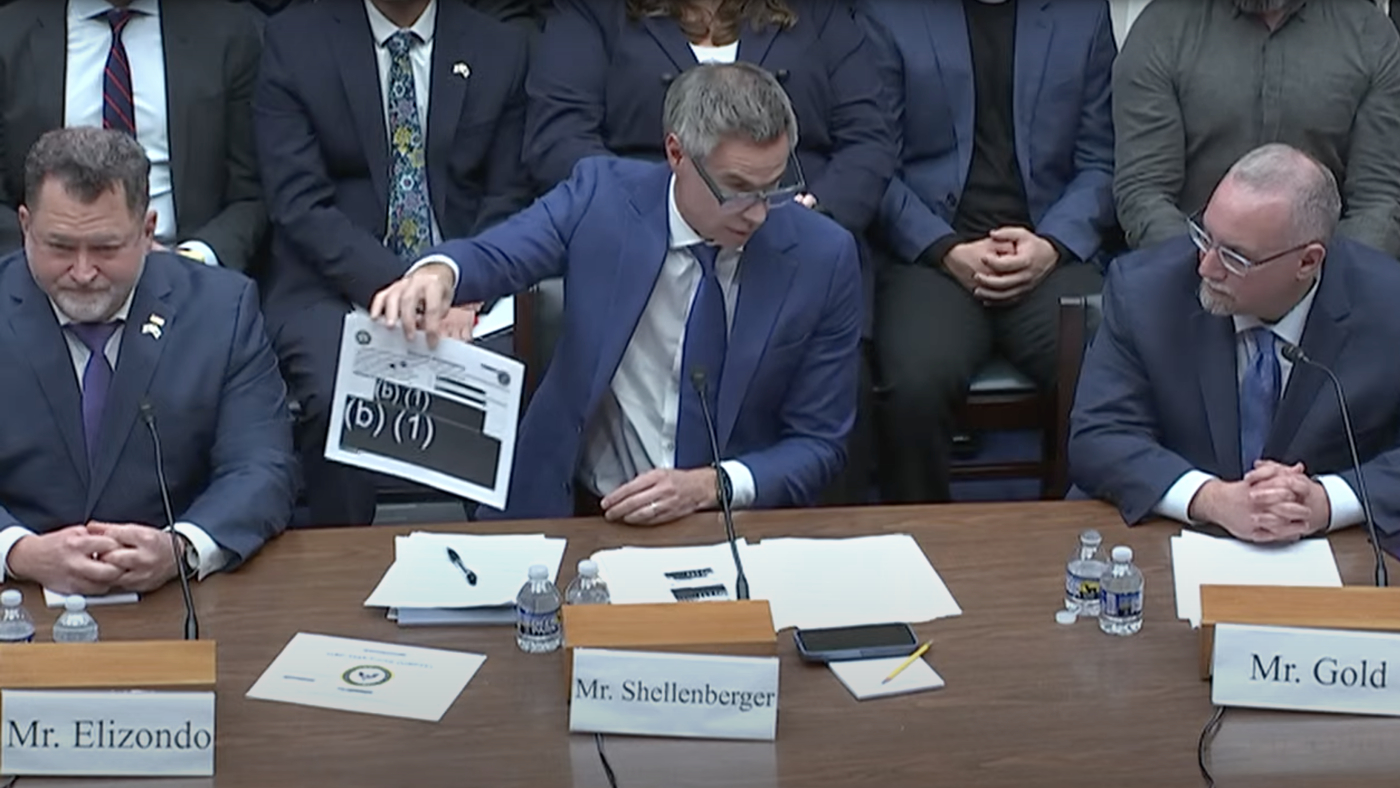
During a House Oversight Committee hearing, experts testified about the U.S. government's alleged secret programs related to Unidentified Anomalous Phenomena (UAP). Witnesses, including former military and defense officials, claimed the U.S. has retrieved and reverse-engineered alien technology. They urged for greater transparency and the removal of stigma surrounding UAP research. The Pentagon previously reported no evidence of extraterrestrial spacecraft, but the hearing highlighted ongoing debates and calls for legislative action on UAP transparency.
A Pentagon report stated that there is no credible evidence of a U.S. government cover-up of extraterrestrial life, despite a significant number of Americans believing in UFOs. The report attributed most sightings to misidentifications of ordinary objects and phenomena, and emphasized the lack of verifiable evidence for claims of government access to extraterrestrial technology. However, a former Pentagon official disputed the report, citing extensive documentation of UAPs interfering with military technologies. The report also highlighted the prevalence of misinformation and disinformation in shaping public beliefs about UFOs.
A Pentagon review of decades of U.S. government investigations into UFO sightings found no evidence of extraterrestrial origin or secret reverse-engineered alien technology. The review, conducted by the Pentagon's All-Domain Anomaly Resolution Office (AARO), integrated U.S. government's investigations into Unidentified Anomalous Phenomena (UAP) incidents and found no verifiable evidence of UAPs representing extraterrestrial activity or the U.S. government possessing extraterrestrial technology. The report also highlighted incidents of misidentification and the development of a new portable real-time UAP sensor technology known as Gremlin to quickly resolve UAP incidents.
The Pentagon's All-domain Anomaly Resolution Office is developing the Gremlin System, a deployable surveillance capability, to capture real-time data and respond to unidentified anomalous phenomena (UAP) incidents. The system, equipped with sensors, is being tested in Texas and aims to be deployed in response to UAP encounters at militarily significant locations. A recent report from the office found no verifiable evidence of extraterrestrial activity but highlighted unsolved UAP cases. The office is also working on public transparency and plans to release a two-volume report on U.S. government involvement with UAP.
The study of unidentified anomalous phenomena (UAP) should not be limited to the science and security framework. While understanding the physical aspects and potential national security implications of UAP is important, there are other lenses through which these phenomena should be studied, such as sociology, psychology, ecology, philosophy, and religion. By adopting a multi-disciplinary approach, we can gain valuable knowledge and insights into UAP's impact on various aspects of human activity. Ignoring these perspectives may result in missed opportunities and potential costs. It is crucial to broaden the scope of UAP research beyond the current framework to fully explore its implications.
NASA has named Mark McInerney as its new research director for unidentified anomalous phenomena (UAP), commonly known as UFOs, after initially refusing to disclose his identity due to concerns of harassment. McInerney, previously NASA's liaison to the Defense Department, will oversee the agency's work on UFOs and act as a communicator between federal agencies. The decision to withhold his name was made to protect the study group members who had received threats. The aim of the appointment is to remove the stigma around reporting UFO sightings and develop NASA's vision for UAP research.
NASA has appointed a director of research to study unidentified anomalous phenomena (UAP), commonly known as UFOs, in response to a report recommending increased investigation. The agency did not disclose the director's name, citing concerns over harassment. The report does not provide a definitive answer on the extraterrestrial origin of UAPs but proposes a larger role for NASA in studying the phenomenon. The panel recommends using Earth-observing instruments and public participation to collect data, as well as employing advanced algorithms to identify patterns. The goal is to shift from conjecture to science and promote transparency in UAP research.
NASA has appointed a new director of research into unidentified anomalous phenomena (UAP), commonly known as UFOs, following a recommendation from an expert panel. The panel's report stated that there is no evidence of an extraterrestrial origin for these objects, but emphasized the need for NASA to gather more information and play a larger role in helping the Pentagon detect UAP. NASA Administrator Bill Nelson expressed his personal belief in the existence of life beyond Earth but stated that the chances of extraterrestrial beings visiting Earth are low. The new research director will focus on establishing a robust database for the evaluation of future UAP.
Avi Loeb, head of the Galileo Project, delivered a lecture at Harvard University on the project's research accomplishments, which involve the systematic study of the sky to identify Unidentified Anomalous Phenomena (UAP). The Galileo team visited the first operational Galileo Observatory at Harvard, where data is being analyzed to identify terrestrial and extraterrestrial objects. Loeb discussed the possibility of government disclosure of UAP information and shared findings from the Galileo Project's expedition to the crash site of an interstellar meteor. He also organized a panel discussion with experts on the congressional hearing and implications for the future, highlighting the potential for a transformative revolution in humanity's cosmic perspective and aspirations for interstellar space.
NASA's team of 16 experts and scientists studying unidentified anomalous phenomena, also known as UFOs, aims to publish its first report by midsummer. The team is tasked with helping NASA produce a roadmap that acknowledges many UAPs historically will never be able to be explained due to poor quality data. The team is trying to assess whether those phenomena pose any risks to safety and is doing so using science. The team has yet to provide NASA with any recommendations, which will be included in the anticipated July report. The team is interested in enlisting the help of citizen scientists to better monitor UAP.