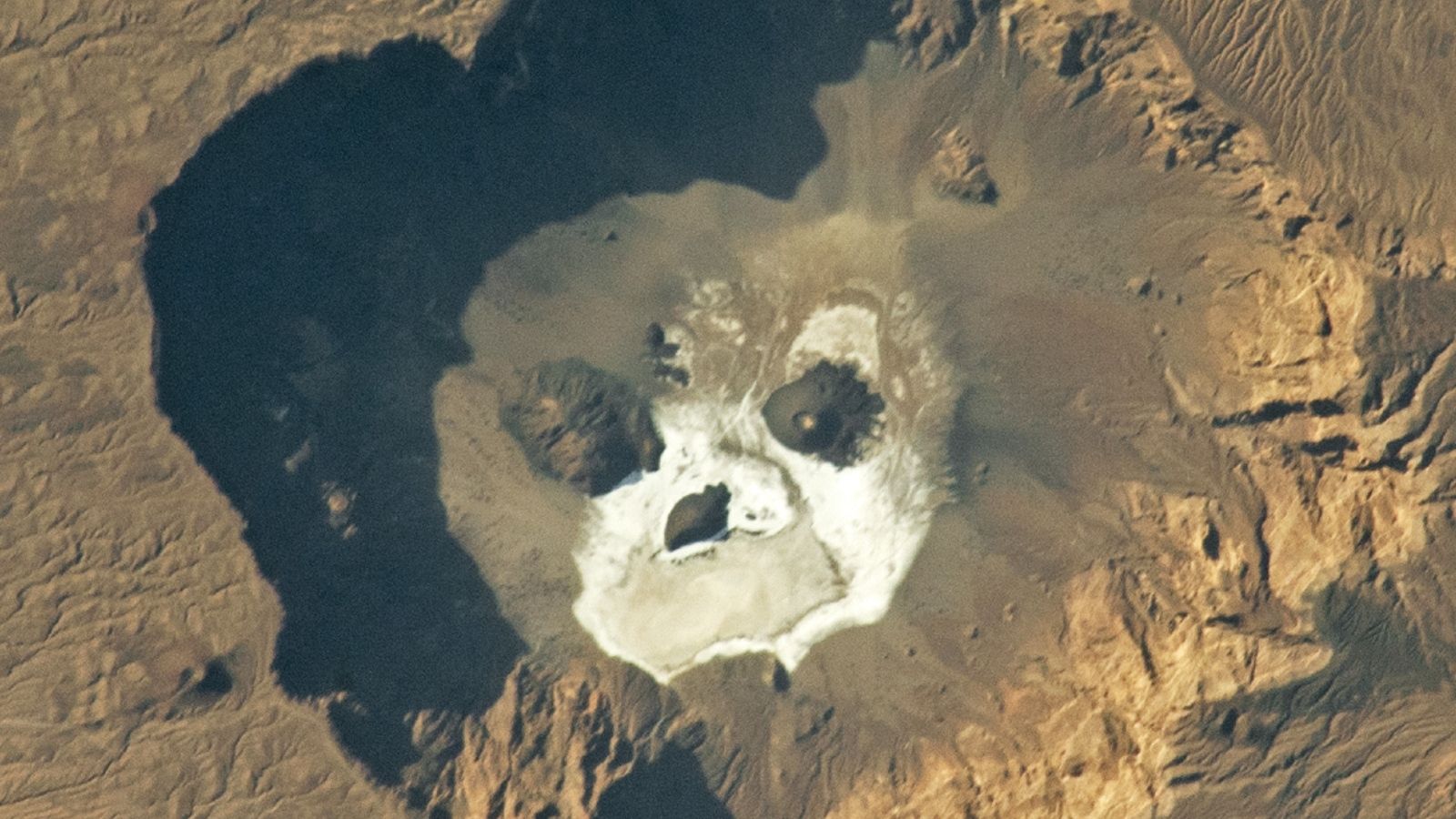
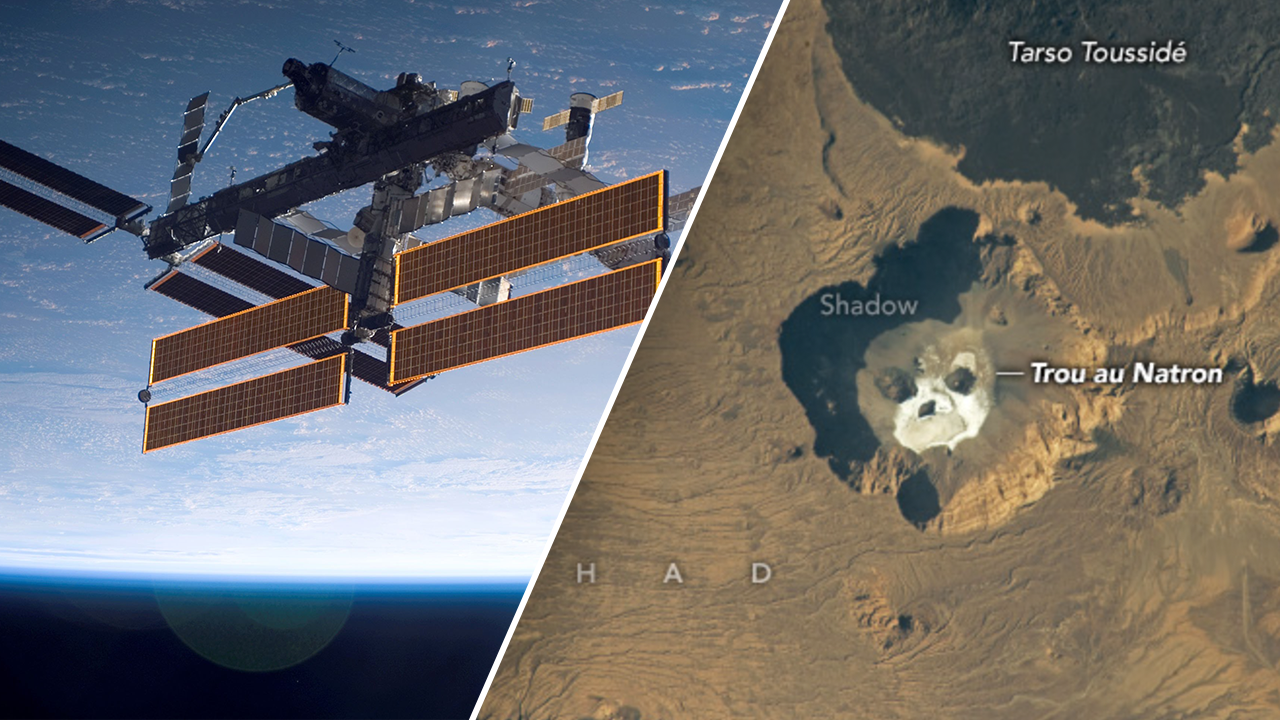
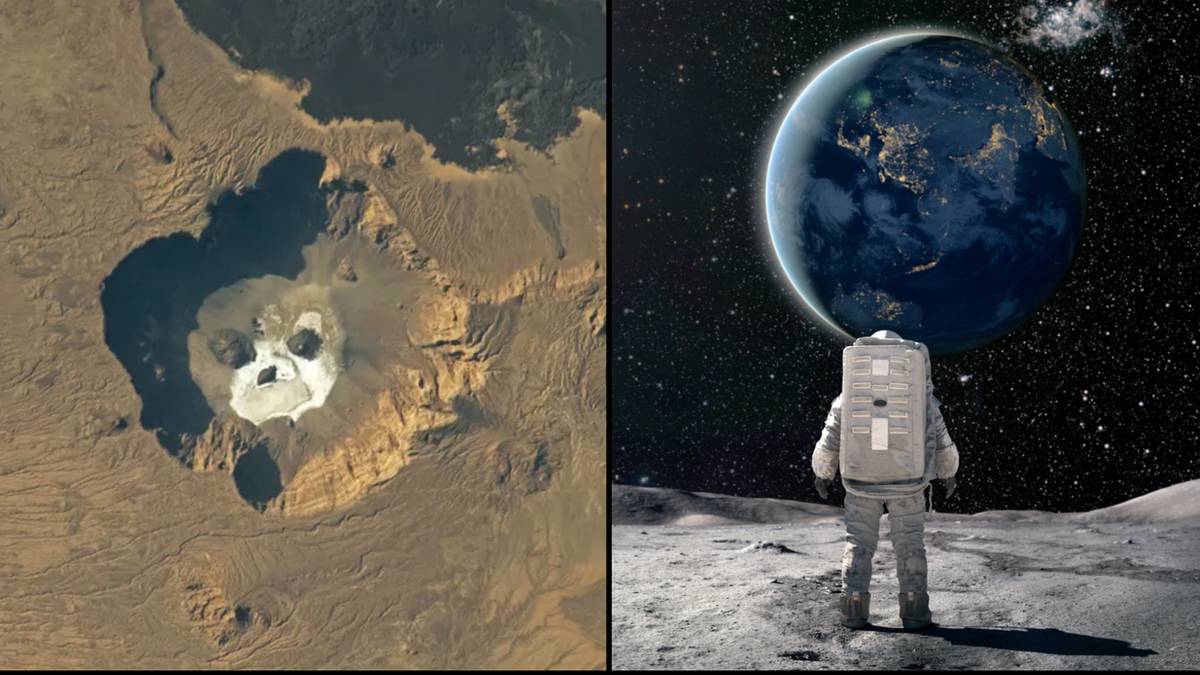
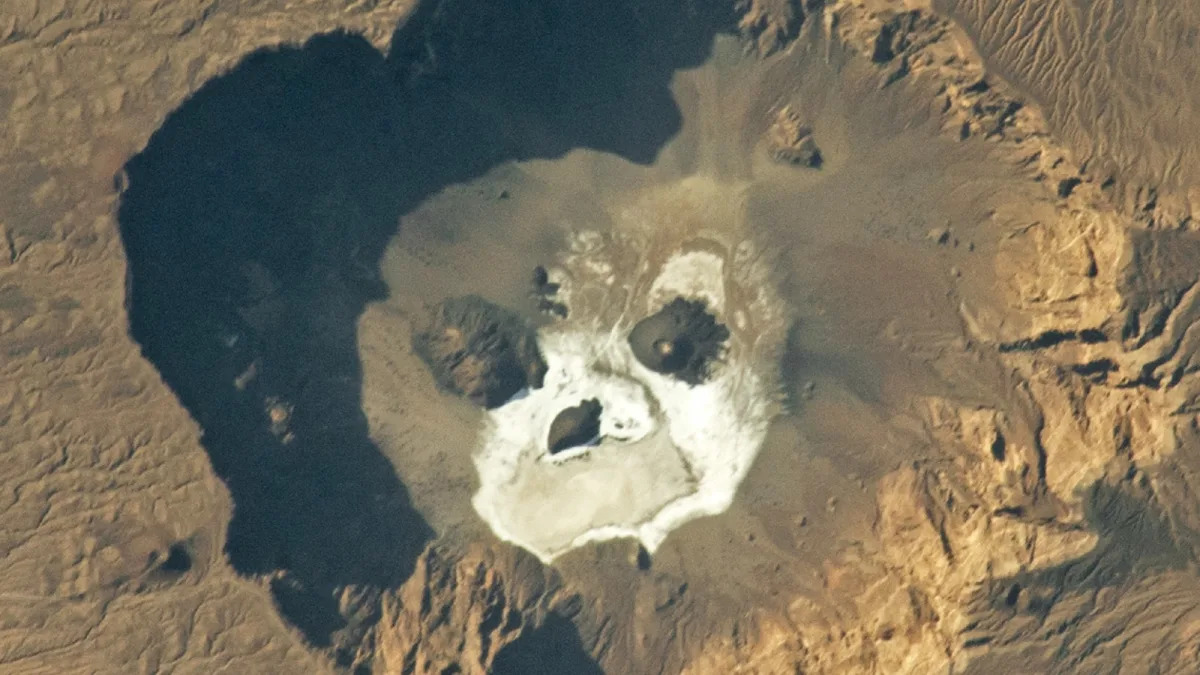
An astronaut photo from the ISS captures the skull-like appearance of the Trou au Natron caldera in Chad's Sahara, shaped by volcanic activity and natural mineral deposits, revealing a striking geological formation from space.
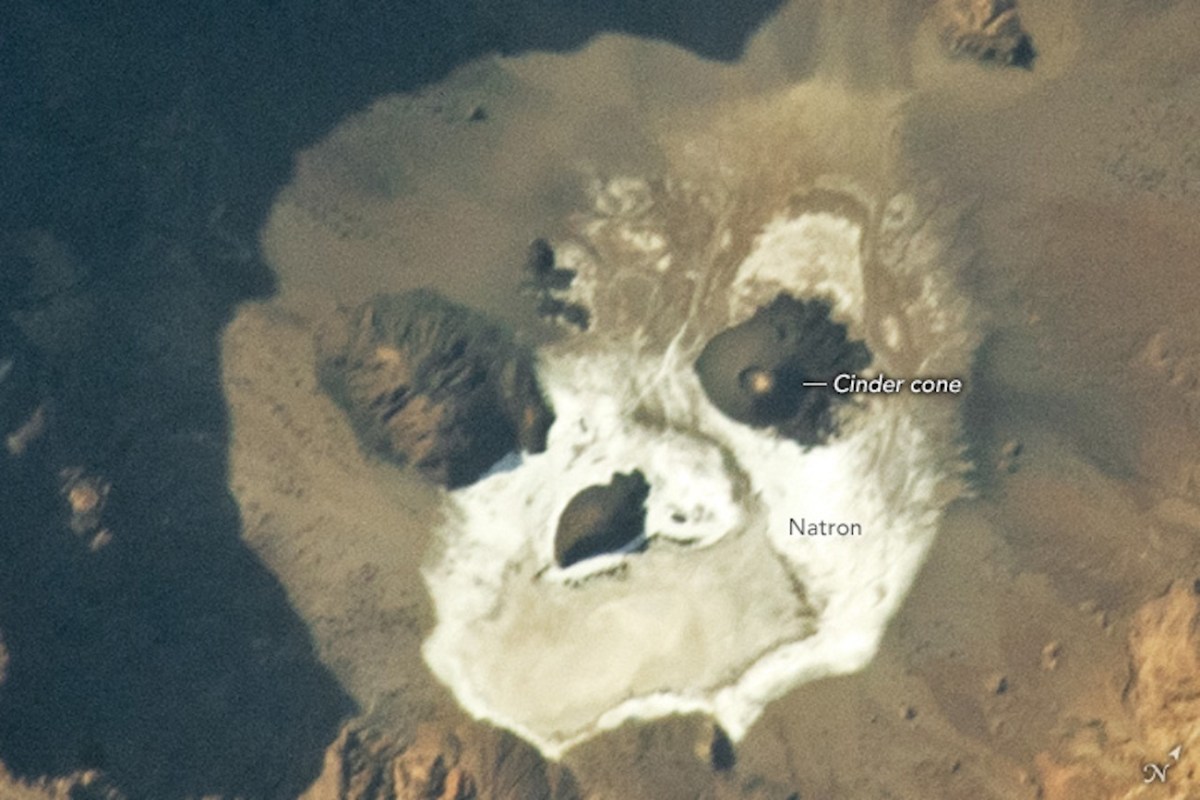
An astronaut aboard the International Space Station captured photos of a skull-like formation in the Tibesti Mountains in Chad. The images show a deep volcanic pit and soda lake called Trou au Natron, which resembles a ghostly face. The eye sockets and nose are actually cinder cones, while the white material is a mineral crust made of natron salt. The remote location of the area has made it difficult for scientists to study, but research suggests it was once a glacial lake. NASA also recently released images of an "eerie face" captured by the Juno space probe passing Jupiter.
An astronaut aboard the International Space Station captured an astonishing photo of a massive skull peering up from a volcanic pit in Trou au Natron, northern Chad. The "face" is formed by shadows from the rim of a caldera, while the "eyes" and "nose" are cinder cones. The white area around the "mouth" is a mineral crust made of natron, a salt formed by evaporating hot spring water.
An astronaut aboard the International Space Station captured a photo of a giant skull-shaped geological formation in Africa called Trou au Natron. The formation, located in Chad's Sahara desert, is a volcanic caldera with smoldering volcano cones that resemble the eyes of the skull. The area is remote and little is known about it due to its inaccessibility and political unrest. The formation is of interest to scientists who are studying its formation and history.
NASA has released a spooky image of a skull-shaped feature captured by an astronaut aboard the International Space Station. The eerie "skull" appears to glower from the heart of a volcanic pit in Chad's Sahara Desert. The feature is located on the floor of Trou au Natron, a volcanic caldera left behind by an ancient eruption. The skull's white color is due to natron, a naturally occurring salty mixture, while the eyes and nose holes are cinder cones. Trou au Natron was once a glacial lake and is one of the youngest volcanic features in the Tibesti Massif.