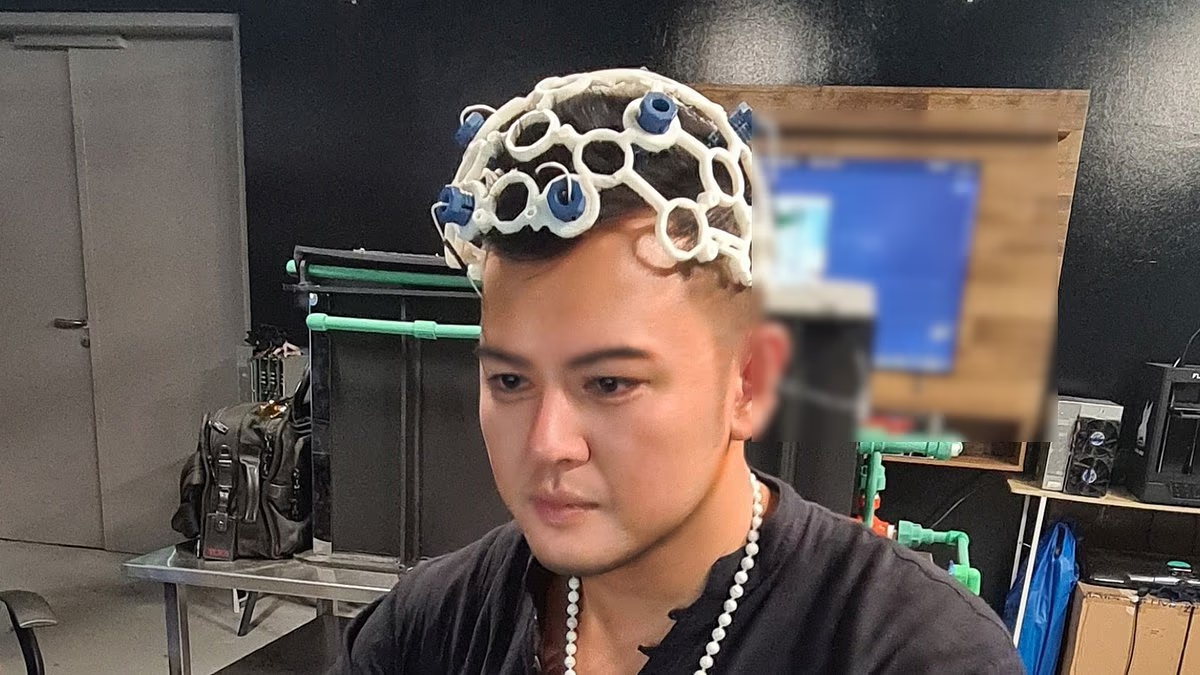
Herbert Sim, a London-based tech investor, predicts that within five years, a new race of superhuman mutants with extraordinary abilities could emerge, driven by advancements in transhumanism, genetic engineering, and brain-computer interfaces, potentially rendering ordinary humans obsolete. While some technologies like gene editing and neural implants are already in development or use, the idea of a future dominated by enhanced mutants remains speculative but increasingly plausible.
Tech executive Bryan Johnson, known for his mission to optimize human health and delay death, hosted a series of events in Brooklyn for his "DON'T DIE" group, where attendees discussed their struggles with aging and anxiety about the future. Johnson's Protocol, involving a disciplined lifestyle and expensive health products, was a central focus, with attendees sharing their experiences and seeking meaning in the pursuit of longevity. The day included rock climbing, a "thoughtful conversation," and a dance party, shedding light on Johnson's philosophy as a transhumanist and the diverse perspectives on life and death among the attendees.
Sociologist Timothy Recuber's book "The Digital Departed" explores how the dying and the dead exert agency over their online presence, examining digital texts from terminally ill bloggers to online suicide notes. Recuber also delves into the use of hashtags as a form of collective online remembrance and interviews individuals involved in transhumanism, discussing the potential for advanced technologies to enable digital records of the human mind to be uploaded to the Internet. He raises ethical concerns about mind uploading, cautioning against narratives that promote technological progress as necessarily good and highlighting the inequalities mirrored in people's online lives.