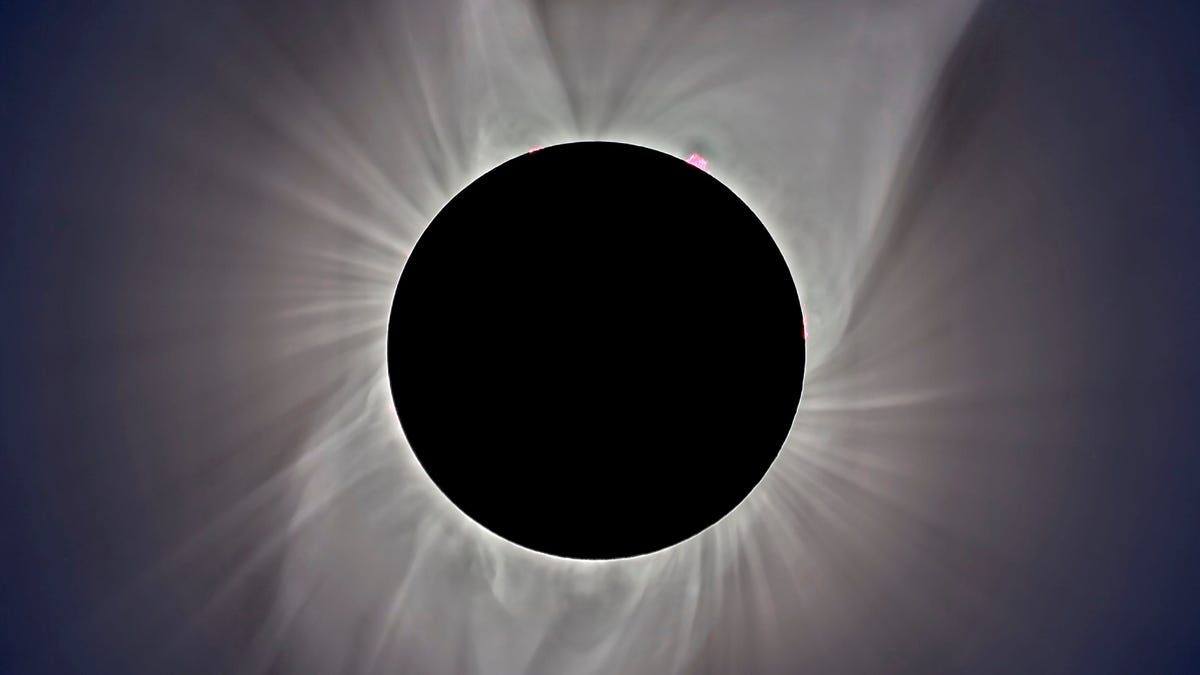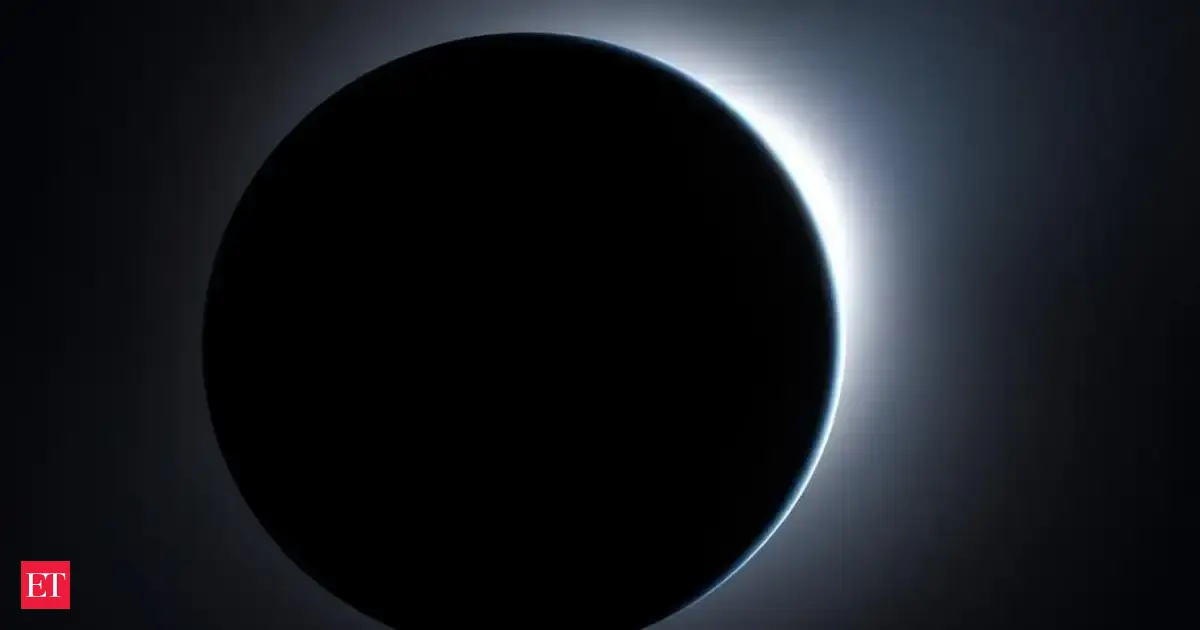
The article clarifies that there will be no solar eclipse on August 2, 2025, despite social media claims, and highlights the upcoming total solar eclipse on August 2, 2027, which will be the longest of the 21st century, visible across parts of Europe, North Africa, and the Middle East, lasting about 6 minutes and 23 seconds.

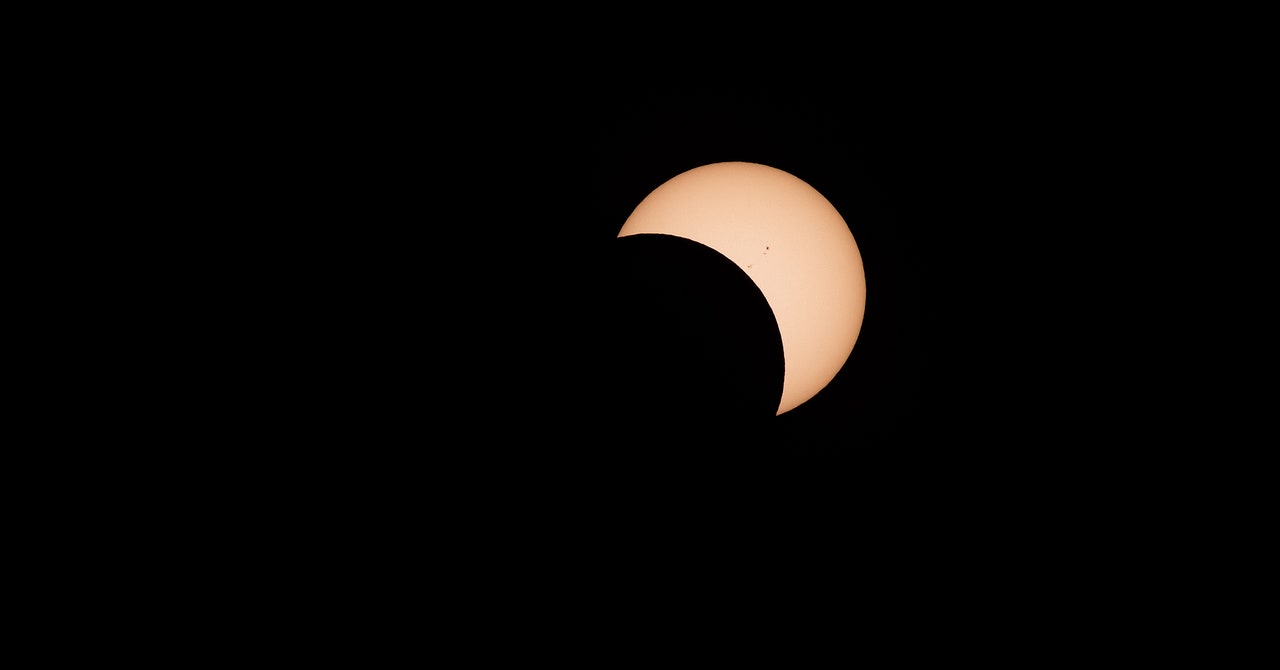
A partial solar eclipse was visible in parts of Scotland, while most of the UK missed out due to cloud cover. Tens of millions in the US gathered to view the total eclipse, but in the UK, only northern and western Scotland had clear skies for the partial eclipse. Social media users shared pictures of solid grey clouds, with some joking about the "breathtaking" view. A physicist described partial eclipses as "boring," while the next total solar eclipse visible from the UK is not expected until 2090.
On April 8, 2024, a generational total solar eclipse captivated millions across America, leaving them breathless and mesmerized by the rare celestial event.
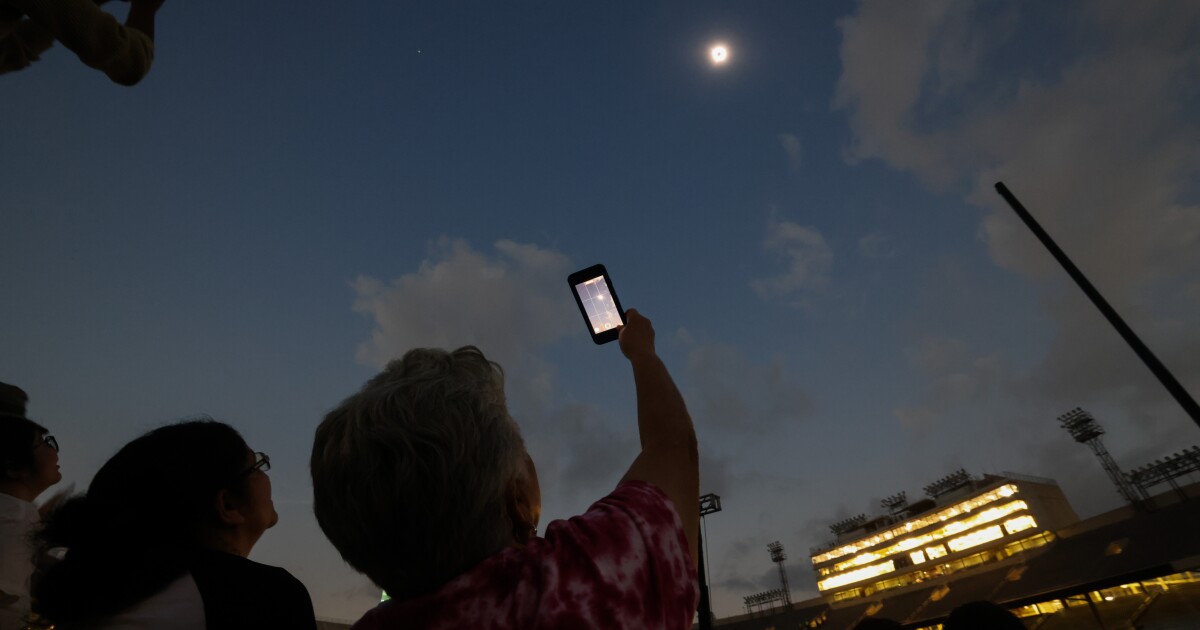
North Texas celebrated the total eclipse at the Cotton Bowl in Dallas as visitors watched the darkening sky and listened to scientists and musicians during the Sun, Moon and You Total Eclipse Viewing hosted by NOAA. The event provided an opportunity for people to witness the eclipse and take photos using filters and sunspotters, while also offering educational activities for children to learn about the eclipse's perspective.
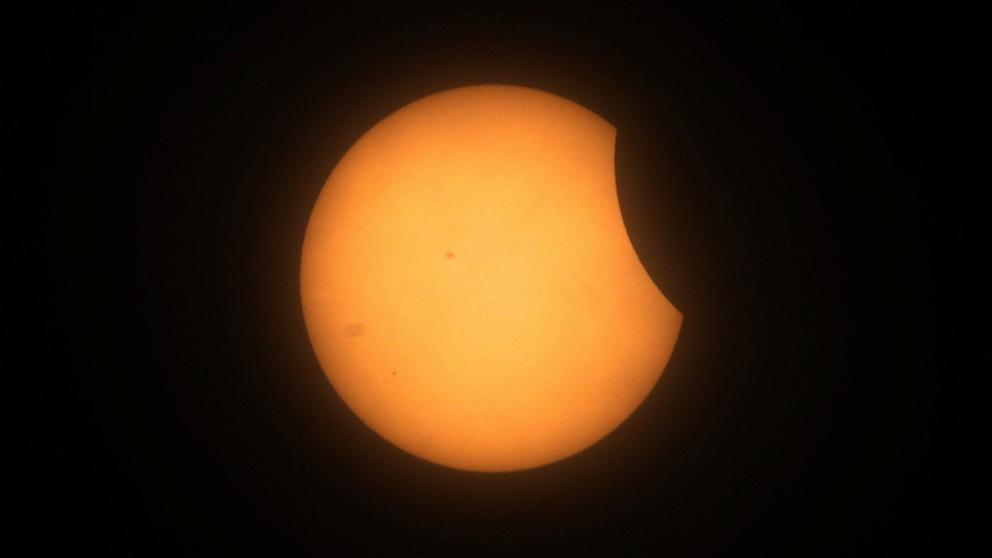
Nebraska was not in the path of totality for the recent solar eclipse, but there are upcoming opportunities to witness partial solar eclipses in the state. The next solar eclipse visible in Nebraska will be an annular eclipse on Jan. 26, 2028, followed by a hybrid eclipse on Nov. 14, 2031, and a total eclipse on March 30, 2033. Solar eclipses occur when the moon is positioned between the Earth and the sun, casting a shadow over the Earth, and typically happen twice a year during a new moon phase.
The next total solar eclipse in the contiguous U.S. is set for Aug. 23, 2044, shadowing three states, while a coast-to-coast eclipse is expected on Aug. 12, 2045. Internationally, a total solar eclipse is scheduled for Aug. 12, 2026, sweeping over the Arctic Ocean, Greenland, Iceland, Atlantic Ocean, Portugal, and northern Spain. The recent total solar eclipse was observed in northern Maine and New Hampshire, with the sun's corona shining behind the moon, and a partial eclipse was captured behind the Statue of Liberty in New York Harbor.
Meteorologists are refining forecasts for the solar eclipse in Upstate New York, with the best viewing expected in northern New England and the New York City area. The Hudson Valley and NYC will experience clear skies for the partial eclipse, with temperatures around 61 degrees. Unfortunately, Western and Northern New York may experience cloudy conditions. The eclipse will begin at 2:11 p.m. on April 8, with maximum coverage at 3:25 p.m. and normal light returning by 4:36 p.m. Sunday's weather in the Hudson Valley is expected to be around 51 degrees with some lingering clouds.
A total solar eclipse is set to pass through Texas and the Midwest states on April 8, offering a unique celestial spectacle. While special glasses are essential for direct viewing of the sun, a pinhole projector can also be used to safely observe the eclipse. The shape of the pinhole affects the image projected, with round, square, and triangular holes producing different patterns when light passes through. Even if not in the path of totality, individuals can still enjoy the eclipse using simple pinhole viewers or by standing under a tree to see crescent-shaped images projected through the gaps in the leaves.
Several kids who witnessed the last total solar eclipse in 2017 shared their memories and how the experience impacted them. From seeing the sky go dark and hearing crickets to feeling a sense of wonder and broadening their perspectives, the eclipse left a lasting impression. One adult who saw a total eclipse as a child believes that the event can have a subconscious impact, leading her to pursue a career in physics.
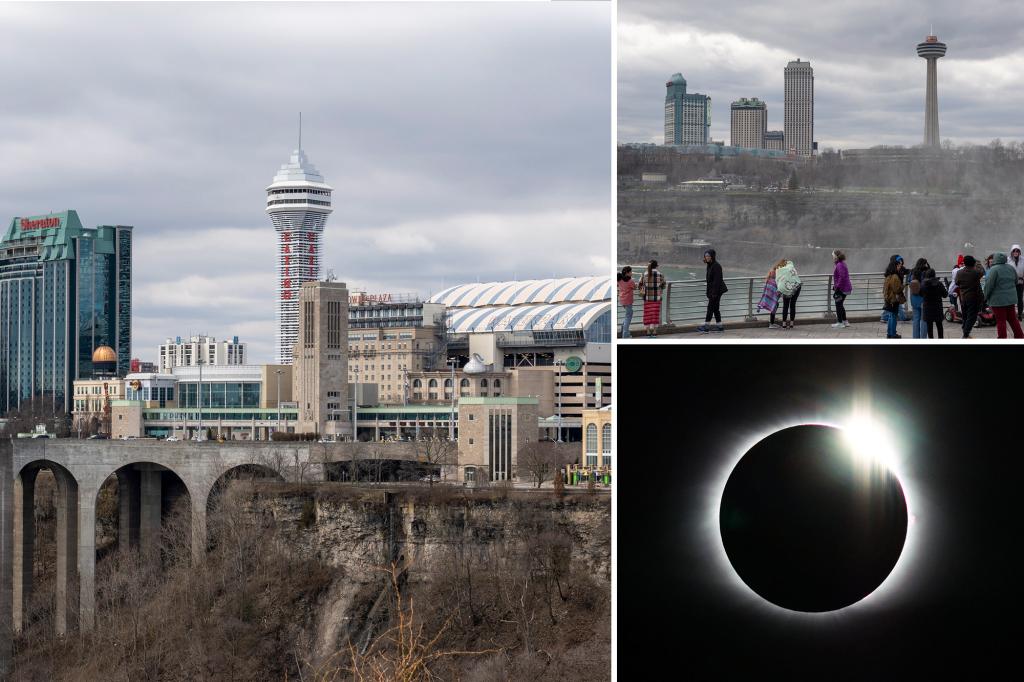
Niagara Falls, Canada, has declared a state of emergency ahead of the April 8 total eclipse as 1 million people are expected to visit the area, with preparations being made for the influx of visitors and potential traffic jams, cell phone network overloads, and increased need for emergency services. The eclipse, not seen in the area since 1979, is expected to draw a large crowd, and the city is taking precautions to ensure the safety and smooth experience for all visitors.
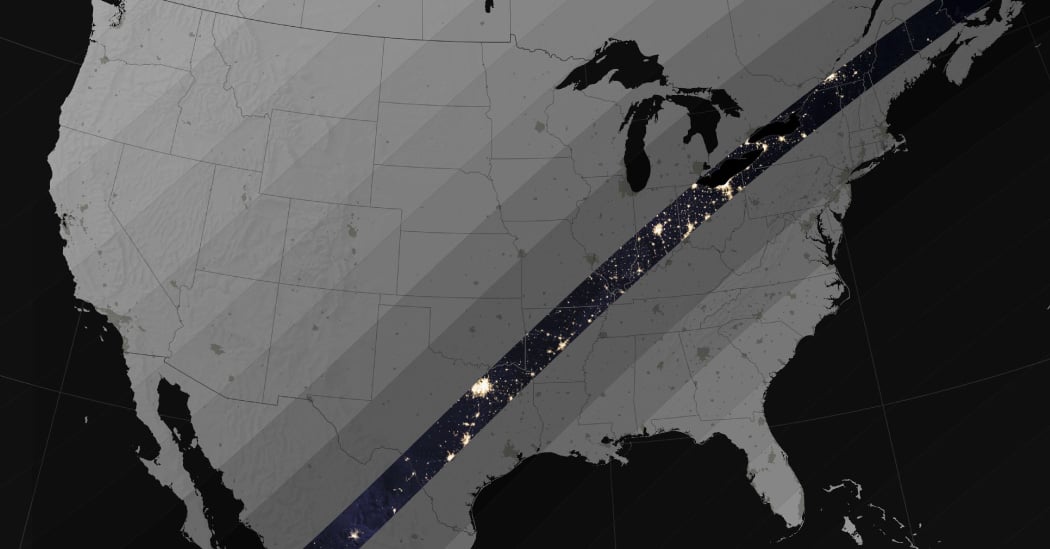
On April 8, a total solar eclipse will occur above the U.S., with the path of totality passing through northern Mexico, Texas, the Midwest, the East Coast, and southeast Canada. Southern California will only experience a partial eclipse, while those in Nevada, Arizona, and New Mexico will have better visibility. It's important to use certified eclipse glasses with the ISO icon and reference number 12312-2 for safe viewing, as looking at the sun without proper protection can cause damage.
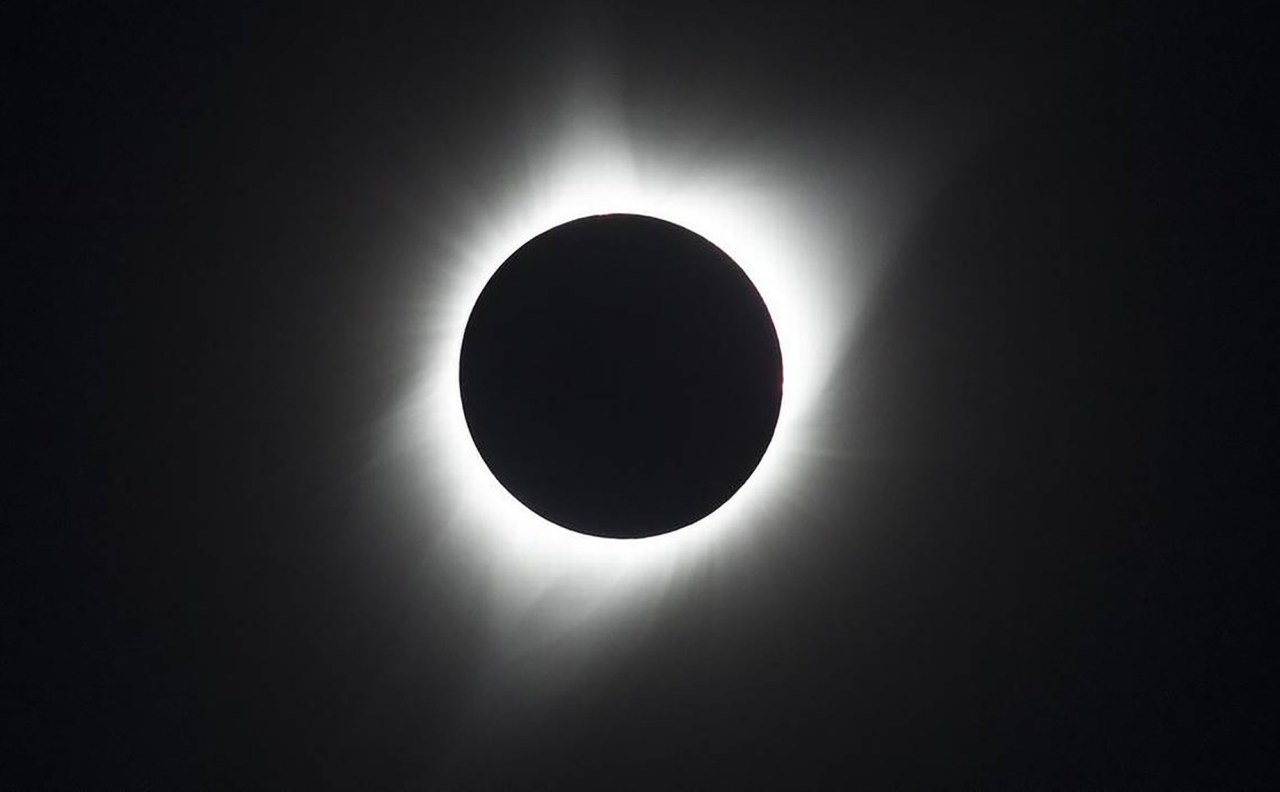
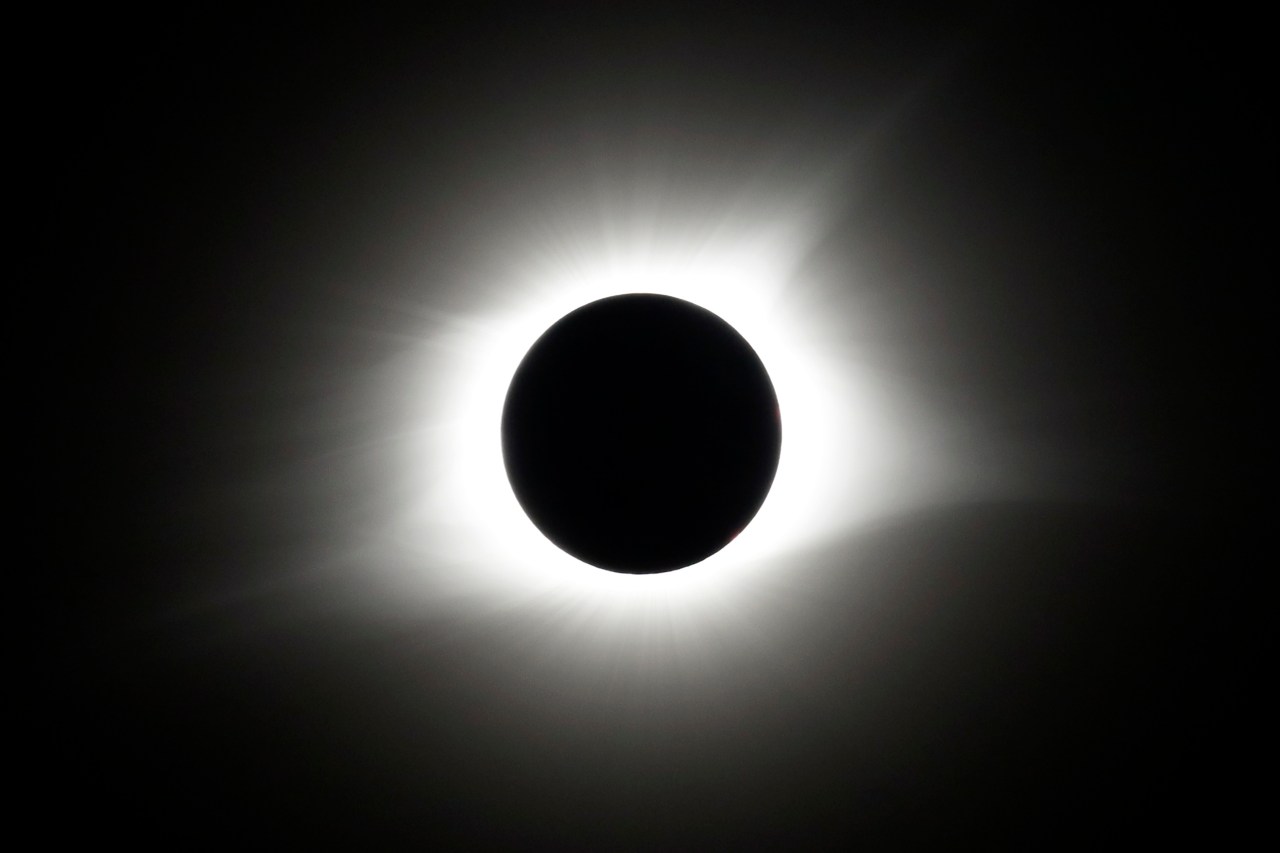
On April 8, a total solar eclipse will be visible across a swath of North America, with the path cutting through Mexico and the United States from Texas to Maine. Viewers within the deepest shadow will experience a total eclipse, with potential effects including a drop in temperature, changes in wind, and the appearance of bright planets in the sky. The sun's corona, typically hidden by glare, will be briefly visible, and viewers can take advantage of the Purkinje effect by wearing green or contrasting green and red colors. If missed, the next total solar eclipses in the United States won't occur until 2044 and 2045.
Several Central Texas school districts, including Marble Falls ISD, have canceled classes on April 8 to allow students to witness a total solar eclipse, a rare event that won't occur again for another 20 years. The districts have made the day a student holiday, and an interactive map has been created to show which cities will be in the path of totality and for how long.
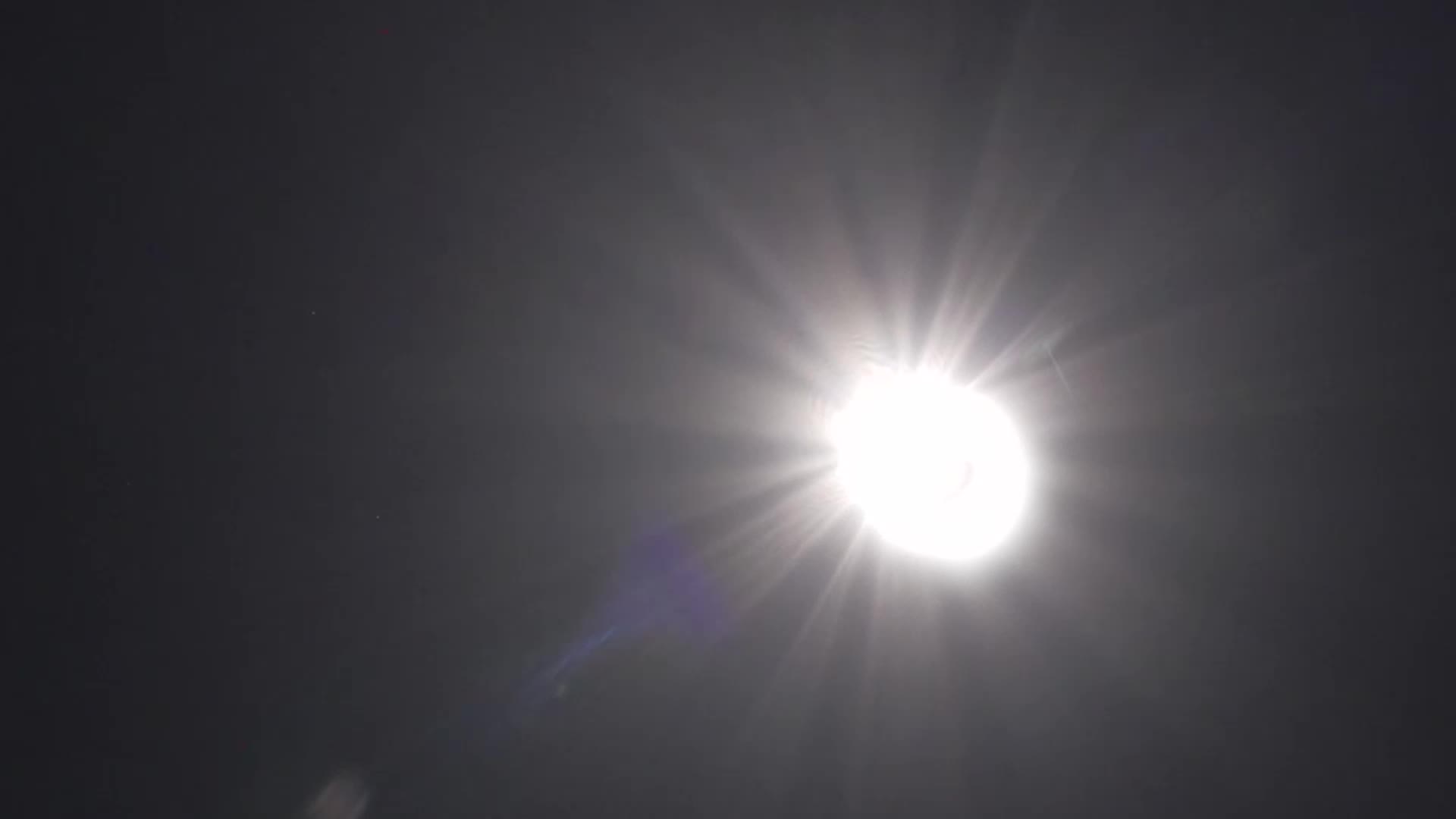
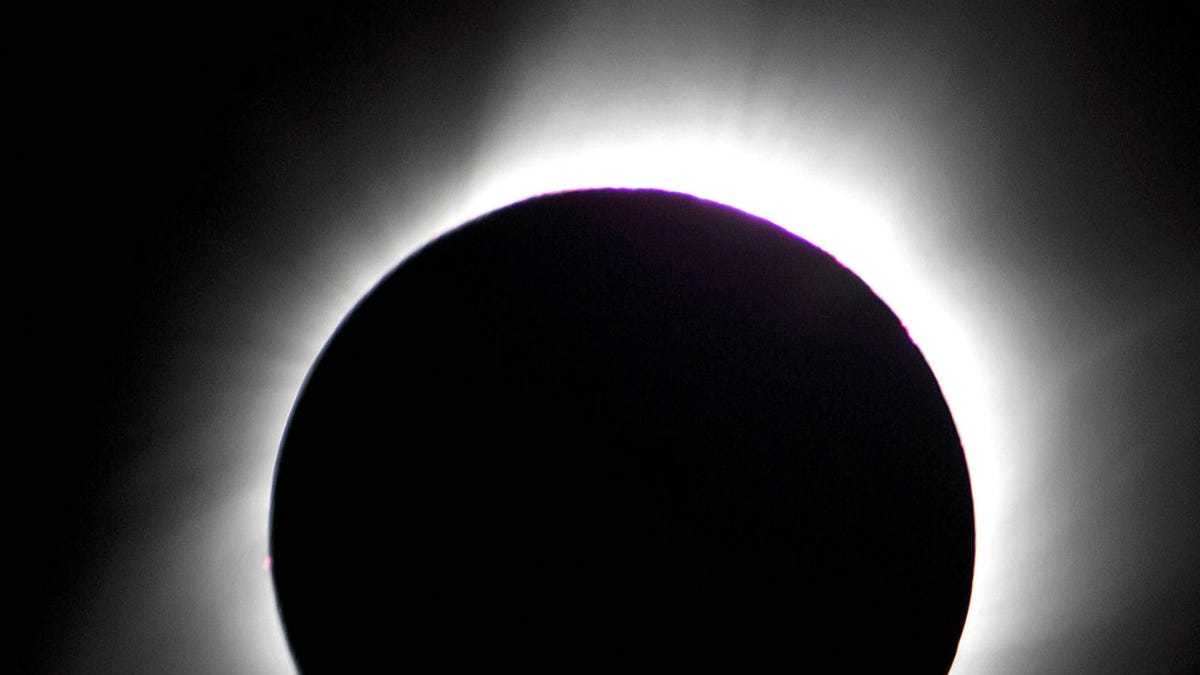
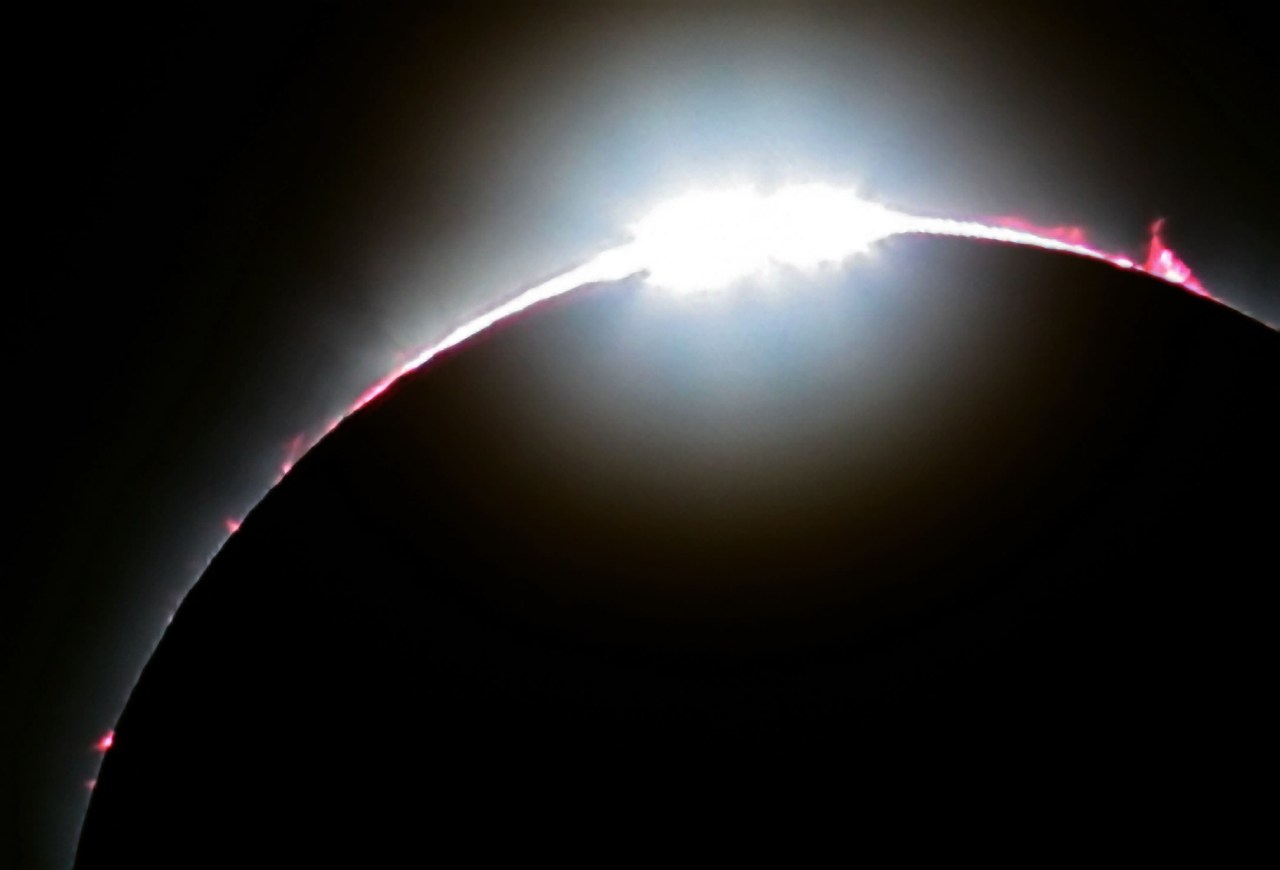
During April's total eclipse, a "double diamond ring" effect, also known as Baily's Beads, will be visible in parts of Central Texas as the last bit of the sun is covered by the moon and when it reemerges, caused by the uneven edge of the moon. Cartographer Michael Zeiler has created maps showing where this phenomenon will be visible, particularly just west of Fredericksburg and Kerrville, and has also created 14 maps across North America for other viewing locations. Solar eclipse glasses are necessary for safe viewing, and only those within the path of totality can briefly remove them when the sun is completely obscured.
A rare total solar eclipse is set to occur on April 8, with certain parts of central Ohio offering better viewing opportunities than others. The phenomenon is expected to last up to four minutes and 28 seconds and could impact weather. Specialized eye protection is necessary to safely view the eclipse, as it can cause temporary or permanent eye damage. The next eclipse in the U.S. is not predicted until 2099.