Tag

2024 Eclipse

All articles tagged with #2024 eclipse

science-and-astronomy1 year ago

"Preparing for the Next Solar Eclipse: Streaming Recap and 2024/2026 Viewing Locations"

The recent total solar eclipse was the last visible over North America for 20 years, but there are upcoming eclipses worldwide. NASA hosted a live stream of the event, and the next total solar eclipse over North America will occur in 2024. Eye safety is crucial when viewing eclipses, and indirect viewing methods or certified solar filters for cameras are recommended. Additionally, a new app called Solar Snap can help protect eyes and take better eclipse photos on smartphones.
astronomy1 year ago

"2024 Solar Eclipse Viewing Guide for Long Island"

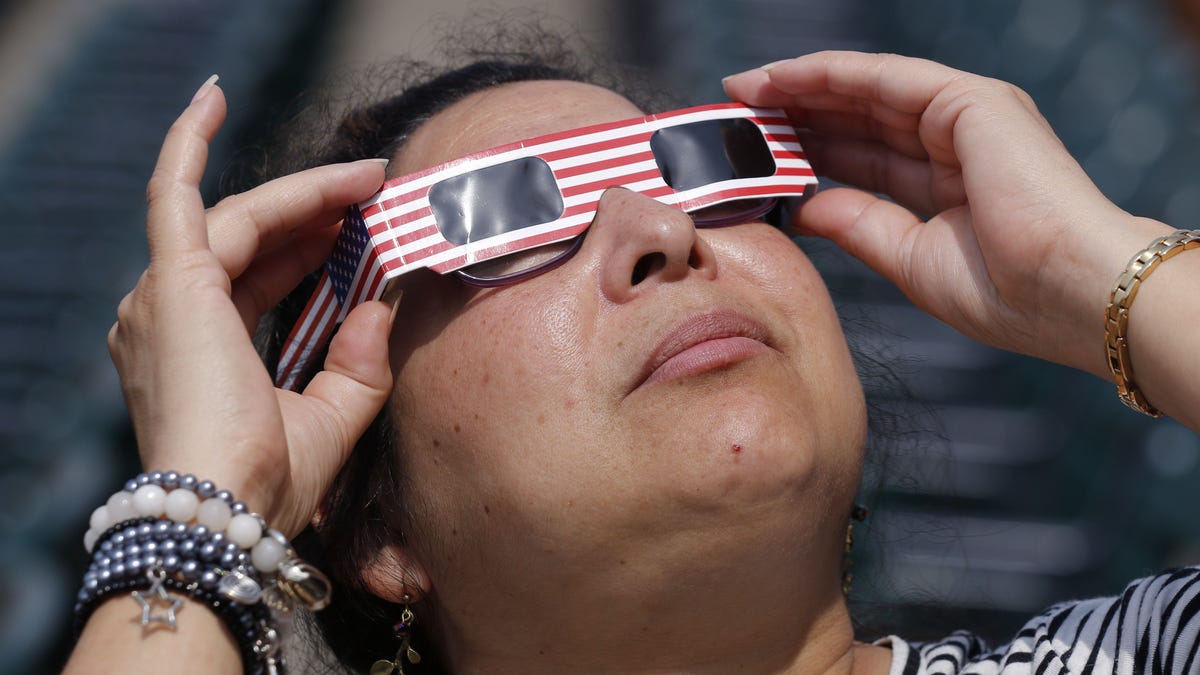
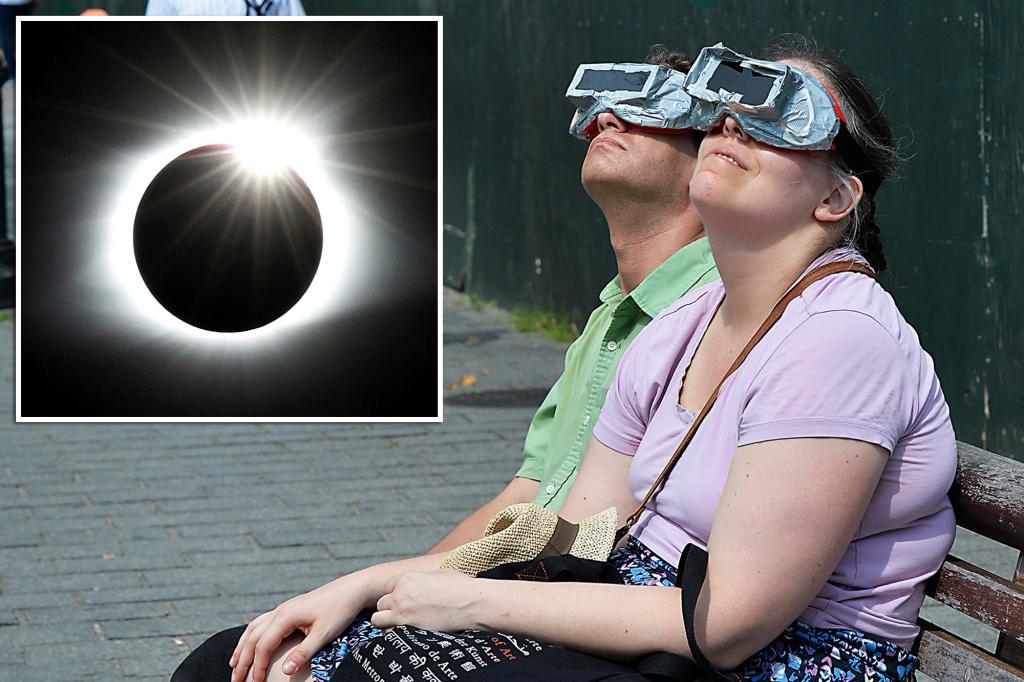
Long Island will experience a partial solar eclipse on April 8, 2024, with the best viewing time from 2:10 p.m. to 4:36 p.m., reaching 90% totality just before 3:30 p.m. Viewing parties will be held at various locations across Long Island, and free eclipse glasses are available at Warby Parker locations, local libraries, and the Long Island Welcome Center. Protective eyewear is necessary to avoid eye injury during the event.

astronomy1 year ago

"Upcoming Total Solar Eclipses in the US: Dates and Paths Revealed"

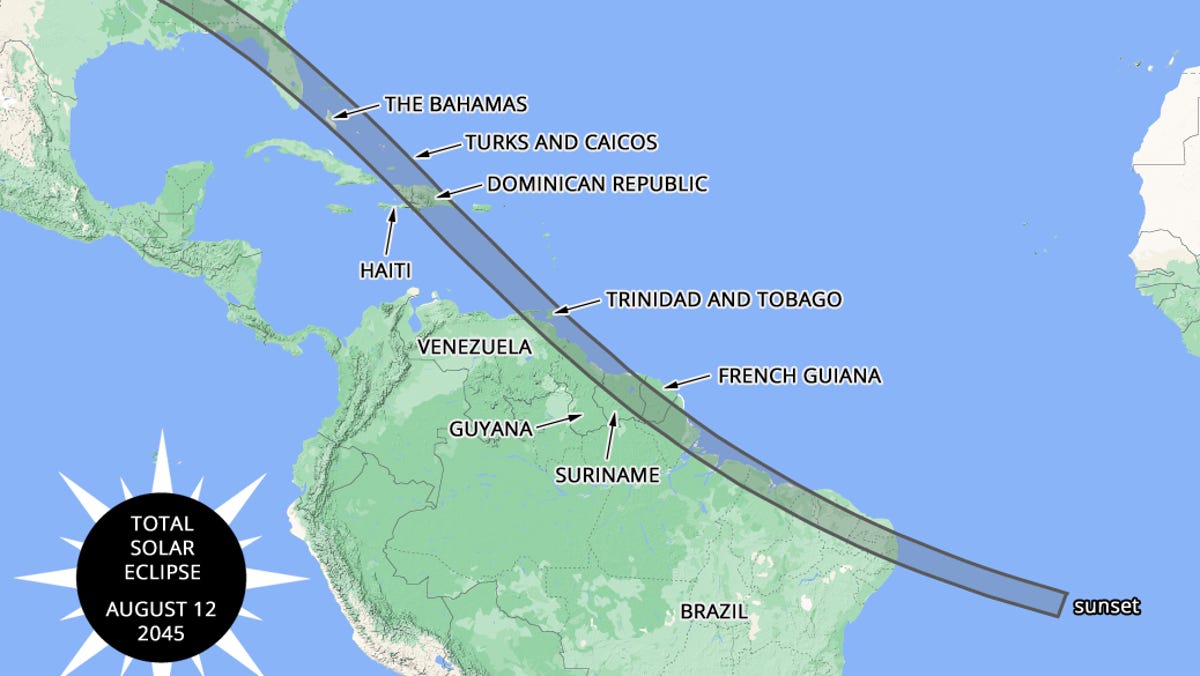
The next total solar eclipse visible from the contiguous U.S. after the 2024 eclipse will be on August 23, 2044, but it will only touch three states. Another eclipse is expected on August 12, 2045, with a path of totality over several states. A total solar eclipse occurs when the moon passes between the Earth and the sun, creating a rare spectacle that offers a glimpse of the sun's corona. The 2024 eclipse will cross 13 states from Texas to Maine, while the 2044 eclipse will only touch three states and the 2045 eclipse will have a more robust path across the U.S.

astronomy1 year ago

"2024 Total Solar Eclipse: Path, Peak Times, and Safety Tips for Viewing"

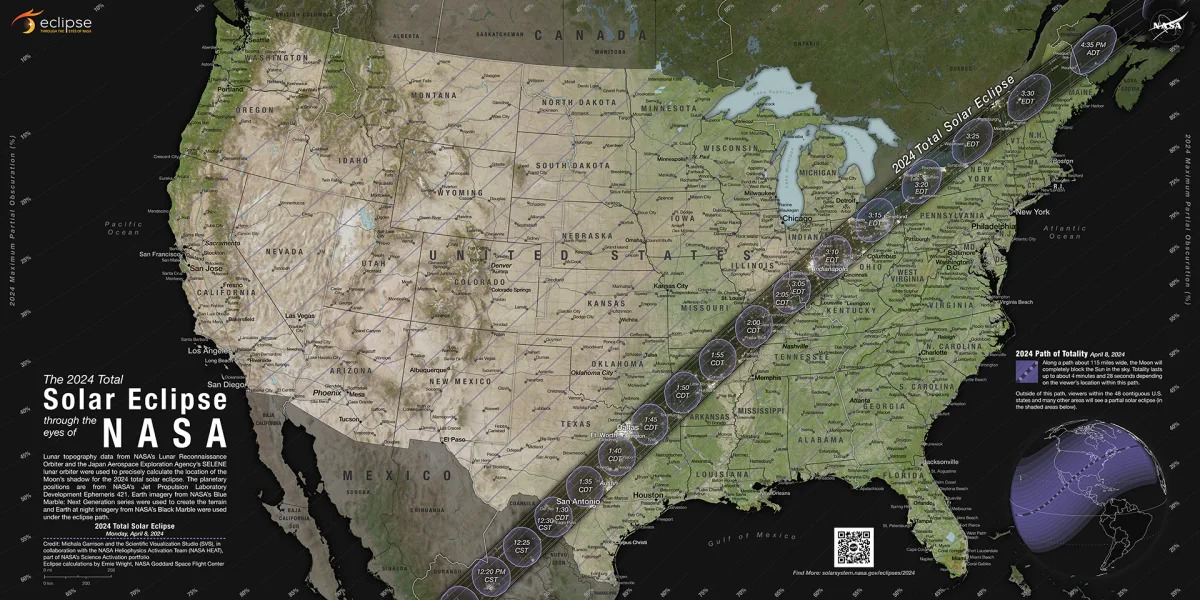
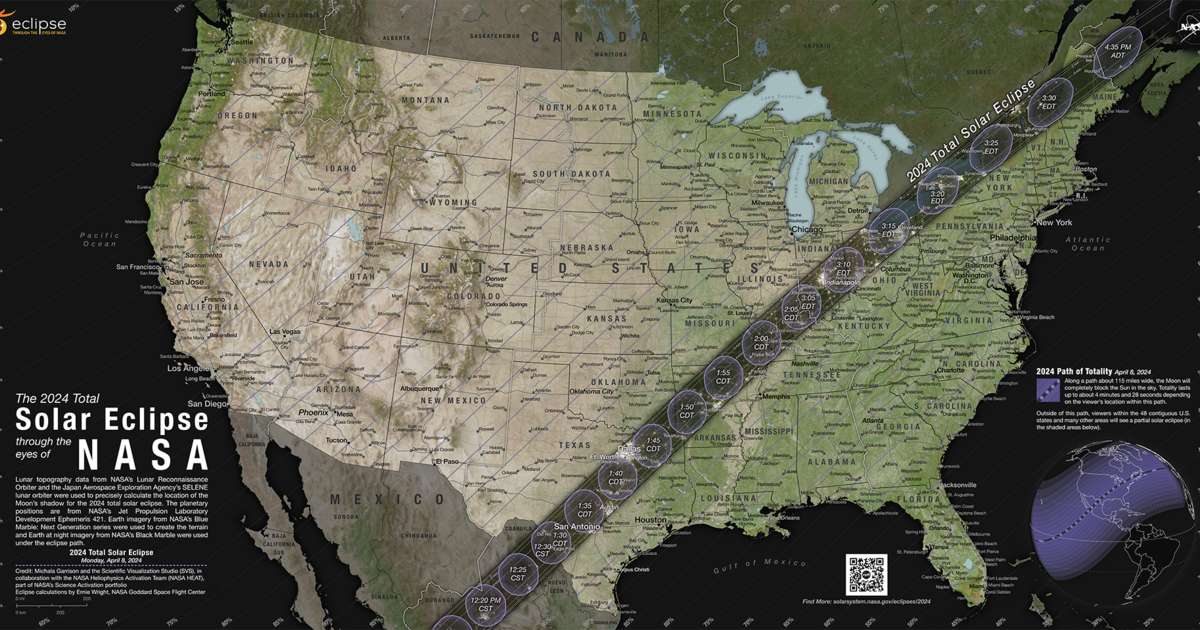
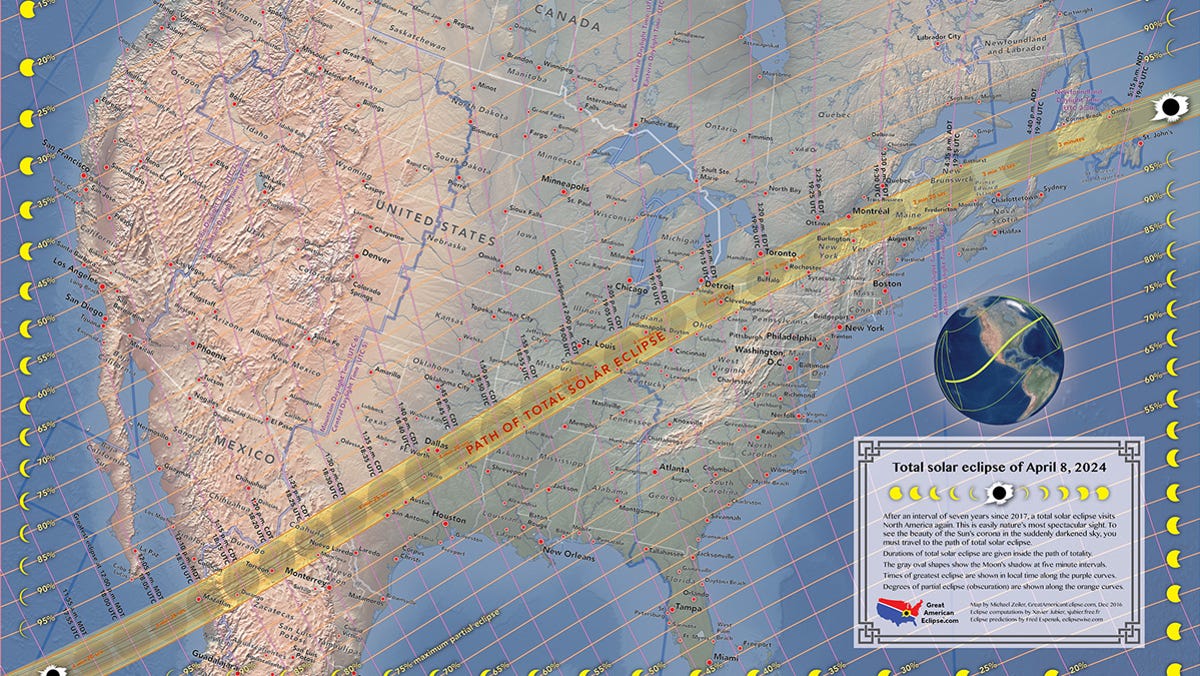
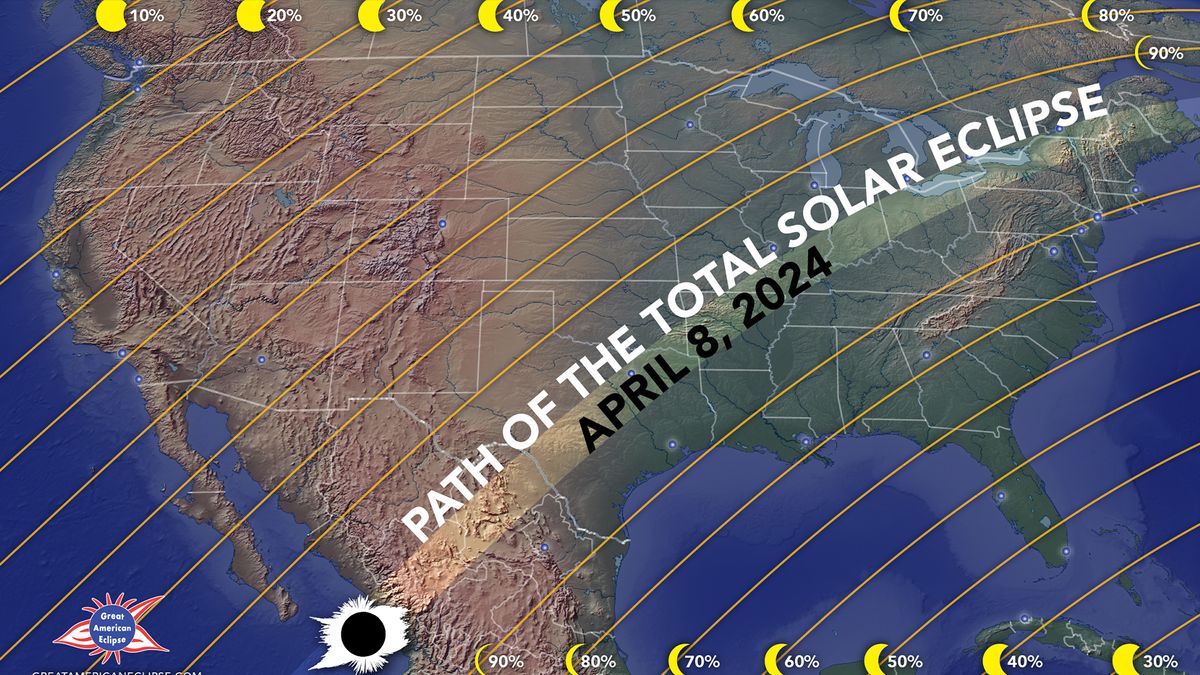
A total solar eclipse is set to cross North America on April 8, 2024, with parts of 15 U.S. states within the path of totality, where the moon will fully block out the sun. The eclipse will first appear along Mexico's Pacific Coast at around 11:07 a.m. PDT, then travel across the U.S. from Texas to Maine and into Canada. Maps show the specific regions and peak times for viewing the eclipse, with several major cities included in the path of totality. NASA has provided times for various cities and a map to check when the eclipse will reach specific locations.

astronomy1 year ago

"2024 Solar Eclipse: Path, Peak Times, and Viewing Tips Across the U.S."

A total solar eclipse is set to cross North America on April 8, 2024, with parts of 15 U.S. states within the path of totality, where the moon will fully block out the sun. Maps show the path and timing of the eclipse, which will range between 108 and 122 miles wide and include major cities such as San Antonio, Dallas, Indianapolis, and Buffalo. Outside the path of totality, observers may see a partial eclipse, and NASA provides a tool to check how much of the sun will be covered in specific locations. The next total solar eclipse visible from the contiguous U.S. will be on August 23, 2044.

astronomy1 year ago

"2024 Total Solar Eclipse: Path, Viewing Tips, and Safety Precautions"

On April 8, 2024, a total solar eclipse will sweep through North America, with a path of totality passing over 15 U.S. states, Mexico, and Canada. The eclipse will have 5 distinct stages: first contact, second contact, totality, third contact, and fourth contact. Skywatchers are advised to use specialized eclipse glasses or filters to safely view the event. Following this eclipse, the next total solar eclipse visible in the U.S. will occur on March 30, 2033.

astronomy1 year ago

"Ultimate Guide to Solar Eclipse 2024: Time, Path, Glasses, and Photography Tips"

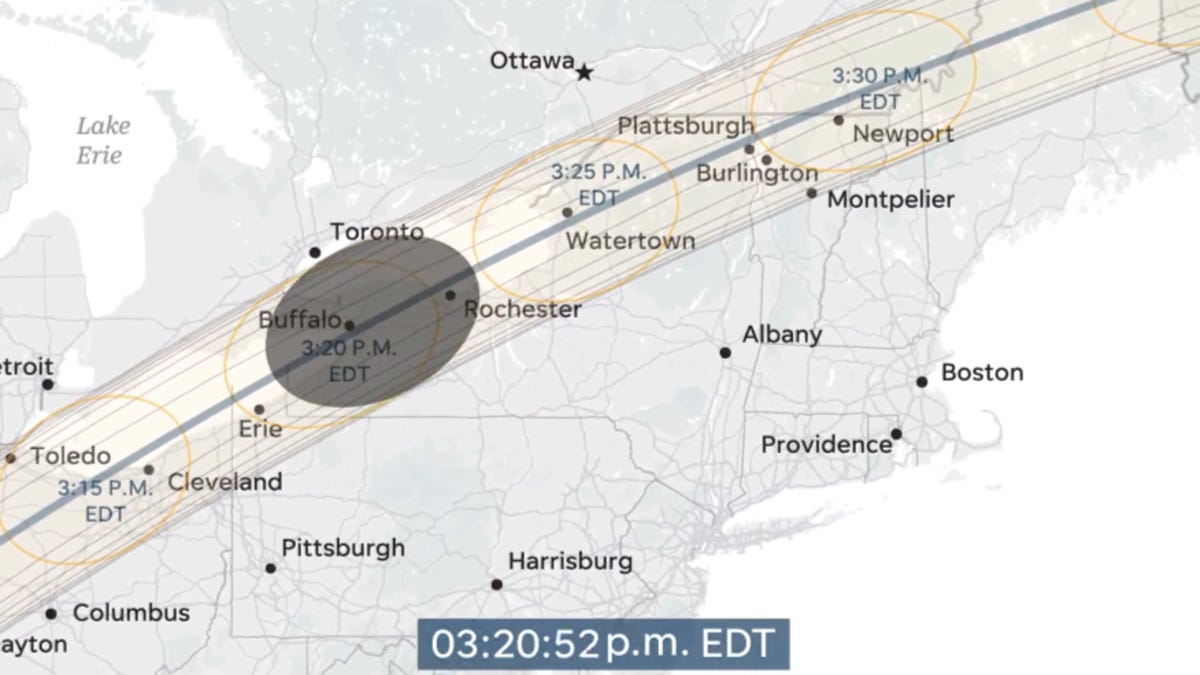
The 2024 solar eclipse will pass through notable cities in Mexico, the U.S., and Canada, with the path of totality including locations such as San Antonio, Dallas, Indianapolis, Cleveland, Buffalo, and Montreal. In New York, cities like Niagara Falls, Buffalo, and Rochester will experience totality, with Rochester having a start time of 2:07 p.m. and totality at 3:20 p.m. Lasting for 3 minutes and 38 seconds, the eclipse will bring darkness to communities along its path, with the moon's close approach to Earth resulting in an especially long period of sun-blocked darkness.

astronomy1 year ago

"2024 Solar Eclipse: Safety, Duration, and Path Across the US"

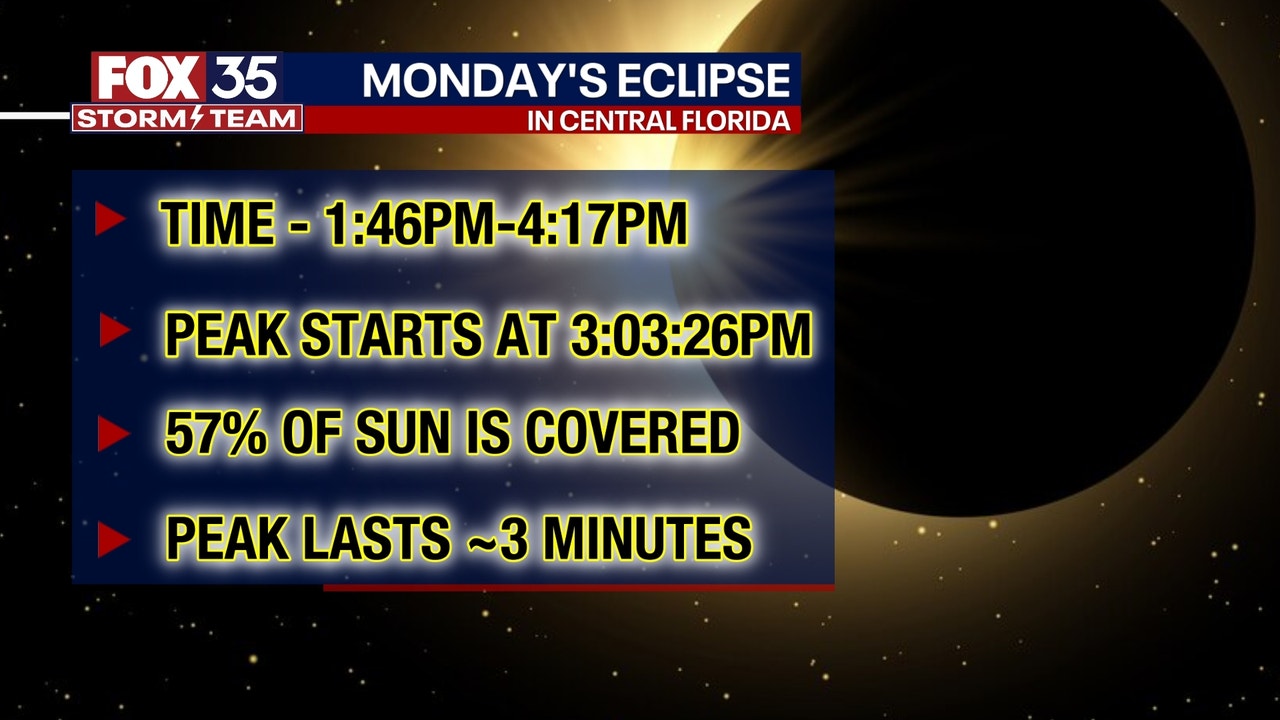
On April 8, 2024, a total solar eclipse will be visible in the contiguous United States, with a partial eclipse occurring in Florida. The eclipse will start between 12 and 17 minutes before 2 p.m. EDT, with the peak viewing expected around 3 p.m. Between 40% and 60% of the Sun's surface will be obscured during this time, and the eclipse will wrap up around 4:15 p.m. Observers in Florida are advised to wear eclipse glasses for eye safety.

astronomy1 year ago

"Ultimate Guide to Photographing and Watching the 2024 Solar Eclipse"

The 2024 solar eclipse will sweep across North America on April 8, offering a rare spectacle. Some surprising facts include the path starting in the Pacific Ocean and ending in the Atlantic, Mexico experiencing the longest totality, more people living in the path of totality compared to the last eclipse, the sun's corona being visible, and the next total eclipse in the U.S. not occurring until 2033.

science-and-astronomy1 year ago

"Ultimate Guide to Viewing and Streaming the Solar Eclipse"

The last total solar eclipse over North America until 2044 is set to occur on Monday, visible from the Mexican Pacific coast to easternmost Canada. NASA will host a 3-hour live stream of the eclipse, featuring commentary and views from locations in the path of totality. Eye safety is crucial, and viewers are advised to use certified solar viewing glasses or indirect methods for viewing. The 2024 eclipse will cover more land and last longer than the 2017 eclipse, with maximum totality lasting nearly four-and-a-half minutes.

astronomy1 year ago

"Best States for Viewing 2024 Solar Eclipse's Path of Totality"

The path of totality for the 2024 total solar eclipse will cross a large swath of the U.S., from Texas to Maine, offering millions of Americans the chance to witness the celestial event. The eclipse will pass through 13 U.S. states, with totality expected to occur at different times in major cities along the path. A new map suggests a narrower path of totality, but NASA won't be making any alterations to its calculations. While eclipse glasses are necessary until totality, the rare opportunity allows spectators to witness the eclipse with the naked eye during that time.

astronomy1 year ago

"Maximizing Your View: Ensuring You Catch the 2024 Solar Eclipse"

On April 8, 2024, a total solar eclipse will be visible in 15 U.S. states, with the path of totality stretching from Mexico to Canada. Totality will last up to 4 minutes and 27 seconds in some areas. Those outside the path will still see a partial eclipse, with various ways to safely enjoy the event. Maps are available to help plan eclipse viewing and travel to locations within the path of totality.

astronomy1 year ago

"2024 Solar Eclipse: Largest Illinois Town to Experience Totality"

Carbondale, Illinois, is set to experience totality during the 2024 Total Solar Eclipse, just as it did in 2017. Southern Illinois University Carbondale will host a festival to celebrate the event, with classes canceled for the day. The eclipse will be visible over approximately 128 miles of Illinois, with Carbondale expecting four minutes and nine seconds of totality. In Northern Illinois, the Chicago area expects to see an estimated 94% totality. Additionally, there are various tourist destinations and state parks along the eclipse's path of totality in Illinois.

astronomy1 year ago

"Why the April 8 Solar Eclipse Outshines 2017's"

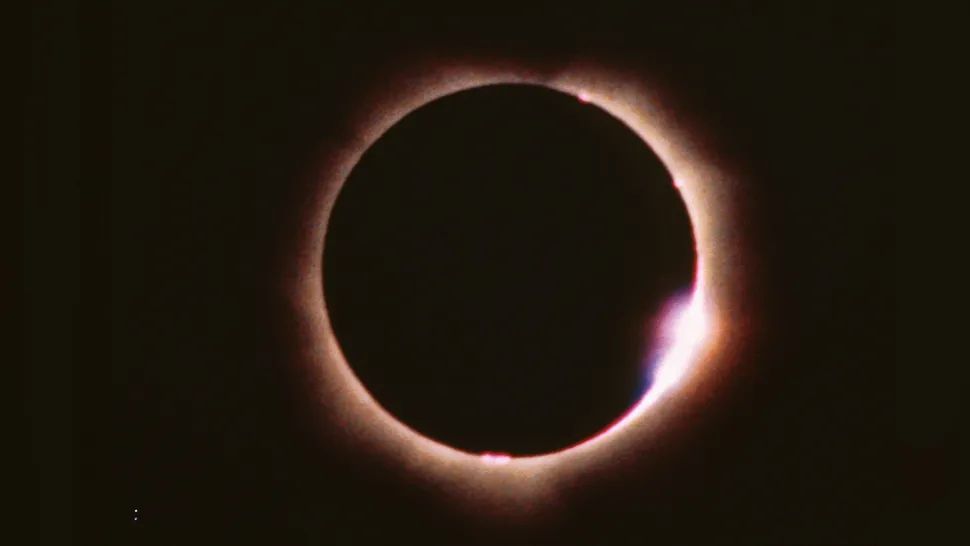
The upcoming total solar eclipse on April 8, 2024, is anticipated to be better than the 2017 eclipse for several reasons. The sun's corona is expected to be more dynamic due to the sun reaching solar maximum, the shadow will be larger and darker, more people will be able to witness it, the duration of totality will be longer, and the eclipse's arrival will be more dramatic as the moon's shadow moves faster across the U.S. The 2024 eclipse is the last total solar eclipse visible from the United States until 2044.

astronomy1 year ago

"2024 Solar Eclipse: Duration and Key Details"

The 2024 solar eclipse is expected to last about two-and-a-half hours, with totality lasting only a few minutes and occurring in a path stretching from Texas to Maine, including a sliver of Michigan. Viewers are advised to spend a couple of hours watching the eclipse, with totality lasting about 4 minutes for those in its path. Tips for watching the eclipse include using proper eyewear, observing shadow bands and Baily's Beads, and being mindful of temperature changes and emotional responses. The next total solar eclipse visible from the contiguous United States will take place in 2044, with the next solar eclipse crossing Michigan's path of totality occurring in 2099.