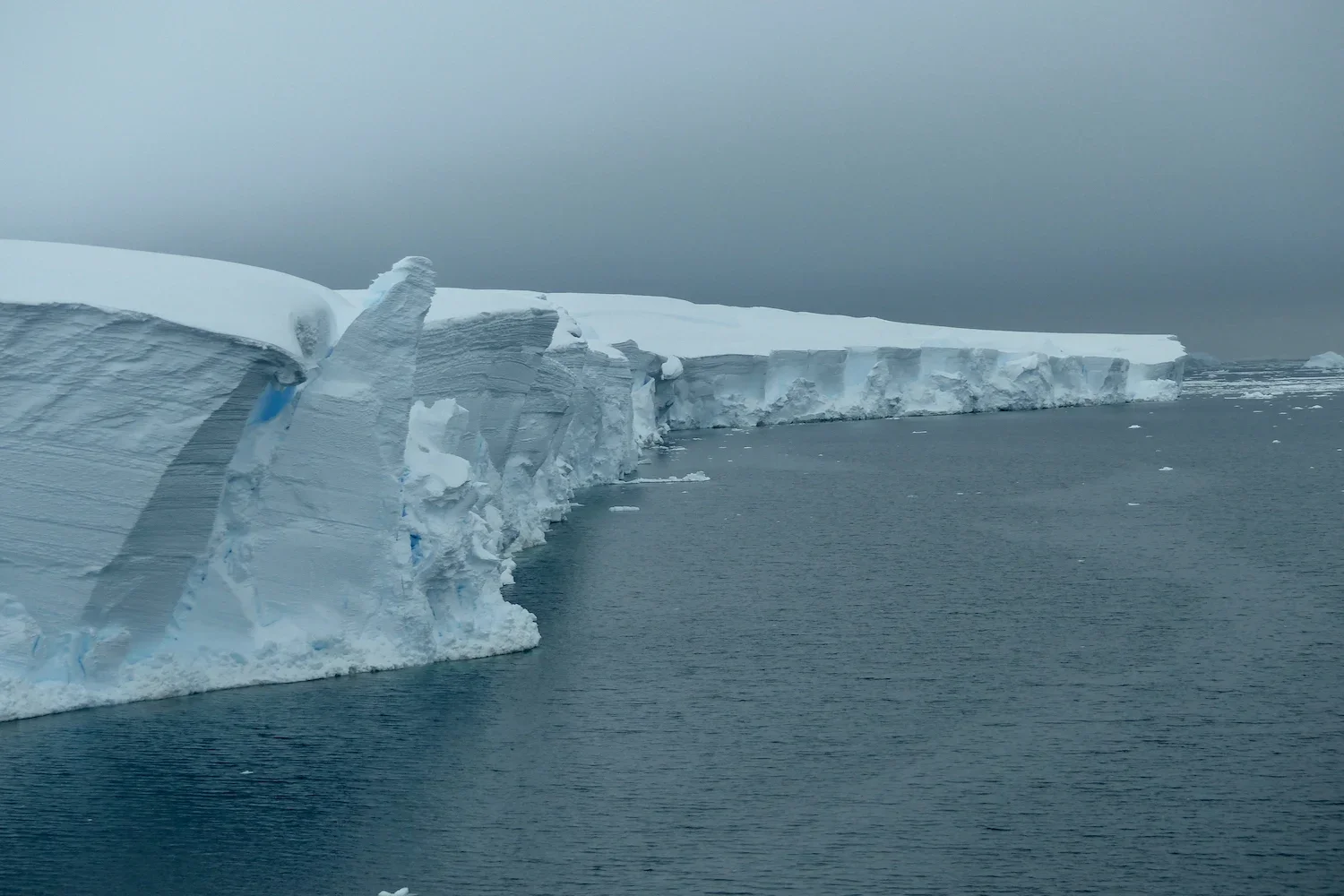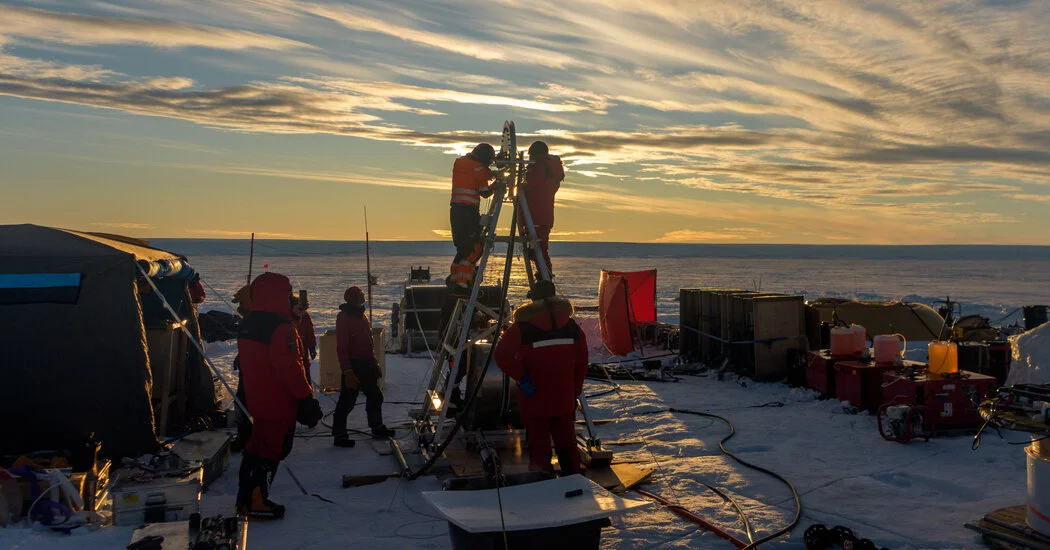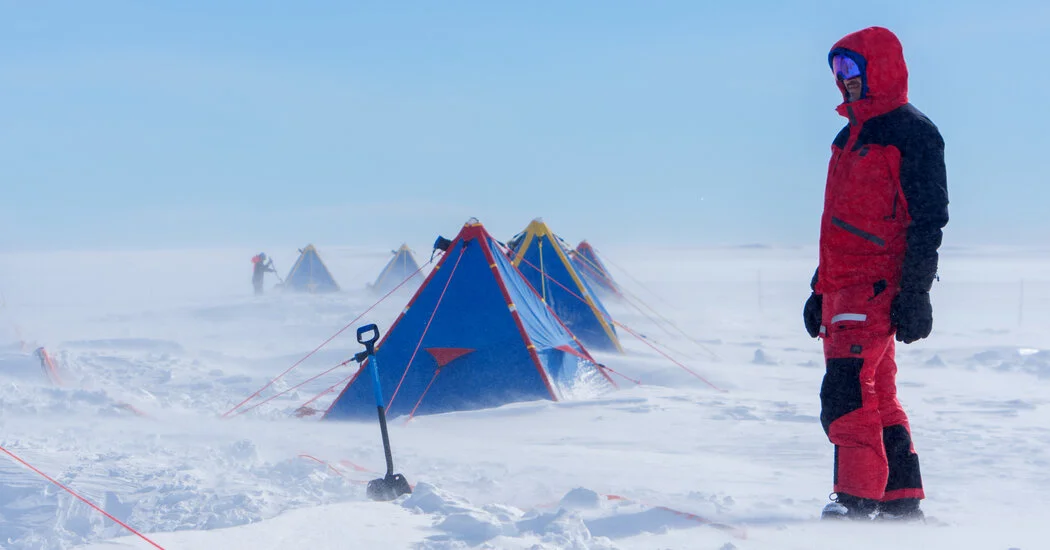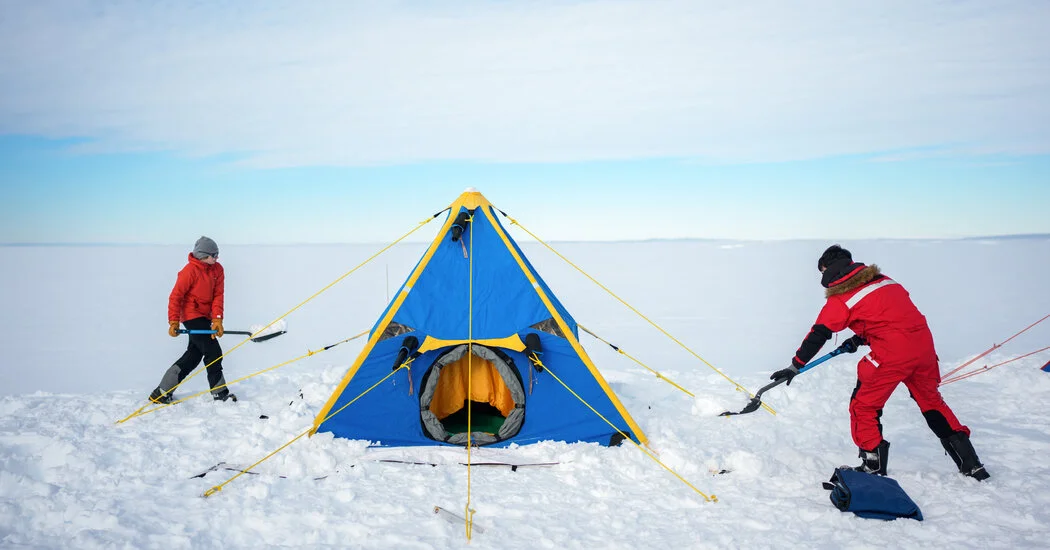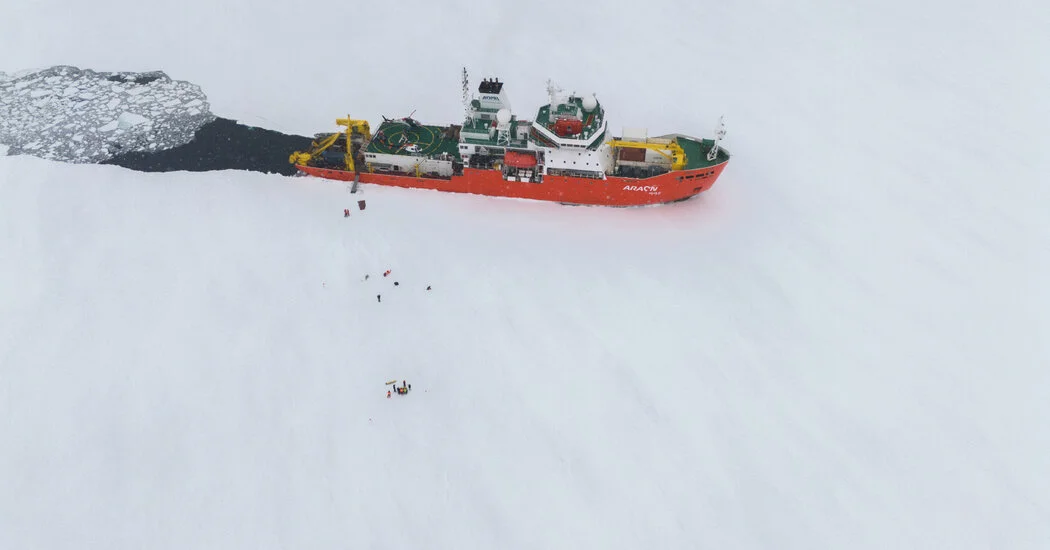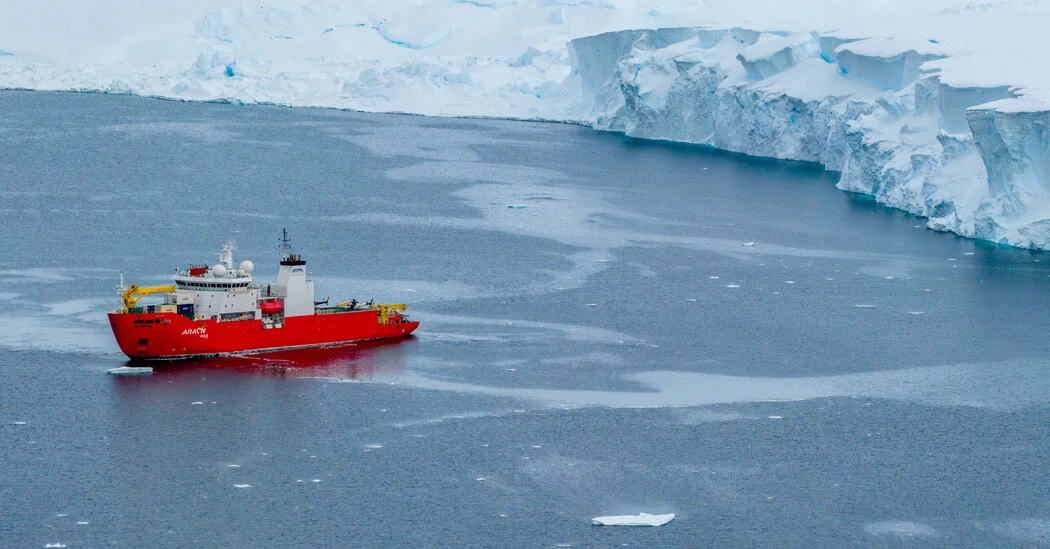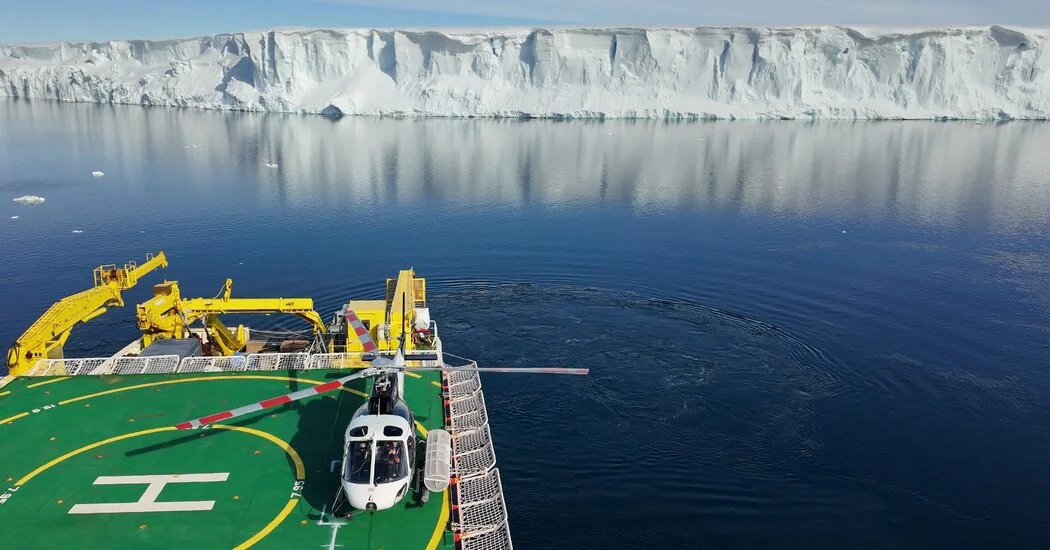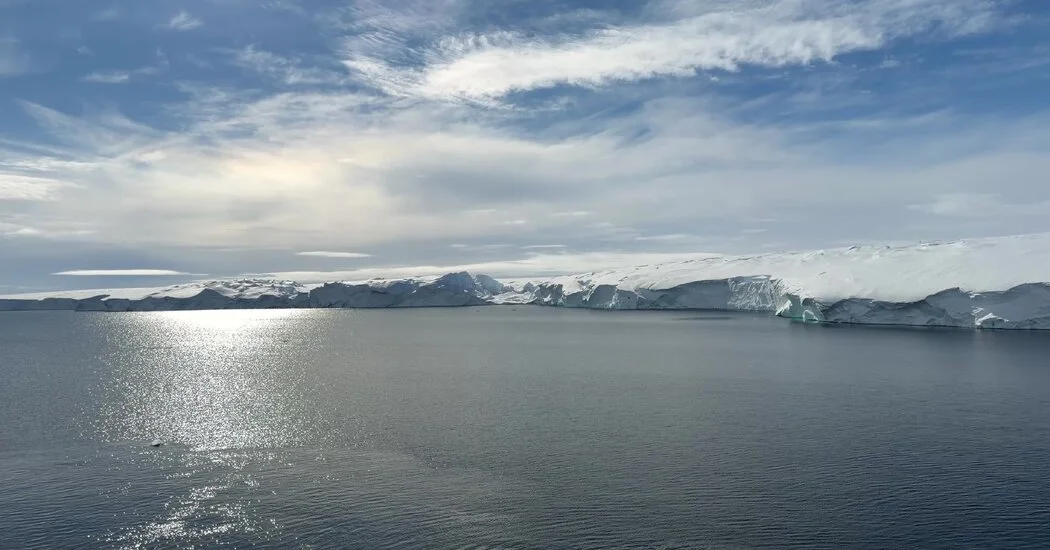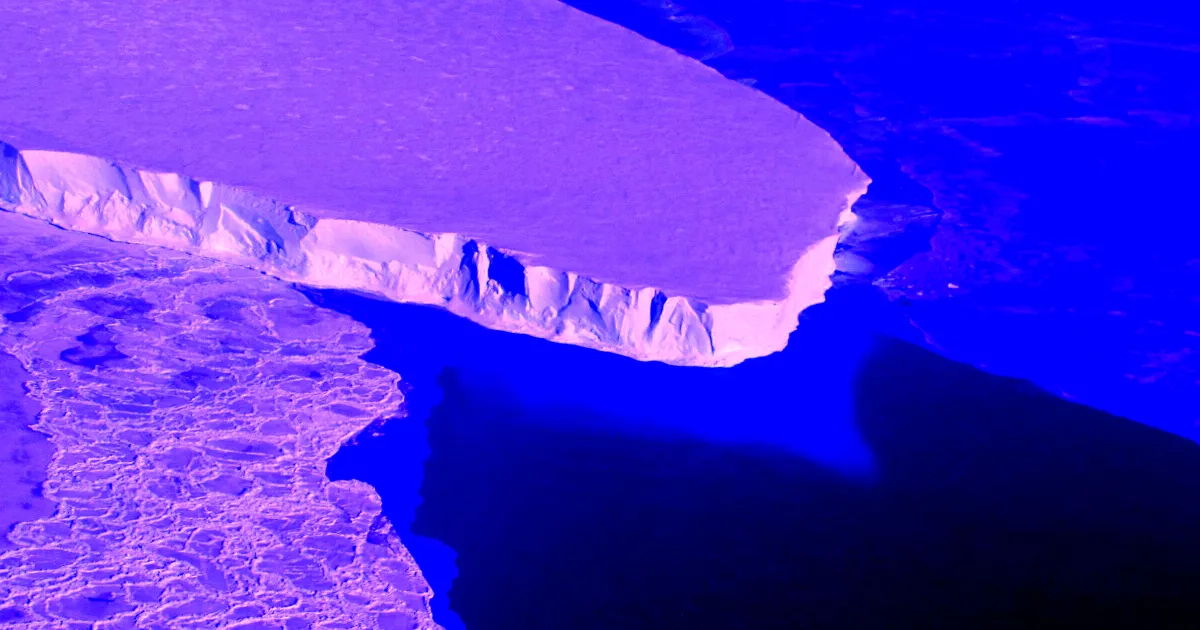
The icebreaker Araon has arrived at the Thwaites Glacier in Antarctica, where it is now surrounded by the rapidly melting glacier, highlighting concerns about climate change and ice loss in the region.
Hundreds of low-frequency glacial earthquakes have been detected in Antarctica, especially near the unstable Thwaites Glacier, indicating increased ice flow and potential risks of collapse that could significantly raise global sea levels, prompting calls for further research into their causes and implications.
Recent research on Antarctica's Thwaites Glacier reveals new insights, suggesting it may not be as doomed as its nickname 'Doomsday Glacier' implies, and emphasizing the importance of reducing carbon emissions to potentially prevent its collapse and mitigate sea level rise.
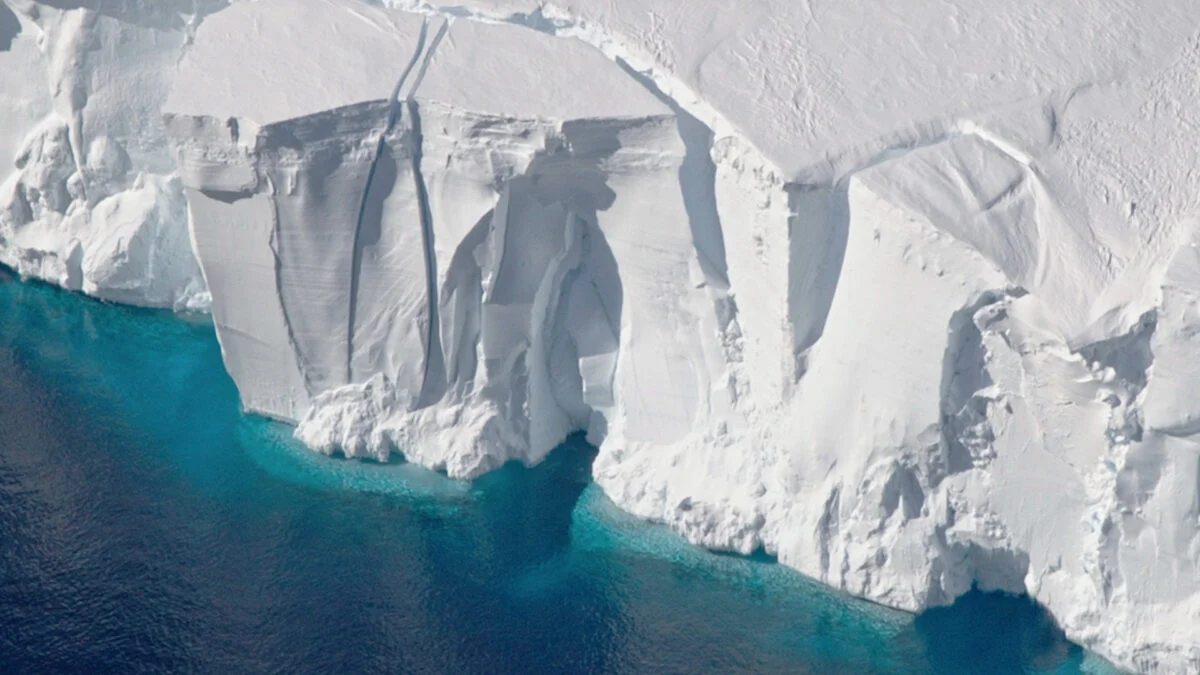
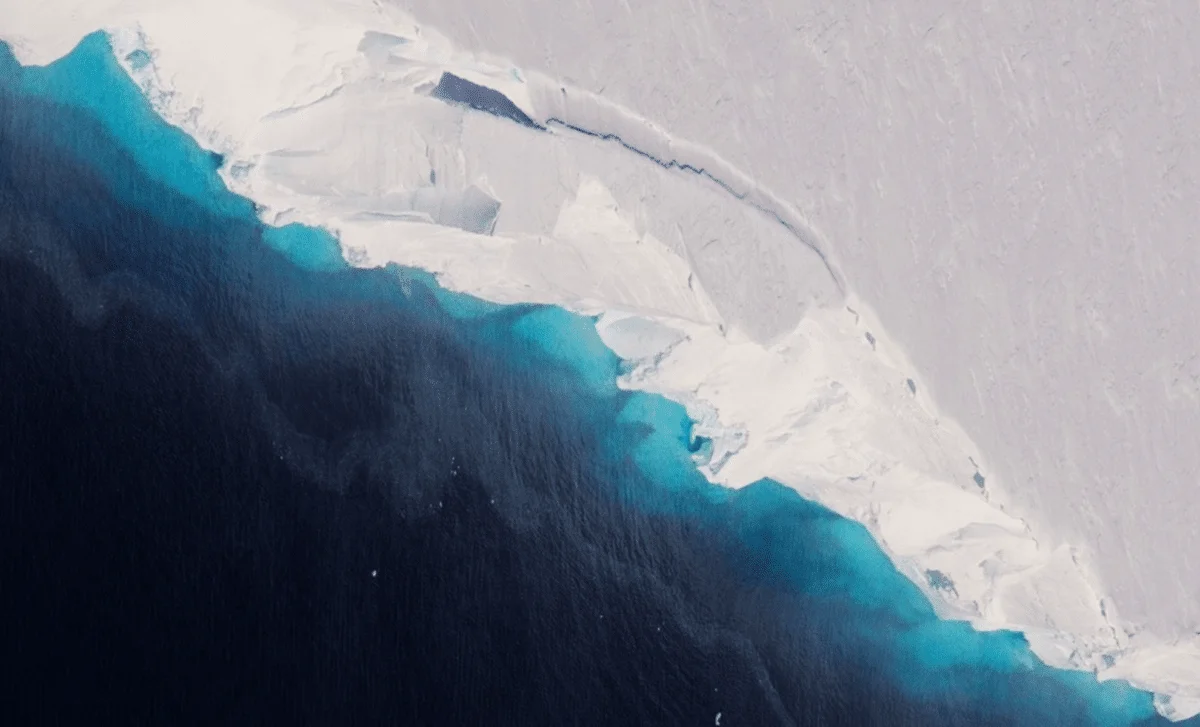
The Thwaites Glacier in Antarctica, known as the 'Doomsday Glacier,' is experiencing accelerated retreat and structural weakening due to cracks and warming ocean waters, which could lead to a potential collapse and up to 11 feet of global sea level rise, posing a significant threat to coastal communities. Scientists warn that climate change is intensifying these processes, and urgent mitigation efforts are needed to delay or prevent catastrophic outcomes.
The Thwaites Glacier in Antarctica, known as the 'Doomsday Glacier,' is experiencing accelerated retreat and structural weakening due to cracks and warming ocean waters, raising concerns that its collapse could trigger up to 11 feet of global sea level rise, with scientists emphasizing the urgent need for climate change mitigation to delay this potential catastrophe.
The Thwaites Glacier in Antarctica, known as the 'Doomsday Glacier,' is experiencing rapid structural weakening due to crack growth, which accelerates ice flow and risks irreversible collapse, potentially raising global sea levels by 65 centimeters. The process involves a feedback loop where cracks lead to faster ice movement, further cracking, and destabilization, with patterns that could threaten other ice shelves as well.
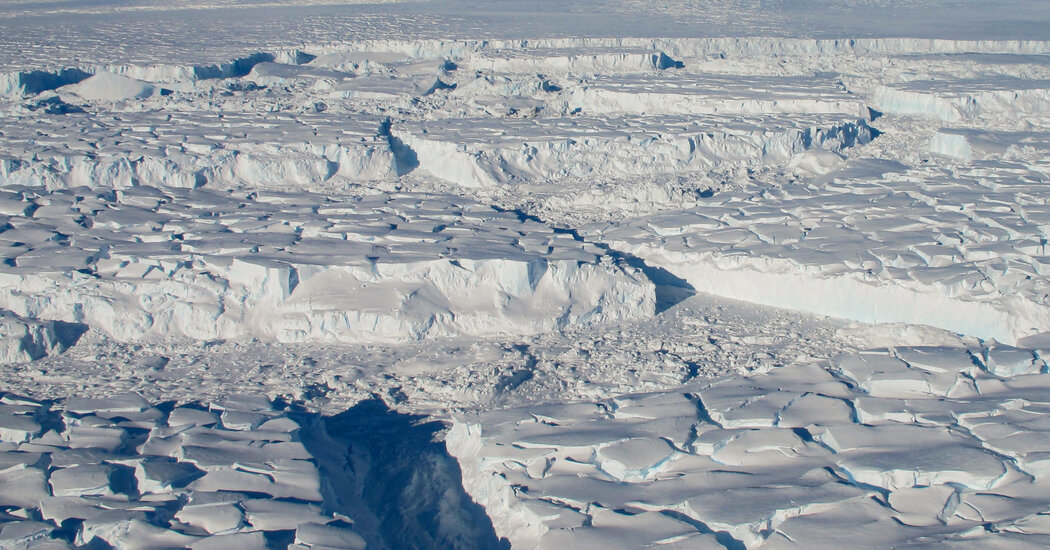
A comprehensive study using 20 years of satellite data reveals that the Thwaites Glacier's Eastern Ice Shelf is rapidly destabilizing due to expanding fractures and a shift in the stabilizing pinning point, creating a self-reinforcing feedback loop that accelerates ice loss and poses a significant threat to global sea levels.
A new study reveals that cracks and fractures in the Thwaites Eastern Ice Shelf, part of the rapidly changing 'Doomsday Glacier' in Antarctica, have been progressively weakening the ice shelf over two decades, leading to accelerated destabilization and potential implications for global sea-level rise.
The Thwaites Glacier in Antarctica, known as the 'Doomsday Glacier,' is showing signs of instability with fractures that could lead to its collapse, potentially causing global sea levels to rise by up to 11 feet. New satellite-based research improves understanding of fracture development, offering better predictions of collapse timing, which could have catastrophic consequences for coastal cities worldwide.
Scientists are studying the rapidly breaking apart Thwaites Glacier in Antarctica, which could significantly raise global sea levels if it collapses. Using new satellite data analysis methods, researchers aim to better predict when and how these ice shelves will fracture, with the goal of understanding and potentially mitigating catastrophic sea level rise.
The Thwaites Glacier, known as the "Doomsday Glacier," poses a significant threat to global sea levels, potentially raising them by over ten feet if it collapses. Scientists are considering geoengineering solutions, such as barriers to block warm water, to slow its melting. However, these measures are seen as temporary fixes rather than solutions to climate change, emphasizing the need for reducing carbon emissions. Studies predict the glacier's complete collapse could occur by 2100 or in the following centuries, with its rapid retreat continuing to accelerate.
The Thwaites Glacier is experiencing accelerated melting as warm water reaches miles inland past its grounding line, contributing to significant ice loss.
A new study reveals that the Thwaites Glacier in Antarctica, known as the "Doomsday Glacier," is melting much faster than previously predicted due to warm seawater eroding its base. This accelerated melting could lead to significant sea-level rise, potentially inundating coastal communities and displacing millions. The glacier's instability poses a severe threat, with projections indicating it could retreat to a deeper basin within 10 to 20 years, further hastening its demise and contributing to a global sea-level rise of up to 10 feet.
A new study using satellite data reveals that Antarctica's Thwaites Glacier is melting faster than previously thought due to warm seawater intrusions, which could significantly impact global sea level rise projections.
New satellite data reveals that Antarctica's Thwaites Glacier is melting faster than previously thought due to warm seawater intrusions, which could significantly impact global sea level rise projections.