JWST uncovers a sulfur-rich lava-ocean exoplanet, redefining planet types
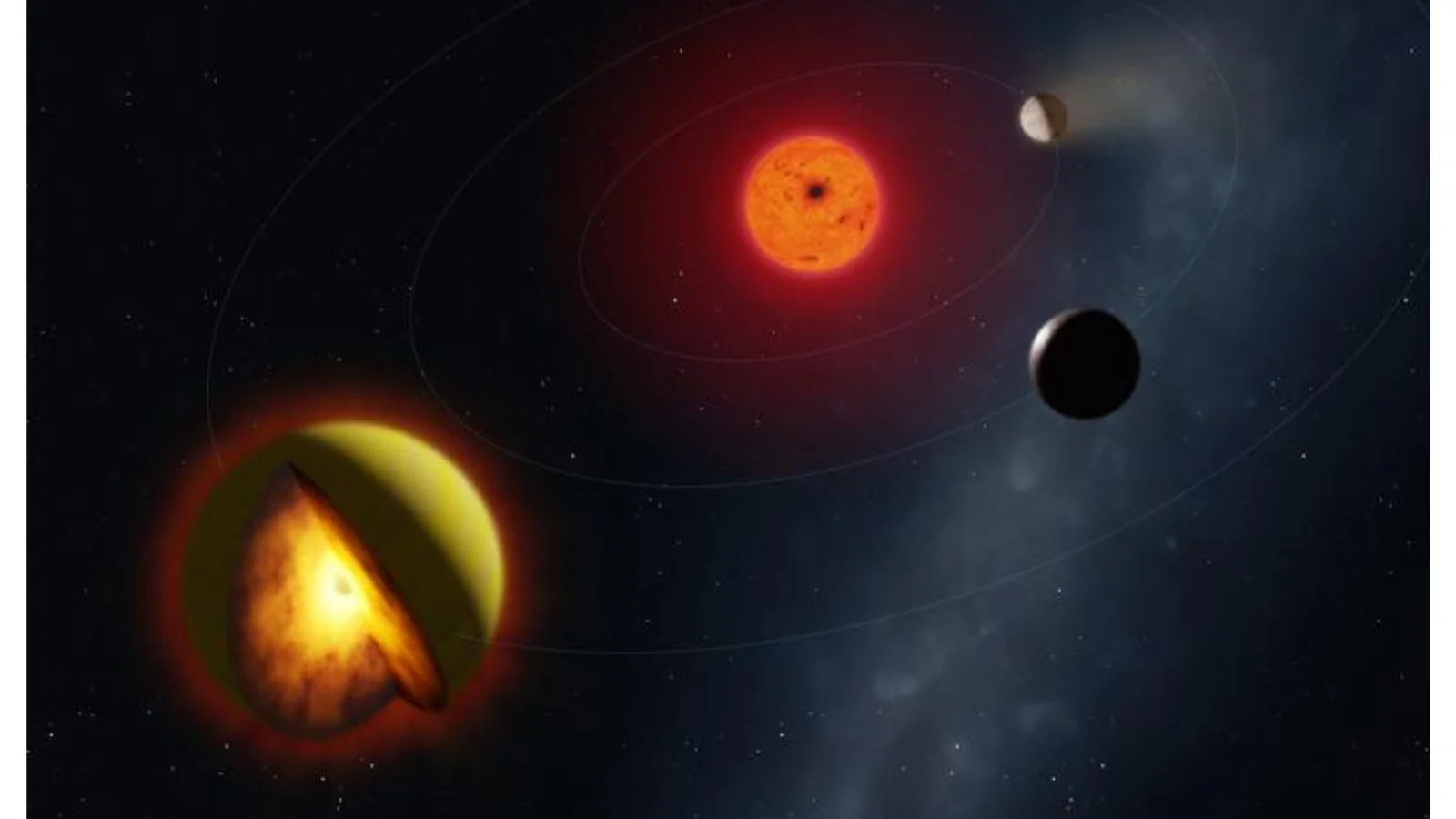
Space-based and ground observations reveal L 98-59 d as a 1.6× Earth's size exoplanet with a global magma ocean and a sulfur-rich atmosphere likely dominated by hydrogen sulfide and sulfur dioxide, suggesting it formed from a larger sub-Neptune and cooled over billions of years. This lava-world represents a new class of planets and highlights the surprising diversity of worlds beyond our solar system.