
JWST uncovers a sulfur-rich lava-ocean exoplanet, redefining planet types
TL;DR Summary
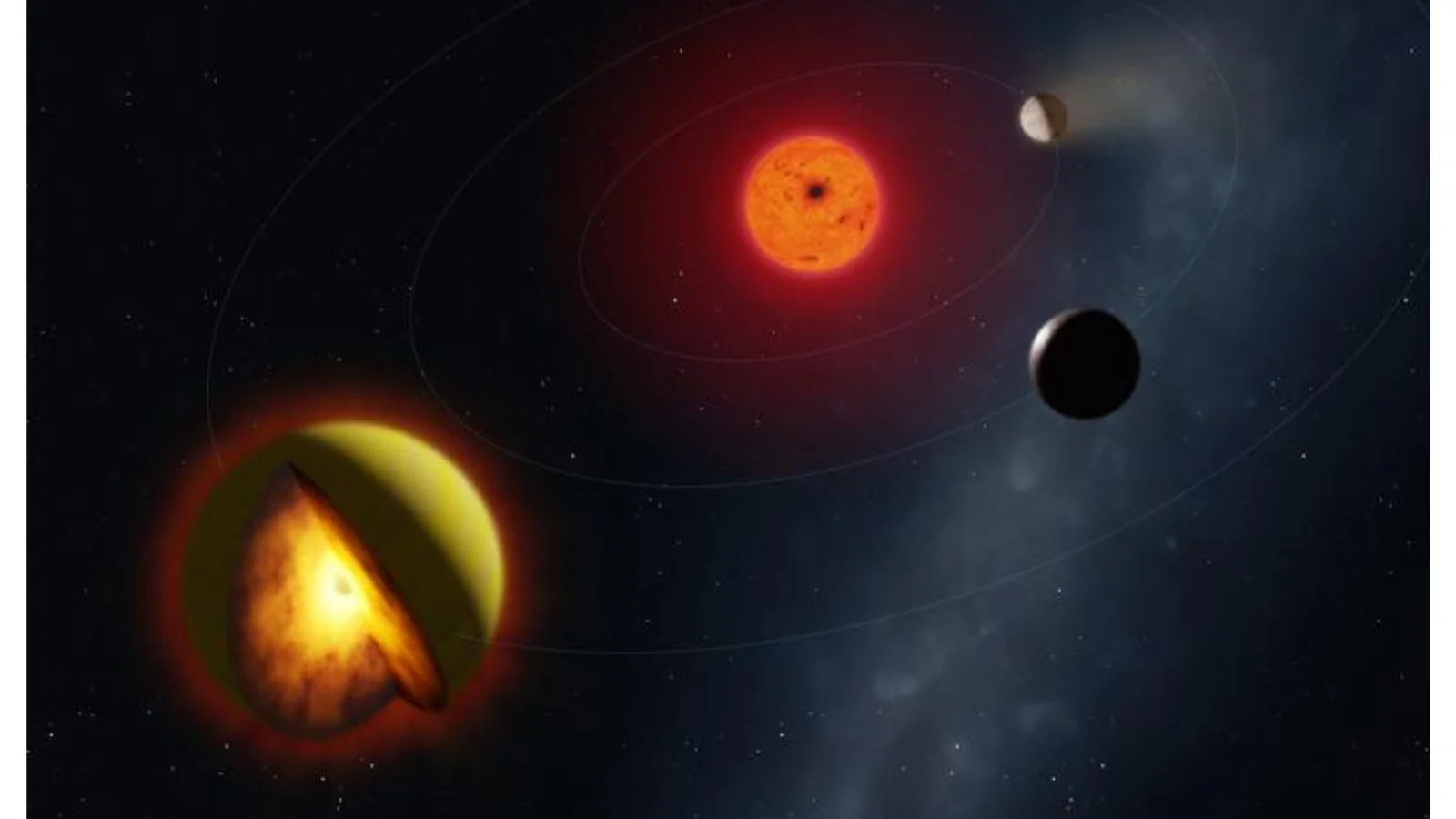
Space-based and ground observations reveal L 98-59 d as a 1.6× Earth's size exoplanet with a global magma ocean and a sulfur-rich atmosphere likely dominated by hydrogen sulfide and sulfur dioxide, suggesting it formed from a larger sub-Neptune and cooled over billions of years. This lava-world represents a new class of planets and highlights the surprising diversity of worlds beyond our solar system.
Topics:science#astronomy#exoplanets#james-webb-space-telescope#l-98-59-d#magma-ocean#sulfur-compounds
- Astronomers discover a new type of planet that probably smells like rotten eggs Space
- ‘A molten, mushy state’: scientists may have found a new type of liquid planet The Guardian
- Hellish new planet identified beyond solar system Financial Times
- Volatile-rich evolution of molten super-Earth L 98-59 d Nature
- Astronomers discover what may be a new type of planet abcnews.com
Reading Insights
Total Reads
1
Unique Readers
5
Time Saved
54 min
vs 54 min read
Condensed
99%
10,778 → 63 words
Want the full story? Read the original article
Read on Space