
Tag

Astrosphere

All articles tagged with #astrosphere

Chandra captures first X-ray image of a sun-like star’s wind-driven bubble
astronomy3 days ago

Chandra captures first X-ray image of a sun-like star’s wind-driven bubble

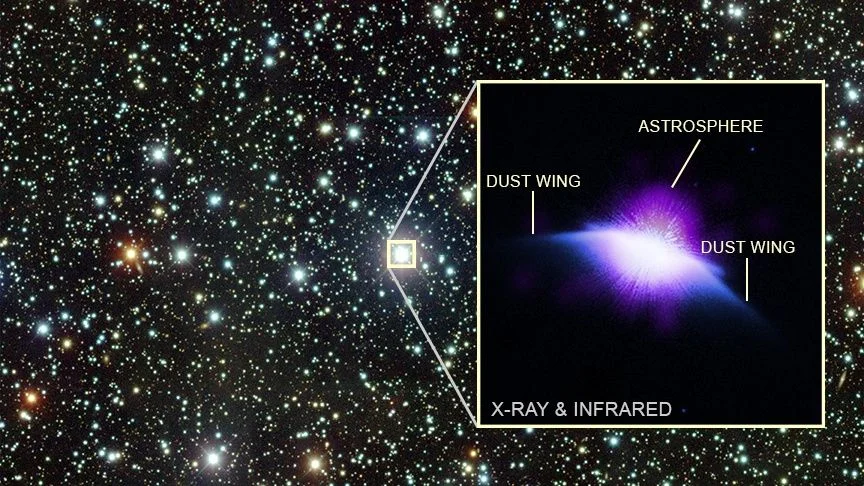
Astronomers using NASA’s Chandra X-ray Observatory imaged the faint X-ray glow around HD 61005, a young sun‑like star about 120 light‑years away, revealing a wind‑blown bubble called an astrosphere—the first X-ray evidence of such a bubble around a star similar to the Sun. HD 61005 is ~100 million years old, and its stellar wind is roughly three times faster and 25 times denser than the Sun’s today, inflating a brighter astrosphere in a dense interstellar environment. The finding offers a rare glimpse into the early solar system’s conditions and how stellar winds shape planetary environments.
Chandra Spots Sun-like Star’s Astrosphere, Echoing Early Solar Wind
space4 days ago

Chandra Spots Sun-like Star’s Astrosphere, Echoing Early Solar Wind

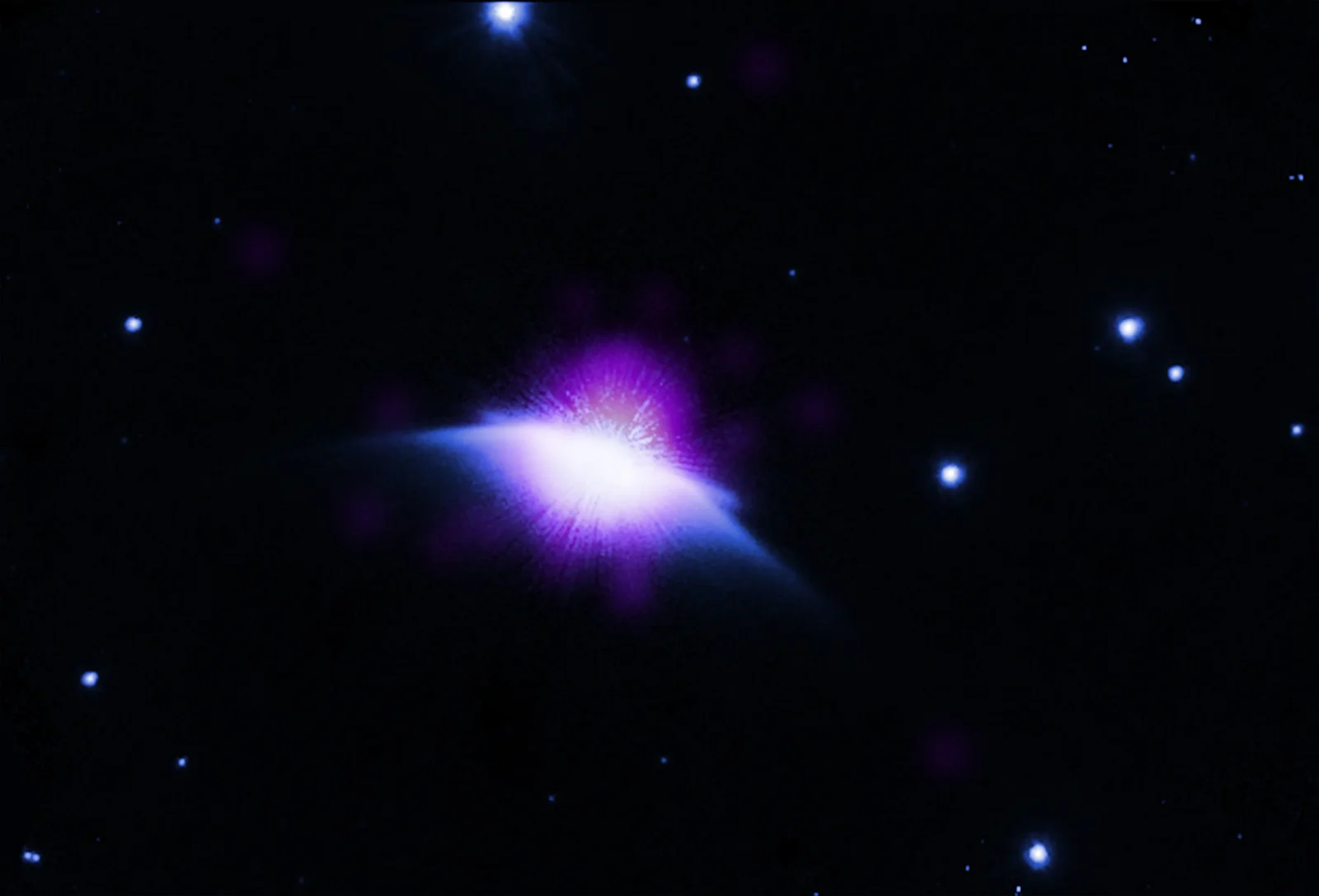
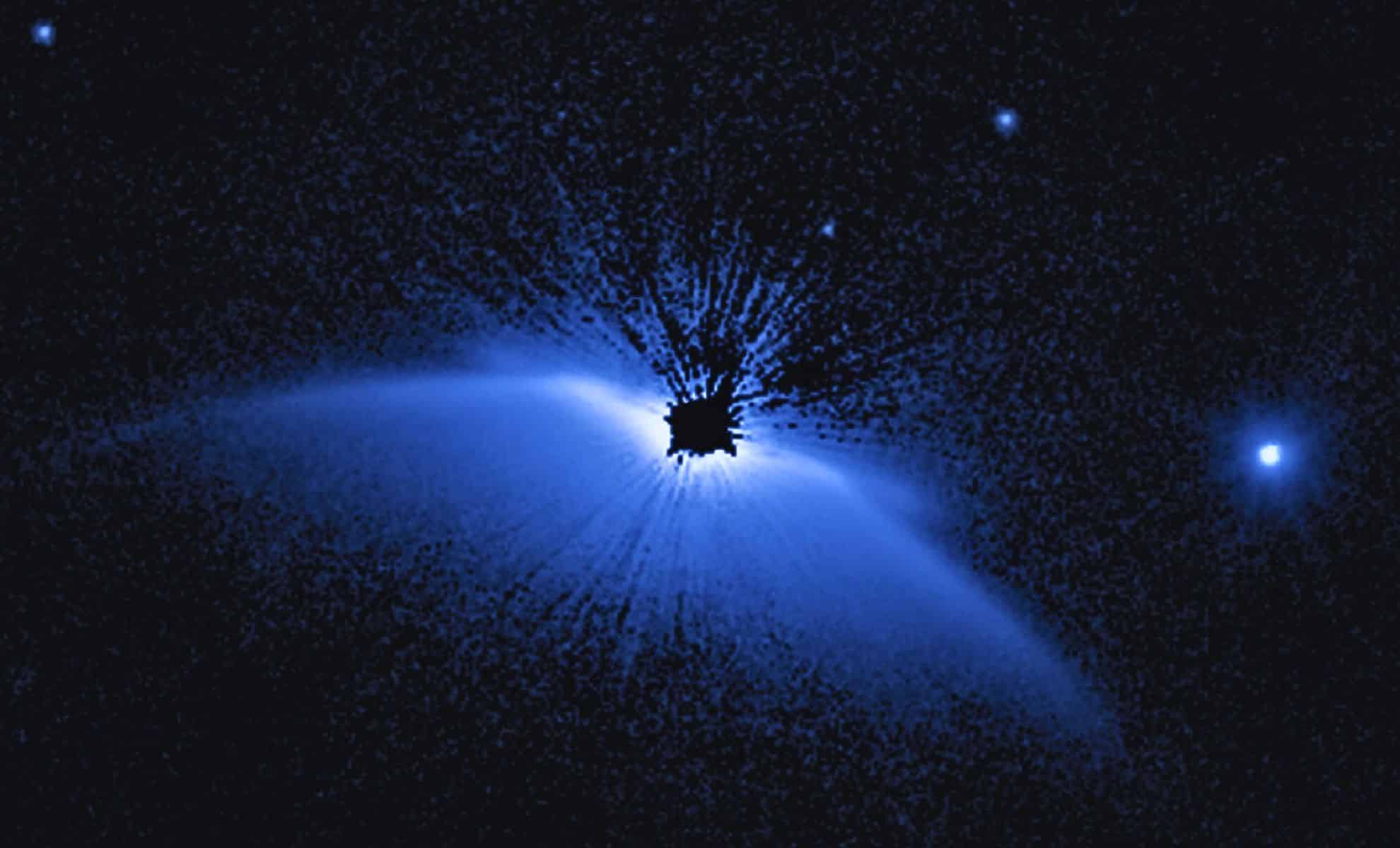
NASA’s Chandra X-ray Observatory detected an astrosphere around HD 61005, the first image of a Sun-like star’s wind-blown bubble. Located about 120 light-years away and ~100 million years old, HD 61005’s wind is ~3× faster and ~25× denser than the young Sun’s, creating a bubble roughly 200 AU across as it moves through surrounding interstellar gas. The star, nicknamed the “Moth” for its dusty infrared wings, offers a glimpse into the Sun’s past and how its heliosphere may have looked billions of years ago.

First Astrosphere Found Around Sunlike Star by Astronomers
science1 year ago

First Astrosphere Found Around Sunlike Star by Astronomers

Astronomers have detected the first-ever astrosphere around a sunlike star, HD 61005, known as "The Moth." This discovery, made using the Chandra X-ray Observatory, reveals a bubble of hot gas created by the star's stellar wind, extending far beyond the Sun's heliosphere. The finding provides insights into the early conditions of our Sun and the role of astrospheres in shielding planets from cosmic rays, enhancing our understanding of potential life-hosting environments around similar stars.