A new study suggests the universe may end much sooner than previously thought, estimating a timeline of around 10^78 years due to quantum decay processes affecting dense stellar remnants like white dwarfs and neutron stars, which slowly lose mass through Hawking radiation, leading to a gradual cosmic fade-out.
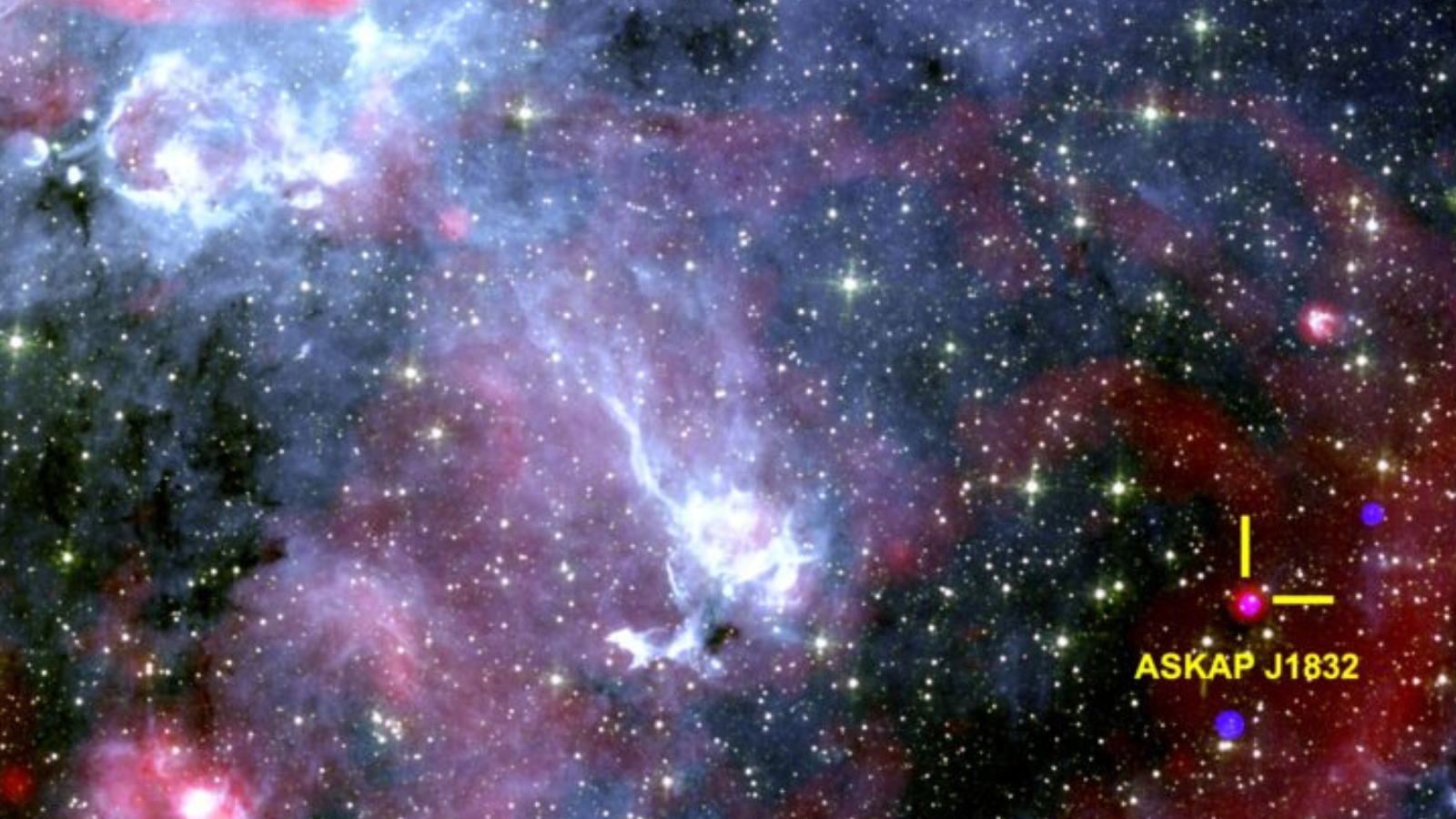
Astronomers have discovered a mysterious cosmic object, ASKAP J1832-0911, located within the Milky Way, that emits both X-ray and radio wave bursts every 44 minutes, a phenomenon not previously observed in such objects, possibly indicating a new type of stellar remnant like a magnetar or white dwarf pair.
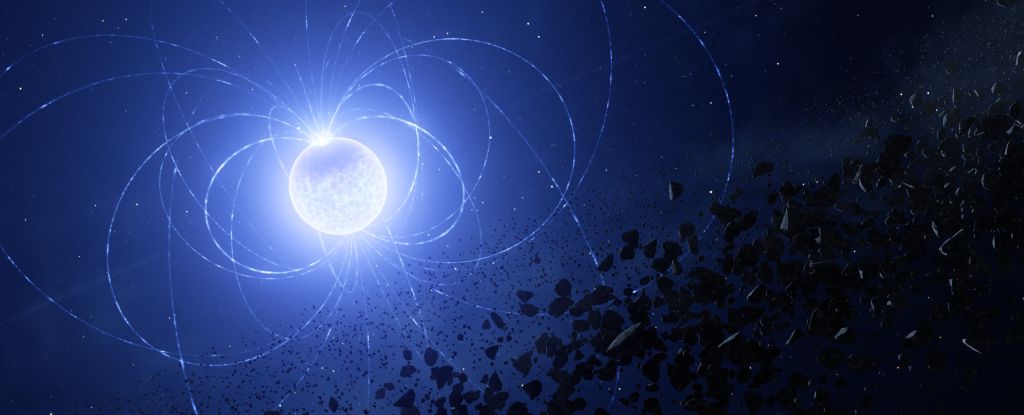
Astronomers have discovered a scar of vaporized metal on a white dwarf star's surface, revealing the remnants of a planet that was devoured by the star. This discovery suggests that the star's magnetic field plays a key role in the process of planetary consumption, funneling and holding the material in place. The findings provide new insights into how white dwarfs cannibalize pieces of their planetary systems and could lead to a better understanding of the fate of planets orbiting dying stars.
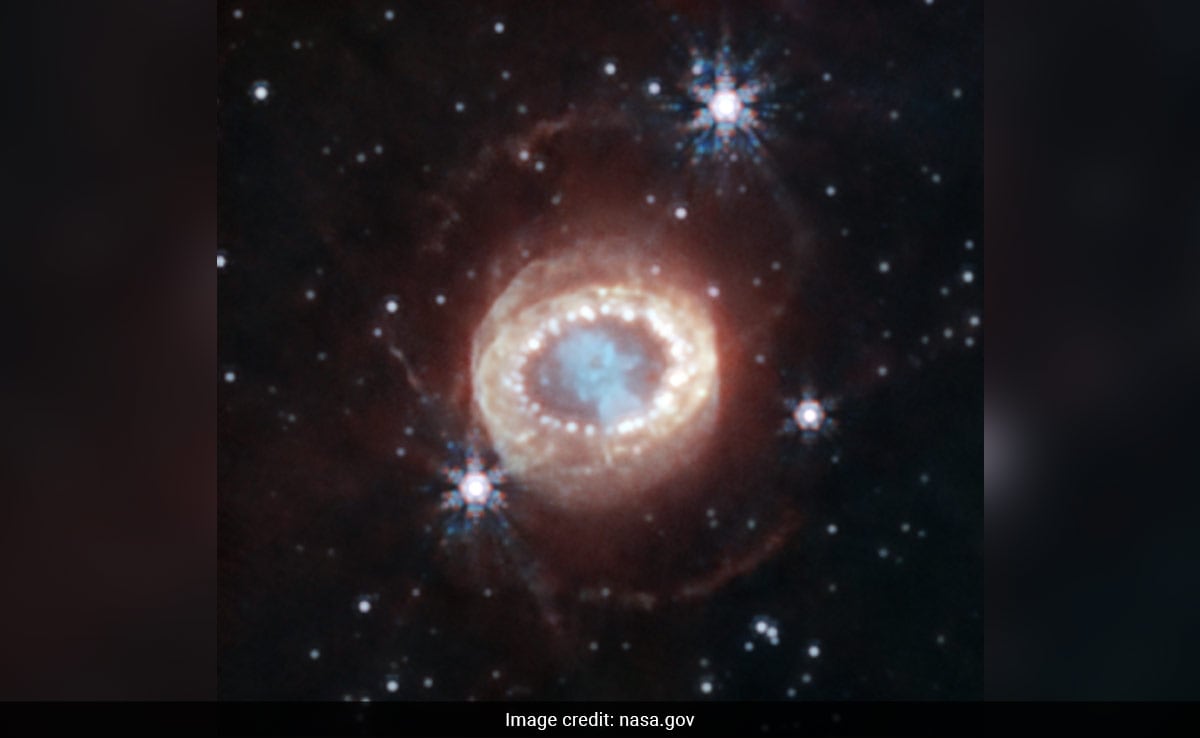
The James Webb Space Telescope (JWST) has captured a stunning image of the expanding remains of a supernova that exploded 36 years ago. The image, taken by the observatory's Near Infrared Camera (NIRCam), reveals intricate details of the supernova remnant, including a central structure resembling a keyhole. The image shows clumpy gas and dust ejected by the explosion, with a dense dust cloud shaping a dark "hole" in the keyhole. The observation of SN 1987A, located 168,000 light-years away, provides valuable insights into the development of supernovae and their remnants. The Webb telescope will continue to study the supernova over time, collaborating with other observatories to unravel the mysteries surrounding this legendary event.
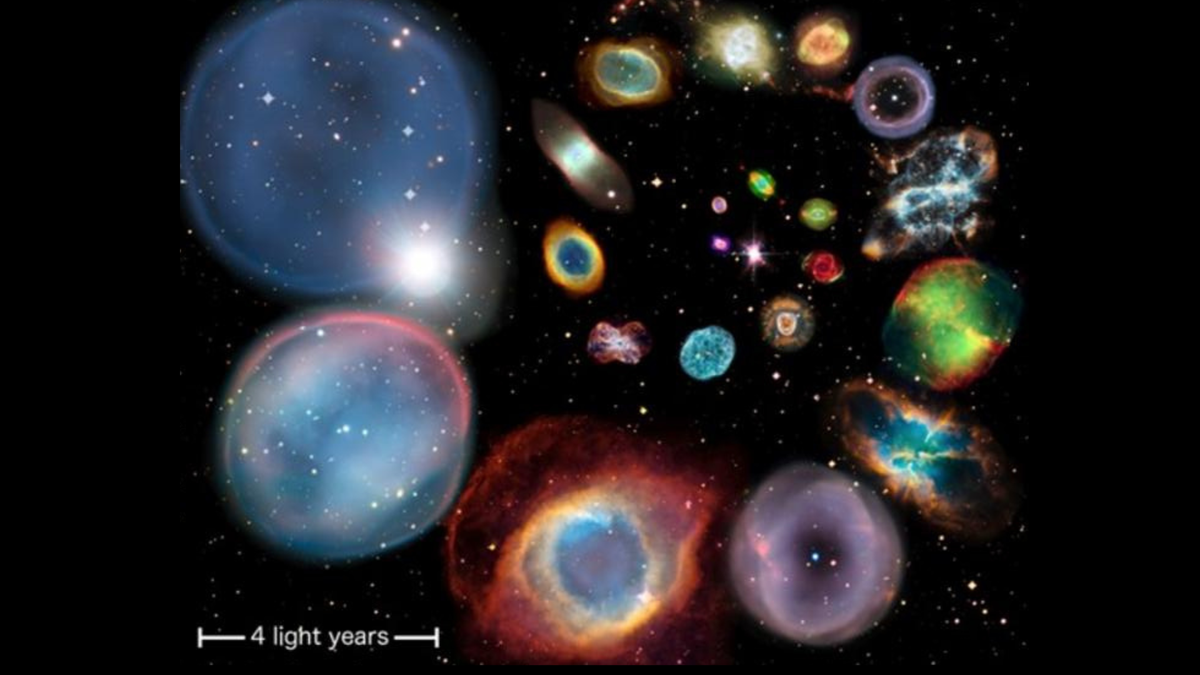
Scientists have discovered that the alignment of planetary nebulas in the galactic bulge at the center of the Milky Way is only present in nebulas with a close stellar companion. This suggests that the alignment is created by the rapid orbital motion of the companion star, which may even end up orbiting inside the remains of the main star. The findings deepen our understanding of the dynamics and evolution of the Milky Way's bulge region and provide insights into the formation of close binary systems.
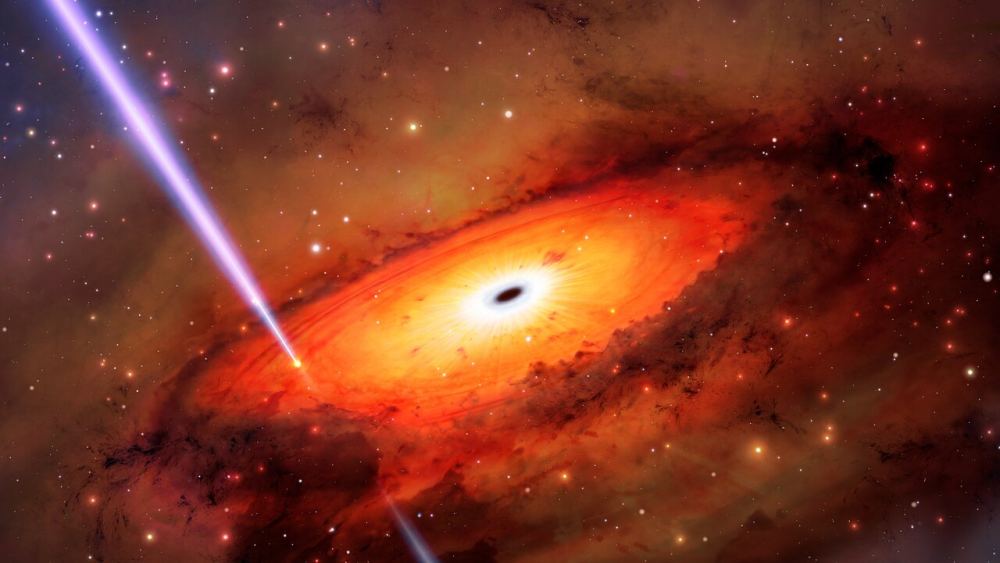
Astronomers have discovered a new way for stars to meet their demise by colliding with each other in the crowded heart of an ancient galaxy, resulting in a long-duration gamma-ray burst visible across billions of light-years. The event, called GRB 191019A, was caused by the merger of two compact objects, likely stellar remnants, in close proximity to the central supermassive black hole. This discovery could help answer questions about how stars die and what unexpected sources might create gravitational waves. Astronomers hope to find more of these events and match them with corresponding gravitational-wave detections using current and upcoming observatories.
New 3D computer simulations by Northwestern University-led astrophysicists suggest that intermediate-mass black holes, if they exist, devour wayward stars like messy toddlers, taking a few bites and then flinging the remains across the galaxy. The simulations also provide astronomers with new clues to help pinpoint these hidden giants within our night sky. Intermediate-mass black holes are about 10 to 10,000 times more massive than stellar remnant black holes but not nearly as massive as supermassive black holes.