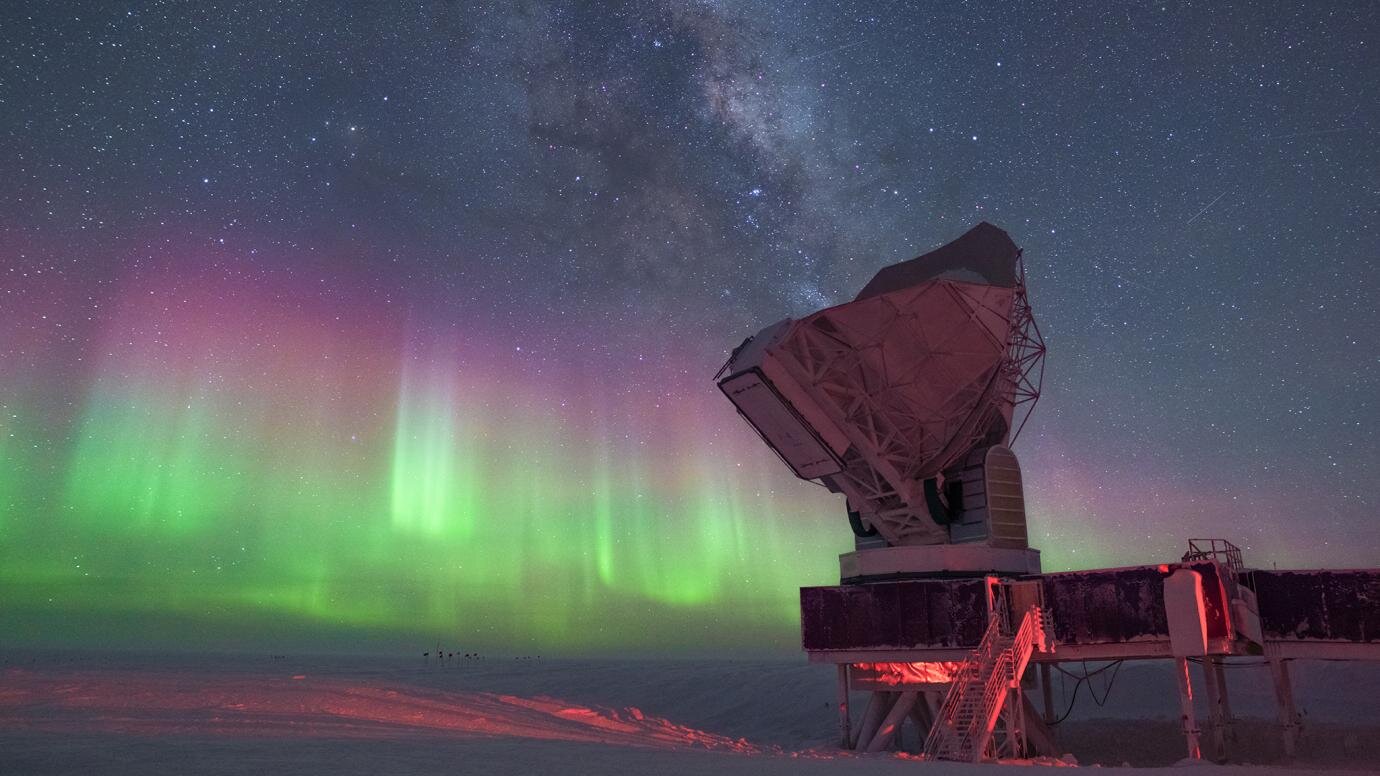
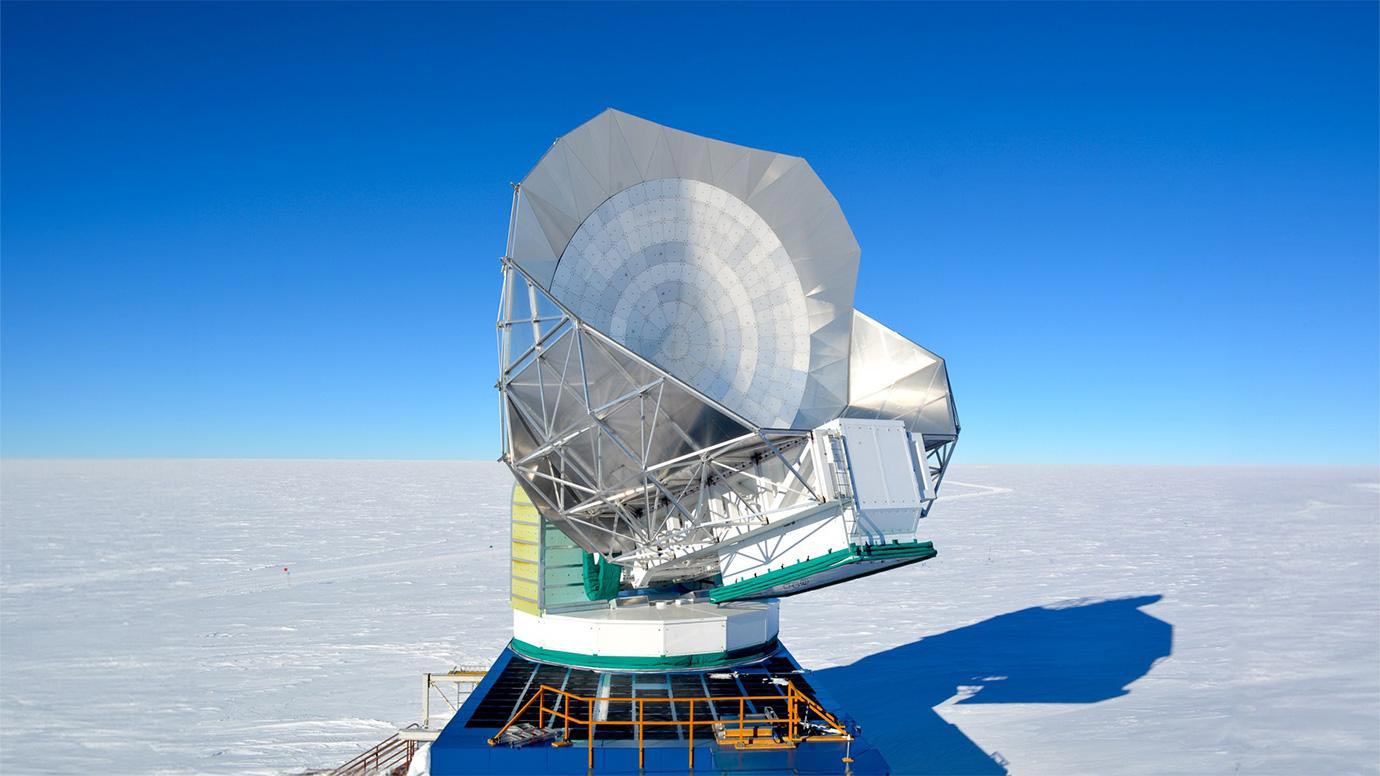
The South Pole Telescope in Antarctica, a crucial tool for studying the early universe and cosmic phenomena, is highlighted under a colorful night sky, emphasizing its role in advancing our understanding of the universe's origins and structure.
A new study using data from the South Pole Telescope supports the standard cosmological model by analyzing the Cosmic Microwave Background (CMB) and its polarization. This research, conducted by UC Davis and the University of Chicago, offers new insights into the 'Hubble tension,' a discrepancy in measuring the universe's expansion rate. The study's findings align with predictions from the CMB intensity maps, challenging measurements from supernovae observations and providing a new method to calculate the Hubble constant.
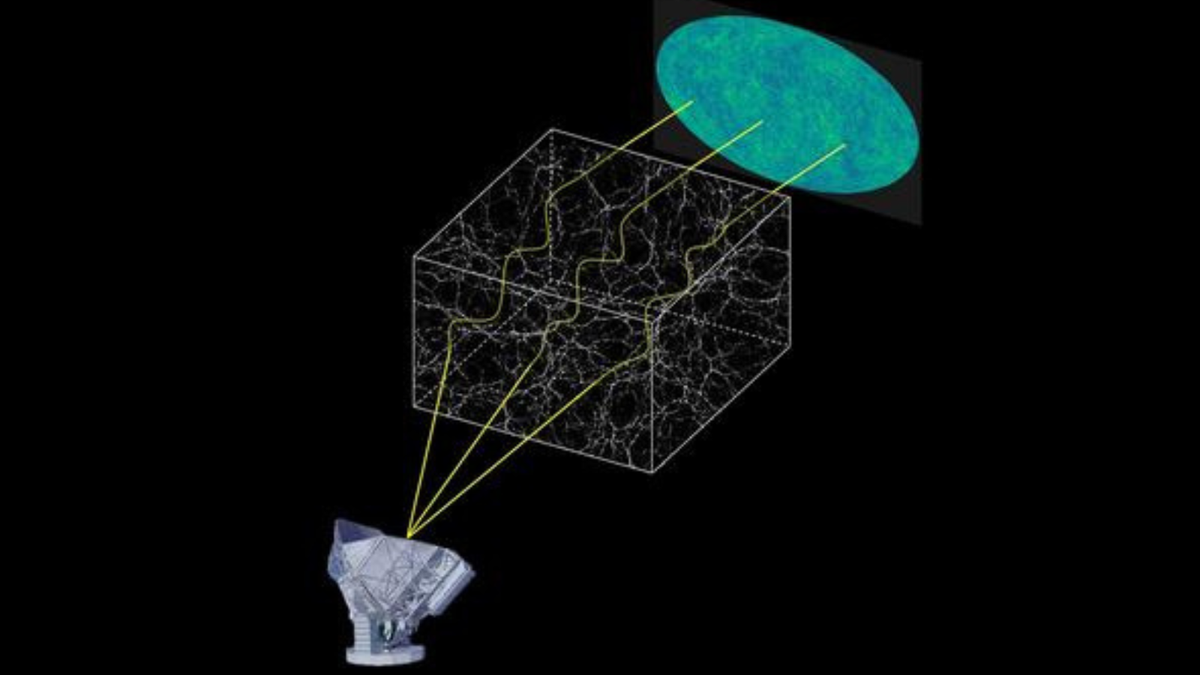
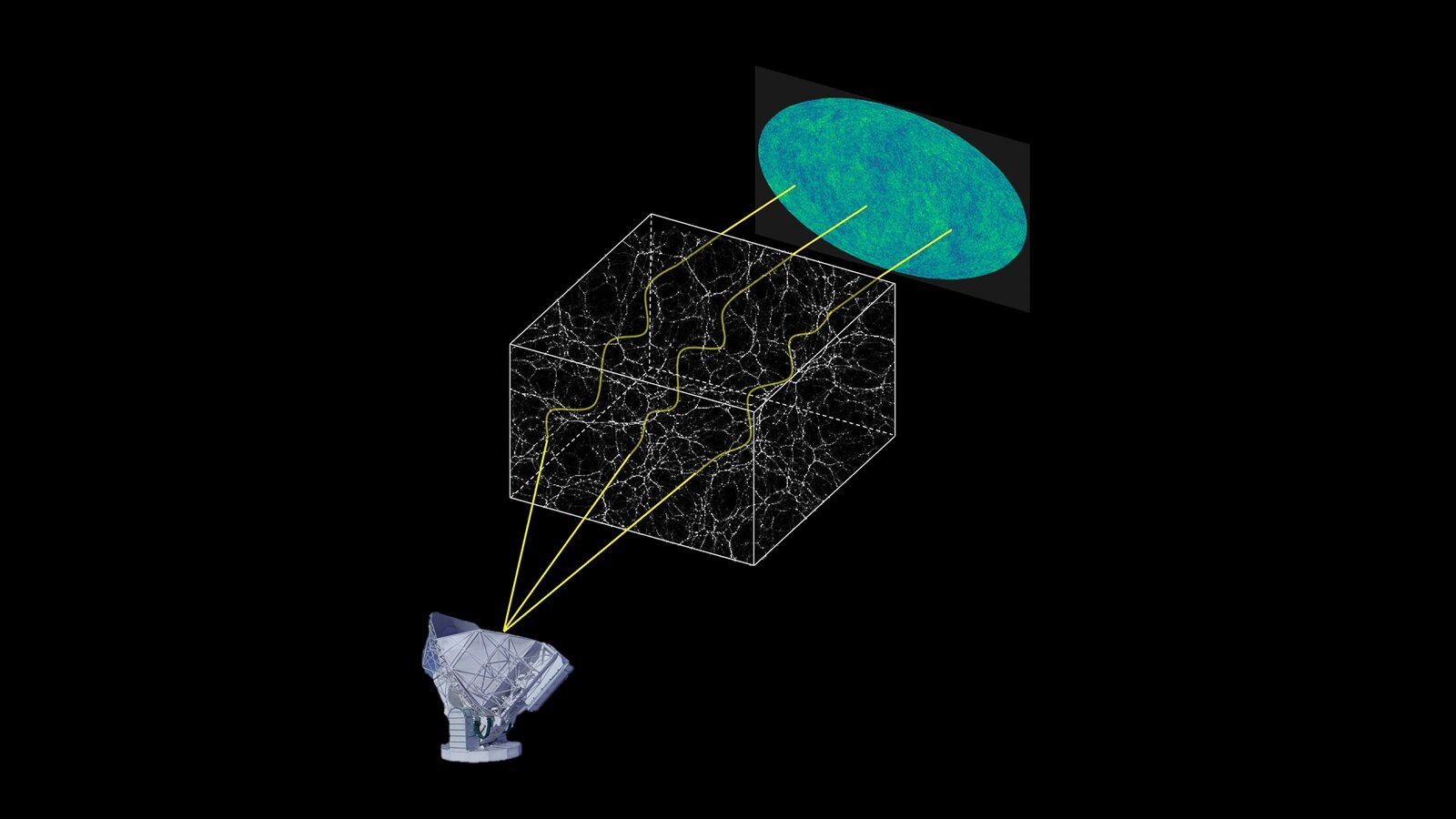
The South Pole Telescope's upgraded camera, SPT-3G, has captured initial data from the Cosmic Microwave Background (CMB), providing a potential "treasure map" for understanding dark matter. By using Einstein's theory of gravity, general relativity, scientists can interpret the CMB's variations to reveal the distribution of dark matter. The telescope's remote location and stable atmosphere have allowed for competitive measurements, hinting at future discoveries that could shed light on the nature of dark energy and the universe's accelerating expansion.
Scientists at the South Pole Telescope in Antarctica have analyzed initial data from their upgraded camera, SPT-3G, which captures remnant light from the universe's early formation. Their findings, published in Physical Review D, include the first measurements of gravitational lensing of the cosmic microwave background, offering insights into the early universe and dark matter. The research, led in part by Argonne National Laboratory, suggests that our current understanding of gravity holds true for large scales and will aid in probing cosmic inflation. The study hints at even more powerful future insights about the nature of our universe.
Scientists at the South Pole Telescope have analyzed initial data from their upgraded SPT-3G camera, publishing details in the journal Physical Review D. The camera, equipped with 16,000 detectors, aims to measure the cosmic microwave background (CMB) and has already provided competitive gravitational lensing measurements, shedding light on the early universe and dark matter. While the data contains contamination, the results strengthen our understanding of gravity and matter structures, with future observations expected to probe cosmic inflation and raise new questions about the universe's unseen components.