Tag

Solar Radiation Management

All articles tagged with #solar radiation management

science-and-technology2 months ago

Elon Musk Proposes Solar Shade to Combat Climate Change

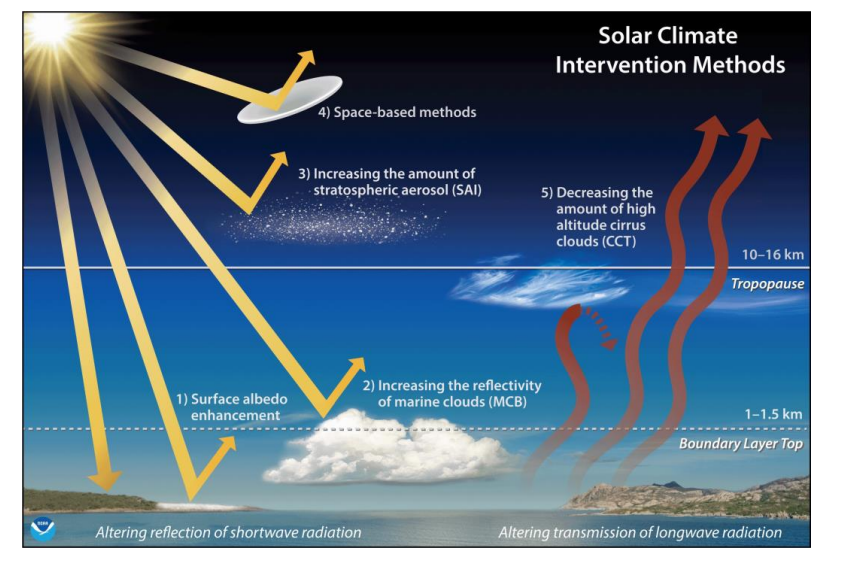
Elon Musk has proposed using satellite-based solar radiation management to combat climate change, a highly controversial and currently impractical geoengineering approach that involves deploying large satellite constellations to control sunlight reaching Earth. Experts warn of the enormous costs, technical challenges, and potential unintended consequences of such a plan, and Musk has not indicated any concrete plans for SpaceX to pursue this technology. Nonetheless, his interest may stimulate further debate and innovation in the field of climate geoengineering.

climate-change1 year ago

"Unconventional Climate Solutions: Scientists' Risky Experiments and Desperate Measures"

Scientists are resorting to once-unthinkable techniques such as dumping chemicals in the ocean and spraying saltwater into clouds in a desperate attempt to cool the planet as global efforts to check greenhouse gas emissions are failing. These geoengineering approaches were once considered taboo but are now being tested outdoors with taxpayer funds and private investments. However, there are concerns about the short and long term risks, including unintended consequences and the potential for massive spending without guaranteed success.

science-and-technology1 year ago

"Proposed Giant Space Umbrella to Cool Earth's Climate"

Scientists at Technion-Israel Institute of Technology are proposing the development of a massive umbrella-like shade the size of Argentina to block the sun's rays and mitigate the effects of global warming on Earth. The one-million-square-mile shade, to be positioned nine million miles from Earth, could potentially reduce the Earth's temperature by 2.7 degrees Fahrenheit within two years. While the project is ambitious, critics have raised concerns about its incredible cost and potential risks, suggesting that funds could be better allocated to reducing emissions and removing carbon dioxide from the atmosphere.

science-and-technology2 years ago

"Orbital 'Sunshade': A Promising Solution to Combat Climate Change"

The Planetary Sunshade Foundation is advocating for the construction of a space-based sunshade to combat climate change. The sunshade would be installed at the Sun-Earth Lagrange-1 point and would reflect sunlight back into space, reducing the trapping of heat in the atmosphere. The foundation believes that a sunshade could be a crucial component of global efforts to address climate change, alongside emissions reduction and carbon dioxide removal. While there are uncertainties and governance challenges associated with solar radiation management techniques, the foundation argues that the sunshade has many advantages and deserves investment.

science-and-technology2 years ago

"Orbital 'Sunshade': A Promising Solution to Combat Climate Change"

The Planetary Sunshade Foundation is advocating for the construction of a space-based sunshade to combat climate change. The sunshade, installed at the Sun-Earth Lagrange-1 point, would reflect sunlight back into space, reducing the trapping of heat in the atmosphere. The foundation believes that the construction of a Planetary Sunshade is feasible, utilizing existing solar sail technology and advancements in space launch systems. While some express concerns about the risks and governance challenges of solar radiation modification, proponents argue that it should be considered as part of global efforts to address climate change.

climate-change2 years ago

Antarctic Sea Ice Decline: A New Abnormal Threatens the Continent

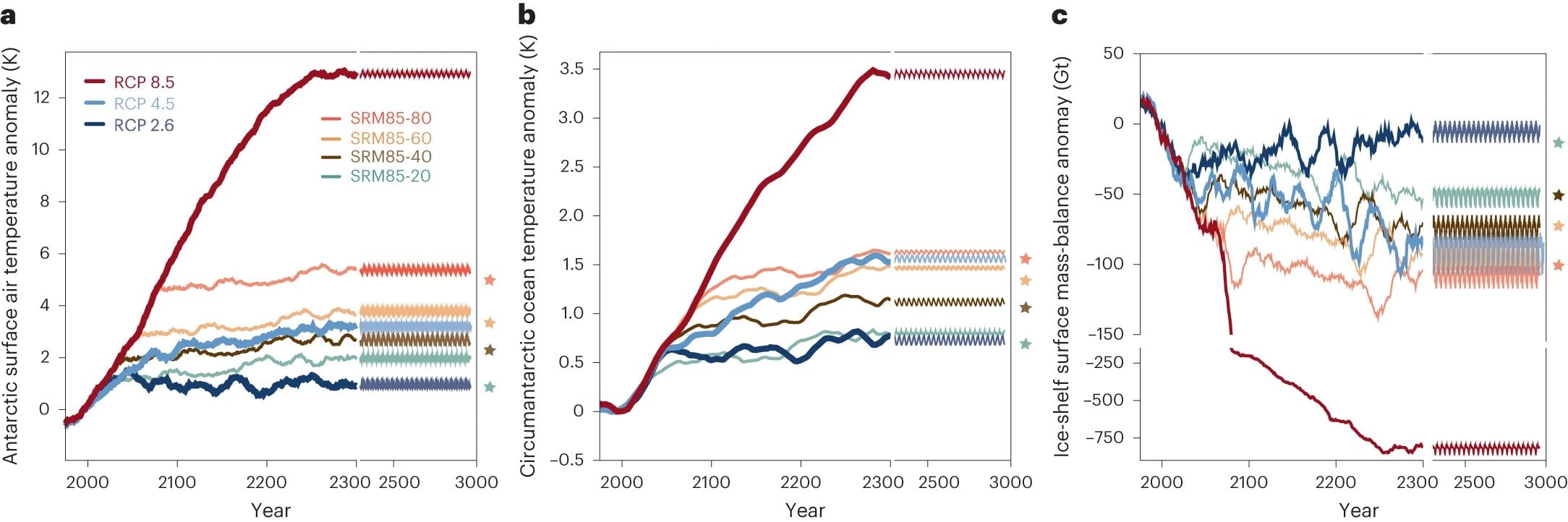
A new study published in the journal Nature Climate Change reveals that solar geoengineering, a method of spraying sun-reflecting particles into the atmosphere to cool the Earth's surface temperature, would have limited impact on delaying the melting of ice in Antarctica. The research highlights that rapid decarbonization is still the most effective approach to prevent the worst impacts of global warming. The study also warns that even if greenhouse gas emissions are reduced, geoengineering could have unforeseen consequences and negative effects on weather patterns.

climate-change2 years ago

Simulations debunk aerosol geoengineering as a solution to Antarctic ice sheet melting

Simulations conducted by researchers in Switzerland and the UK suggest that aerosol geoengineering, specifically solar radiation management (SRM), will not be able to prevent the collapse of the West Antarctic Ice Sheet (WAIS). The study found that while SRM could delay the collapse by 20-60 years under different emissions scenarios, it cannot avoid it altogether. The most effective way to prevent the long-term collapse of the WAIS is rapid decarbonization. The research highlights the urgent need to eliminate global carbon emissions and warns against relying on SRM as a solution to climate change.

environment2 years ago

Unintended Geoengineering: How Shipping Emissions Have Altered the Earth

Scientists have discovered that the reduction in ship tracks, caused by regulations to cut down on sulfur pollution emitted by ships, has inadvertently led to the warming of the planet. Ship tracks, formed from the exhaust of vessels, were found to brighten low-lying ocean clouds, reflecting sunlight away from the Earth and cooling temperatures. However, the sulfur dioxide emitted by ships also contributed to air pollution. These findings have sparked interest in geoengineering, particularly the concept of marine cloud brightening, which aims to replicate the cooling effects of ship tracks without the harmful emissions. While the research is still inconclusive, experts believe that further investigation and investment in geoengineering research are necessary to understand the potential risks and benefits of such technologies.

climate-change2 years ago

"Sun Dimming: A Solution to Prevent Ice Melt?"

Researchers from the University of Bern have investigated the possibility of preventing the melting of the West Antarctic ice sheet by artificially dimming the sun through solar radiation management (SRM). The study found that while SRM could delay the collapse of the ice sheet, it cannot prevent it entirely. The most effective way to prevent long-term collapse is through rapid decarbonization. The study also highlights the high risks and unforeseeable side effects of geoengineering, including potential disruptions to the monsoon regime and ocean acidification.