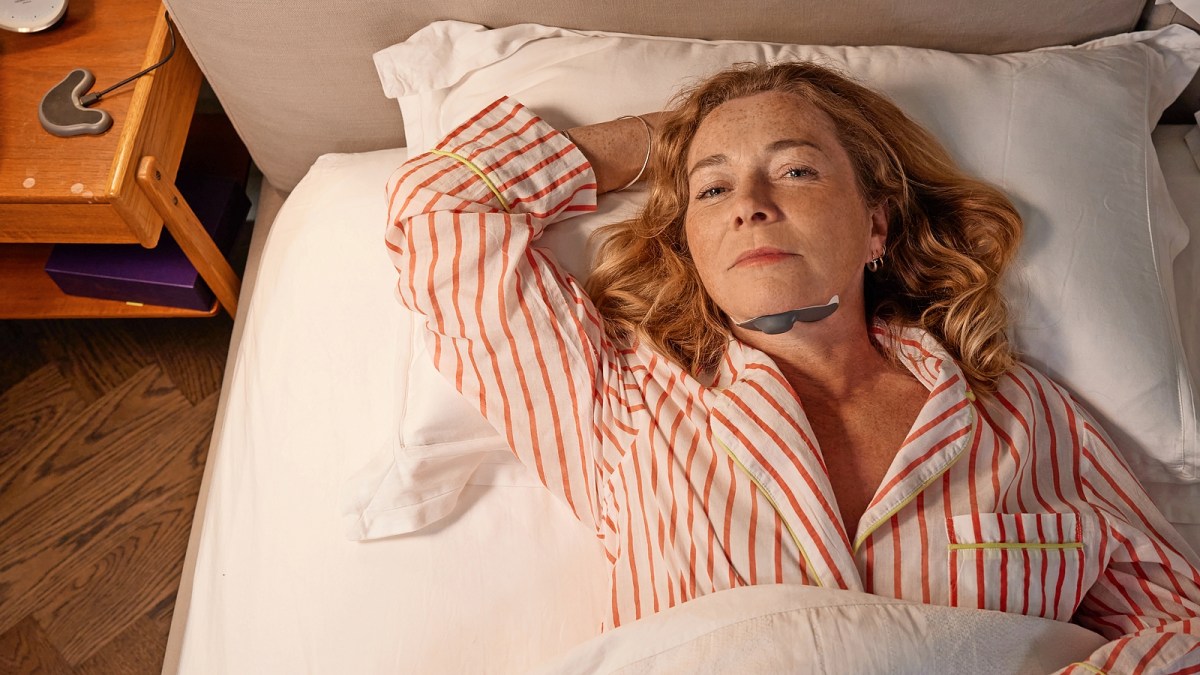
A woman explores a new wearable device called Zeus, designed to reduce snoring by electrically stimulating throat muscles, after recording her own loud snoring habits. While initial trials show promise, her personal experience with the device was mixed, but it may help some users with snoring or mild sleep apnea, offering a less intrusive alternative to traditional treatments.
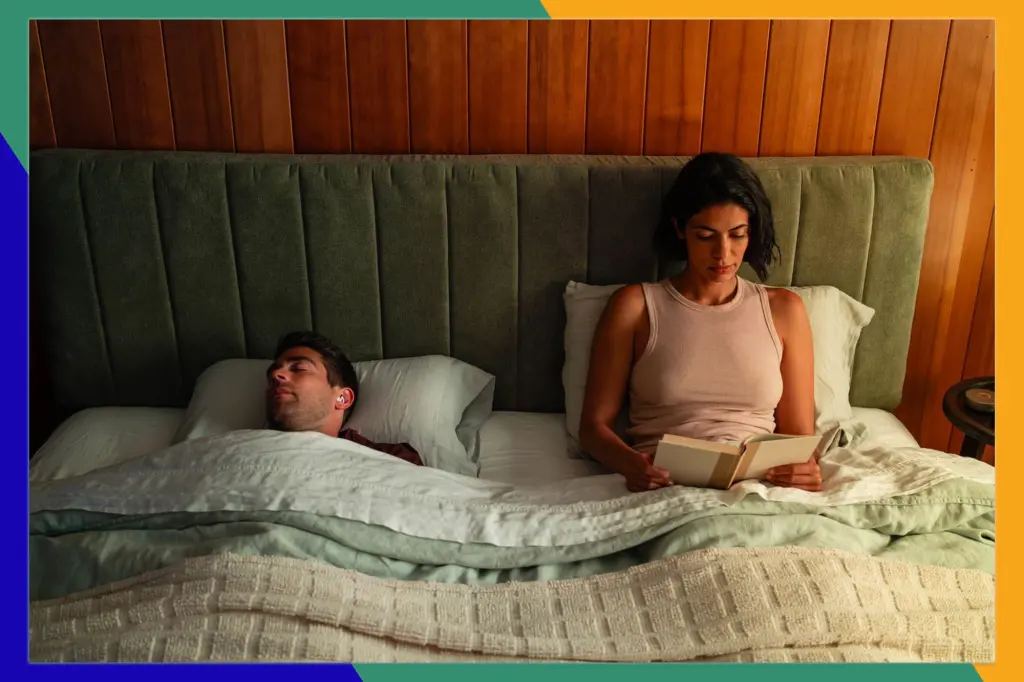
Ozlo Sleepbuds, tiny wireless earbuds designed to block out noise and improve sleep quality, are currently $35 off, offering features like biometric sensors, customizable tips, and the ability to stream soothing sounds, making them a popular solution for sleep struggles amid rising sleep disorders.
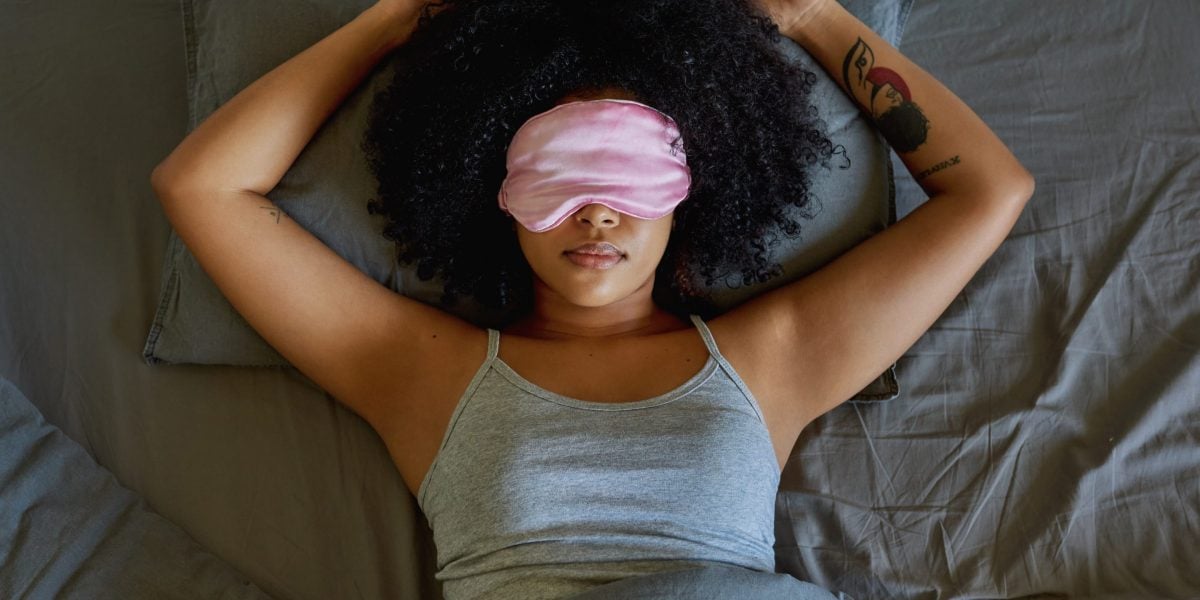
Prophetic, a startup, has developed a headpiece called the "Halo" that induces a lucid dream state, allowing users to work and be productive during their sleep. The device aims to give individuals control over their dreams, enabling them to practice skills or explore creative solutions to problems. While consumer devices claiming to induce lucid dreams already exist, Prophetic's Halo offers new potential for creativity and problem-solving. The Halos will be priced between $1,500 and $2,000 each.
Prophetic, a startup backed by venture capital, aims to enable workers to code and work in their dreams using a headpiece called the "Halo" that induces a lucid dream state. The Halo, designed in collaboration with Card79 founder Afshin Mehin, uses focused ultrasound beams to activate the brain regions responsible for decision-making and awareness during sleep. While other devices claiming to induce lucid dreams exist, Prophetic aims to provide better control over dreams, allowing users to practice skills and explore creative problem-solving. However, skeptics argue that achieving dream control is challenging, and it requires a combination of the device and mindfulness techniques. Prophetic plans to release the Halo in spring 2025, with an estimated cost of $1,500 to $2,000 per device.
Sleep trackers, such as wearable devices and phone-based apps, have gained popularity in recent years for their ability to collect data on sleep patterns and offer insights on sleep quality. However, experts caution that while these trackers can provide some benefits, they can also be misleading and are not a cure for sleep disorders. The accuracy of data collection can be affected by factors such as obesity, heart rhythm disorders, and skin tone. Additionally, the translation of data into consumer-friendly takeaways, such as sleep stages and overall sleep scores, may not be scientifically vetted or meaningful for individual health outcomes. Experts suggest using sleep trackers to capture long-term patterns and reinforce sleep hygiene, but caution against relying solely on numbers and scores to understand sleep.
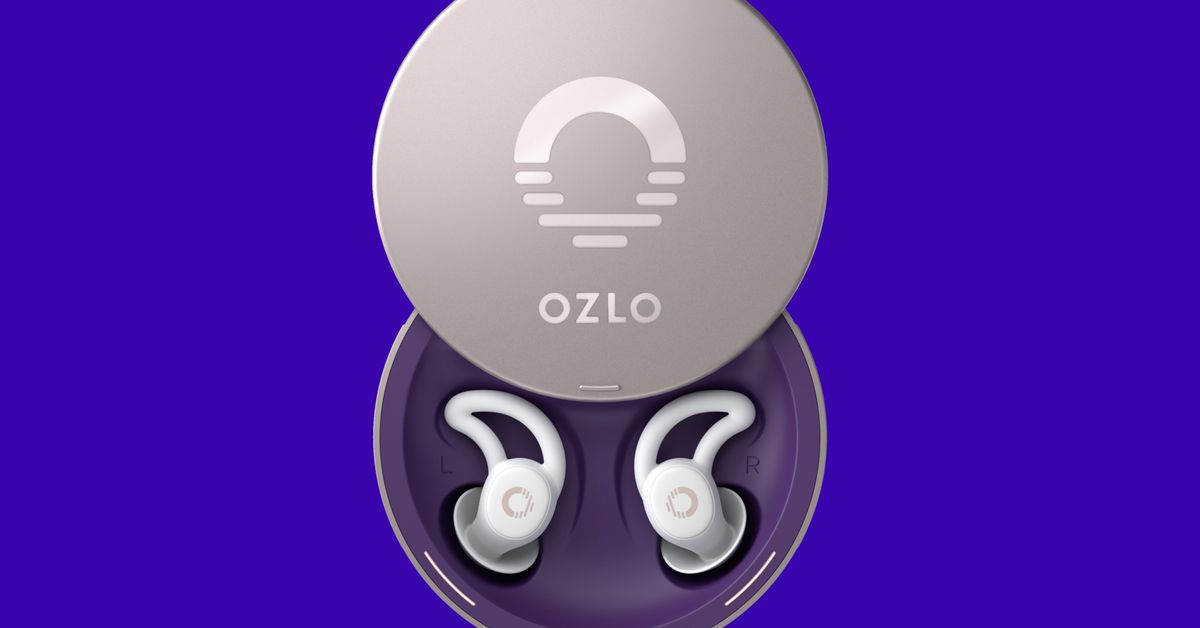
Three ex-Bose employees have formed a startup called Ozlo and acquired the Sleepbuds trademark from Bose after the discontinuation of the product. The revamped Sleepbuds, which resemble their predecessors, now include biometric sensing technology to monitor sleep stages and have a more sophisticated charging case that analyzes sleep environment factors. The Sleepbuds v3 can play regular music in addition to masking sounds, and Ozlo plans to introduce personalized sleep therapy capabilities. The company has raised over $10 million in funding and will launch a Kickstarter campaign to bring the Sleepbuds back to consumers.