The U.S. Senate approved a stopgap funding bill to end the government shutdown, which now awaits House approval and President Trump's signature. The measure funds the government through January 30 and includes provisions for federal employee backpay and SNAP funding, but does not extend ACA subsidies, leading to ongoing political negotiations. The House is expected to vote soon, with further discussions on healthcare reform and full-year funding still pending.
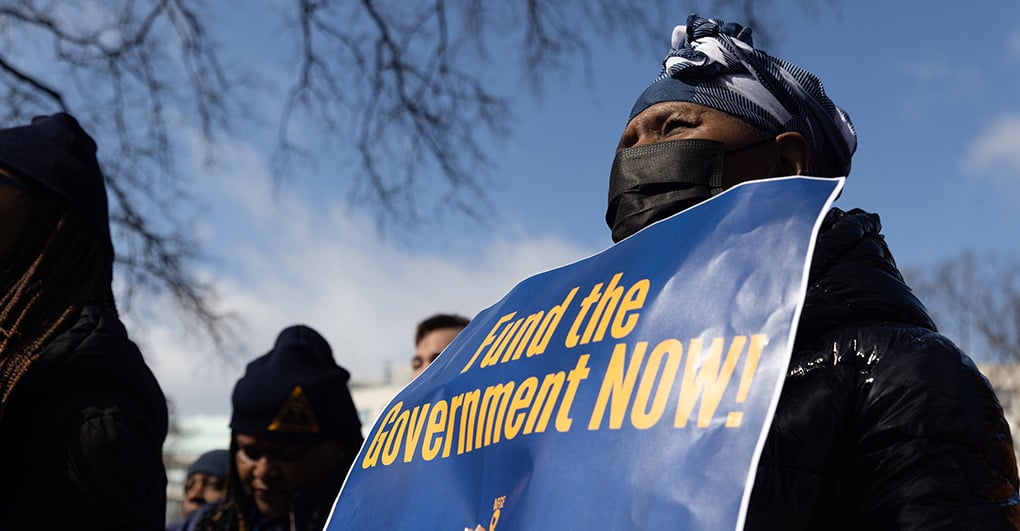
Everett Kelley, AFGE President, urges Congress to end the government shutdown immediately by passing a clean continuing resolution, paying federal workers their due, and focusing on responsible governance to serve the American people effectively.
The House will not return next week as the Senate works to resolve the government shutdown, with disagreements over funding extensions and legislative priorities, including transparency issues and healthcare subsidies, prolonging the stalemate.
Senate Republicans and Democrats are at an impasse over a continuing resolution to fund the government, with Democrats opposing the bill and Republicans pushing for a bipartisan agreement to avoid a shutdown, highlighting internal divisions and strategic disagreements.
Democrats oppose the GOP's stopgap funding bill, risking a government shutdown on October 1, and are planning to propose their own resolution that includes healthcare subsidies, while negotiations and party loyalties remain complex.
Republicans plan to introduce a short-term government funding bill through Nov. 20, facing opposition from Democrats who demand bipartisan negotiations and extensions for ACA tax credits, amid ongoing political tensions and upcoming legislative deadlines.
As the December 20 deadline for a government shutdown approaches, Congress is considering a continuing resolution (CR) to fund the government into March. Speaker Mike Johnson (R-La.) may need Democratic support to pass the CR, as Republicans lack the Senate majority to bypass a filibuster. Disaster aid funding is a contentious issue, with some Republicans opposing additional spending. A shutdown would affect non-essential federal employees and could disrupt holiday travel, as air traffic controllers and TSA officers would work without pay.
Congress faces a December 20 deadline to avoid a government shutdown, likely opting for a continuing resolution to fund the government into early 2025. This move could give Republicans more leverage with President-elect Trump returning to office, but it also risks complicating his early presidency by creating a critical funding deadline. The process requires bipartisan support, and Democrats hold significant power in shaping the legislation. A drawn-out funding debate could also impact House Speaker Mike Johnson's re-election bid.
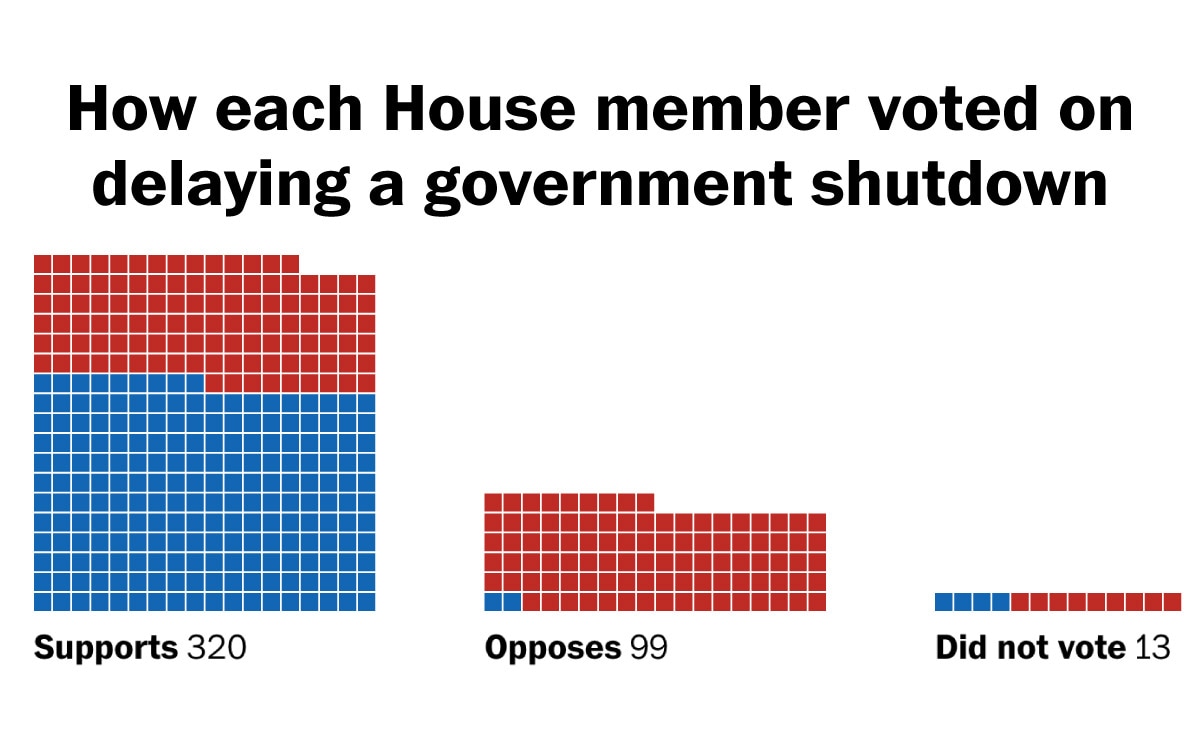
The House passed a continuing resolution to delay a government shutdown, extending funding for 20% of the federal government until March 8 and the remaining funding until March 22. The bill received bipartisan support, with 113 Republicans and nearly all Democrats backing it. The Senate must also pass the bill to prevent a partial shutdown, marking the fourth stopgap spending bill since September.
Congressional leaders have agreed to delay the government shutdown deadlines by extending the expiration dates for federal finances until later in March, preventing a partial government shutdown this weekend. The funding deal aims to give lawmakers more time to finalize full-year spending legislation for various agencies, with the new deadlines set for March 8 and March 22. The agreement will require swift approval from Congress to avoid a shutdown, as lawmakers continue to grapple with passing spending measures for the 2024 fiscal year.
Senate Republican Whip John Thune suggests that Congress may need to pass a short-term government funding bill into March to allow time for processing outstanding appropriations bills and avoid a shutdown. Thune's comments may set up a clash with Speaker Mike Johnson, who has pledged to no longer support short-term stopgap measures. Other Republican senators also express support for a short-term continuing resolution, cautioning against a government shutdown and emphasizing the need to continue work on appropriations bills.
President Biden has signed a bipartisan short-term funding bill to keep the government open until early 2024, extending funding for various departments. The bill passed the Senate with a vote of 87-11 and the House with a vote of 336-95. This measure clears the holiday calendar for Congress but sets the stage for a potential funding battle in December if a long-term agreement cannot be reached.
Rep. Mike Gallagher criticizes Congress for passing a Continuing Resolution to fund the government through Groundhog Day, highlighting the lack of progress in addressing the broken appropriations process. He calls for the passage of the bipartisan Preventing Government Shutdowns Act and the implementation of biennial budgeting and consolidated committee jurisdiction to avoid repeating fiscal failures.
House Speaker Mike Johnson expects bipartisan support for his "laddered" continuing resolution to fund the government, which would potentially allow the Senate enough time to pass the bill and avoid a government shutdown. The plan funds some federal agencies until mid-January and others through early February, without including the steep spending cuts demanded by the conservative House Freedom Caucus. Johnson will need two-thirds of the House, including over 100 Democrats, to vote for the resolution. Senate Majority Leader Chuck Schumer and Minority Leader Mitch McConnell have also expressed support, and President Joe Biden is open to the approach.
Senator Chris Murphy criticizes House Speaker Mike Johnson's "laddered" continuing resolution (CR) as gimmicky but remains open to the House's discussions. Murphy emphasizes the need to keep the government open and expresses concern about the House's approach, calling it a recipe for failure. He prefers the Senate's plan for a clean CR that keeps the entire government open until the same date. Johnson's proposal includes a two-step funding plan with different expiration dates for various agencies, potentially leading to a partial government shutdown. Senate Majority Leader Chuck Schumer aims to avoid a government shutdown through a temporary extension and bipartisan funding.