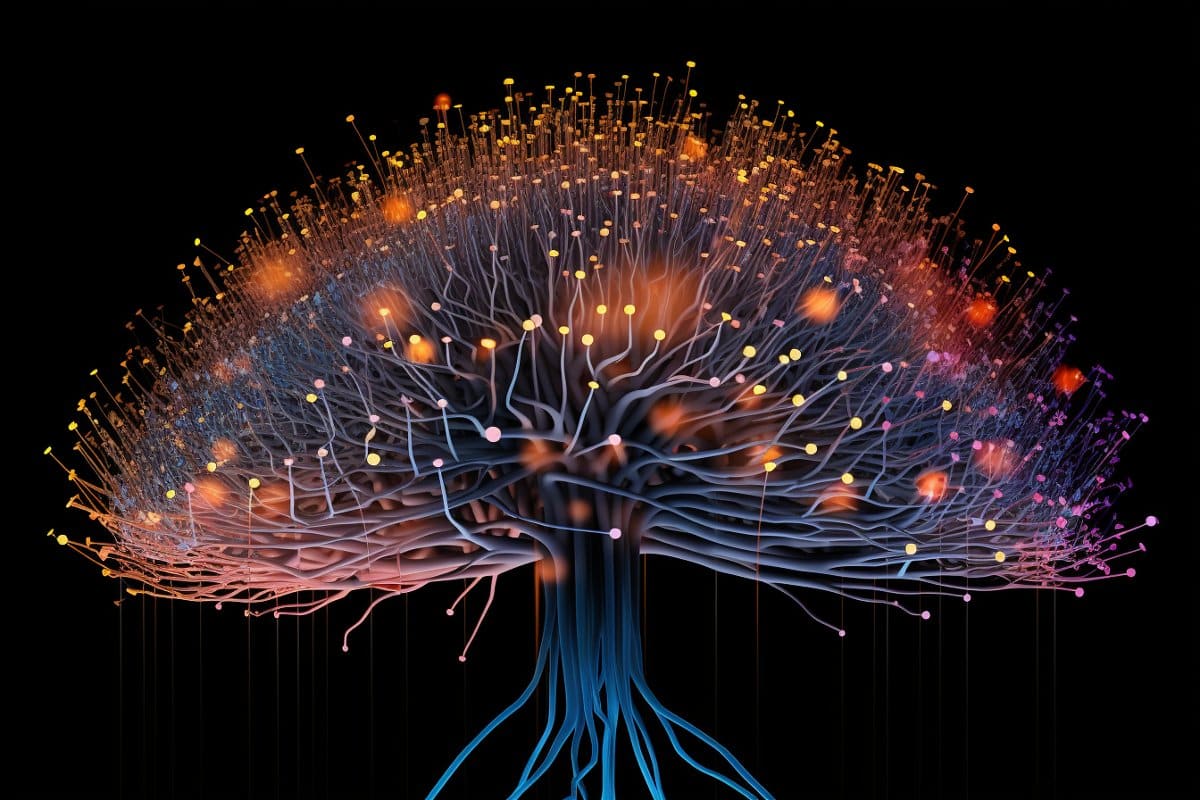
Researchers at MIT have found evidence suggesting that the brain may use a process similar to self-supervised learning, a technique used in artificial intelligence (AI), to develop an intuitive understanding of the physical world. By training neural networks using self-supervised learning, the resulting models generated activity patterns similar to those observed in the brains of animals performing similar tasks. This breakthrough could provide insights into the inner workings of the mammalian brain and enhance our understanding of AI.
Two studies from researchers at MIT's K. Lisa Yang Integrative Computational Neuroscience Center suggest that the brain may develop an intuitive understanding of the physical world through a process similar to self-supervised learning used in computational models. The studies found that neural networks trained using self-supervised learning generated activity patterns similar to those seen in the brains of animals performing the same tasks. The findings indicate that these models can learn representations of the physical world to make accurate predictions, suggesting that the mammalian brain may use a similar strategy. The research has implications for understanding the brain and developing artificial intelligence systems that emulate natural intelligence.