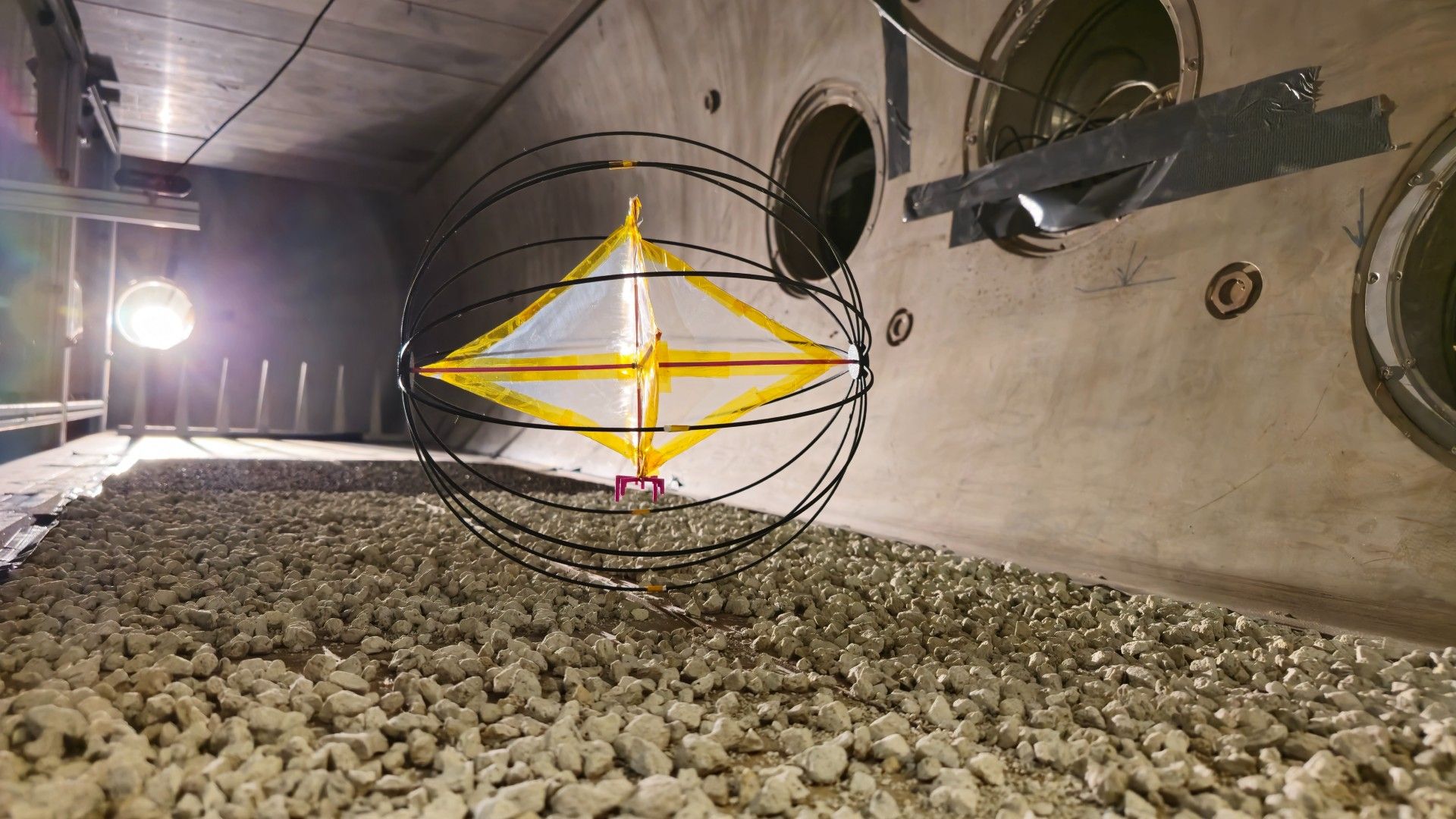
Researchers have validated through wind tunnel tests that tumbleweed-inspired rovers could operate on Mars, propelled by the planet's high winds, potentially covering vast distances and collecting environmental data, offering a low-cost and wide-reaching method for planetary exploration.

NASA's robotic rovers frequently get stuck on alien terrains due to overlooked effects of gravity on granular soils like moon and Mars dust. Recent research using physics-based simulations reveals that the behavior of dust under different gravitational conditions significantly impacts rover mobility, providing insights to improve future rover design and prevent them from getting stuck. This understanding is crucial for successful exploration of extraterrestrial surfaces.
NASA's rover testing methods may be flawed because they overlook how gravity affects the sand on extraterrestrial surfaces, leading to potential misjudgments about rover performance and increasing the risk of rovers getting stuck on planets like Mars and the Moon.
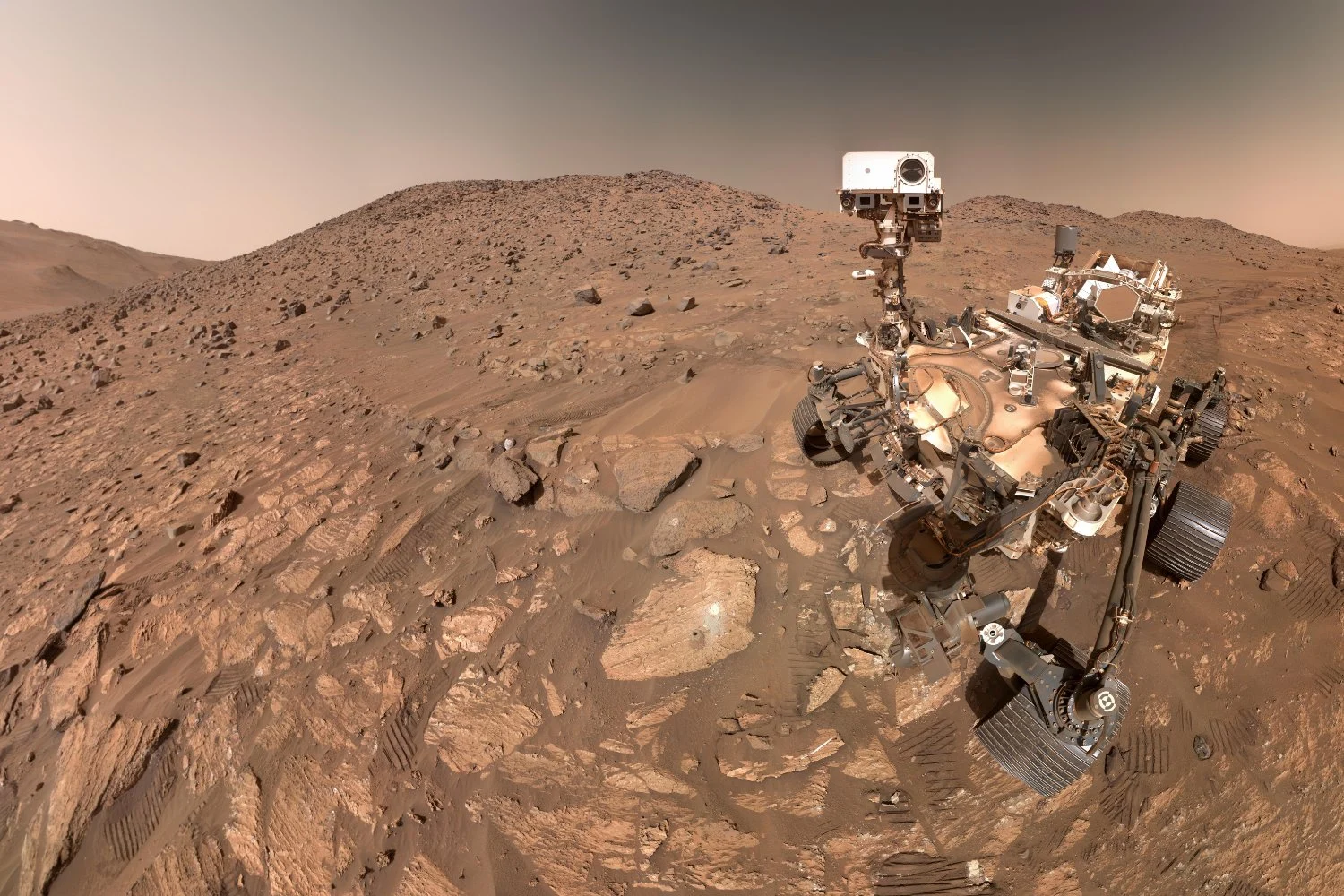
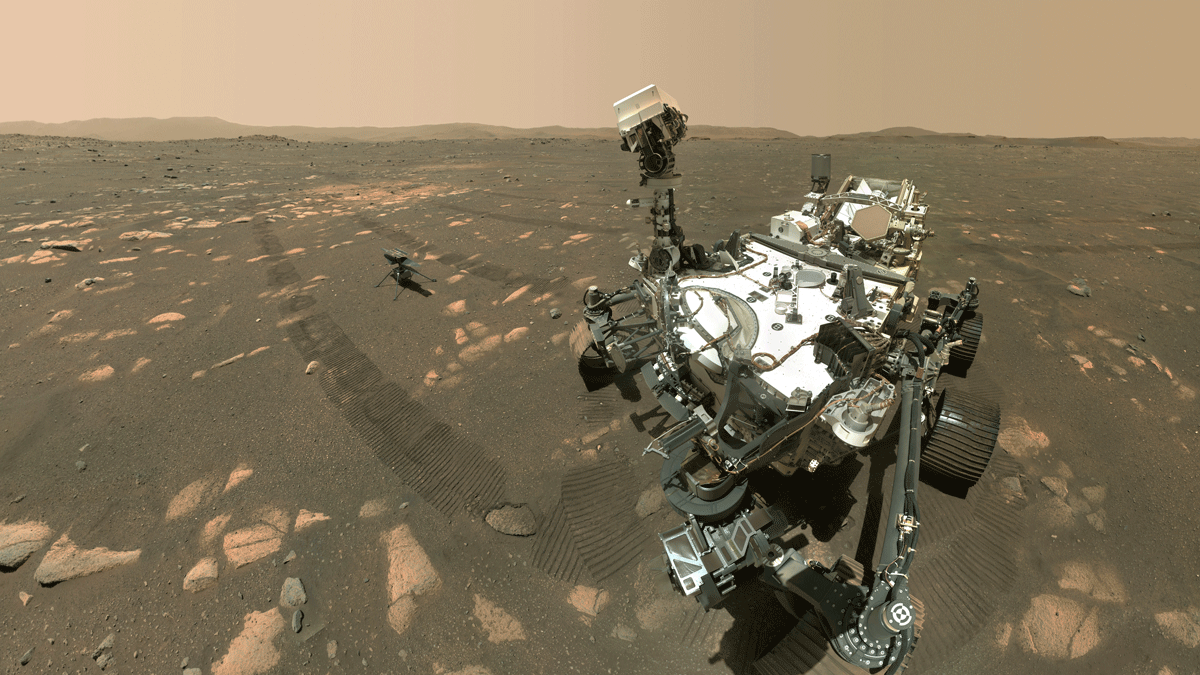
NASA's Perseverance and Curiosity rovers are facing significant challenges on Mars. Perseverance is struggling with steep and slippery terrain while attempting to reach the rim of Jezero Crater, slowing its progress. Meanwhile, Curiosity encountered difficulties in Gediz Vallis, getting stuck on a rock and halting its journey. Both rovers are adapting their strategies to navigate the harsh Martian environment, with Perseverance attempting backward driving for better traction and Curiosity focusing on remote sensing while planning its next move.
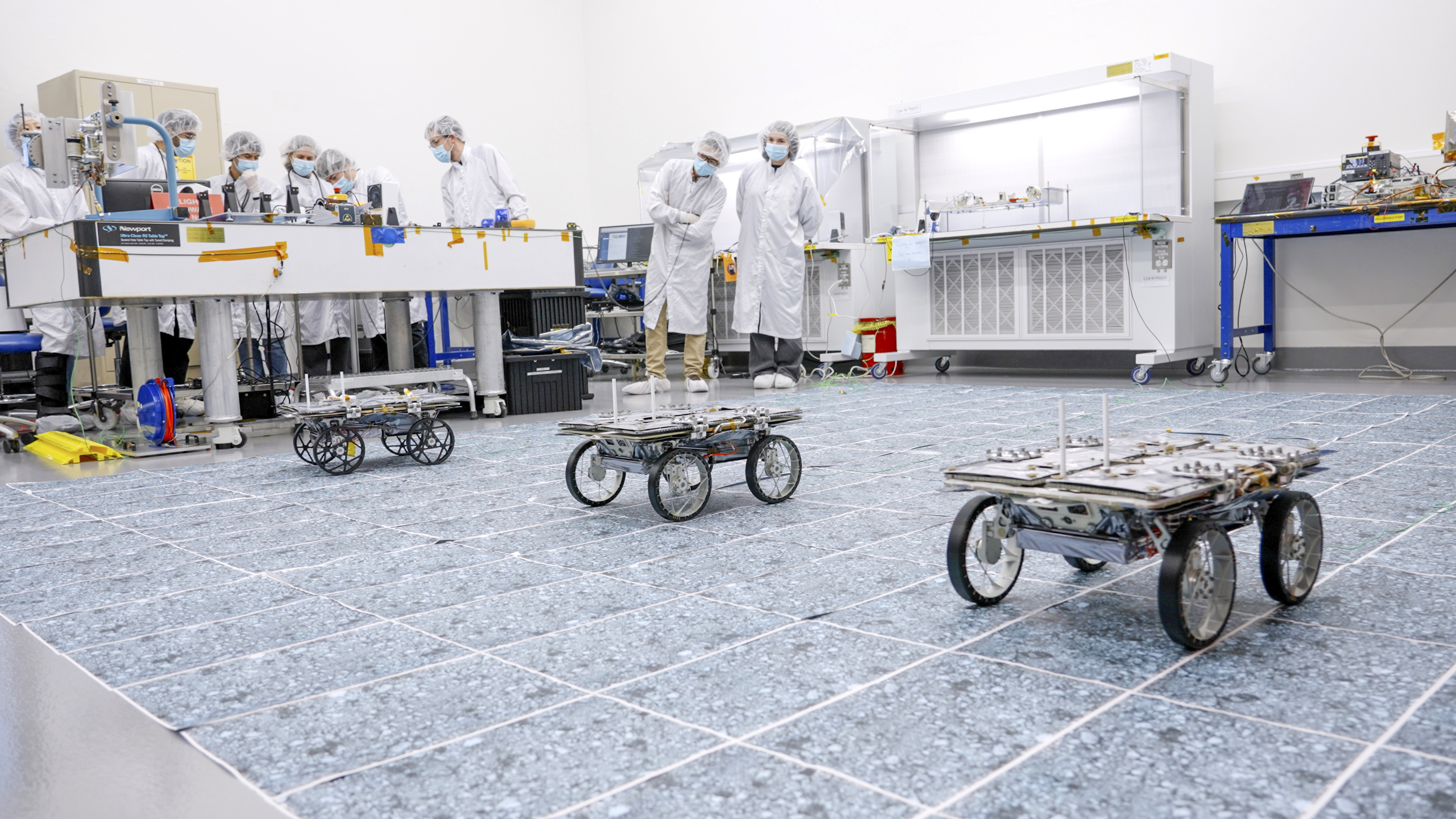
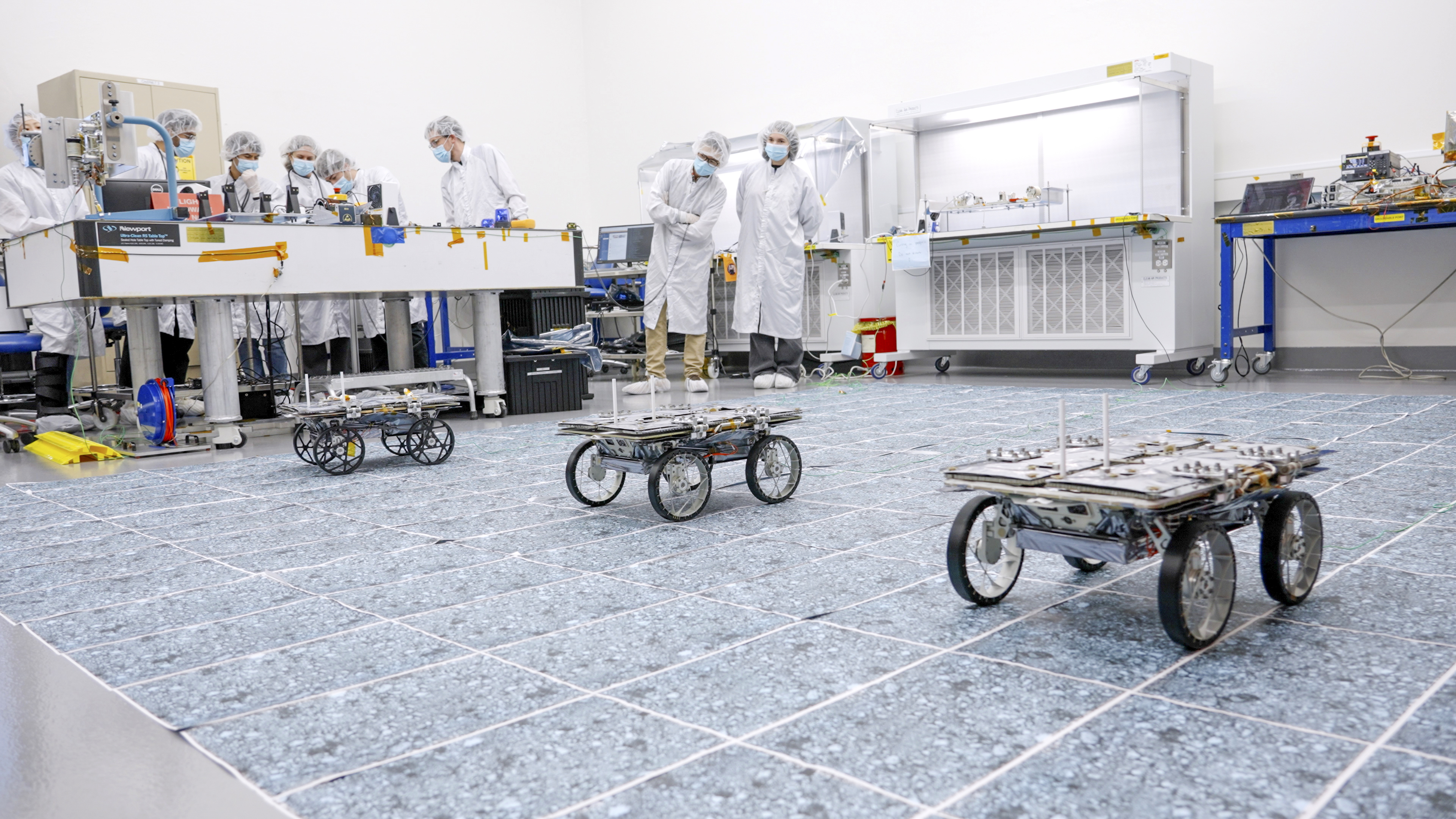
NASA's Jet Propulsion Laboratory has completed the assembly and testing of a trio of small rovers as part of the CADRE project, which aims to demonstrate the ability of robotic spacecraft to work together autonomously on the Moon. The solar-powered rovers, about the size of a carry-on suitcase, will explore the Moon's Reiner Gamma region, conducting experiments and using ground-penetrating radar. Engineers have also tested the rovers' cooperative autonomy software, ensuring they can adjust plans and respond to unexpected obstacles as a team. The hardware will be installed on a lander headed for the Moon's surface, with the ultimate goal of paving the way for future missions involving teams of robots working together to conduct scientific measurements.
NASA's Jet Propulsion Laboratory has completed construction and testing of a trio of small rovers called CADRE, which will explore the Moon's Reiner Gamma region as a technology demonstration. The rovers, about the size of a carry-on suitcase, will autonomously map the lunar surface and use ground-penetrating radar. The project aims to show the potential of multirobot missions and pave the way for future missions involving teams of robots working together. The rovers have undergone rigorous testing to ensure they can withstand the harsh conditions of space and the lunar environment, and will be installed on a lander headed for the Moon.
A map reveals over seven tonnes of debris left on Mars by human missions, including parachutes, heat shields, and broken equipment. Despite the failed missions, ongoing efforts by rovers like Nasa's Curiosity and Perseverance aim to uncover signs of past life on the Red Planet. As space exploration continues, the balance between scientific discovery and environmental impact must be considered for future missions, with sustainability in mind.
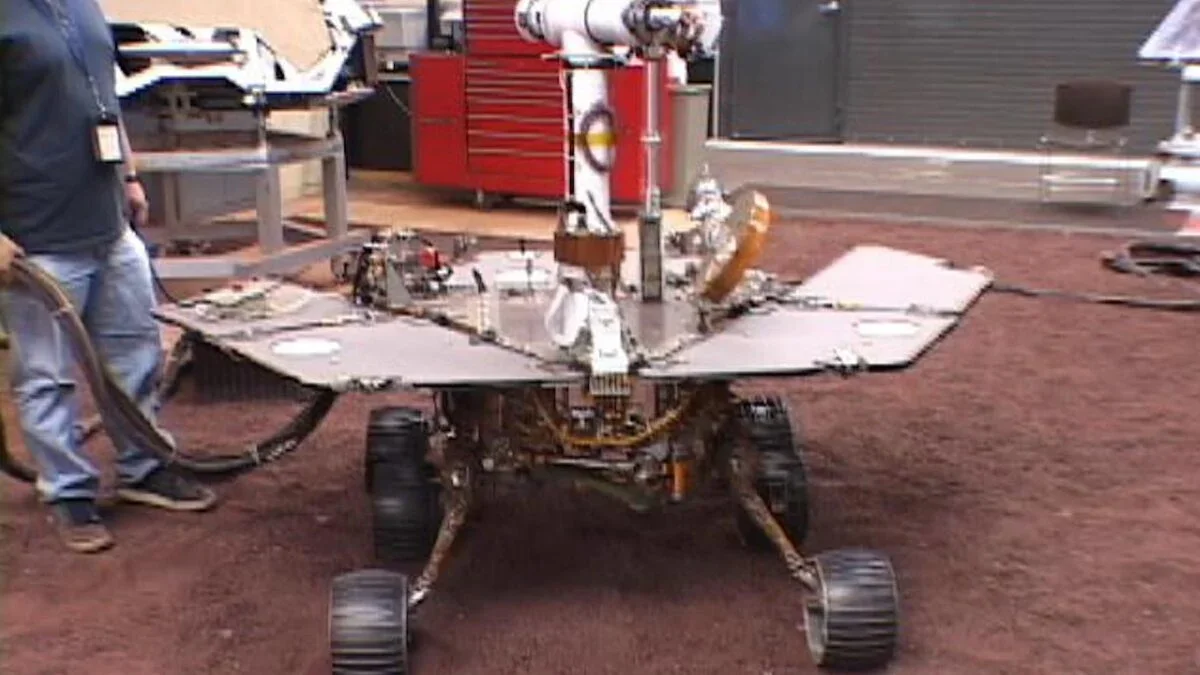
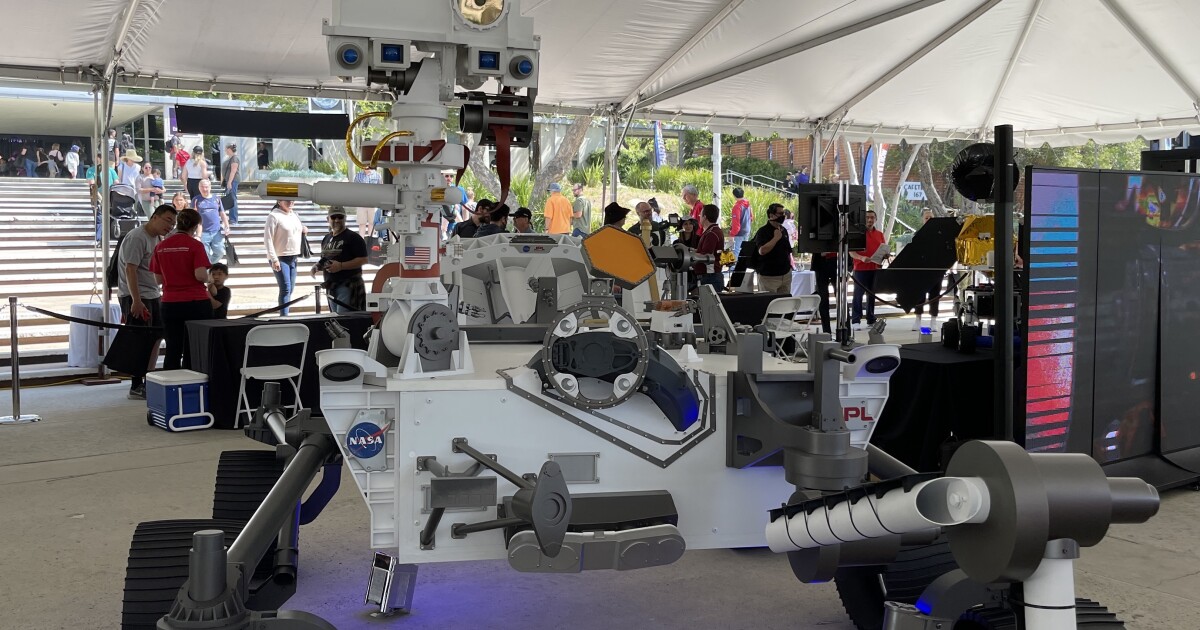
NASA's Jet Propulsion Laboratory (JPL) held its first Explore JPL event in four years, with 36,000 tickets available for the two-day event. Visitors got to take a trip through Mission Control, check out full-scale replicas of machines sent to other planets, and talk to the people who built them. The event included a replica of the Mars ascent vehicle, a model of the Perseverance rover, and a 1:1 replica of Ingenuity, the first helicopter to fly on Mars. The Scarecrow rover was also on display, which rover drivers use to practice their skills here on Earth.
NASA is considering launching a series of lower-cost, sustainable missions to Mars once every two years, instead of developing expensive rovers for the Red Planet. The space agency's Director of the Mars Exploration Program, Eric Ianson, unveiled the long-term strategy for exploring Mars, titled "Exploring Mars Together," which proposes low-cost missions between $100 million to $300 million each. NASA's focus is on its Moon to Mars objectives, including the use of NASA's Space Launch System rocket for deep space exploration. The agency is no longer interested in developing increasingly complex robots for the Red Planet, except for the Mars Sample Return mission, which is a joint effort between NASA and the European Space Agency.
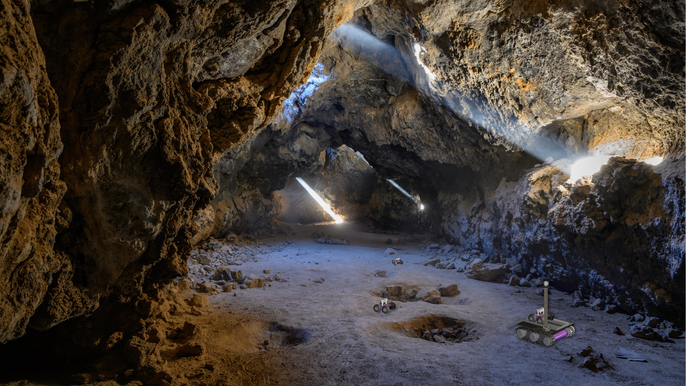
Engineers at the University of Arizona have developed a communication network system that could allow autonomous rovers to explore caves and other underground features on Mars to scout out habitats for astronauts. The system involves a "mesh topology network" that links different types of rover vehicles, which would deploy communication nodes along the way, just like Hansel and Gretel leave a trail of breadcrumbs. The rovers would continuously monitor their environment and maintain awareness of where they are in space, allowing them to navigate underground environments without ever losing contact with their "mother rover" on the surface.