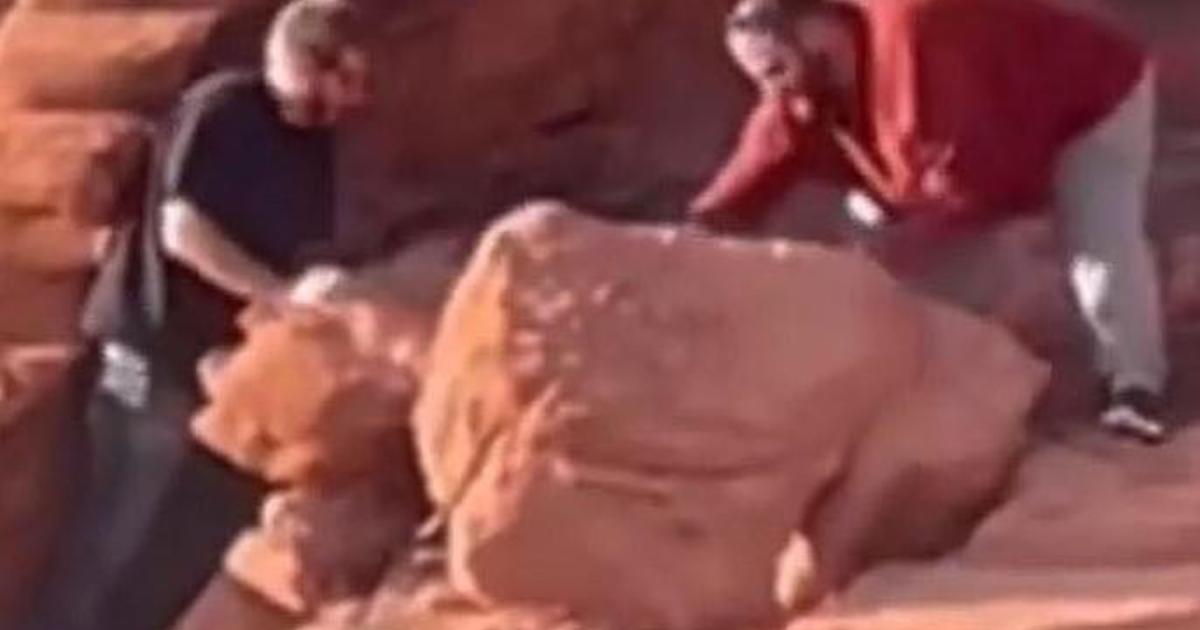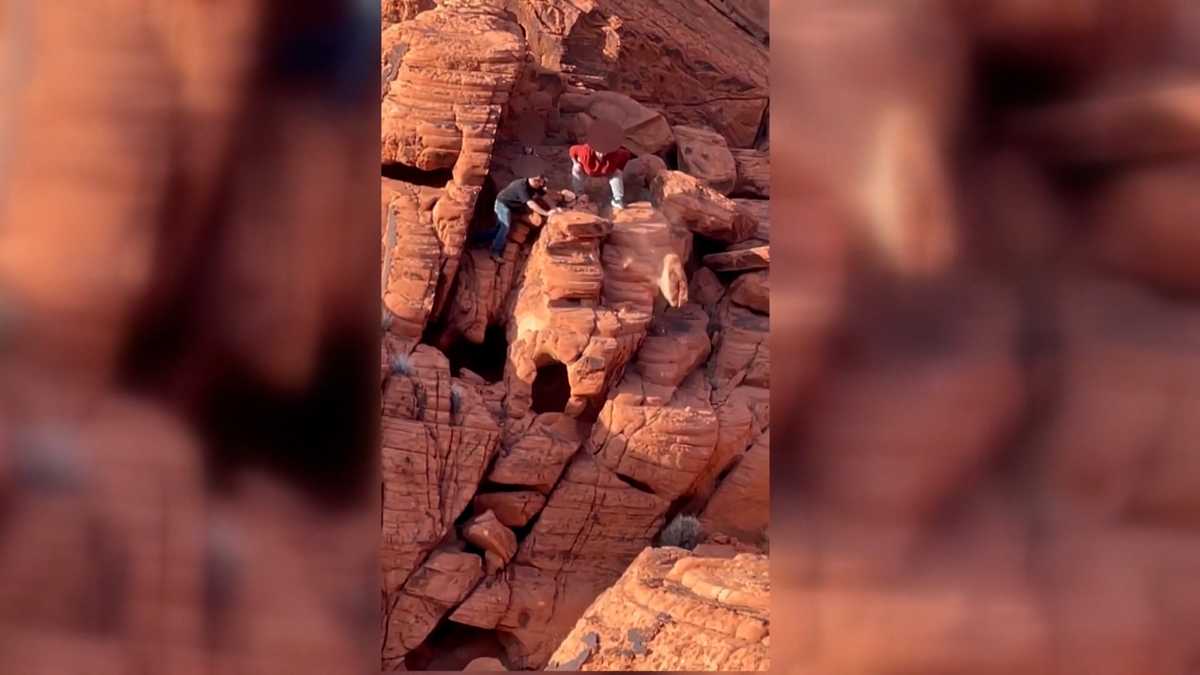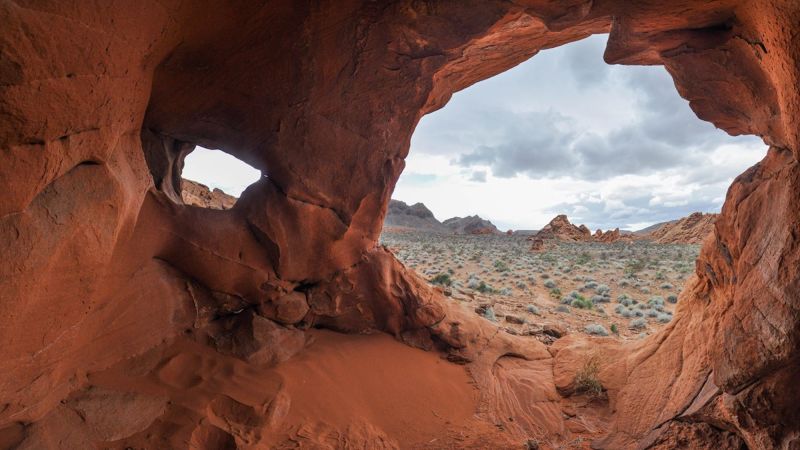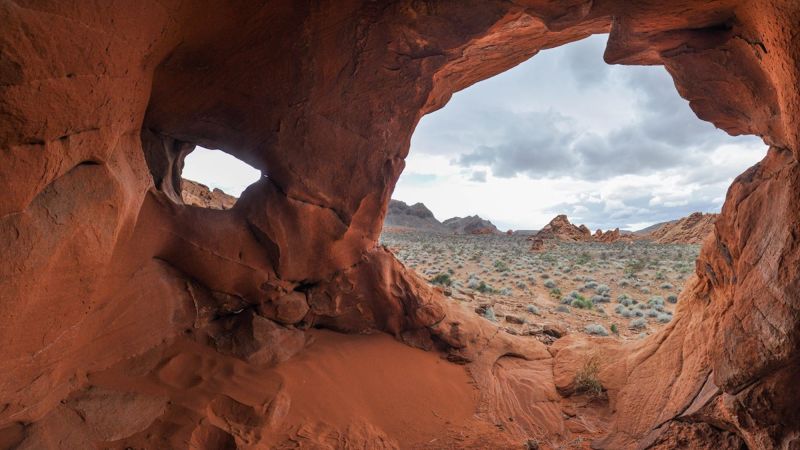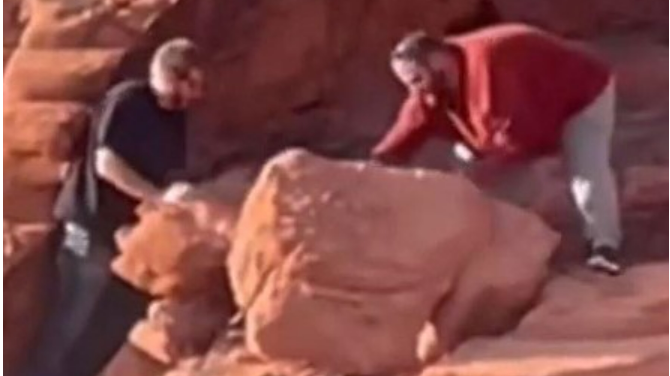
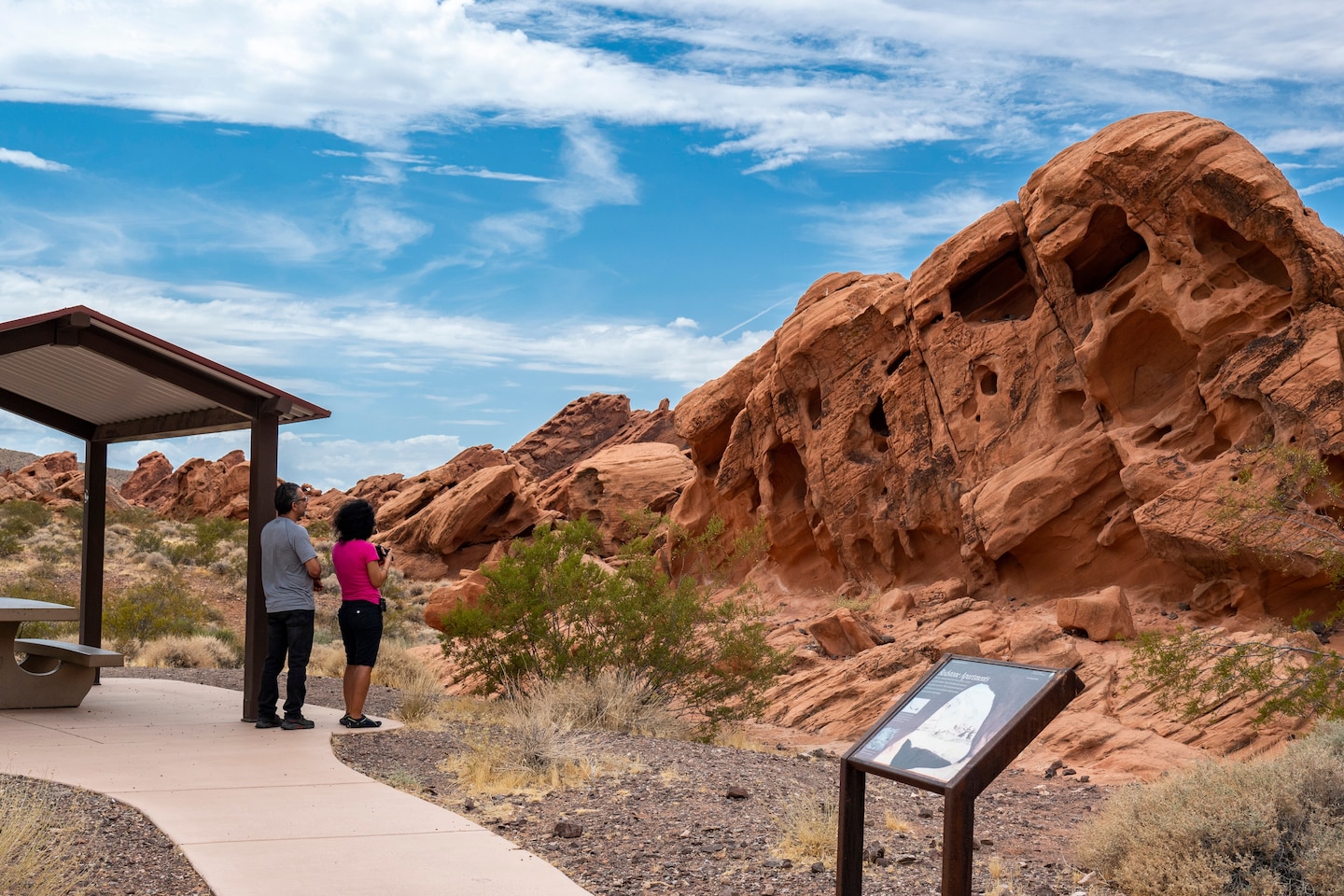
Park rangers at Lake Mead National Recreation Area are seeking the public's help to identify two men caught on video vandalizing natural rock formations near the Redstone Dunes Trail, with the incident described as "appalling" and "disgusting" by a park spokesperson. The rocks, formed from 140-million-year-old desert dunes, were pushed off a cliff, and the National Park Service is urging anyone with information to come forward.
Two men were caught on video destroying ancient rock formations at Lake Mead National Recreation Area, potentially facing federal charges for vandalizing protected land. The footage shows the men dislodging and shoving boulders over the edge while a frightened girl pleads with her father to stop. National park rangers are seeking public assistance in identifying the perpetrators, emphasizing the significance of these ancient resources formed millions of years ago. The penalty for the vandalism could range from a misdemeanor to a felony, with potential jail time and fines. The destruction of these rocks will permanently alter the distinctive landscape of Lake Mead, a natural wonder that has drawn millions of visitors.
Federal authorities are seeking the public's help in identifying two men who were caught on video damaging rock formations at Lake Mead National Recreation Area in Nevada. The incident, which occurred near the Redstone Dune Trail, has sparked outrage as the park officials stated that the damage is irreparable. The National Park Service has emphasized the severity of such destruction, which can lead to felony charges, fines, and jail time. With staffing limitations, park officials rely on the public to help monitor and report suspicious activities, urging visitors to use their cellphones to capture evidence and report any vandalism.
Two visitors at Lake Mead National Recreation Area were caught on video destroying ancient rock formations, prompting park rangers to seek the public's help in identifying the suspects. The damage to the federally-protected formations, shaped over 140 million years, is irreversible. The suspects could face federal charges, jail time, or large fines if caught. The area, known for its breathtaking views and water sports, has been affected by extreme drought, causing water levels to plummet and exposing sunken boats and human remains. Visitors are encouraged to report any unusual activity to park authorities to help monitor the area.
Two visitors at Lake Mead National Recreation Area were caught on video destroying ancient rock formations, prompting park rangers to seek the public's help in identifying the suspects. The damage to the federally-protected formations, shaped over millions of years, is irreversible. The suspects could face federal charges, jail time, or large fines if caught. The vast recreation area, known for its breathtaking views and water sports, has been impacted by extreme drought, causing water levels to plummet. Visitors are urged to report any unusual activity to park authorities to help monitor the area.
Two visitors were caught on video destroying ancient rock formations at Lake Mead National Recreation Area, causing irreversible damage to federally-protected formations shaped over 140 million years. Park rangers are seeking the public’s help in identifying the suspects, who could face federal charges, jail time, or large fines. The vast recreation area, known for its breathtaking views and water sports, has been impacted by extreme drought, causing water levels to plummet and exposing sunken boats and human remains. Visitors are encouraged to report any unusual activity to park authorities to help monitor the area.
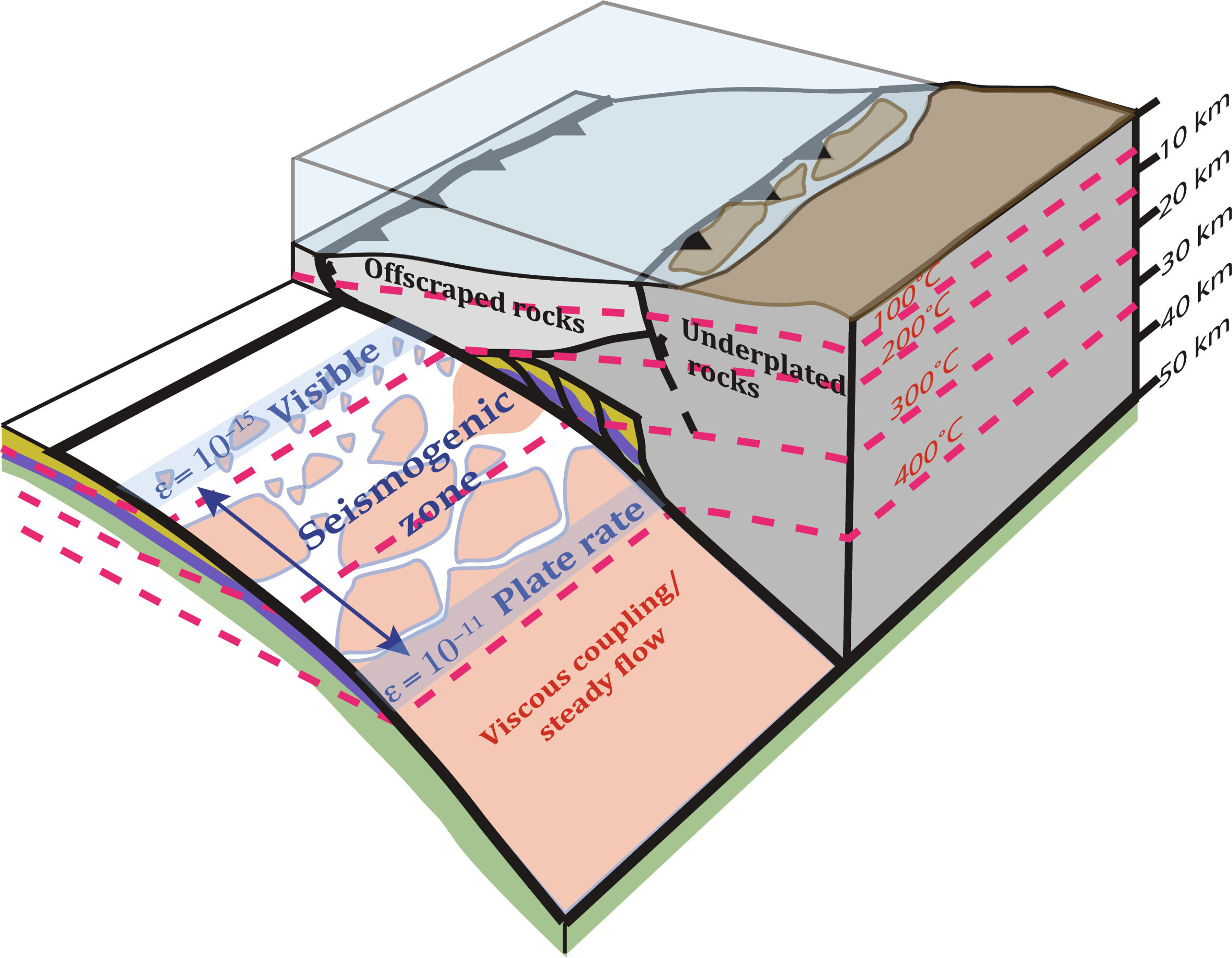
Researchers from Penn State and Brown University have studied ancient rocks from subduction zones to develop a new model for predicting pressure solution activity in these zones between major earthquakes. The study provides insights into how rocks deform under pressure, influencing tectonic plate movement. The findings could improve earthquake predictions and have been applied to the Cascadia Subduction Zone, suggesting potential for a major earthquake in the region.
Fishbone-like rock formations photographed by NASA's Curiosity rover on Mars have sparked excitement on the internet, with some internet users playfully calling them "dragon bones." Astrobiologist Nathalie Cabrol noted on Twitter that "in 20 years of studying Mars, that's the most bizarre rock I have ever seen." Additional photos taken by the rover in recent days captured formations that look like fins or shark's teeth, with the team of researchers working with Curiosity saying that they were going to use the sensors on the rover to study the bedrock in the area.