Tag

Rime Antenna

All articles tagged with #rime antenna

space2 years ago

ESA's RIME Antenna Successfully Released with Jiggling and Percussive Action.

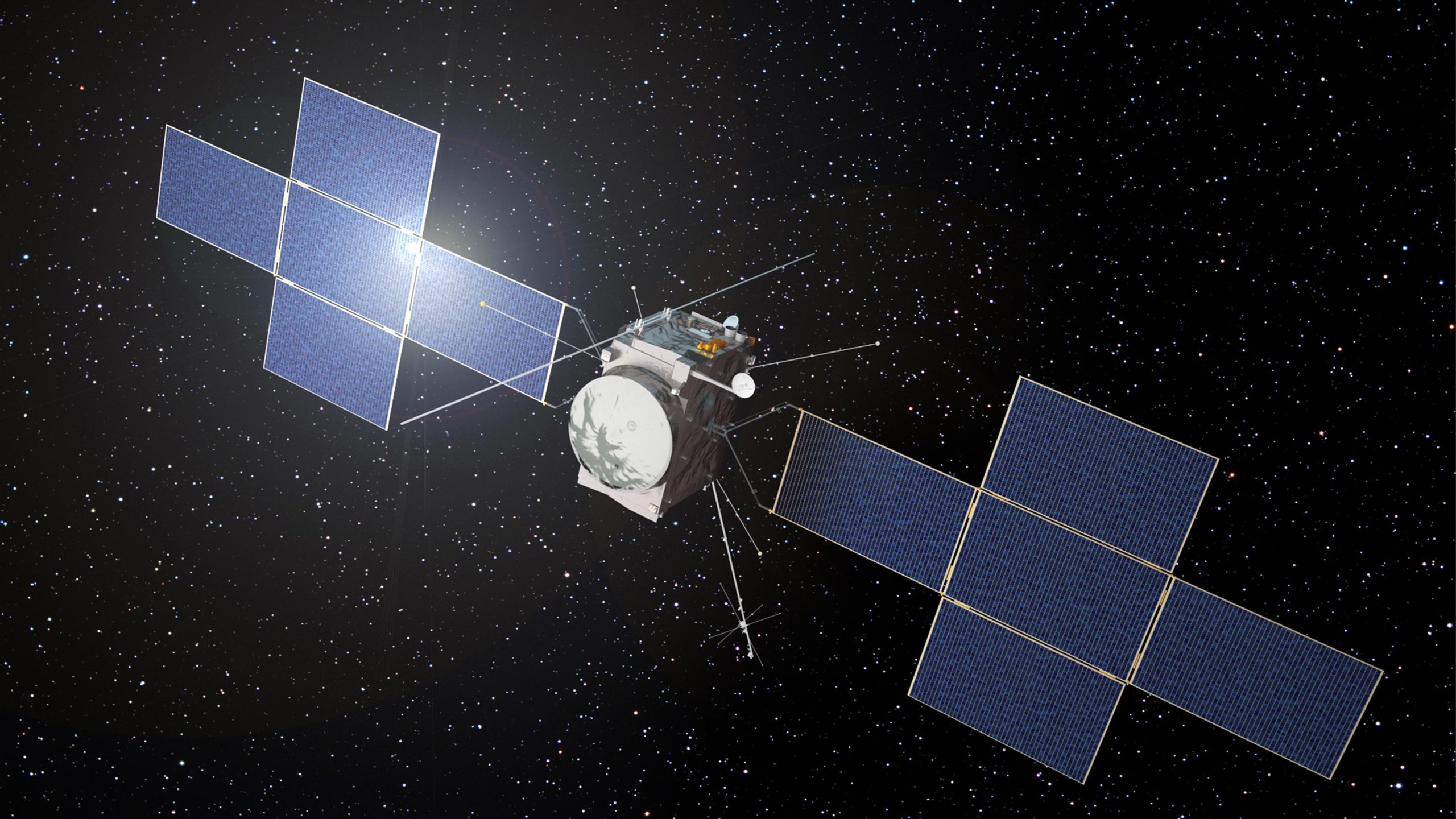
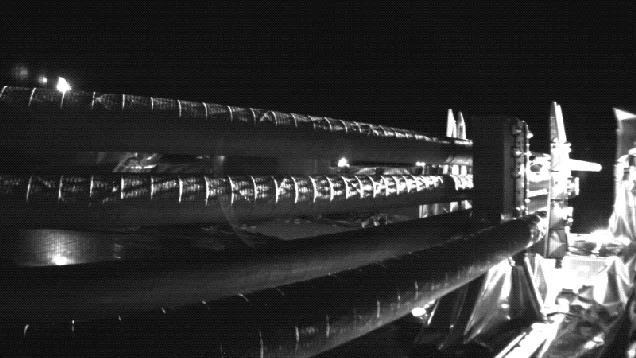
The RIME antenna on ESA's Jupiter-bound space probe Juice was stuck, but engineers managed to shake it loose using a non-explosive actuator. The antenna will use ice-penetrating radar to get a subsurface look at Jupiter's moons. Juice is expected to arrive at Jupiter in 2031 and perform multiple science missions until a planned deorbit on Ganymede by late 2035.
space2 years ago

Juice Spacecraft's RIME Antenna Successfully Deployed

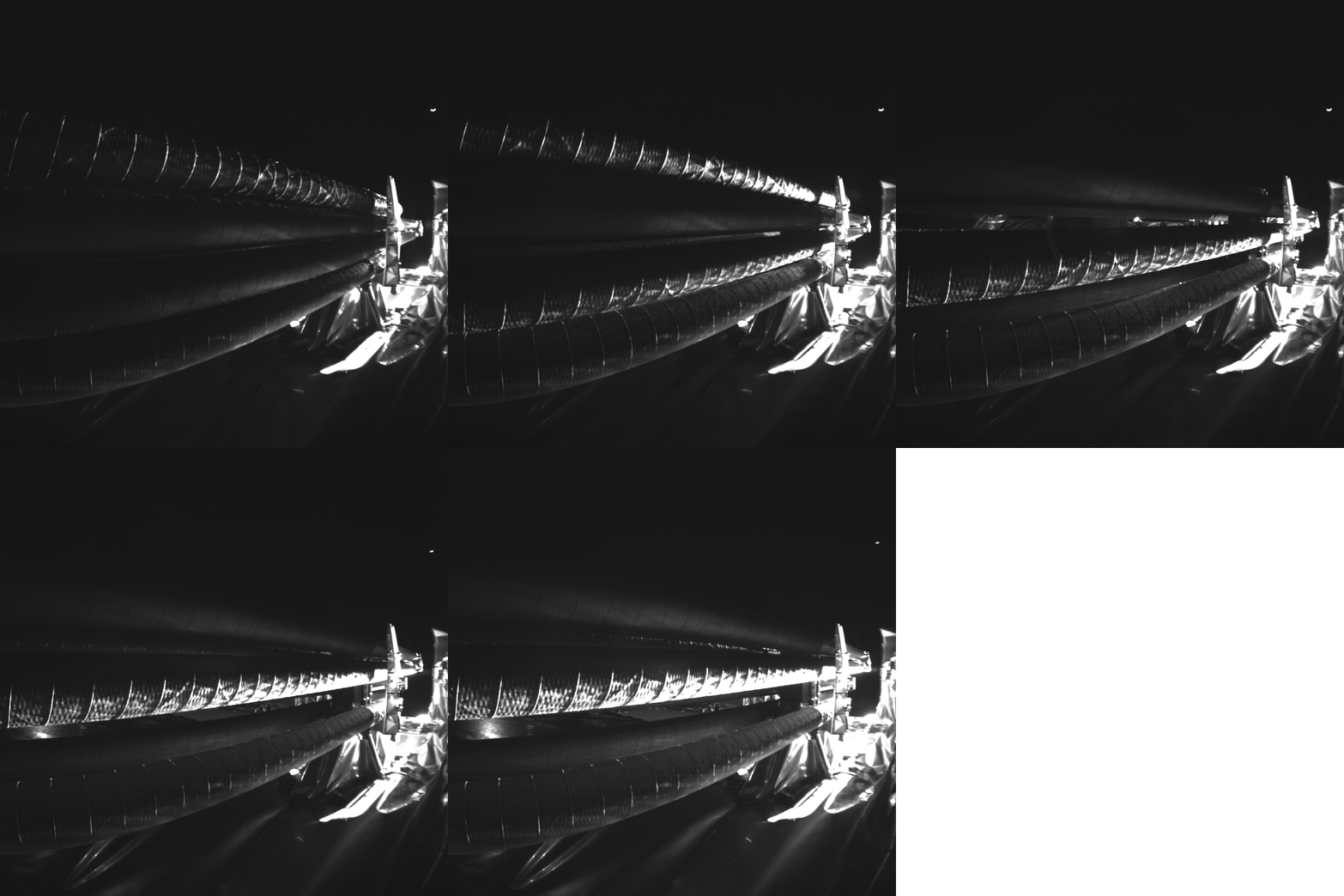
The Juice spacecraft's RIME antenna, designed to study Jupiter's icy moons, has been successfully deployed after overcoming a stuck pin issue with the help of a mechanical device called a 'non-explosive actuator'. The 16-meter-long boom had been stuck for over three weeks, but the flight control team at ESA's mission control center in Darmstadt finally managed to jolt it into life on May 12. Once ESA's Jupiter Icy Moons Explorer (Juice) arrives at Jupiter, it will use RIME to study the surface and subsurface structure of Jupiter's icy moons down to a depth of 9 km.

space2 years ago

Jupiter Probe's Stuck Antenna Unfurls with Clever Fix.

The JUICE probe, on its way to explore Jupiter's icy moons, encountered a problem when its ice-penetrating RIME antenna refused to deploy. Engineers tried several methods to dislodge the stuck antenna, including shaking and baking it in the sun, but it remained lodged. Finally, a "non-explosive actuator" was fired, which moved the pin holding the antenna in place, allowing it to fully deploy. The probe will continue its eight-year journey to Jupiter, where it will explore Europa, Ganymede, and Callisto.

spaceflight2 years ago

JUICE Jupiter probe overcomes deep space antenna glitch.

Europe's JUICE Jupiter probe has fixed its Radar for Icy Moons Exploration (RIME) antenna after more than three weeks of intense troubleshooting efforts. RIME is a key piece of JUICE's scientific package, which will be used to study the surface and subsurface structure of Jupiter's icy moons down to a depth of 9 km. After arriving in orbit around Jupiter, JUICE will study the moons Ganymede, Callisto, and Europa up close during a series of flybys.

science-and-exploration2 years ago

ESA's Juice Mission Suffers Setback as RIME Antenna Detaches

After three weeks of attempts, the 16-meter-long RIME antenna on ESA's Jupiter Icy Moons Explorer (Juice) has finally been successfully deployed using a mechanical device called a 'non-explosive actuator'. The RIME antenna will be used to study the surface and subsurface structure of Jupiter's icy moons down to a depth of 9 km, as part of Juice's mission to investigate the emergence of habitable worlds around gas giants and the formation of our Solar System.

space2 years ago

ESA's Jupiter Icy Moons Explorer Faces Antenna Deployment Failure.

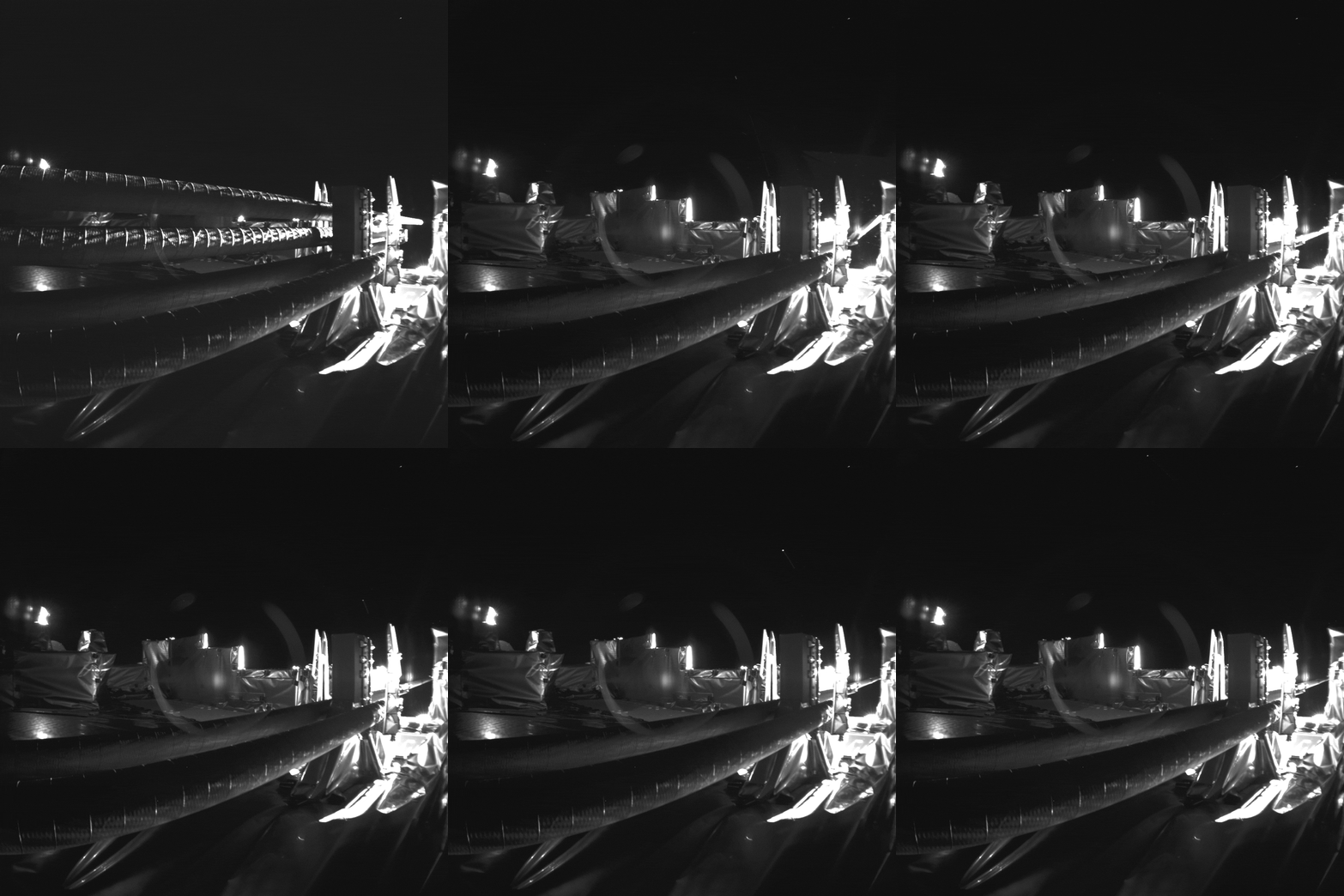
The Radar for Icy Moons Exploration (RIME) antenna on ESA’s Jupiter Icy Moons Explorer (Juice) spacecraft has encountered an issue preventing its deployment, potentially caused by a stuck pin. Despite this, Juice’s other instruments are functioning properly, and there’s a two-month window to solve the problem. Work continues to free the radar, and teams at ESA’s mission control center in Darmstadt, Germany, along with partners in science and industry, have lots of ideas up their sleeves.

science-and-exploration2 years ago

Juice RIME antenna deployment progresses.

The deployment of Juice's ice-penetrating RIME antenna has been delayed due to an issue with the mounting bracket. Teams at ESA's mission control center are working to free the radar, which is currently partially extended but still stowed away. The current leading hypothesis is that a tiny stuck pin is preventing the antenna's release. Various options are being considered to nudge the instrument out of its current position. The RIME instrument is one of ten on board ESA's Jupiter Icy Moons Explorer, Juice, set to investigate the emergence of habitable worlds around gas giants and the formation of our Solar System.