Many elderly Vanguard clients are failing to take required minimum distributions (RMDs) from their retirement accounts in 2024, leading to potential tax penalties of up to 25%. Vanguard recommends automating withdrawals and consolidating accounts to prevent missed RMDs and avoid unnecessary taxes.
US President Donald Trump is advocating for easing regulations to allow Americans to invest retirement savings in cryptocurrencies, private equity, and other alternative assets, aiming to broaden investment options for workers but raising concerns about increased risks. The Department of Labor has 180 days to review potential rule changes, with some major firms already exploring private equity retirement funds. Critics warn this could pose risks to savers, while supporters see it as expanding investment opportunities.
Private-credit ETFs are emerging as a way to bring private loans into retail investment portfolios, including potential inclusion in retirement accounts, but they pose significant risks related to liquidity and valuation due to the illiquid nature of private assets. Industry leaders are exploring securitization through CLOs to improve tradability, yet concerns remain about the true liquidity and risk profile of these investments, especially during market stress. Regulatory and market developments are ongoing, with some pushing for broader private asset access in retirement plans, while skeptics warn of potential systemic risks.
U.S. President Donald Trump is reportedly preparing to sign an executive order allowing 401(k) retirement accounts to invest in cryptocurrencies like Bitcoin, Ethereum, and Dogecoin, marking a significant shift in investment policy and potentially boosting crypto adoption in traditional finance.
President Trump plans to issue an executive order to expand access to private investments in 401(k) retirement accounts, potentially allowing investors to invest more easily in private companies like SpaceX and OpenAI, which could unlock trillions of dollars for private firms and bolster the private asset management industry.
The Federal Reserve's 2022 Survey of Consumer Finances reveals that almost half of American families don't have dedicated retirement accounts, with median savings varying by age. The article provides a breakdown of median retirement savings and the percentage of those with accounts by age bracket. It also emphasizes the importance of developing a retirement plan tailored to individual circumstances and offers strategies for catching up on savings, including seeking financial advice and exploring additional sources of income.
Despite positive economic indicators such as cooling inflation and low unemployment, consumer sentiment in the US remains negative, with consumers feeling the economic strain. The Indicator from Planet Money explores three specific ways in which consumers are feeling the pinch, including the impact on Family Dollar, credit card debt, and retirement accounts.
While delaying Social Security benefits until age 70 can lead to higher monthly checks and potentially maximize lifetime benefits, it's not without risks. Delaying benefits may temporarily reduce spousal benefits and leave less for heirs, and there's no way to predict if it's the best strategy for everyone. Coordinating claiming strategies with a spouse and considering the impact on retirement accounts are crucial, as collecting early to out-invest the growth in benefits comes with substantial risk.
The S&P 500 and Dow Jones hit record highs, signaling a boost for Americans' retirement accounts and investor confidence in the economy's future. Tech stocks, including chipmakers like Nvidia and Texas Instruments, contributed to the market surge. The record highs reflect signs of a strong economy, with strong consumer spending, a healthy labor market, and expectations of interest rate cuts. While there's a chance of market volatility due to high inflation and interest rates, analysts anticipate the current rally to continue based on historical stock market trends.
Changes for retirement in 2024 include potential taxes on Social Security benefits due to a high cost-of-living adjustment (COLA) in 2023, the ability to roll over unused funds from 529 education accounts to a Roth IRA, the elimination of required minimum distributions for designated Roth accounts in certain retirement plans, a 3.2% increase in Social Security benefits, higher Medicare expenses including increased Part B rates and Part D premiums, and the cooling of inflation providing some relief for retirees.
As the end of the tax year approaches, there are still strategies you can employ to reduce your 2023 tax bill. One option is to fund your retirement accounts, such as a 401(k) or IRA, to defer taxable income and grow your nest egg. Additionally, making charitable contributions can lower your taxable income while allowing you to support causes you care about. Another tactic is to harvest losses by selling losing stocks to offset gains. Going green can also provide tax benefits, such as clean vehicle tax credits for purchasing electric vehicles or fuel cell vehicles, and energy-efficient home improvement credits. Lastly, consider borrowing from family members to reduce interest rates and preserve tax breaks.
As the year-end approaches, there are several tax-saving strategies to consider. The Inflation Reduction Act offers tax credits for energy-efficient home improvements and electric vehicle purchases. Other strategies include maximizing contributions to 401(k) accounts, making charitable donations, and utilizing tax-loss harvesting. Seniors should be aware of the required minimum distribution (RMD) rules for retirement accounts. It's important to take advantage of these opportunities before December 31 to maximize tax savings.
The IRS has increased the contribution limits for 401(k) and IRA accounts for 2024, allowing individuals to shield an additional $1,000 from taxes. The 401(k) contribution limit has been raised by $500 to $23,000, while the IRA contribution limit has been increased by $500 to $7,000. Savers aged 50 and older can still make catch-up contributions of $7,500 for 401(k) and $1,000 for IRA accounts. These increases provide investors with more opportunities to save for retirement and take advantage of tax-deferred growth.
The IRS has announced the new retirement account contribution limits for 2024. The employee contribution limit for 401(k) plans will increase to $23,000, while catch-up contributions for those aged 50 and older will remain at $7,500. The contribution limit for IRAs will be raised to $7,000, with catch-up contributions remaining at $1,000. Additionally, the adjusted gross income phaseout range for Roth IRA contributions will increase, potentially allowing more Americans to qualify.
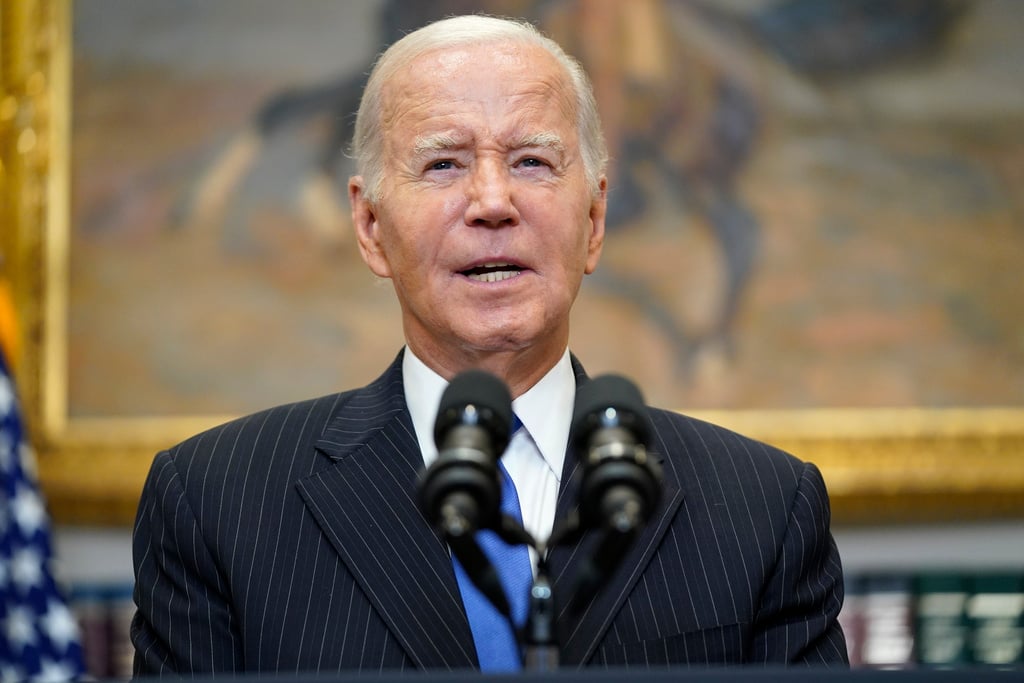
President Joe Biden has unveiled a proposal by the Labor Department to eliminate "junk fees" charged by financial advisers on retirement accounts. The new rule would require financial advisers to act in the best interest of account owners, closing loopholes in earlier laws. Biden specifically highlighted the impact of self-serving annuities that drain people's savings accounts. Under the rule, financial advisers who violate it would face penalties, including paying restitution and fines. The president's campaign against hidden fees aims to protect consumers and ensure fairness in the financial industry.