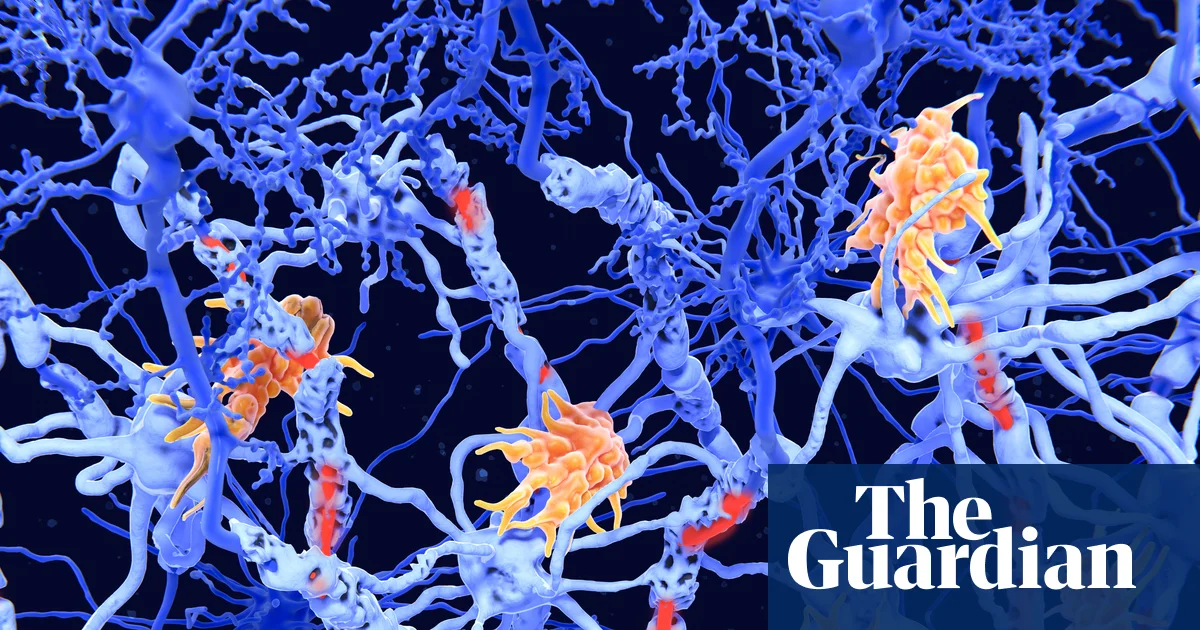
Researchers have identified two compounds, K102 and K110, capable of repairing the myelin sheath damaged by multiple sclerosis, showing promise for reversing nerve injury and advancing toward human clinical trials.
Early clinical trial results suggest that combining a common diabetes drug with an antihistamine may partially repair nerve damage in multiple sclerosis, offering hope for a new class of therapies, although the effects observed were small and not yet clinically noticeable.
A cell study shows that pro-inflammatory molecules like TNF-alpha and interferon gamma impair the growth of myelin-producing cells in the brain, potentially contributing to multiple sclerosis by hindering myelin repair. The research suggests that promoting oligodendrocyte development while preventing astrocyte-like transformation could be a promising therapeutic strategy for MS.
Estriol, a pregnancy hormone, has been found to reverse myelin breakdown in the brain's cortex, a primary area affected in multiple sclerosis (MS). MS results in inflammation that damages the myelin coating around nerve fibers in the brain's cortex, leading to disability worsening. However, the new study found that estriol not only prevented brain atrophy but also induced remyelination, suggesting it could repair MS-induced damage. This is the first study to identify a treatment that could repair myelin in the cortex, undoing some of the damage caused by MS.
An analysis of MRI data from the ReBUILD clinical trial has shown that the over-the-counter antihistamine clemastine can repair myelin, the protective coating on nerve fibers that’s damaged in multiple sclerosis (MS). The study provides the first direct, biologically validated, imaging-based evidence of myelin repair induced by clemastine. MRI techniques have been developed to measure the myelin water fraction (MWF), the ratio of water trapped within the thin layers of myelin to the total water content in brain tissue, most of which can flow more freely.
Surgery has been found successful for some MS patients with facial pain. The MS incidence rate in the UK is holding steady. Omega-3 fatty acids may be a key to keeping the myelin coating of some of our nerves in good shape. Retinoic acid may ease inflammation in people with MS and stimulate the growth of myelin forming cells in the central nervous system.