Australia's inflation rose to 3.2% in Q3, the highest in over a year, surpassing forecasts and pushing beyond the Reserve Bank's target, which suggests that rate cuts may be delayed as inflation remains persistent despite economic growth.
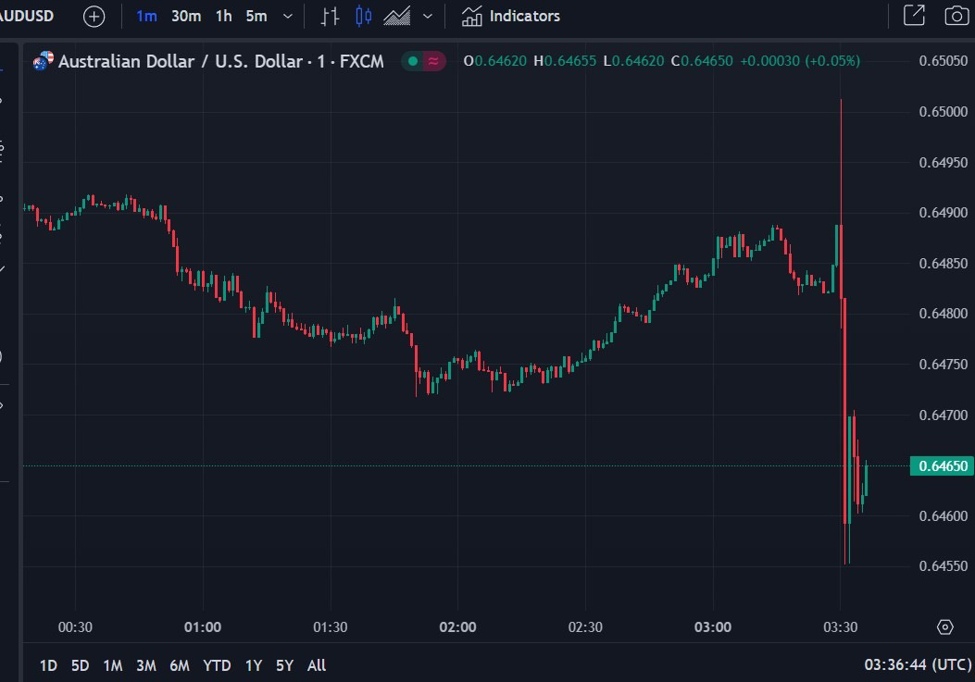
Australia's central bank cut interest rates to 3.6%, the lowest since April 2023, while downgrading its economic growth forecast to 1.7% for the year, citing subdued demand and inflation easing, but remains cautious about potential further tightening to control inflation amid global trade uncertainties.
Asian stock markets mostly rose, with Japan and Australia reaching record highs amid optimism from the U.S.-China tariff truce extension and the Reserve Bank of Australia cutting interest rates as expected, supporting regional investor sentiment.
Australia's inflation rate in Q2 dropped to 2.1%, the lowest since March 2021, supporting the case for a rate cut by the Reserve Bank of Australia, which has already reduced rates twice this year. Despite the lower inflation, the RBA has kept rates steady at 3.85%, citing strong inflation indicators and labor market conditions, but analysts expect a rate cut in August due to global economic slowdown and rising unemployment.
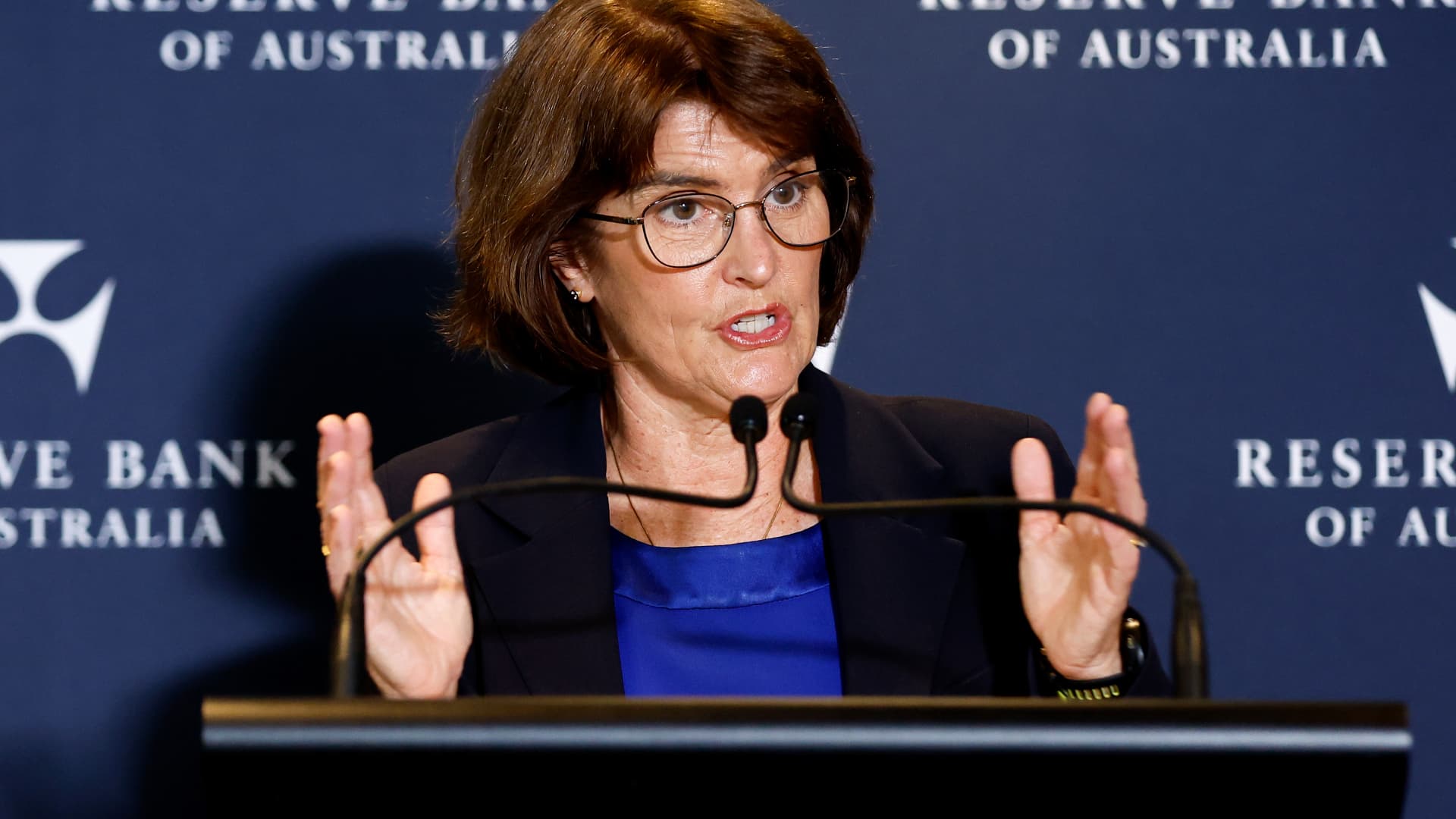
Reserve Bank of Australia (RBA) Governor Michele Bullock stated uncertainty about a potential interest rate cut in February, emphasizing the need to be data-driven. While not ruling out a rate cut, Bullock highlighted the importance of upcoming economic data, including jobs and CPI reports, in guiding the RBA's decision. This uncertainty is expected to keep the Australian dollar volatile until the next RBA meeting on February 18.
The Reserve Bank of Australia has maintained its benchmark interest rate at 4.35% for the eighth consecutive meeting, citing high underlying inflation despite a decline in headline inflation to 2.8% in the third quarter. The RBA expects inflation to remain above its 2%-3% target until 2026, with uncertainties in labor market conditions and external geopolitical risks influencing future economic outlooks.
The Reserve Bank of Australia's February meeting minutes revealed that the board considered the possibility of a 25 basis points rate hike or maintaining the current rate, with the latter being the stronger option due to balanced risks to the outlook. While data provided more confidence in inflation returning to target, the board acknowledged the need for more time to be confident in this. Despite this, the board agreed it was appropriate not to rule out another rate increase, but also noted that hiking rates would not prevent them from cutting if the economy weakens. The minutes also highlighted weaker-than-expected data on the labor market and consumption, as well as the impact of high inflation, higher tax, and interest payments on consumption.
The Reserve Bank of Australia has updated its economic forecasts for 2024 and 2025, with slight downward adjustments in GDP and CPI expectations. The revisions indicate a more favorable inflation outlook and potential easing of rates over time, although inflation forecasts remain at the high end of the RBA's target range. The forecasts also point to continued but slightly tempered economic growth, with modest adjustments in inflation expectations suggesting a stabilization of price increases.
The Reserve Bank of Australia (RBA) has decided to keep the cash rate at 4.35%, as expected, while acknowledging that further interest rate hikes cannot be ruled out. Despite signs of easing inflation, it remains high at 4.1%, with goods price inflation lower than forecasted. The RBA remains attentive to inflation risks and uncertain economic outlook, emphasizing the need for sustainable movement towards the target range. The Australian dollar climbed slightly following the report, as the RBA's language indicated that a further interest rate increase is still a possibility.
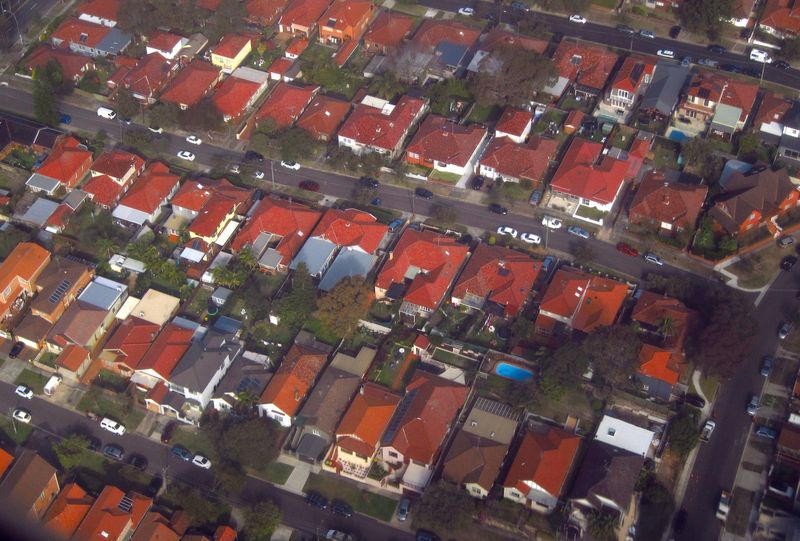
Australian home prices saw an 8.1% increase in 2023, recovering from a 5% decline the previous year, but growth has slowed due to higher interest rates, inflation, and affordability issues. Sydney's prices rose by 11.1%, yet remained below their peak, while Perth and Brisbane also experienced significant increases. The Reserve Bank of Australia's rate hikes, totaling 425 basis points since May last year, and high inflation have put financial pressure on households. However, the RBA believes most borrowers can manage their mortgages. Future housing market trends will be influenced by the trajectory of interest rates, with potential rate cuts possibly boosting the market in the latter half of the year.
US job openings in October plunged to the lowest level since March 2021, while the US November ISM services index came in slightly higher than expected. The German DAX index rallied to an all-time high, and the ECB's Vujcic stated that he expects no more rate hikes and data-dependent decisions. The RBA and ECB's dovish stance led to declines in sovereign yields in Europe and Australia, suggesting central banks may be behind the cutting curve. Falling oil prices and declining input prices contributed to a sense of declining inflation. Gold retraced while Bitcoin soared, breaking higher to $44,000. The euro and pound both experienced selling pressure.
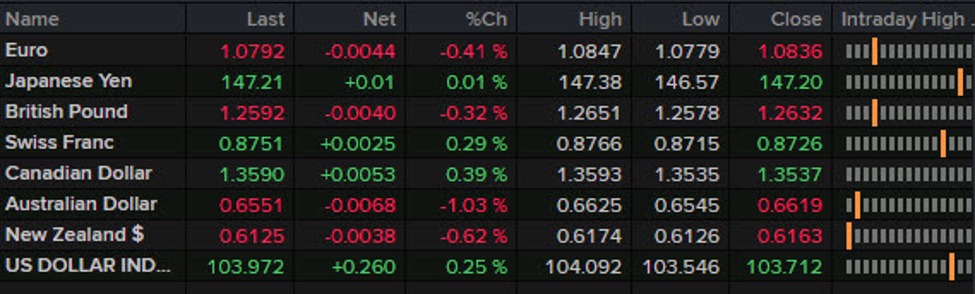
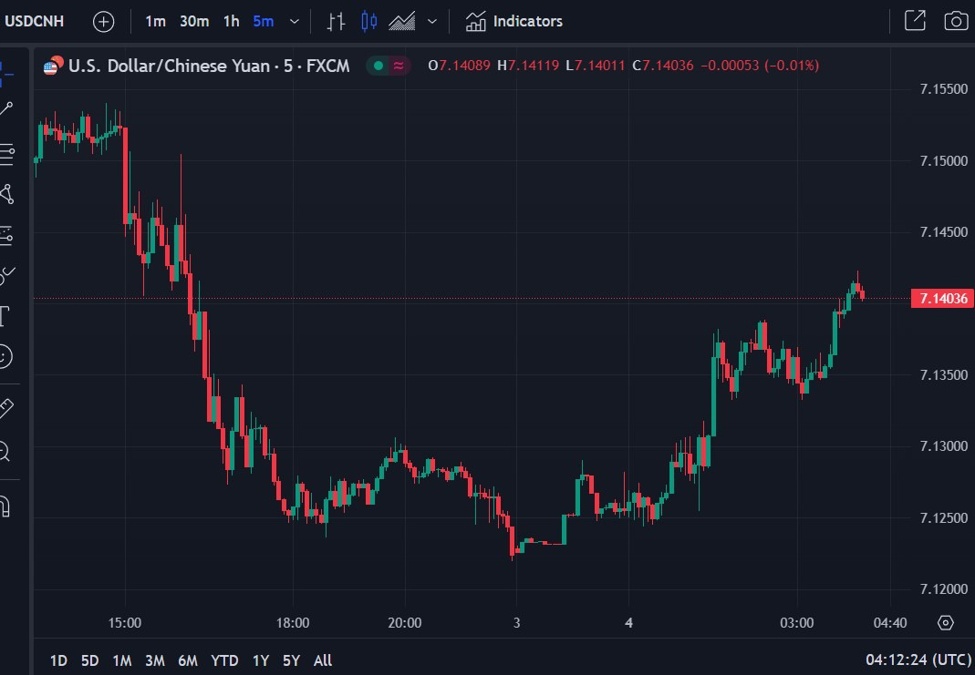
Gold prices rose to highs above $2140 before falling back to around $2085, while Bitcoin surged above $40K. USD/JPY dropped to lows around 146.25 before bouncing back to 146.75. AUD, NZD, and CAD initially rose but later retreated. Concerns over the ongoing respiratory illness outbreak in China continue to impact markets, with the yuan weakening. The Reserve Bank of Australia is expected to keep the cash rate unchanged in its upcoming meeting. Private-survey inflation rates dropped, although monthly rates showed increases.
The Australian dollar (AUD/USD) has slightly decreased after the Reserve Bank of Australia (RBA) raised its cash rate, a decision that was widely expected. Foreign exchange trading carries a high level of risk, and investors are advised to carefully consider their investment objectives and risk tolerance.
Analysts from RBA believe that stocks are approaching a "once-in-a-generation" buying opportunity, as corporate profits are expected to accelerate across sectors of the market. Despite global stocks experiencing a profits recession this year, earnings appear to have bottomed out, and RBA predicts profits to pick up through 2024. The firm sees a robust economy and expects S&P 500 earnings growth to increase by 10%-15% over the next few years. With the exception of a few overvalued tech giants, RBA believes that virtually any other investment presents a great opportunity for investors. Other market forecasters also remain bullish on stocks, despite recent declines.
In the week ahead, investors will be closely watching the release of the U.S. nonfarm payrolls report, speeches by Federal Reserve Chair Jerome Powell and European Central Bank President Christine Lagarde, as well as central bank meetings in Australia and New Zealand. The equity markets are starting the fourth quarter after a weak third quarter, with concerns over surging bond yields and the valuations of tech and growth companies. Lagarde's speech will be closely watched for indications on the future path of interest rates in the Eurozone. Additionally, the Reserve Bank of Australia and the Reserve Bank of New Zealand will hold policy meetings, with investors looking for any signals on rate hikes.