Tag

Radio Bursts

All articles tagged with #radio bursts

astronomy1 year ago

"Star's 54-Minute Radio Bursts Puzzle Astronomers"

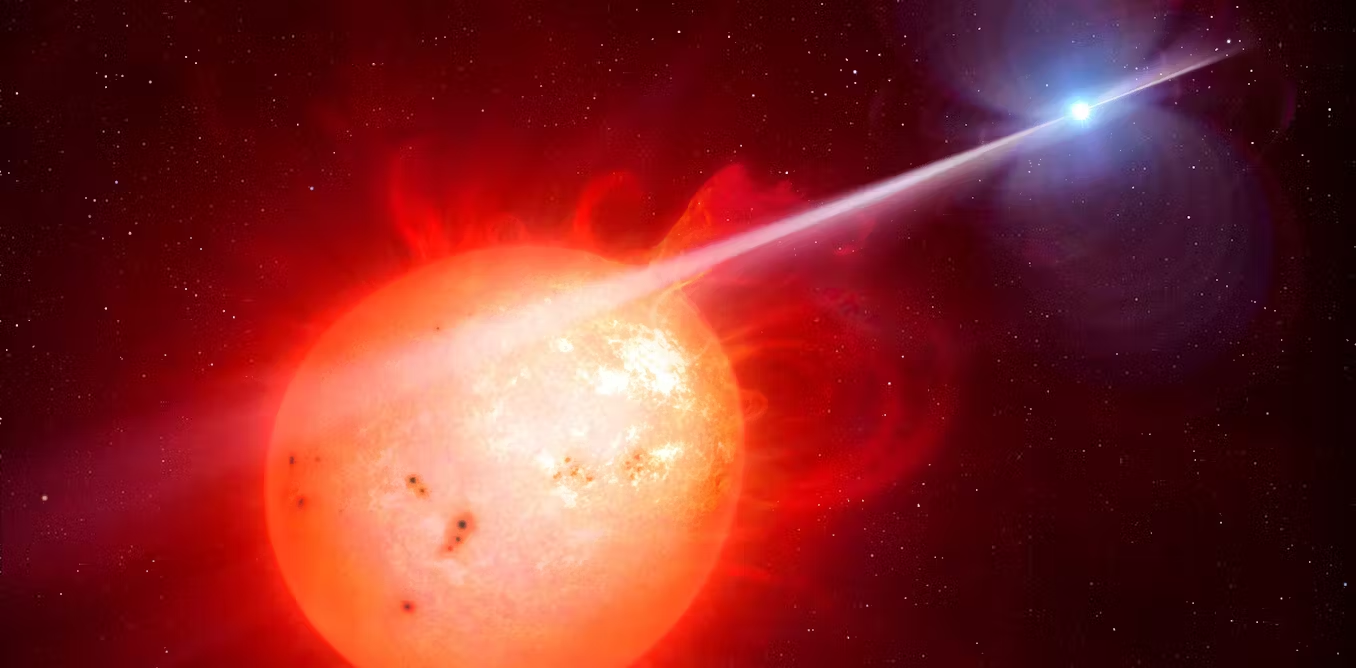
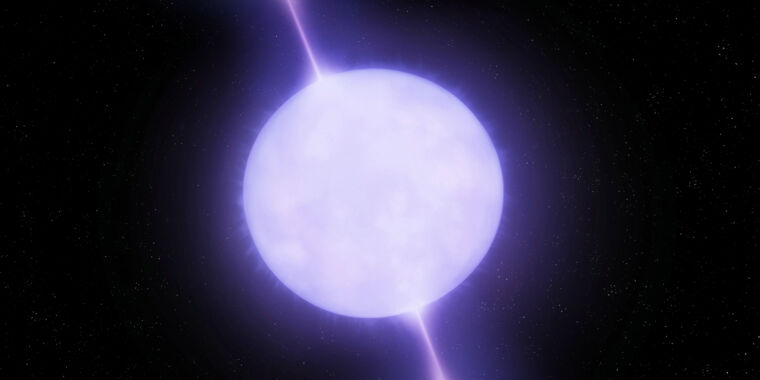
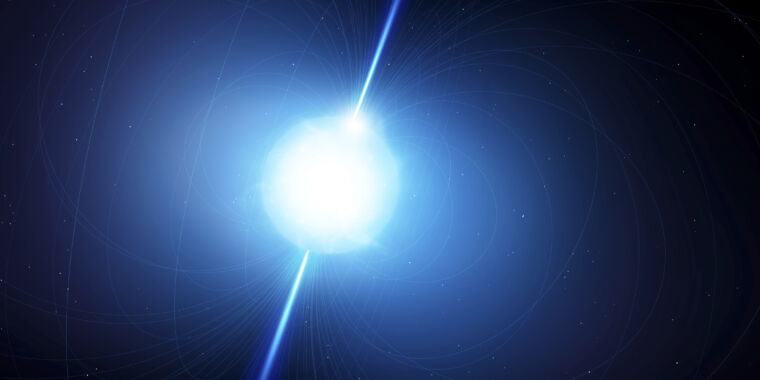
Astronomers have discovered a new source of erratic radio bursts, ASKAP J193505.1+214841.0, which emits pulses nearly an hour apart, unlike any known pulsar. This object, suspected to be a neutron star, shows three modes of activity: strong pulses, faint pulses, and periods of no emission. The discovery adds to the mystery of similar objects, challenging current understanding of neutron stars and their emission mechanisms.

space-science1 year ago

"NASA-Supported Team Detects Aurora-Like Radio Bursts Above Sunspot"

A NASA-supported team has discovered long-lasting radio signals resembling auroras above a sunspot on the Sun, a phenomenon previously observed only on planets and stars. These radio bursts, detected using the Karl G. Jansky Very Large Array, could provide insights into solar behavior and similar emissions from distant stars. The discovery challenges existing notions of solar radio phenomena and suggests that aurora-like radio emissions may also originate from large spots on stars. NASA's heliophysics fleet is poised to further investigate the source regions of these radio bursts, while the team plans to reexamine other solar radio bursts for similar emissions.

astronomy1 year ago

"NASA Telescopes Uncover Clues to Mysterious Radio Bursts"

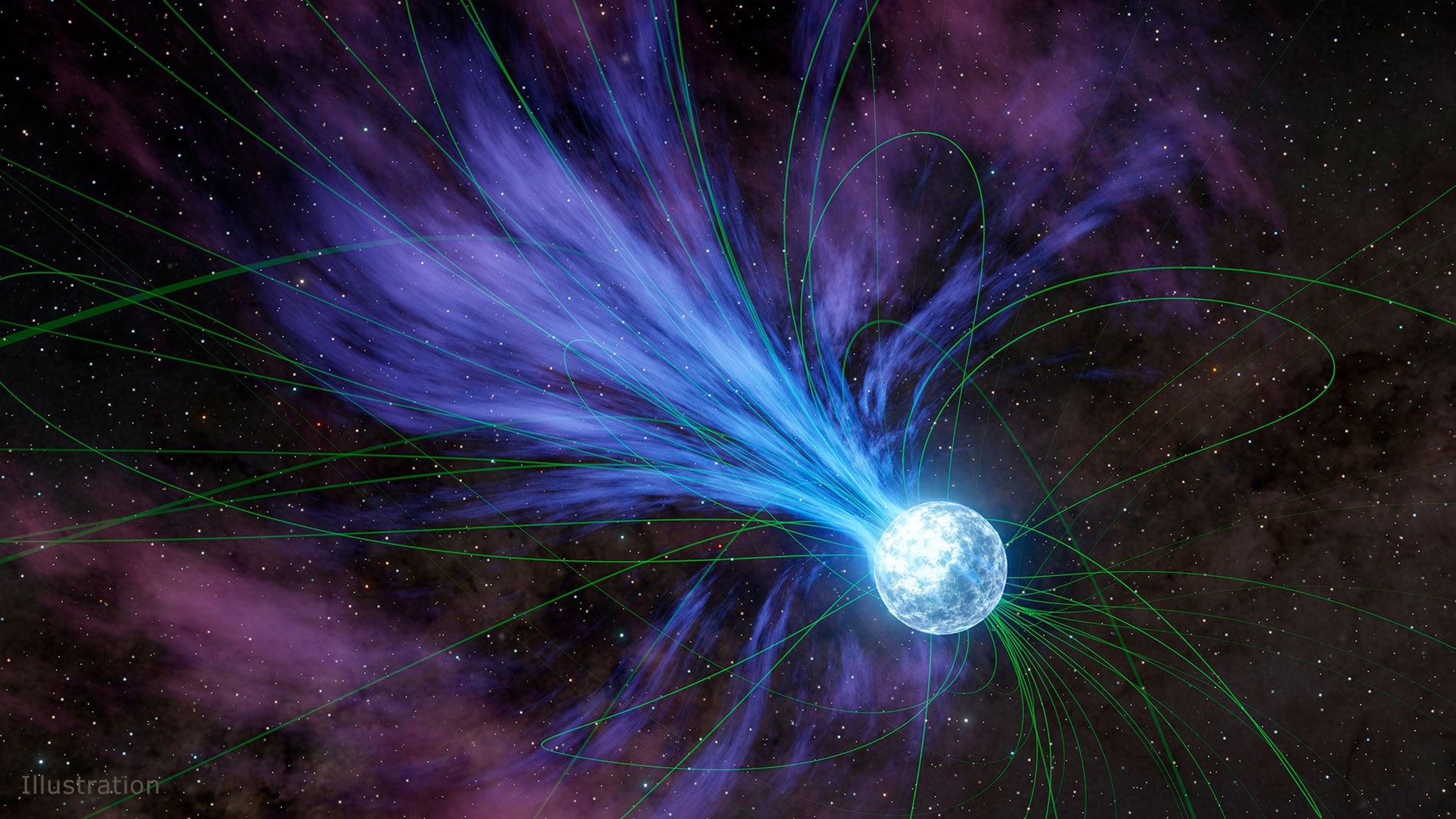
NASA's NICER and NuSTAR telescopes observed a fast radio burst from the magnetar SGR 1935+2154, providing valuable data on the phenomenon. The burst occurred between two periods of rapid rotational rate increase, followed by a surprising rapid decrease. The increase in high-energy light before the burst led to the telescopes' orientation towards the magnetar. Scientists believe the burst was caused by material eruption from the magnetar's interior, but the exact mechanism behind fast radio bursts remains uncertain. The findings were published in the journal Nature, shedding light on the nature of these mysterious cosmic events.

space-science1 year ago

"Unraveling the Mystery: NASA Telescopes Detect Dead Star's Glitch Triggering Extreme Radio Events in Space"

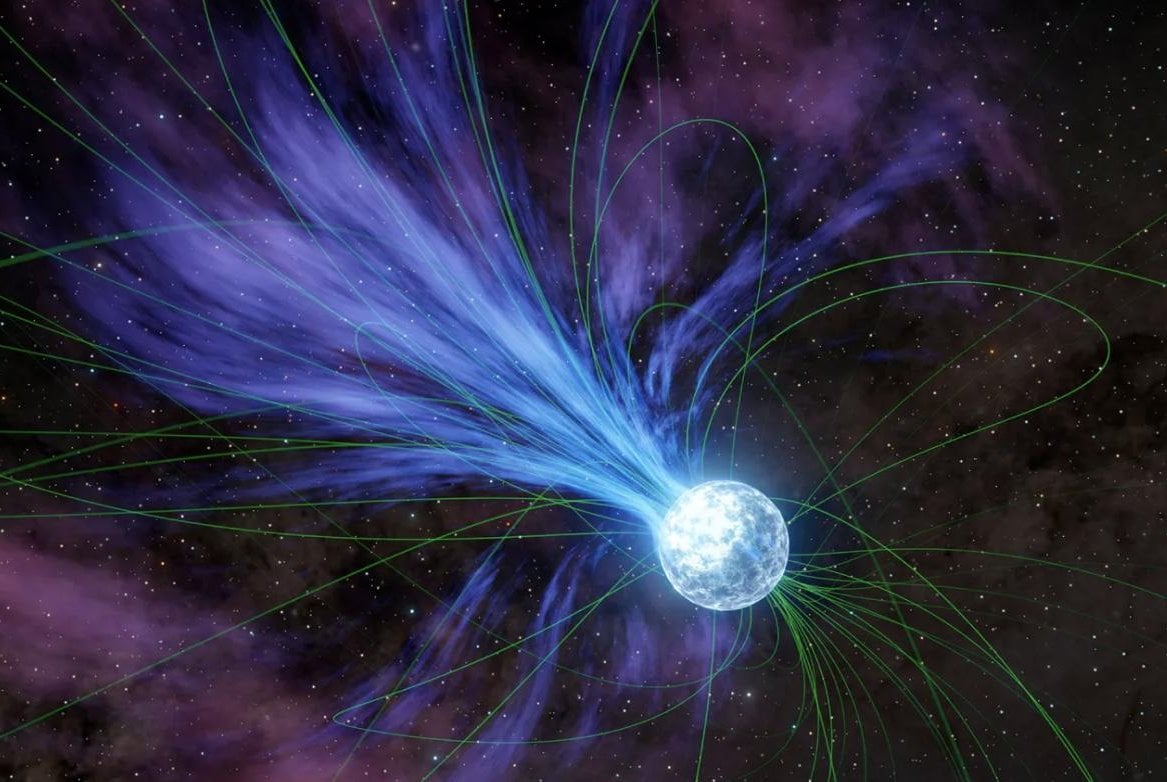
NASA's X-ray telescopes captured a dead star, or magnetar, releasing a fast burst of radio waves, shedding light on extreme radio events in space. The burst, which lasted only a fraction of a second, emitted as much energy as the sun does in a year and formed a laserlike beam. This observation provides valuable insight into the origin of fast radio bursts, as scientists study the collapsed remains of the exploded star and its unusual behavior, including rapid changes in rotation speed.

astronomy2 years ago

"Unprecedented Fast Radio Burst Travels 8 Billion Years to Reach Earth, Surprising Scientists"

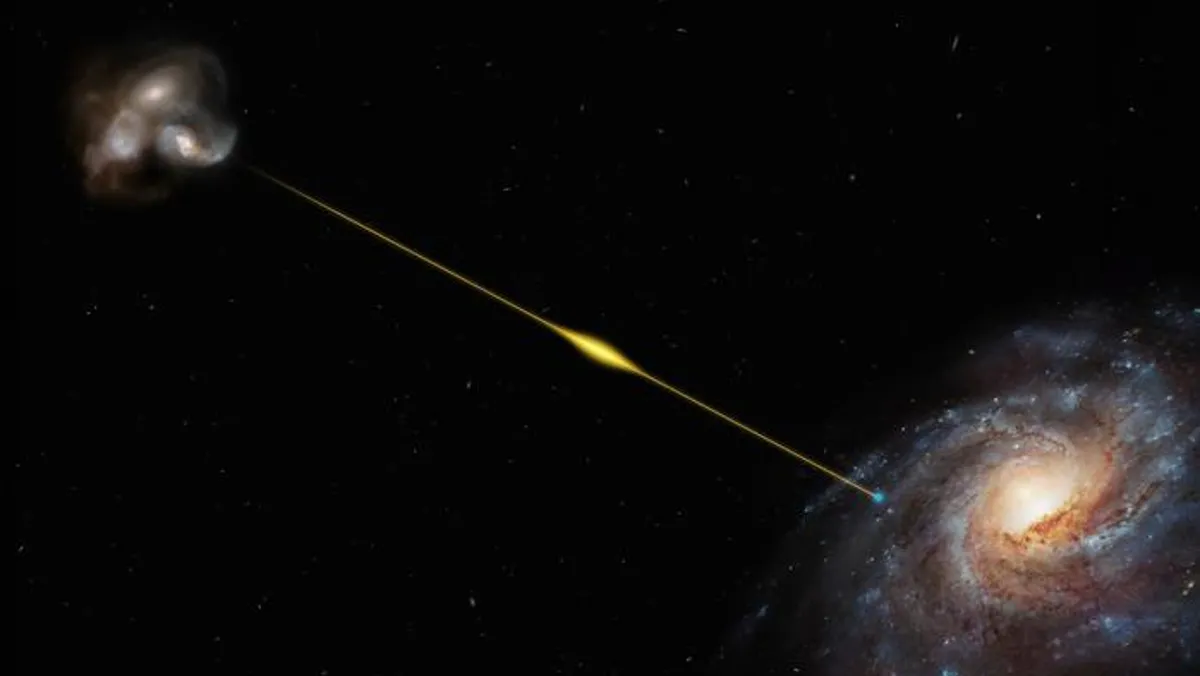
Astronomers have detected the most distant and powerful fast radio burst (FRB) ever observed, which traveled for 8 billion years before reaching Earth. The burst, detected in June 2022, lasted less than a thousandth of a second and packed more energy than the sun produces in three decades. While the exact cause of FRBs remains unknown, scientists suspect that magnetars, distant dead stars with strong magnetic fields, are responsible. These elusive bursts provide valuable insights into the structure of the universe and may help scientists understand the missing matter between galaxies.

astronomy2 years ago

Decades-long Mystery: Space Signal Blinking Every 20 Minutes Since 1988

Astronomers have discovered a new object in space, named GPM J1839–10, that emits regular bursts of radio energy every 21 minutes, which is much slower than typical pulsars. The object was found during a search for transient objects and has been emitting signals since 1988. The nature of this phenomenon remains a mystery, as it does not fit into any known category of objects that can produce such behavior.

astronomy2 years ago

Magnetic Fields Hold Clues to Fast Radio Bursts from Space

A new study published in Science highlights a rare repeating fast radio burst (FRB 20190520B) that produces radio bursts a few times an hour, occasionally at different radio frequencies. Using the five-hundred-meter Aperture Spherical Radio Telescope (FAST) in China, astronomers were able to identify and study this phenomenon, which has never stopped repeating. FRBs are powerful, millisecond-long radio bursts from space that produce as much energy during their brief existence as the Sun produces over a few days.