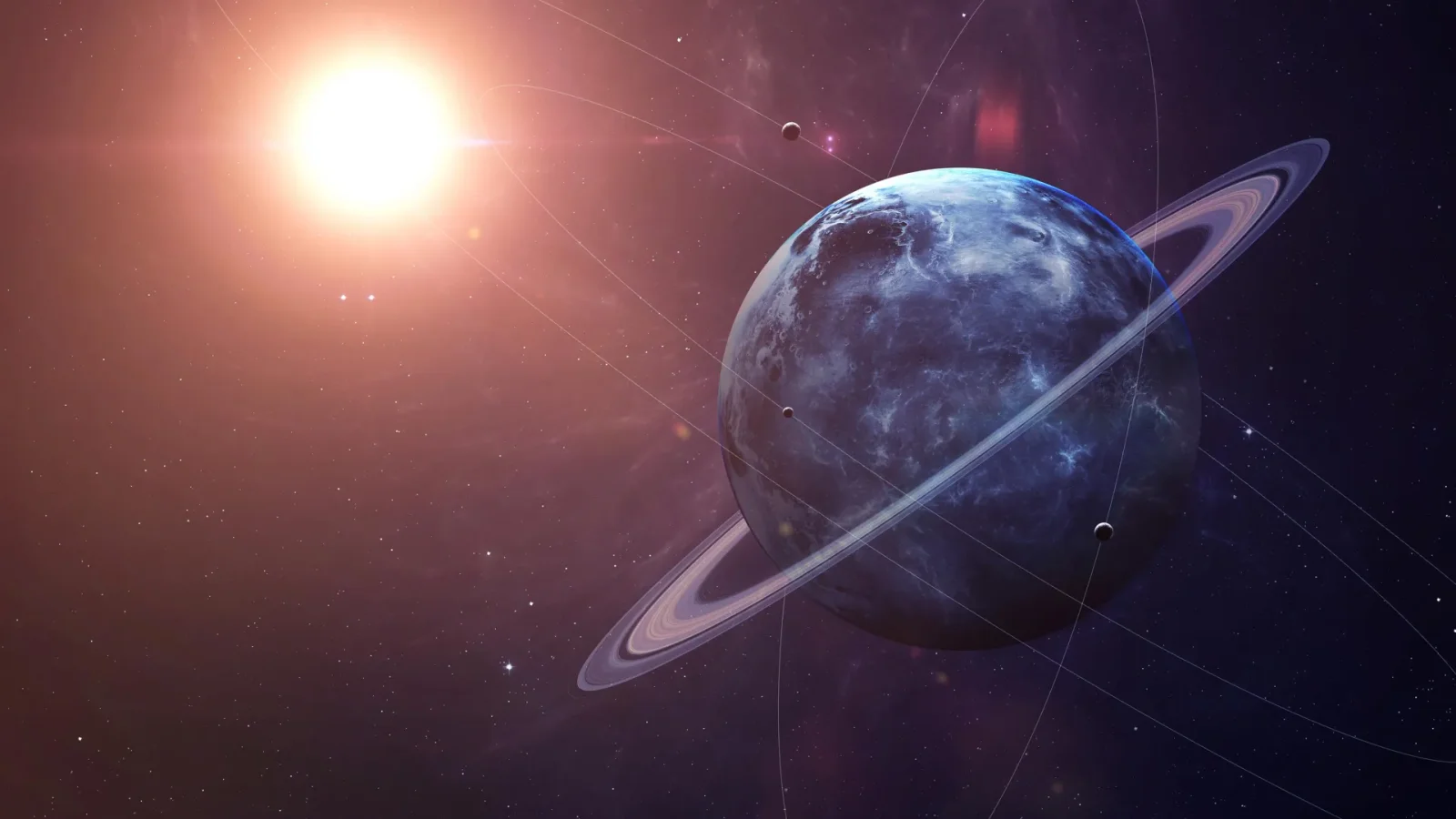
New analysis suggests Voyager 2 encountered Uranus during a solar wind event—likely a co-rotating interaction region—raising Uranus’ radiation belts and solving the long-standing mystery of the intense radiation Voyager 2 saw.
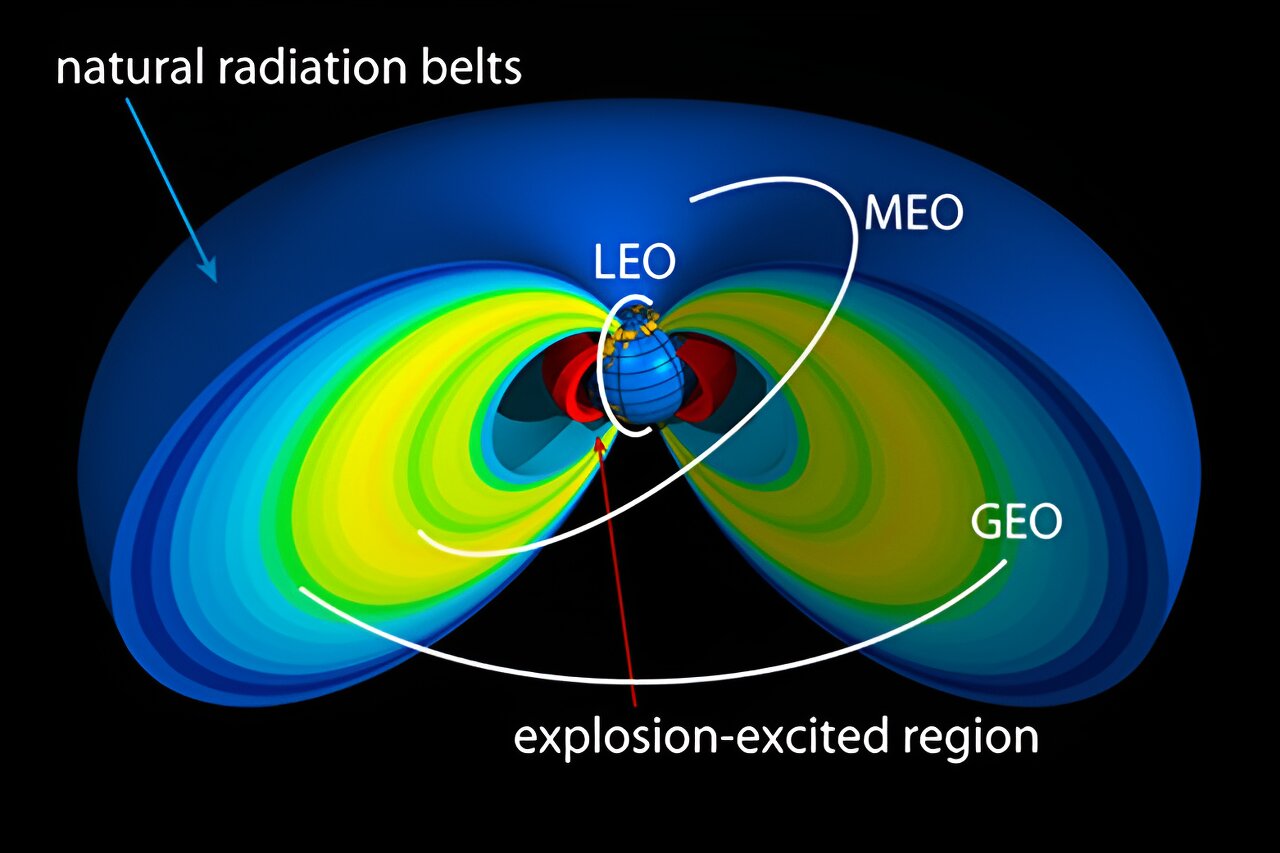
A scientist at Los Alamos National Laboratory has discovered errors in mathematical calculations related to the effects of nuclear explosions in space, which have gone undetected for nearly 50 years. These errors have impacted our understanding of the influence of electromagnetic waves on the dispersal of trapped electrons in the Earth's magnetic fields. The discovery offers an opportunity to improve protections for space technologies and better predict the threat and efficacy of radiation belt remediation strategies. The errors have implications for the damage caused to satellites by artificial radiation belts formed after nuclear explosions in space, and they conflict with quasilinear theory, a cornerstone for existing models used to understand spacecraft protection.
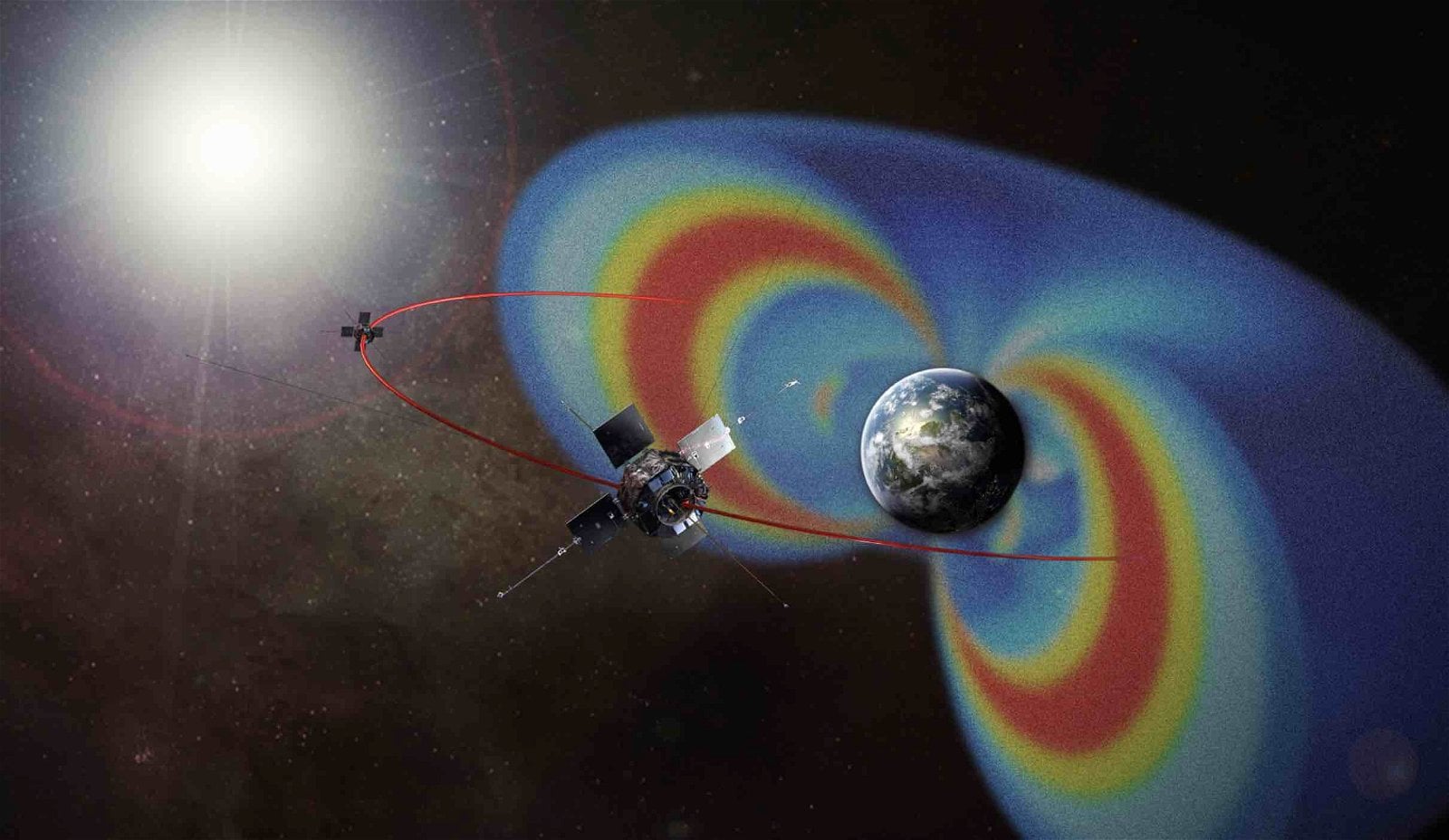
Researchers have corrected a 50-year-old error in the math used to understand how electromagnetic waves scatter electrons trapped in Earth's magnetic fields, leading to improved models of artificial radiation belts and better predictions of their impact on space technology. The discovery of these errors will help scientists improve their understanding of how high-altitude nuclear explosions could produce artificial radiation belts and impact space technology, potentially leading to better protection for satellites and space assets.
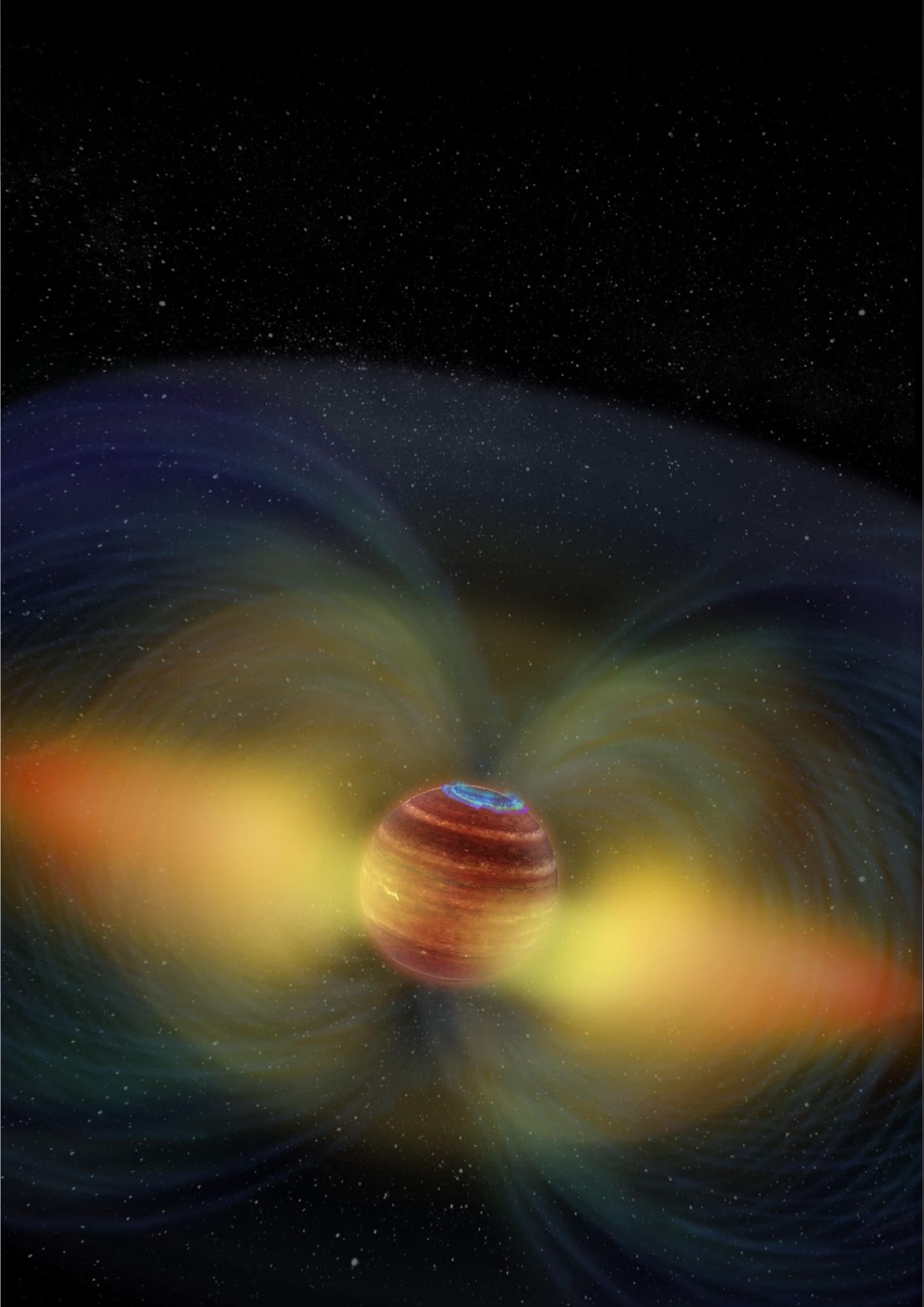
Astronomers have discovered the first radiation belt outside of our solar system around a brown dwarf called LSR J1835+3259, which is about the same size as Jupiter but more dense. The radiation belt is almost 10 million times more intense than Jupiter’s and is made of particles traveling near the speed of light. The team used an observing technique to capture three high-resolution pictures of the radio-emitting electrons trapped in the brown dwarf’s magnetosphere over the course of a year. The discovery suggests that radiation belts might be more universal than initially thought, occurring not just on planets but also on brown dwarfs, low-mass stars, and possibly even very high-mass stars.