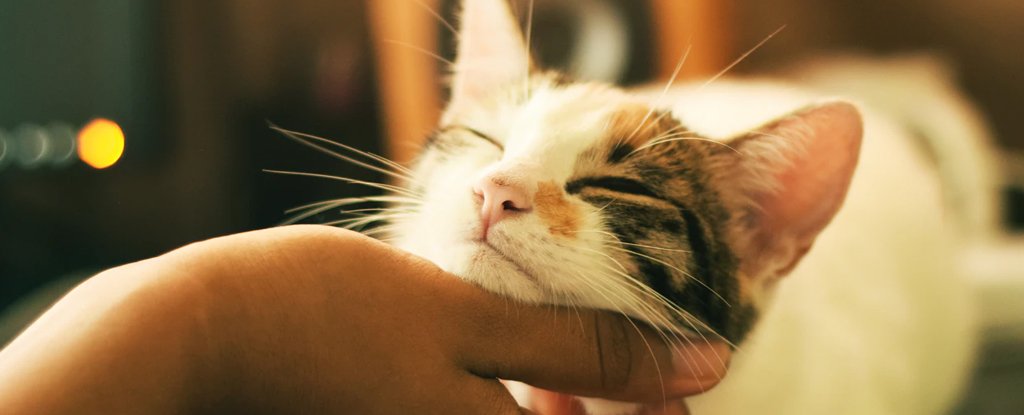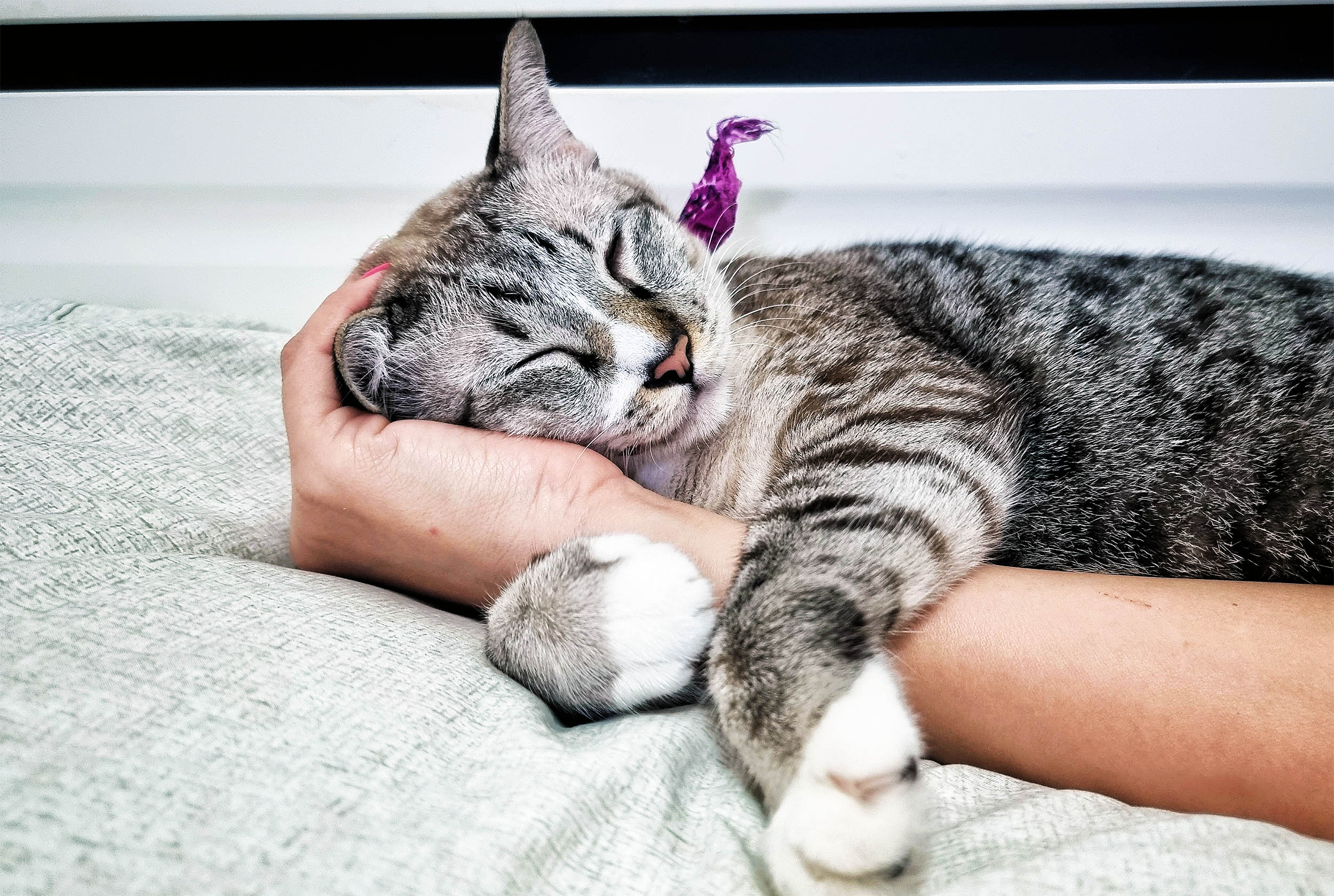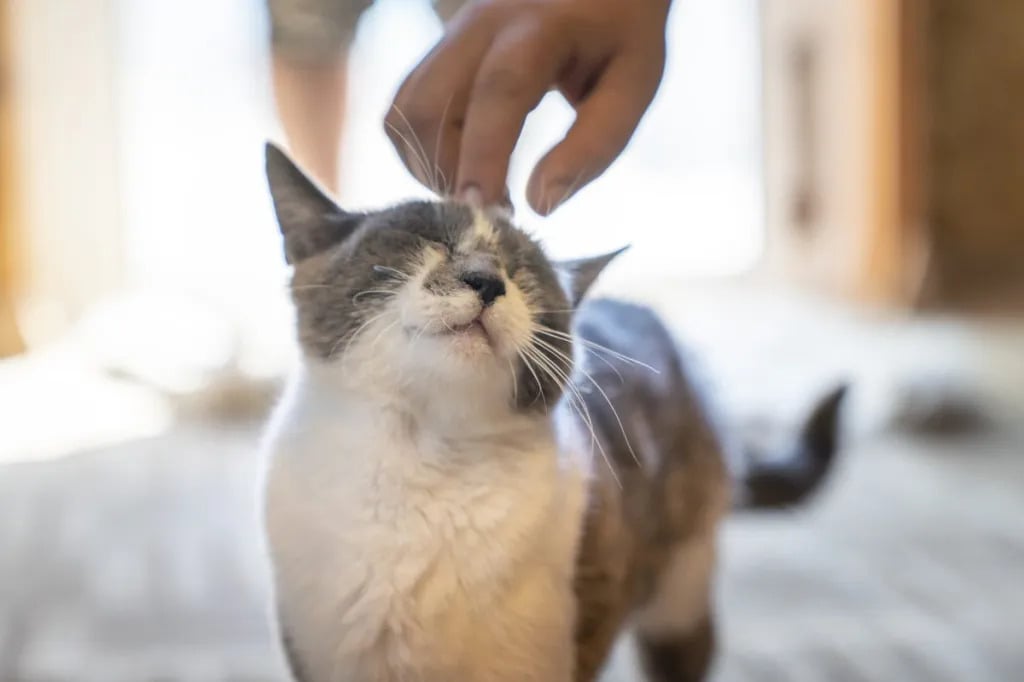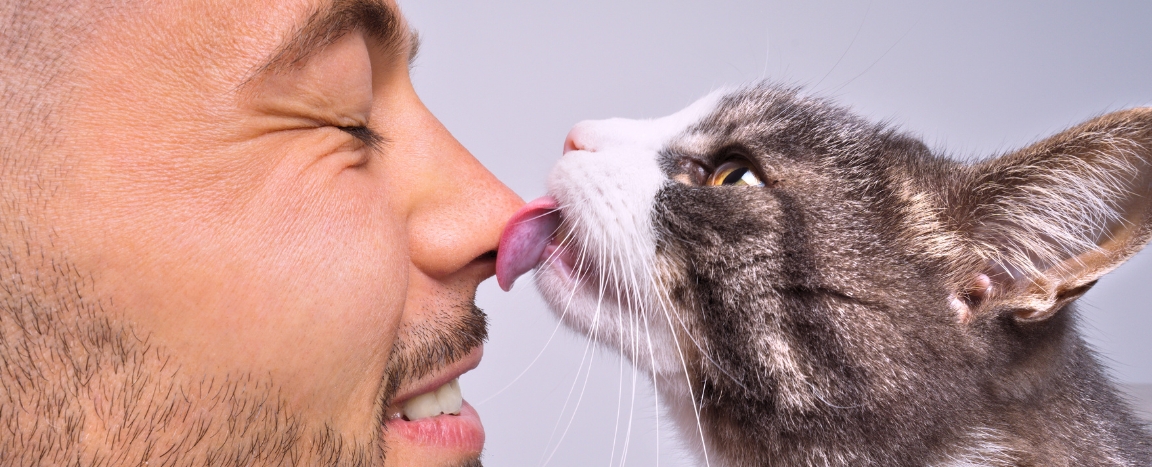
Emerging research highlights the role of oxytocin, the love hormone, in strengthening the bond between cats and humans through gentle interactions like petting and cuddling, which can reduce stress and promote trust, although cats may show their affection more subtly than dogs.
A study from Kyoto University links a genetic variation in the androgen receptor gene to how often domestic cats purr or vocalize, suggesting that domestication and evolution have influenced these behaviors through DNA repeats, with implications for understanding feline communication and evolution.
A Japanese study has identified a gene linked to cat purring, suggesting that domestication may have influenced this trait, and providing insights into the purpose and evolution of purring in cats.
A study by Kyoto University researchers found that genetic variations in the androgen receptor gene influence purring and vocal behaviors in cats, with shorter gene repeats associated with more purring and vocalization, especially in male cats. The research suggests domestication may have shifted gene frequencies, affecting communication styles, and highlights the potential for genetic insights to improve understanding and care of cats, including wild relatives.
A study by Kyoto University found genetic links between cat purring and variations in the androgen receptor gene, with implications for understanding feline behavior and domestication, revealing differences between purebred and mixed-breed cats and similarities with other Felidae species.
Contrary to previous beliefs, new research suggests that cats' purring is not caused by voluntary muscle contractions but rather by the myoelastic aerodynamic theory of phonation. The study found that connective tissue masses in the vocal folds of cats allow them to produce self-sustained low-frequency oscillations without neural input or muscular contractions. While muscle contractions may still play a role, the research indicates that air dynamics trigger the vibration mechanism. The article also explores the various reasons why cats purr, including communication with their mothers, wound healing, and the production of serotonin. However, some experts argue that the study's focus on isolated larynx function overlooks the complexity of a living cat's systems.
Bella, a 14-year-old cat from Cambridgeshire, England, has broken the Guinness World Record for the loudest purr by a domestic living cat, registering a purr measuring 54.59 decibels. Bella's owner, Nicole Spink, described her as a "lazy" cat who purrs all day long, especially when there's food, cuddles, or when watching TV. Spink and her daughter recorded Bella's purr using an app, and Guinness confirmed the record-breaking measurement.
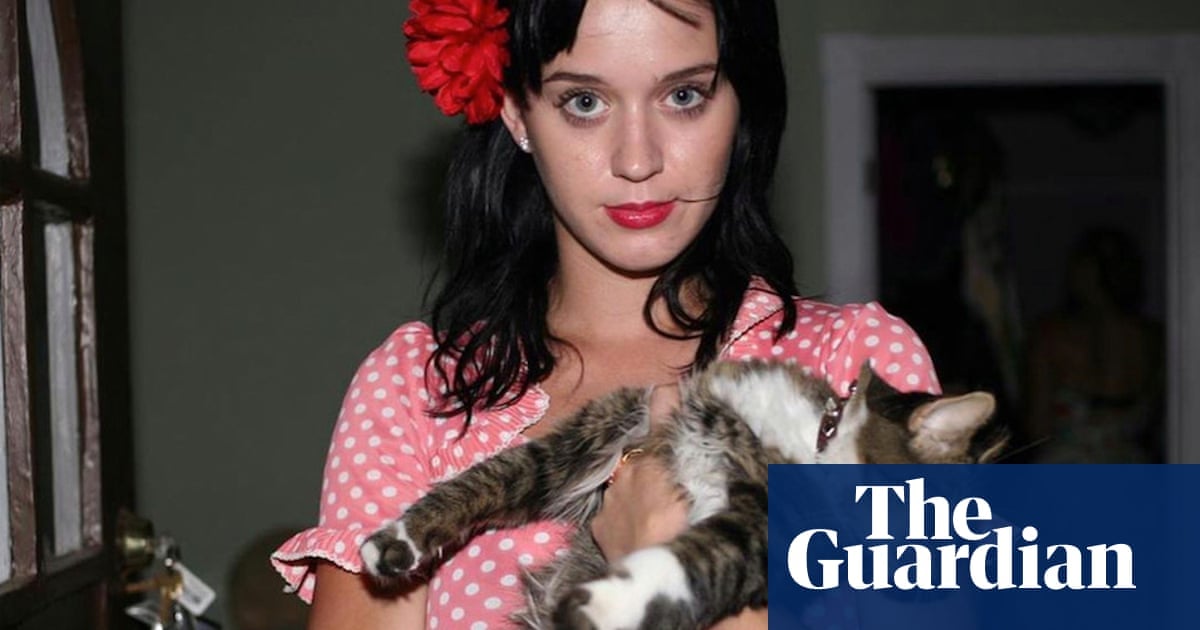
Scientists have discovered that cats produce their purring sound using a vocal technique similar to vocal fry, as employed by singers like Katy Perry. The study found that feline vocal folds contain a specialized pad that allows them to produce low-frequency sounds, far below the range of human voices. Through experiments on euthanized cats, researchers found that the purring sound is generated spontaneously without constant input from the brain. The discovery sheds light on the unique anatomy of cats and may lead to further studies on the role of purring in their health and well-being.
Scientists have discovered that cats produce their purring sound using a technique similar to "vocal fry," as seen in singers like Katy Perry and Kim Kardashian. Previous theories suggested a unique mechanism involving constant neural input from the brain, but new research from the University of Vienna found that purring requires less effort. By dissecting the voice boxes of cats and pumping humid air through their vocal cords, self-sustained oscillations or purrs were produced, indicating that the sound does not require constant brain input. The presence of fibrous tissue embedded in the vocal cords may explain how small cats can produce low-frequency sounds. This finding challenges the previous theory of quick and continuous bursts of signals from the brain causing muscle contractions in the throat to produce a purr.
Cats do not require cyclic contractions of vocal fold muscles to produce purring sounds, according to a recent study. Anatomical investigations have revealed a unique pad in cat vocal folds that enables them to generate low frequencies, similar to human "creaky voice" or "vocal fry." This discovery challenges the previous understanding of cat purring and calls for further research to fully comprehend this mechanism.
Austrian scientists have discovered that connective tissues embedded in cats' vocal cords play a crucial role in their ability to purr, challenging the prevailing hypothesis about how cats produce these low-frequency rumblings. The researchers excised the larynxes of eight deceased domestic cats and found that purring sounds could be produced without muscle contractions, suggesting that cats rely on the same mechanisms as other mammals for vocalizations. The study also highlights that the reasons why cats purr remain a subject of debate, with theories ranging from relaxation and pain relief to manipulation for food.
Scientists have discovered that cats' purring is not caused by active muscle contractions, but rather by squishy pads in their vocal cords. These "purring pads" increase the density of the vocal folds, allowing them to vibrate more slowly and produce the low-pitched purr. The research challenges the belief that larger animals with longer vocal cords are needed to produce low-frequency sounds. The study could provide insights into the role of purring in cats' health and well-being, potentially leading to new technologies for calming devices or treatments for pain and anxiety.
New research suggests that the prehistoric sabretooth tiger may have used a soft purr, similar to house cats, instead of roaring like contemporary big cats. The study examined the bone structures of the extinct animal and found similarities to the hyoid structure of purring cats. Although the sabretooth tiger had fewer bones in its hyoid structure, its size and shape resembled that of smaller purring cats. This raises the possibility that the sabretooth tiger may have produced a soft purr rather than a roar, potentially having deeper vocalizations than modern tigers and lions.