Tag

Protocluster

All articles tagged with #protocluster

James Webb and Chandra Reveal Likely Most Distant Protocluster, Challenging Cosmology
space17 days ago

James Webb and Chandra Reveal Likely Most Distant Protocluster, Challenging Cosmology

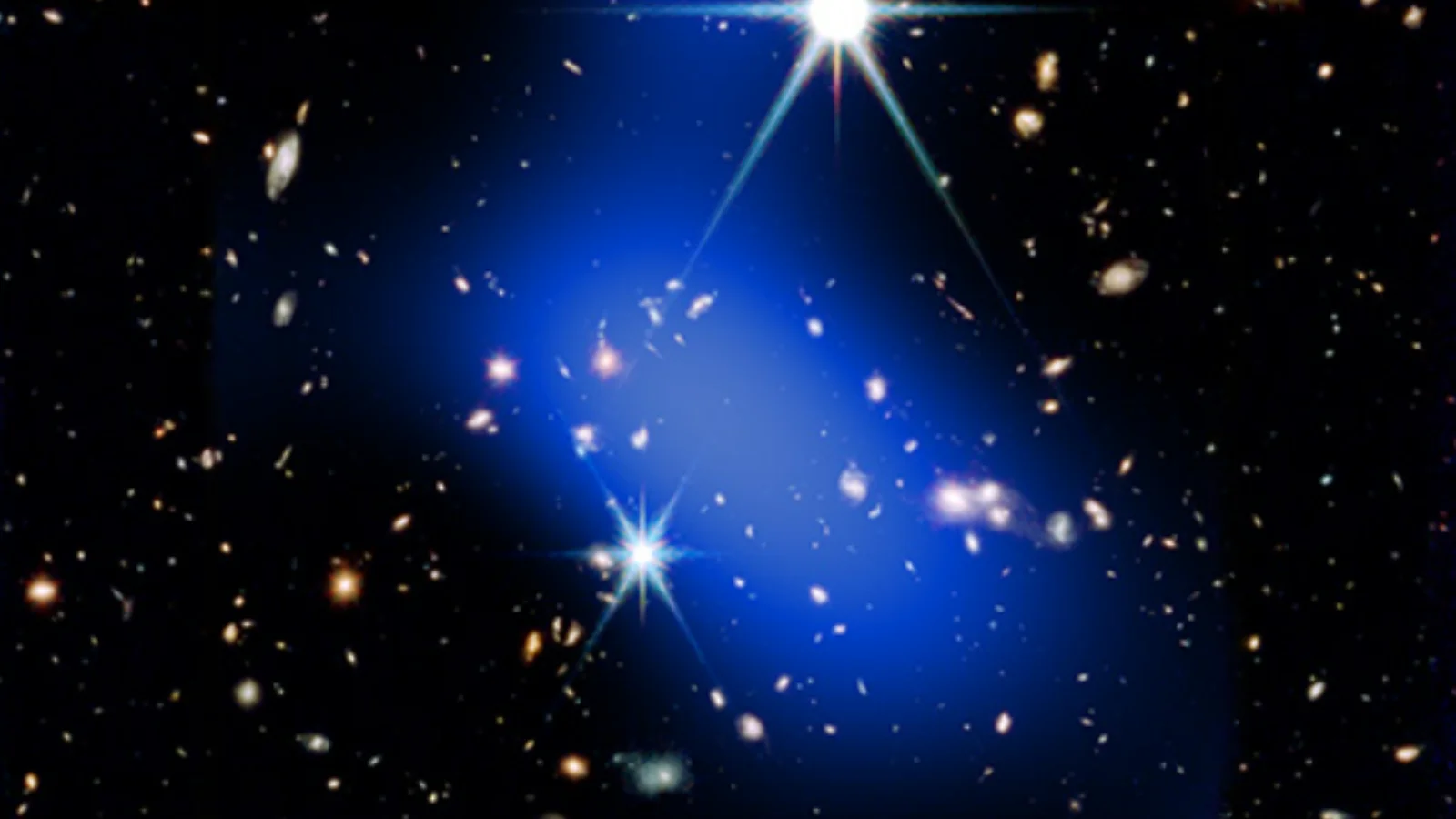
Astronomers using the James Webb Space Telescope and the Chandra X-ray Observatory have captured the clearest image yet of a galaxy protocluster, JADES‑ID1, located about 12.7 billion light‑years away. The structure hosts at least 66 galaxies with a combined mass of roughly 20 trillion suns, embedded in a huge cloud of hot gas detected in X‑rays. Formed when the universe was about 1 billion years old, this protocluster appears more massive and earlier than current cosmological models predict, sparking questions about how such enormous structures grow in the early universe.
JWST and Chandra spot massive protocluster that defies early-universe timing
space18 days ago

JWST and Chandra spot massive protocluster that defies early-universe timing

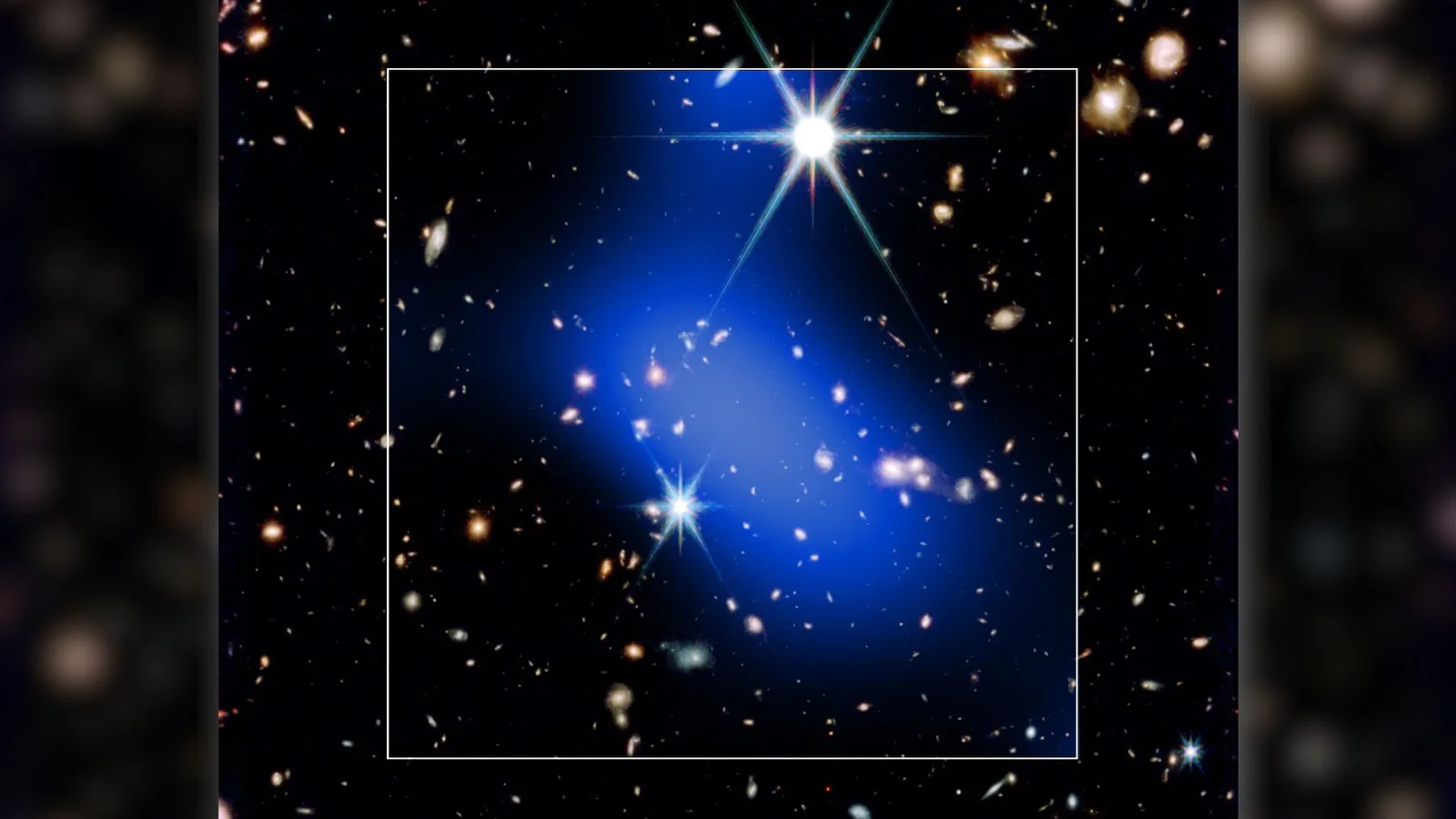
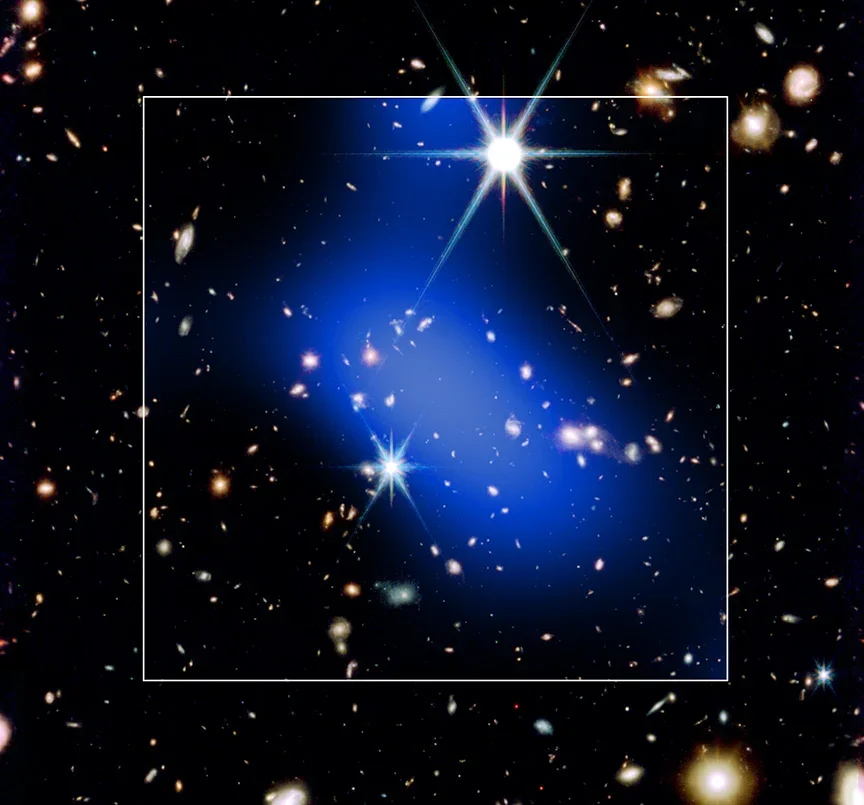
Using JWST's infrared data and Chandra's X-ray observations, astronomers report JADES-ID1, a massive protocluster about 12.7 billion light-years away, containing at least 66 galaxies and a surrounding hot gas cloud; its mass is estimated at ~20 trillion suns and it spans ~1.1 million light-years, existing when the universe was ~1 billion years old, challenging models that such large structures should form later by 2–3 billion years after the Big Bang.

Ancient Protocluster Defies Early-Universe Timing
space19 days ago

Ancient Protocluster Defies Early-Universe Timing

Astronomers using the James Webb Space Telescope and the Chandra X-ray Observatory identified JADES-ID1 as a protocluster with at least 66 galaxies and enveloped in million-degree gas, already amassing about 20 trillion solar masses just one billion years after the Big Bang—far earlier than models predict and prompting questions about how the universe’s largest structures form.

Earliest Protocluster Unveiled by JWST Signals Rapid Cosmic Growth
astronomy1 month ago

Earliest Protocluster Unveiled by JWST Signals Rapid Cosmic Growth

Using the James Webb Space Telescope and NASA’s Chandra X-ray Observatory, scientists observed the most distant protocluster yet seen, JADES-ID1, forming when the universe was about 1 billion years old. Light from this building cluster has travelled 12.7 billion years to reach Earth, revealing multiple galaxies bound by gravity within a surrounding cloud of hot gas and X‑ray emission. The finding—published in Nature—suggests galaxy clusters grew far more quickly in the early universe than current models had predicted, raising new questions about how these massive structures assembled.

"Astronomers Uncover Massive Protocluster Surrounding Luminous Quasar"
astronomy2 years ago

"Astronomers Uncover Massive Protocluster Surrounding Luminous Quasar"

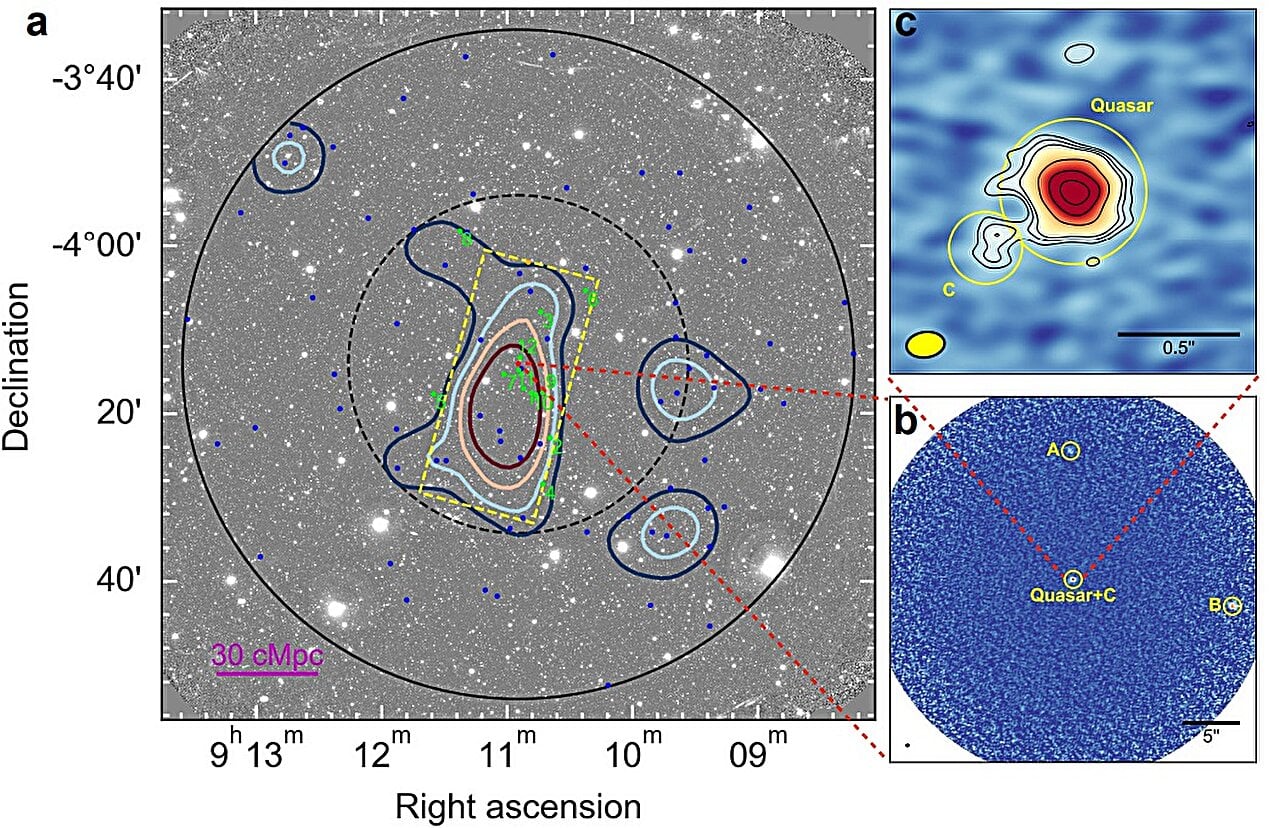
Astronomers have discovered a massive protocluster around a luminous quasar known as J0910–0414, which is one of the most overdense structures known in the early universe. The protocluster, estimated to be three times greater than the nearby Coma cluster, is the most massive one found at a redshift higher than 6.0. This discovery was made possible through observations using the Hyper Suprime-Cam on the Subaru Telescope, the Atacama Large Millimeter/submillimeter Array (ALMA), and other ground-based facilities. The findings suggest that targeting quasar fields with both ALMA and narrow-band observations is an efficient way to identify galaxy overdensities and study the environmental dependence of galaxy evolution.

JWST unveils early universe's secrets through distant observations.
science-and-astronomy2 years ago

JWST unveils early universe's secrets through distant observations.

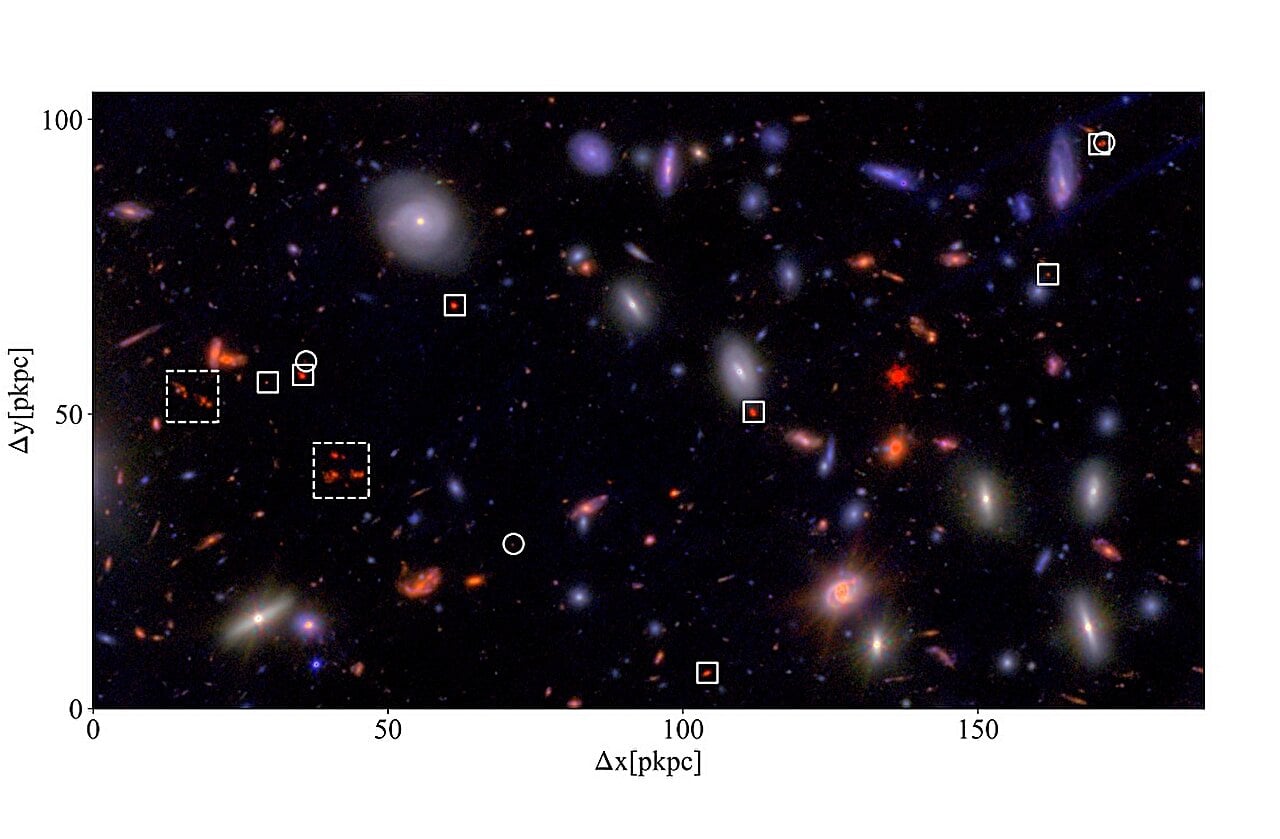
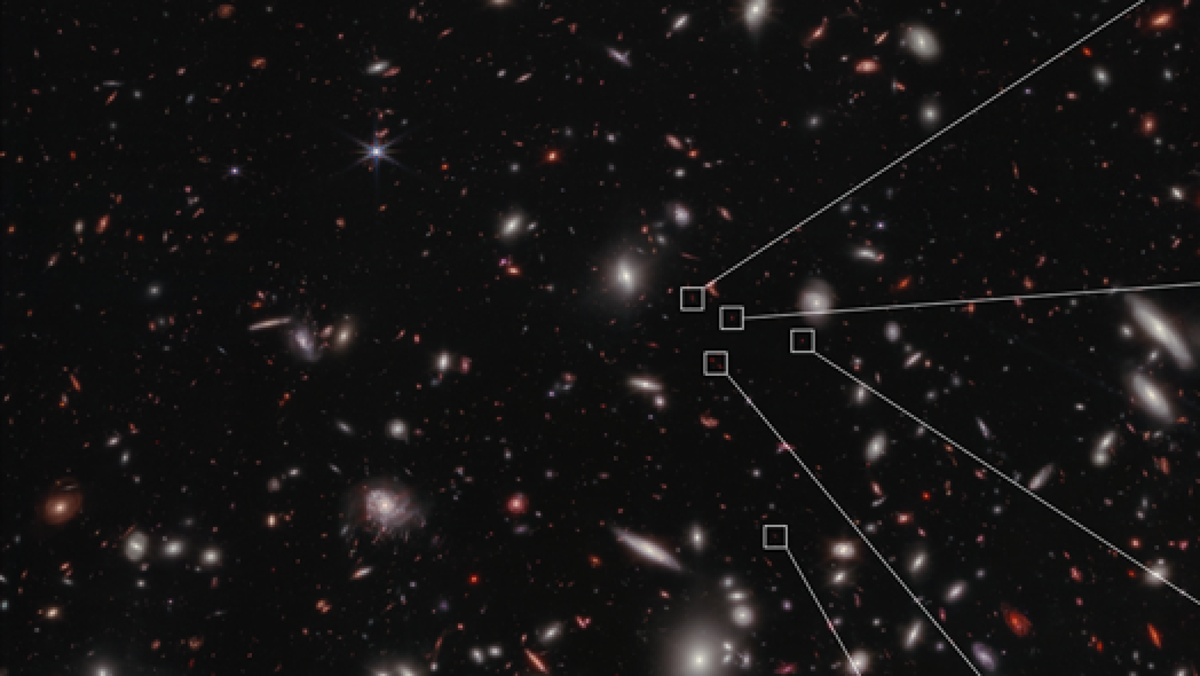
The James Webb Space Telescope has captured images of seven galaxies that make up the youngest protocluster ever seen by astronomers, just 650 million years after the Big Bang. The protocluster will eventually grow in mass and size by incorporating galaxies, forming a galactic cluster that resembles the Coma Cluster. The observation of these galaxies could help scientists better understand how the cosmos has evolved over its 13.8-billion-year existence. The team was able to determine that the galaxies are moving at over 2 million mph through a halo of dark matter, and the key to doing this was precise measurements captured by Webb's Near-Infrared Spectrograph.