The University of Michigan has developed ZEUS, a 2 petawatt laser system that rivals traditional particle accelerators by enabling high-energy physics research in a compact setup, with potential applications in medicine, materials science, and space exploration.
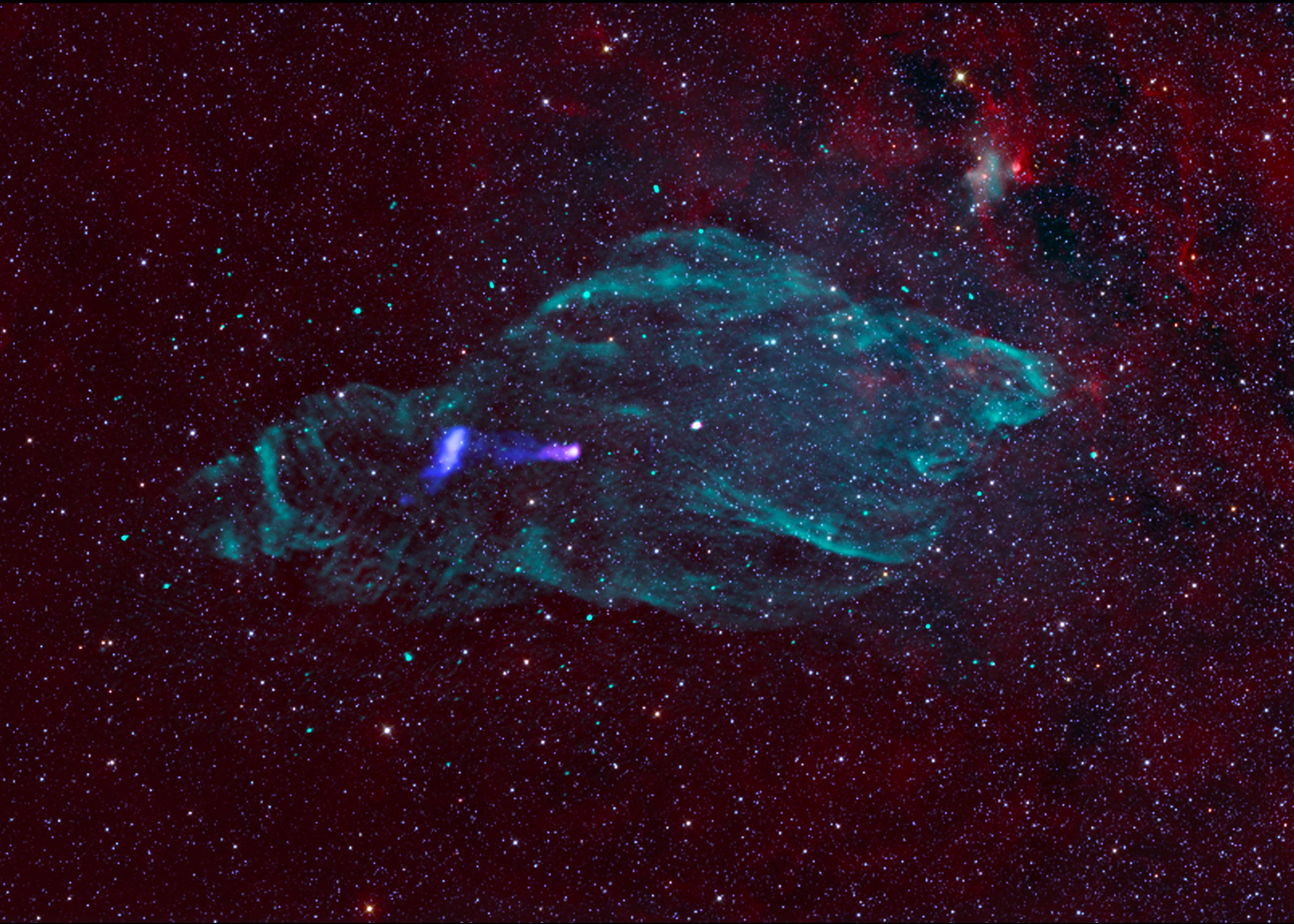
The microquasar SS 433, located in the Milky Way, has been found to emit very high energy gamma rays from its jets, challenging existing theories and shedding light on the mechanisms driving relativistic jets. The detection of gamma rays from SS 433's jets has provided insights into the acceleration of particles within the jets, with the H.E.S.S. observatory pinpointing the exact location of one of the galaxy's most effective particle accelerators. This groundbreaking discovery offers valuable information about the dynamics of relativistic jets and has the potential to enhance our understanding of cosmic phenomena.
NASA's IXPE spacecraft has provided new insights into the process of particle acceleration in extreme environments by studying a microquasar called SS 433. The spacecraft's observations revealed that the magnetic field near the acceleration region points in the direction the jets are moving, indicating a well-ordered magnetic field alignment. This finding challenges previous theories and suggests that the magnetic fields within powerful jets may be "trapped" and stretched when they collide with interstellar matter. The data could also help determine whether the same mechanism acts to align magnetic fields in outflows expelled by various phenomena in space.
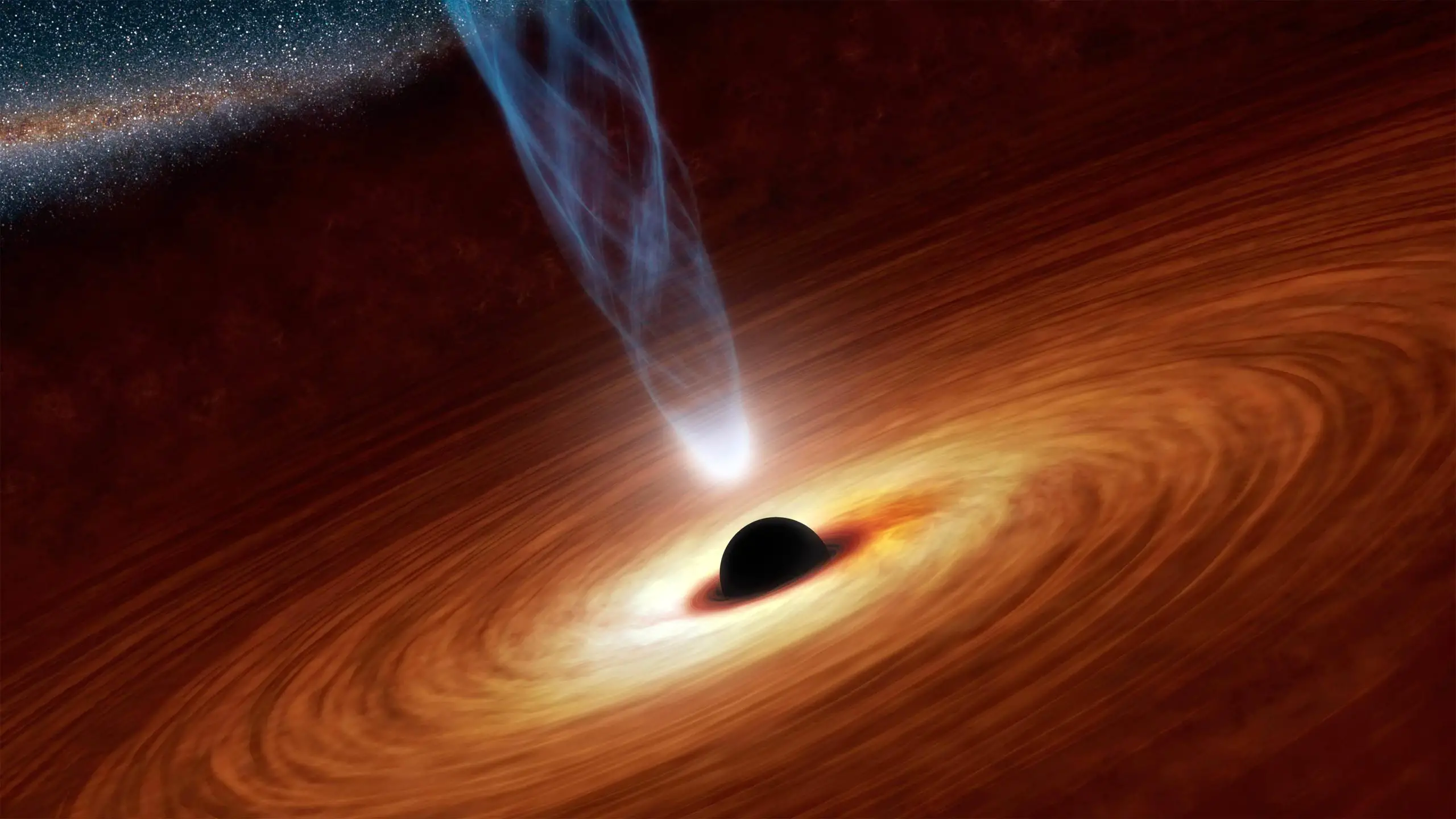
A recent study published in Nature Astronomy has challenged the prevailing theories about x-ray emissions from black hole jets. Contradicting long-standing theories, the study found that x-ray emissions from black hole jets vary over short periods and occur throughout the jets rather than solely at their origin. The research, based on data from the Chandra X-ray Observatory, necessitates a reassessment of how particle acceleration works in these jets and potentially the wider universe. The findings open the door to reimagining how particle acceleration works, and the paper spurs future work to come up with jet models that are consistent with what they found.
X-ray emissions from black hole jets were found to vary over just a few years, challenging one leading theory of particle acceleration in the jets. The study analyzed archival data from the Chandra X-ray Observatory and found rapid changes in X-ray emissions all along the length of the jets, suggesting particle acceleration is occurring all along the jet, at vast distances from the jet's origin at the black hole. The findings poke significant holes in one of the major theories for X-ray production in black hole jets, and researchers hope the paper spurs future work.