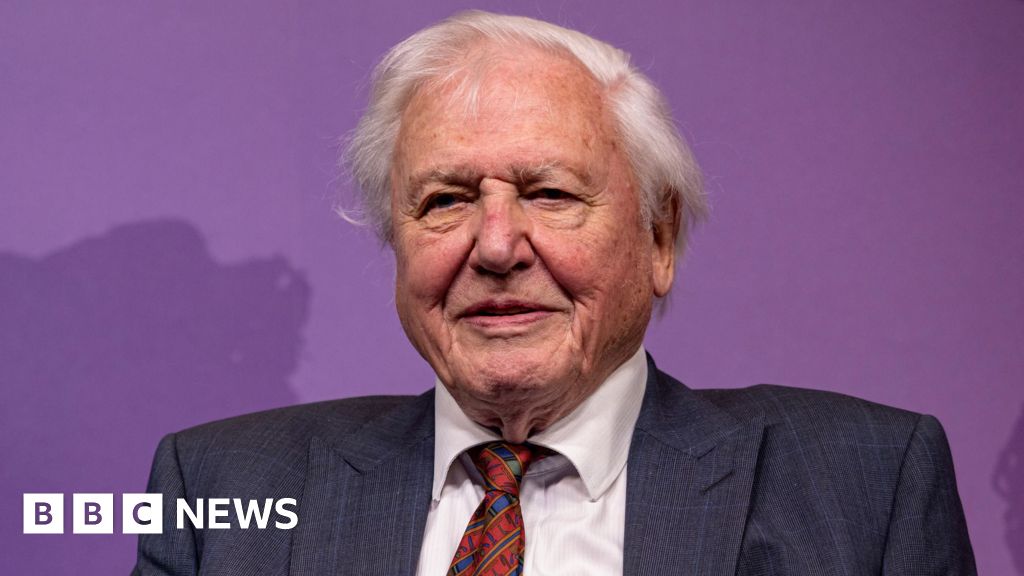
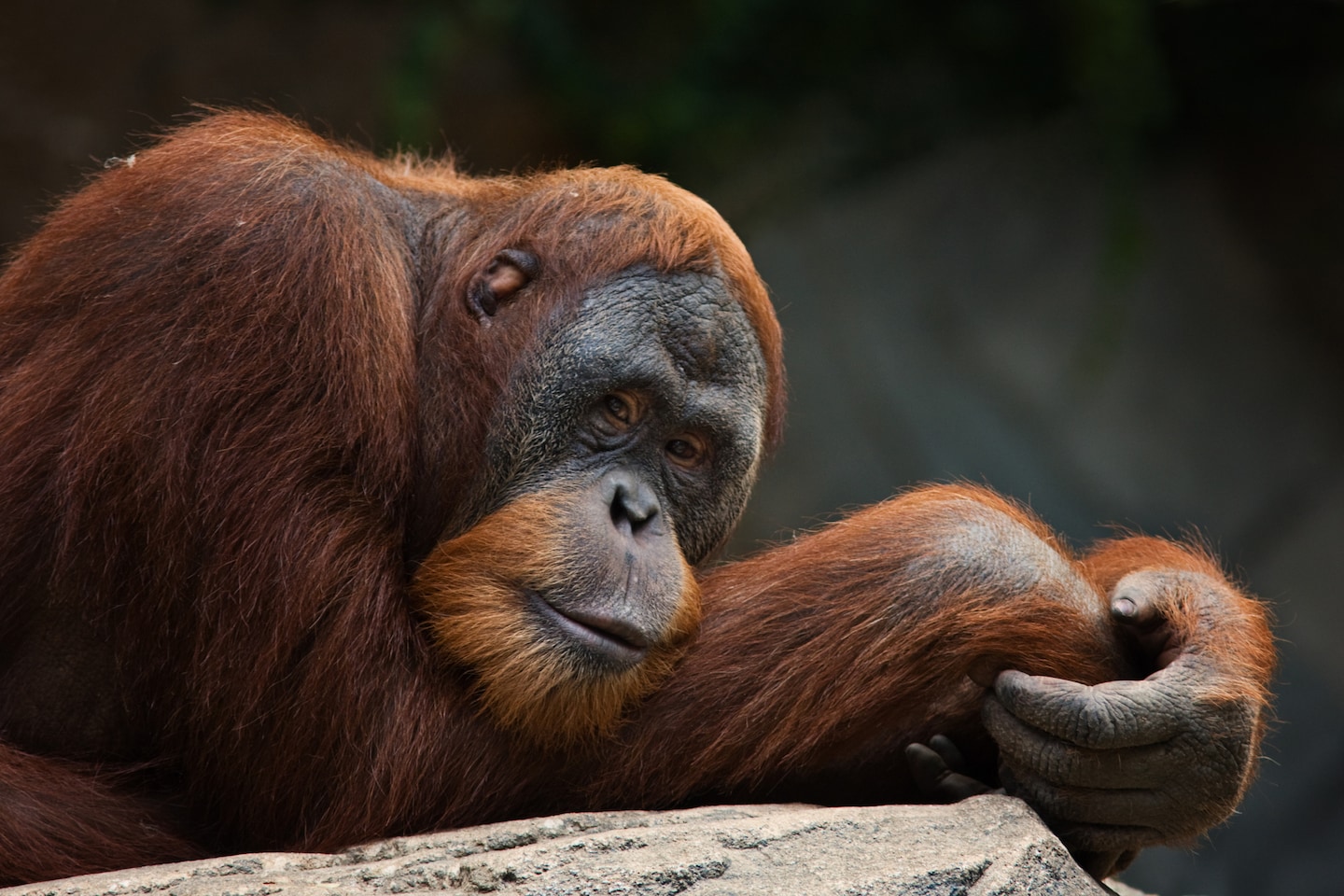
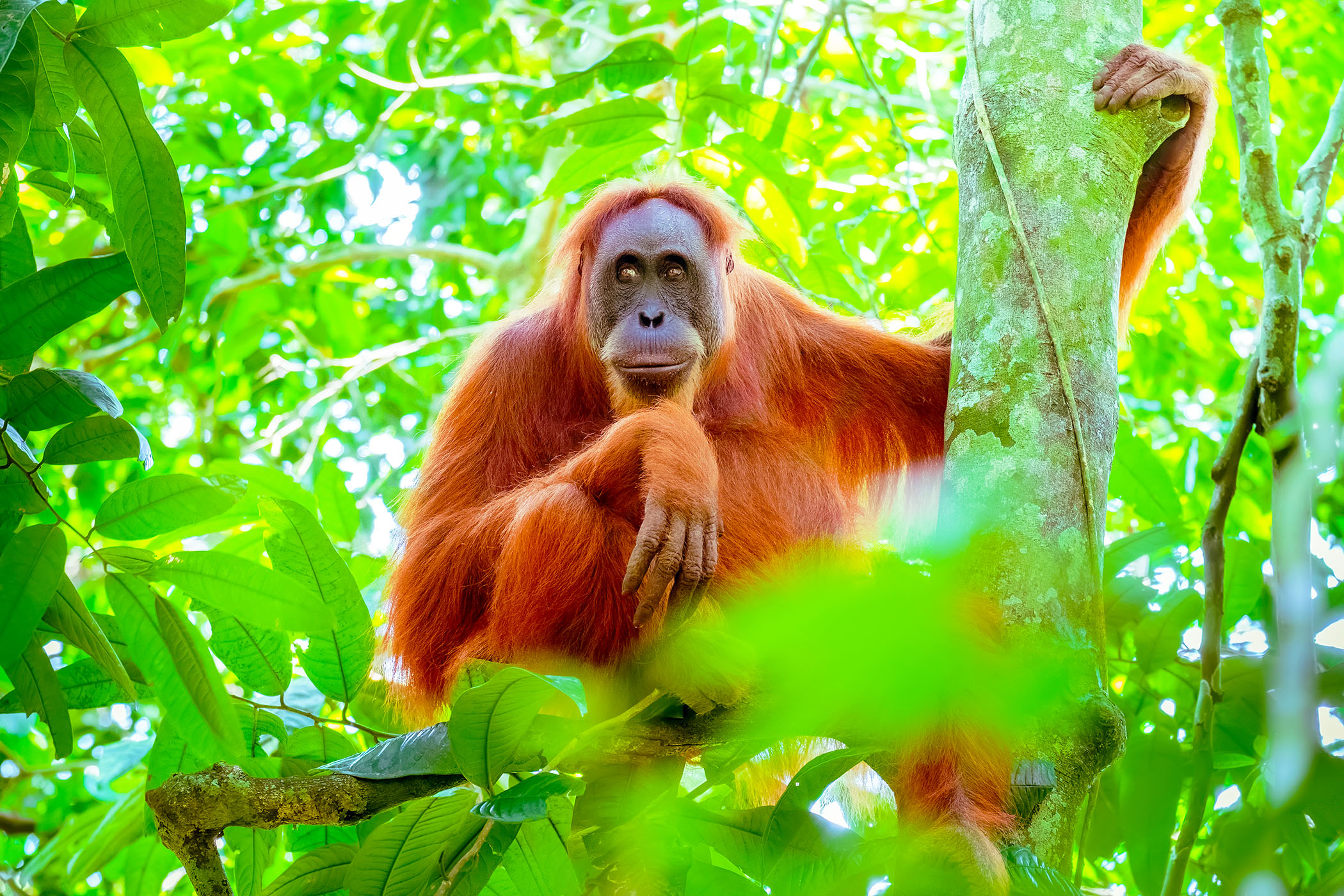
Sir David Attenborough became the oldest Daytime Emmy winner at age 99 for his documentary 'Secret Lives of Orangutans,' breaking the previous record held by Dick Van Dyke. The film, which showcases orangutans in Sumatra, also won two other awards at the 52nd Daytime Emmys in Pasadena, California.
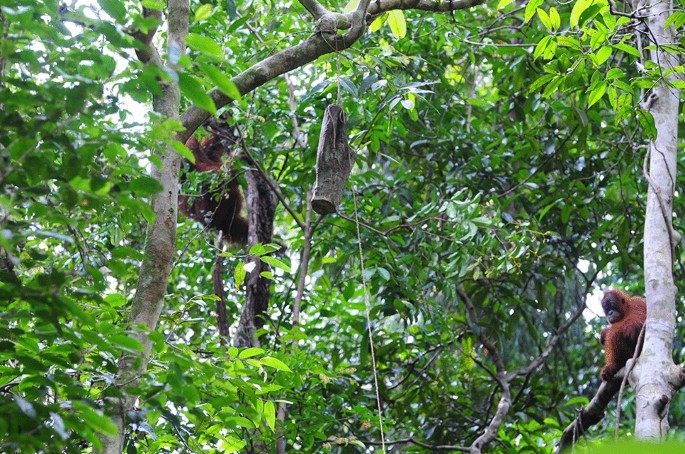
Orangutans in the wild exhibit cautious behavior towards unfamiliar objects, according to recent research. The study, conducted in a Sumatra reserve, found that immature orangutans showed more curiosity, spending more time observing and approaching novel objects compared to adult orangutans. The apes rarely touched the objects, often using tools instead. The presence of other orangutans influenced their curiosity, with social connections playing a role in their exploration. The findings provide insights into the evolution of human curiosity and the importance of social interactions in learning and innovation.
A study conducted in the Gunung Leuser National Park in Indonesia investigated the factors influencing curiosity in wild orangutans. The researchers tested the impact of age-sex classes, the presence of association partners, and prevailing habitat food availability on novelty responses and exploratory tendencies. They found that immature orangutans showed higher levels of neophilia and exploration, while the presence of association partners reduced neophobia and increased neophilia and exploration. Additionally, low food availability in the habitat led to increased exploratory tendencies, decreased neophobia, and increased neophilia. The study provides insights into the factors influencing curiosity in wild orangutans and contributes to our understanding of the evolution of complex cognition.
A study has found that migrant male orangutans learn what foods to eat and how to process them by observing and imitating the locals in their new habitat. The researchers observed peering behavior, where the orangutans intensely observed and mimicked the actions of role models. The study suggests that this social learning is crucial for the survival and adaptation of orangutans in new environments. The ability to quickly adapt to novel environments by learning from locals is likely ancestral in our hominin lineage.
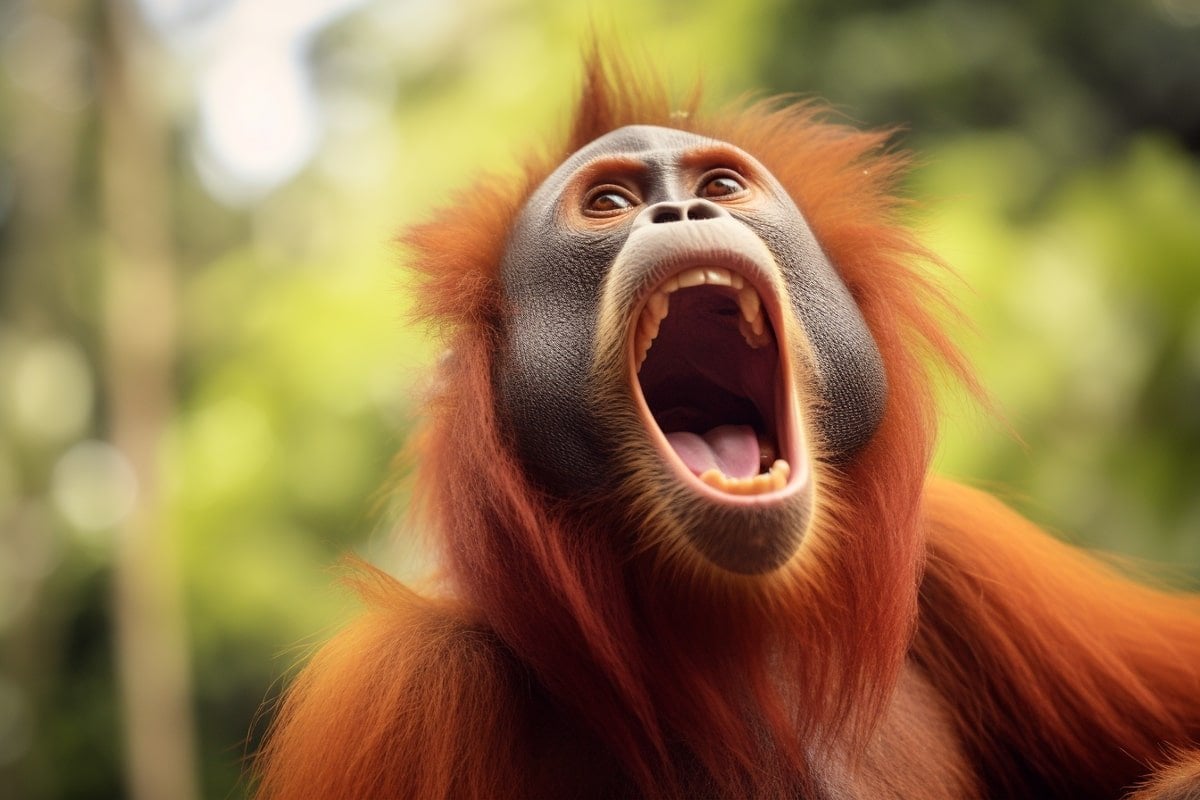
Orangutans have been observed producing two different sounds simultaneously, similar to human beatboxers or songbirds. The discovery suggests that the early language structure of our ancestors might have resembled something like beatboxing. The vocal control abilities of great apes have been underestimated compared to the focus on bird vocal abilities. The findings provide clues around the evolution of human speech and beatboxing capabilities.
Orangutans have been found to make two separate sounds at the same time, a phenomenon known as biphonic call production, which researchers suggest is similar to human beatboxing. The calls involve consonant-like noises that coincide or overlap with vowel-like noises. The researchers recorded two different groups of wild orangutans in Borneo and Sumatra and heard apes making these calls. The researchers suggest that early human language may have resembled something that sounded more like beatboxing before evolution organized language into the consonant-vowel structure that we know today.
Orangutans have been found to possess the ability to produce two separate sounds simultaneously, similar to songbirds and human beatboxers. Researchers observed vocalizing orangutans in Borneo and Sumatra and discovered that primates in both populations exhibited this vocal phenomenon. The findings shed light on the evolution of human speech and suggest that early human language may have resembled beatboxing before evolving into the consonant-vowel structure we know today.
Orangutans have been found to possess the ability to produce two separate sounds simultaneously, similar to human beatboxing or songbirds. This discovery, made through the observation of vocalizing orangutans in Borneo and Sumatra, could provide insights into the evolution of human speech and the origins of beatboxing. The study suggests that this vocal ability may have evolved from existing primate vocalizations, highlighting the potential evolutionary link between primate vocalizations and complex human speech.