Tag

Optical Coherence Tomography

All articles tagged with #optical coherence tomography

health-neuroscience1 year ago

"Predicting Parkinson's Progression with Eye Tests"

Optical coherence tomography, commonly used in eye exams, can monitor neurodegeneration in Parkinson’s disease patients by measuring the thickness of the retina, which often precedes cognitive and motor decline. This method offers a potential early indicator of disease progression, suggesting that routine eye exams could become a non-invasive tool for predicting the future severity of Parkinson’s symptoms and aiding in more targeted treatment strategies.

science-and-technology1 year ago

"Revolutionary Dundee Device Wins Prestigious UK STEM Award for Skin Cancer Detection Breakthrough"

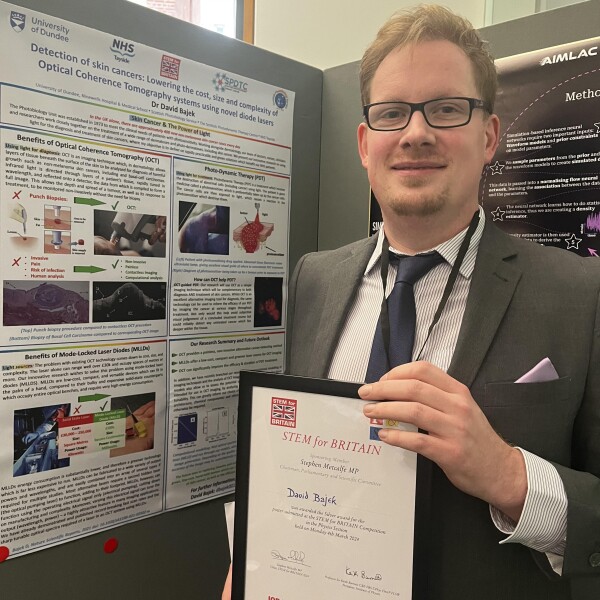
Dr. David Bajek from the University of Dundee and NHS Tayside has been awarded the Silver Award for Physics at STEM for Britain for his innovative research in detecting skin cancer tumors using a handheld device containing infrared lasers. This Optical Coherence Tomography (OCT) method could revolutionize skin cancer diagnosis and monitoring. Dr. Bajek's work also focuses on treating patients with extreme photosensitivity, developing medical and personal devices to help them manage their symptoms.

medical-research2 years ago

Researchers Honored for Groundbreaking Eye-saving Technologies

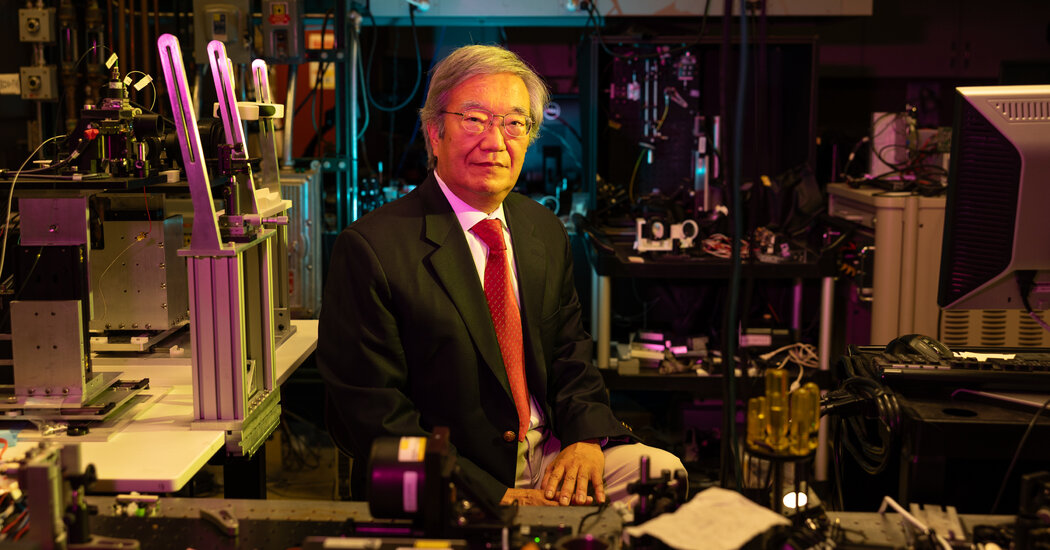
Dr. David Huang, a researcher at Oregon Health & Science University's Casey Eye Institute, along with his partners, has been awarded the prestigious Lasker-DeBakey Clinical Medical Research Award for inventing optical coherence tomography (OCT), a groundbreaking imaging technology that can detect early signs of eye problems and save patients' sight. OCT has revolutionized ophthalmology by allowing doctors to rapidly detect and treat diseases of the retina, potentially saving the eyesight of millions. The technology has also resulted in significant cost savings for Medicare and Medicaid. Huang continues to refine OCT and is excited about its expanding uses in various medical fields.

science-and-technology2 years ago

Breakthrough Eye Imaging Technologies and Researchers Honored with 2023 Lasker Awards

The 2023 Lasker Awards were given to scientists who made significant advancements in the diagnosis of eye diseases and the prediction of cellular protein structure. James G. Fujimoto of MIT was awarded for his contribution to the invention of optical coherence tomography (OCT), an eye-scanning technology that can detect eye diseases earlier than previous methods, potentially preventing blindness. Additionally, the London-based AI lab DeepMind received an award for their work on protein folding, which has revolutionized the understanding of diseases and drug discovery. Dr. Piet Borst was recognized for his discoveries about parasitic diseases and cancer cell resistance to chemotherapy.

health2 years ago

Advancements in Multiple Sclerosis Research and Gene Markers

Adding optic nerve damage, measured by the thickness of retinal layers in the eye, to the diagnostic criteria for multiple sclerosis (MS) can enhance diagnostic accuracy for individuals who have experienced a single MS-like event. Researchers believe their findings support the inclusion of the optic nerve in the next revision of the McDonald criteria, the gold standard for diagnosing MS. Optical coherence tomography (OCT) was used to track retinal nerve layer thickness in patients with clinically isolated syndrome (CIS), and the addition of OCT measures significantly improved diagnostic accuracy and sensitivity compared to traditional metrics. This could lead to earlier treatment initiation and improved long-term prognosis for MS patients.

healthcare2 years ago

AI's Role in Combating Increasing Blindness Rates

Ophthalmology is the busiest medical specialty in the UK's National Health Service, with nearly 10 million appointments per year. The main cause of blindness between the ages of 18 and 65 is diabetic eye disease, but an increasing prevalence of age-related macular degeneration (AMD) is also contributing to the problem. New eye scanners called optical coherence tomography (OCT) devices are being deployed in optometry practices, but community optometrists don't always have the expertise to analyze OCT scans. AI can help by analyzing OCT scans and assessing them for more than 50 retinal diseases, with a level of performance on par with expert ophthalmologists. Once clinically validated, the AI system can be deployed at scale in the community to reduce the burden of chronic diseases like AMD.