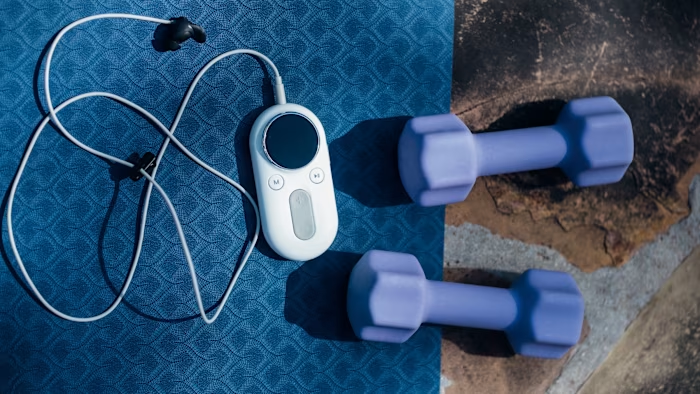
Vagus nerve stimulation (VNS) involves using devices to send electrical pulses to the vagus nerve, which can be done invasively or through skin patches, and is used for conditions like epilepsy and cluster headaches. While some users report benefits such as increased energy and improved sleep, scientific evidence is limited, and the effectiveness of these devices remains uncertain, with some experts suggesting placebo effects may play a role.
The FDA has removed Theresa Michele, the longtime director of the Office of Nonprescription Drugs, from her position and transferred her to a leadership role in the medical devices center, amid recent leadership changes at the agency.
The Trump administration has initiated investigations under Section 232 into imports of robotics, industrial machinery, and medical devices, potentially leading to new tariffs aimed at boosting domestic manufacturing and reducing reliance on foreign supplies, especially in critical sectors like healthcare and industrial equipment.
Verily, Alphabet's life sciences division, is shutting down its medical device program to focus more on AI and data infrastructure, amid ongoing cost-cutting and layoffs across the company as it shifts resources towards artificial intelligence development.
The article showcases bizarre and outdated medical devices and treatments from the past, highlighting how far modern medicine has come in terms of safety, effectiveness, and understanding of health, from early surgical methods to advanced diagnostic technology and vaccines.
Abbott Laboratories' stock fell nearly 6% after lowering its 2025 sales outlook following a mixed Q2 report, despite beating revenue and earnings estimates; growth in medical devices and established pharmaceuticals was strong, but diagnostics underperformed, leading to a cautious outlook and a premarket decline.
Mattel has launched a Barbie doll with Type 1 diabetes, equipped with a glucose monitor and insulin pump, to promote inclusivity and awareness of the condition among children, in partnership with Breakthrough T1D and reflecting a broader effort to represent diverse health experiences in toys.
China has imposed restrictions on EU medical device imports exceeding 45 million yuan in response to the EU's recent bans on Chinese companies participating in public tenders, escalating trade tensions between the two economies.
China will impose restrictions on EU-based companies' access to Chinese government procurement for certain medical devices, escalating trade tensions with the EU, which has responded with its own restrictions on Chinese medical device manufacturers. The move is part of broader trade disputes involving tariffs and market access issues between China and Europe.
US health secretary Robert Kennedy Jr. endorsed the use of health wearables, prompting a surge in shares of DexCom and other medical device makers, as he announced plans to promote wearable technology for health monitoring across the US within four years, highlighting the growing interest and investment in health tracking devices.
Scientists at the University of Nottingham have developed surface patterns on plastics that prevent bacteria from forming biofilms, potentially reducing infections on medical devices like catheters and activating the immune system to clear bacteria, offering a promising alternative to antibiotics and helping to combat antimicrobial resistance.
The FDA plans to implement artificial intelligence to significantly speed up the approval process for drugs and medical devices, aiming to enhance efficiency and deliver faster treatments, especially for neglected and rare diseases, while also reviewing food ingredients and streamlining final approval stages.
The FDA's new AI tool, CDRH-GPT, still in beta, faces significant issues such as bugs, connectivity problems, and inaccuracies, raising concerns about rushing AI deployment in medical device review processes amid staff layoffs and safety considerations.
Scientists from the University of Bristol and UKAEA have developed the first carbon-14 diamond battery, capable of powering devices for thousands of years. Utilizing the radioactive decay of carbon-14, this battery offers a sustainable energy source for applications in medical devices, space technology, and extreme environments. The innovation leverages expertise from fusion energy research and could revolutionize power supply in various fields by providing continuous microwatt levels of power.
Northwestern University researchers have developed a new soft, sustainable electroactive material using peptides and plastic molecules, which could revolutionize medical devices, wearable technology, and human-computer interfaces. These materials, made from nano-sized ribbons, are energy-efficient, biocompatible, and biodegradable, offering potential for low-power electronics and smart fabrics. The study, published in Nature, highlights the material's ability to store energy and digital information, with applications in biomedical devices and renewable energy processes.