The article discusses the significance of prime numbers in mathematics, highlighting the biggest unsolved problem, the Riemann Hypothesis, which concerns the distribution of primes and has profound implications for understanding their behavior. Despite centuries of study, many prime-related questions remain open, but recent progress and optimism suggest that solutions, especially for the Riemann Hypothesis, may be within reach, potentially revolutionizing mathematics.
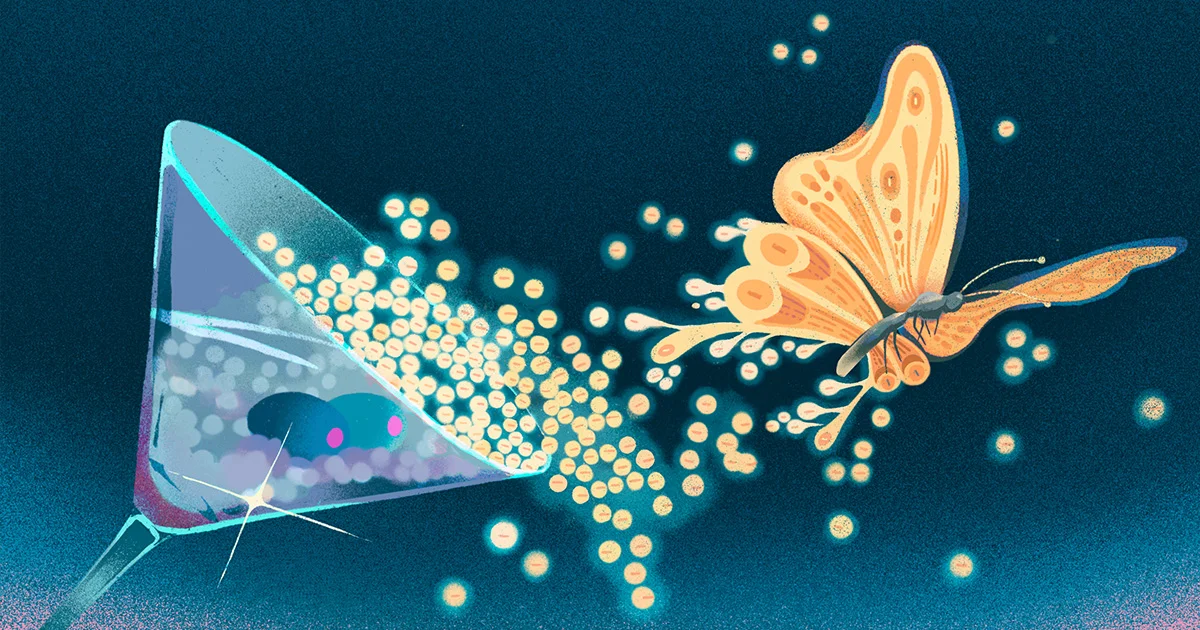
The article discusses the ten martini conjecture, a challenging problem in quantum physics and mathematics related to the energy levels of electrons in magnetic fields, which was eventually proven using advanced number theory and geometric methods, confirming the fractal patterns known as Hofstadter butterflies as real phenomena.
A graduate student at the University of Oxford, Benjamin Bedert, has solved a long-standing problem about the limits of addition related to sum-free sets, confirming that in any set of integers, there exists a large sum-free subset, advancing understanding in a fundamental area of mathematics originally posed by Paul Erdős in 1965.
Mathematicians have discovered a remarkable new connection between prime numbers and partition functions, revealing infinitely many ways to detect primes without divisibility checks, which could influence future research in number theory and cryptography.
Two mathematicians, Ben Green and Mehtaab Sawhney, have developed a new method using additive combinatorics and Gowers norms to study the distribution of prime numbers, successfully proving that infinitely many primes fit the form p² + 4q², which opens new avenues for understanding prime patterns and their applications in fields like cryptography.
Researchers at City University of Hong Kong and North Carolina State University have made a groundbreaking discovery in prime number theory, challenging the long-held belief that prime numbers are unpredictable. Their research has led to the development of a Periodic Table of Primes (PTP) that can accurately predict the locations of prime numbers, with potential applications in fields such as cybersecurity. This breakthrough has the potential to significantly impact encryption and cryptography, making data more secure.
Summer Haag and Clyde Kertzer, participants in a CU Boulder REU, disproved the long-held local-global conjecture in number theory by exploring Apollonian circle packings, challenging the widely accepted belief in mathematics. Their research highlighted the creative and uncharted aspects of mathematical exploration, emphasizing intuition, exploration, and play in math research.
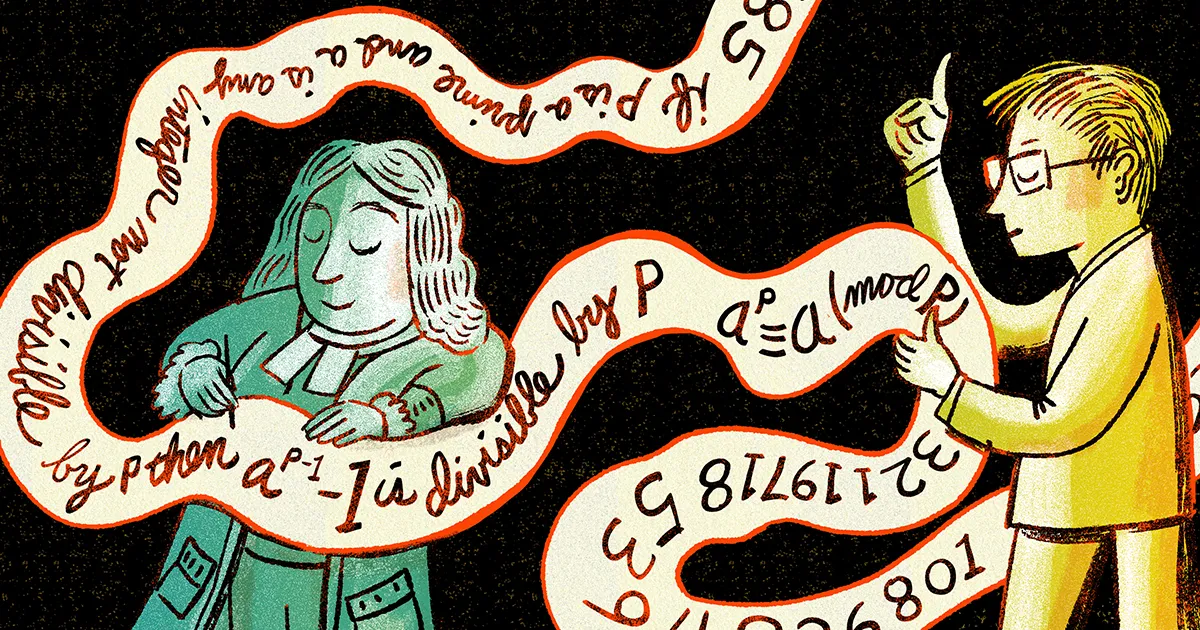
High school student Daniel Larsen has proven a new theorem about Carmichael numbers, a type of not-quite-prime number, that had eluded mathematicians for decades. This theorem is related to Pierre de Fermat's "little theorem," which states that for any prime number, the quantity a^p - a is divisible by p for any integer a. While the converse of Fermat's little theorem is not true, Larsen's work explores the distribution of Carmichael numbers and builds on the research of famous mathematicians such as James Maynard and Terence Tao.
Scientists have discovered a connection between number theory and evolutionary genetics, revealing that mathematical relationships underpin the mechanisms governing the evolution of life on molecular scales. The study found that mutational robustness, which generates genetic diversity, can be maximized in naturally-occurring proteins and RNA structures. The maximum robustness follows a self-repeating fractal pattern called a Blancmange curve and is proportional to a basic concept of number theory called the sum-of-digits fraction. This research highlights the role of mathematics in understanding the structure and patterns of the natural world.
An interdisciplinary team of researchers from Oxford, Harvard, Cambridge, GUST, MIT, Imperial, and the Alan Turing Institute has discovered a surprising connection between number theory and genetics. They found a deep link between the sums-of-digits function from number theory and the phenotype mutational robustness in genetics. This discovery sheds light on the structure of neutral mutations and the evolution of organisms. The researchers also determined that the maximum mutational robustness is proportional to the logarithm of the fraction of all possible sequences that map to a phenotype, with a correction given by the sums of digits function. Additionally, they found a connection between the maximum robustness and the Tagaki function, a fractal function. This unexpected link between pure mathematics and genetics may have important implications for evolutionary genetics.
Researchers have discovered a surprising connection between number theory in mathematics and genetics, revealing insights into neutral mutations and the evolution of organisms. The study found that the maximal robustness of mutations, which can occur without changing an organism's characteristics, is proportional to the logarithm of all possible sequences that map to a phenotype, with a correction provided by the sums-of-digits function from number theory. This unexpected link between pure mathematics and genetics may have important implications for evolutionary genetics.