Modern humans interbred with Denisovans, an extinct human species, which resulted in a genetic adaptation for zinc regulation that helped humans adapt to cold climates. However, this adaptation may also predispose individuals to mental health disorders such as depression and schizophrenia. The genetic variant observed, which affects zinc regulation, is widespread in non-African populations and is associated with a greater predisposition to psychiatric diseases. The variant is believed to have originated from interbreeding with Denisovans and has left a global mark, except in African populations. Further research is needed to understand the full implications of this genetic adaptation on mental health.
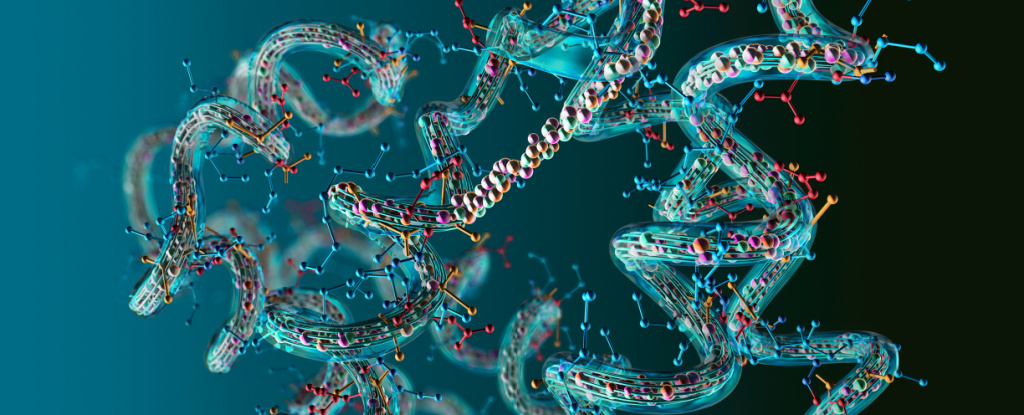
Scientists have discovered a connection between number theory and evolutionary genetics, revealing that mathematical relationships underpin the mechanisms governing the evolution of life on molecular scales. The study found that mutational robustness, which generates genetic diversity, can be maximized in naturally-occurring proteins and RNA structures. The maximum robustness follows a self-repeating fractal pattern called a Blancmange curve and is proportional to a basic concept of number theory called the sum-of-digits fraction. This research highlights the role of mathematics in understanding the structure and patterns of the natural world.
New research suggests that there may have been a previously unknown phase of humanity’s great migration: an “Arabian standstill” of up to 30,000 years in which humans settled in and around the Arabian Peninsula. These humans slowly adapted to life in the region’s colder climate before venturing to Eurasia and beyond. The genetic adaptations involved parts of the genome related to fat storage, nerve development, skin physiology, and tiny hair-like fibers in our airways called cilia. These adaptations share striking functional similarities with those found in humans and other mammals living in the Arctic today.