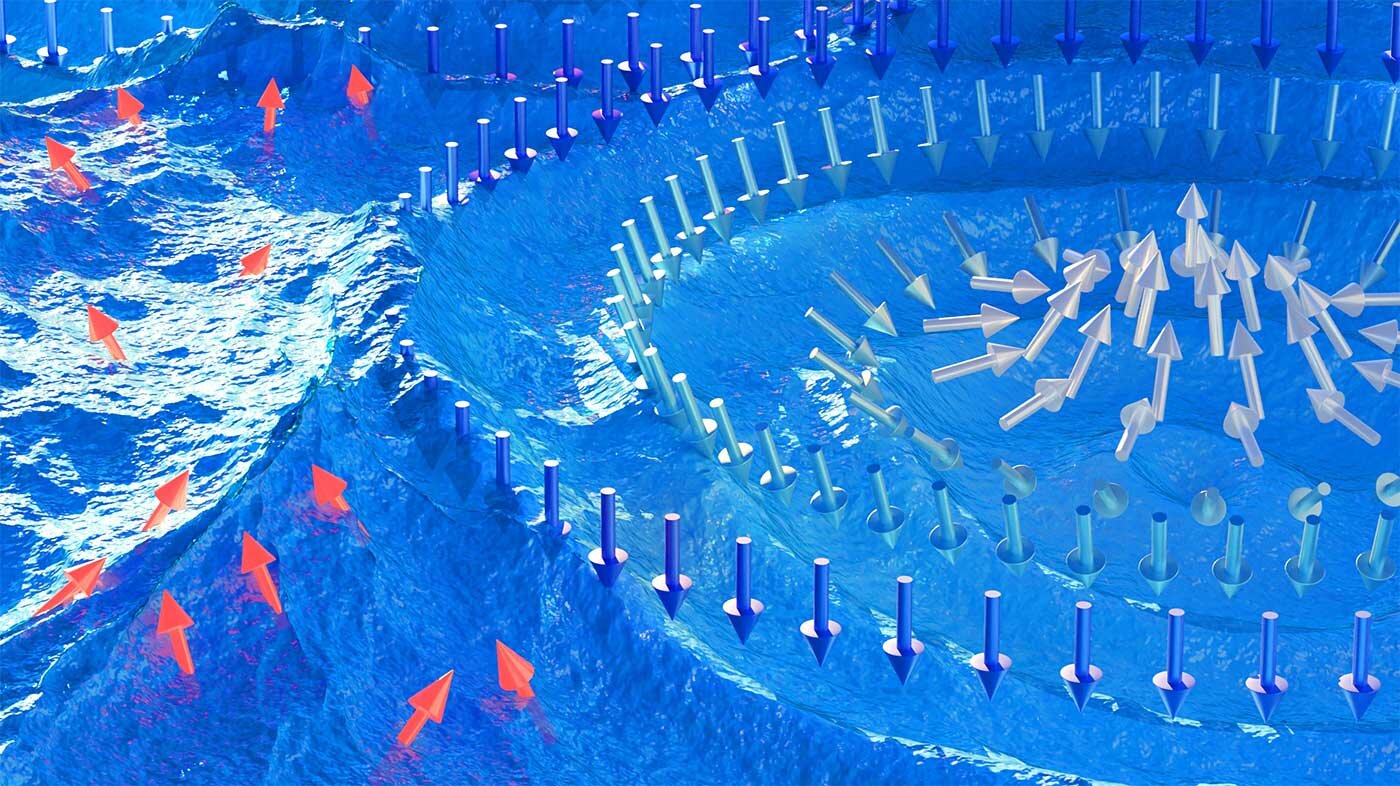
The article discusses the proof of the '10 martini' conjecture, which links quantum mechanics with intricate mathematical structures like fractals and Cantor sets, highlighting the journey from a challenging problem in quantum theory to a breakthrough in understanding energy levels of electrons in magnetic fields, and its implications in physics and mathematics.
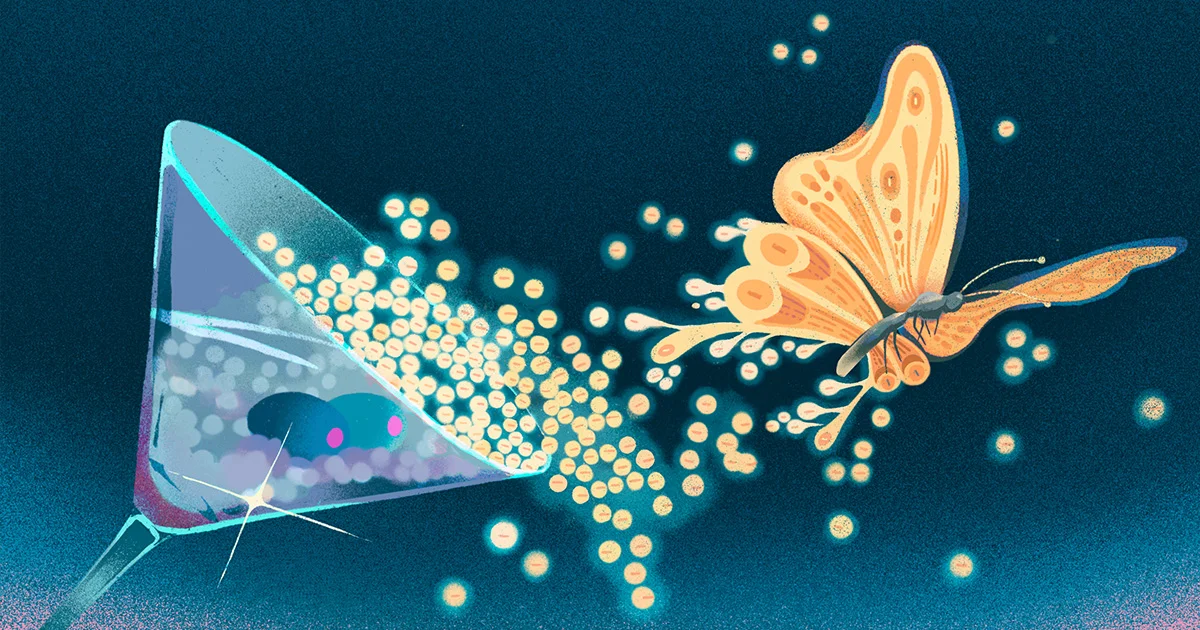
The article discusses the ten martini conjecture, a challenging problem in quantum physics and mathematics related to the energy levels of electrons in magnetic fields, which was eventually proven using advanced number theory and geometric methods, confirming the fractal patterns known as Hofstadter butterflies as real phenomena.
A new study from the University of Bristol has found that forest canopies do not replicate the fractal patterns of individual trees, challenging the idea that fractal patterns might explain how forest canopies are organized. The researchers compiled data from nine vastly different forest types in Australia and found that none of the canopy sections behaved like fractals beyond the crowns of individual trees. While forest canopies are not fractal, there is some predictability in how they deviate from fractal patterning, which might still be useful for ecosystem comparisons. The study suggests that forests may prove to be unruly ecosystems that defy mathematical laws, from their canopies right down to their cells.
Researchers have made a discovery in the behavior of dynamic magnetic fractal networks, known as skyrmions, which could advance neuromorphic computing capabilities. These skyrmions create magnetic spin waves with a narrow wavelength, forming an unexpected fractal structure. The researchers aim to use this discovery to develop a miniaturized, spin wave neuromorphic architecture. The findings were made through neutron scattering experiments and could have implications for future applications.