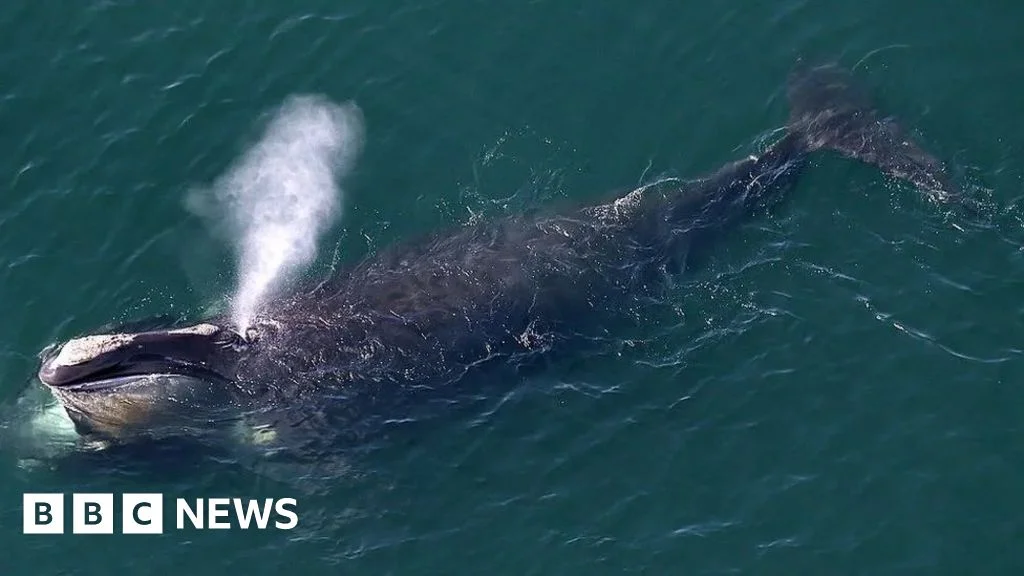
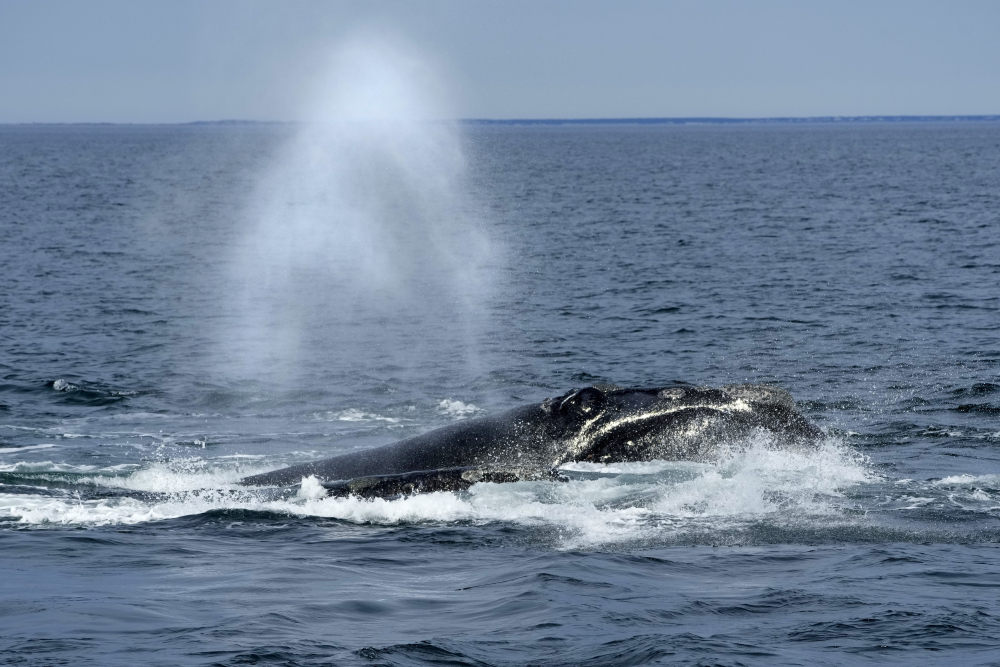
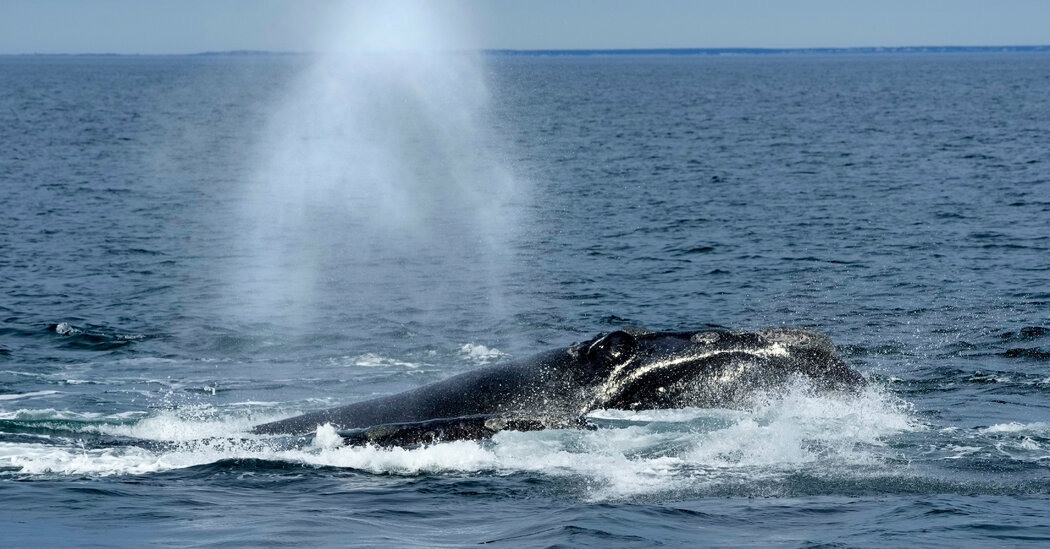
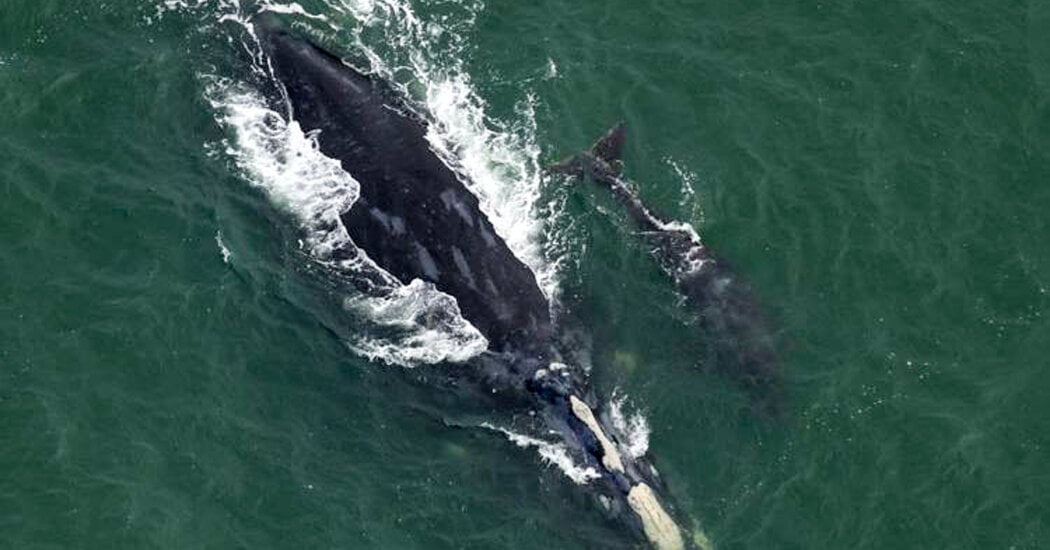
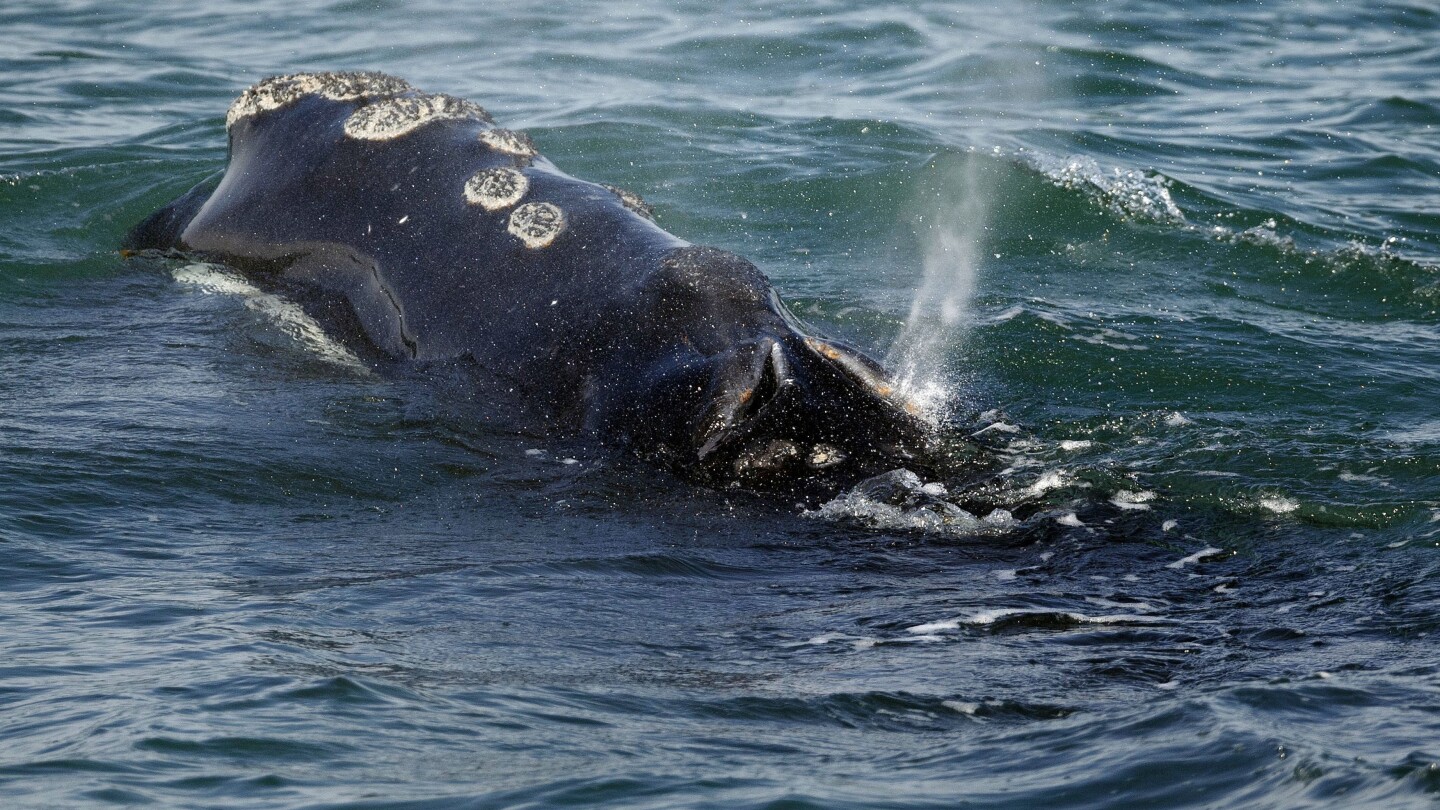
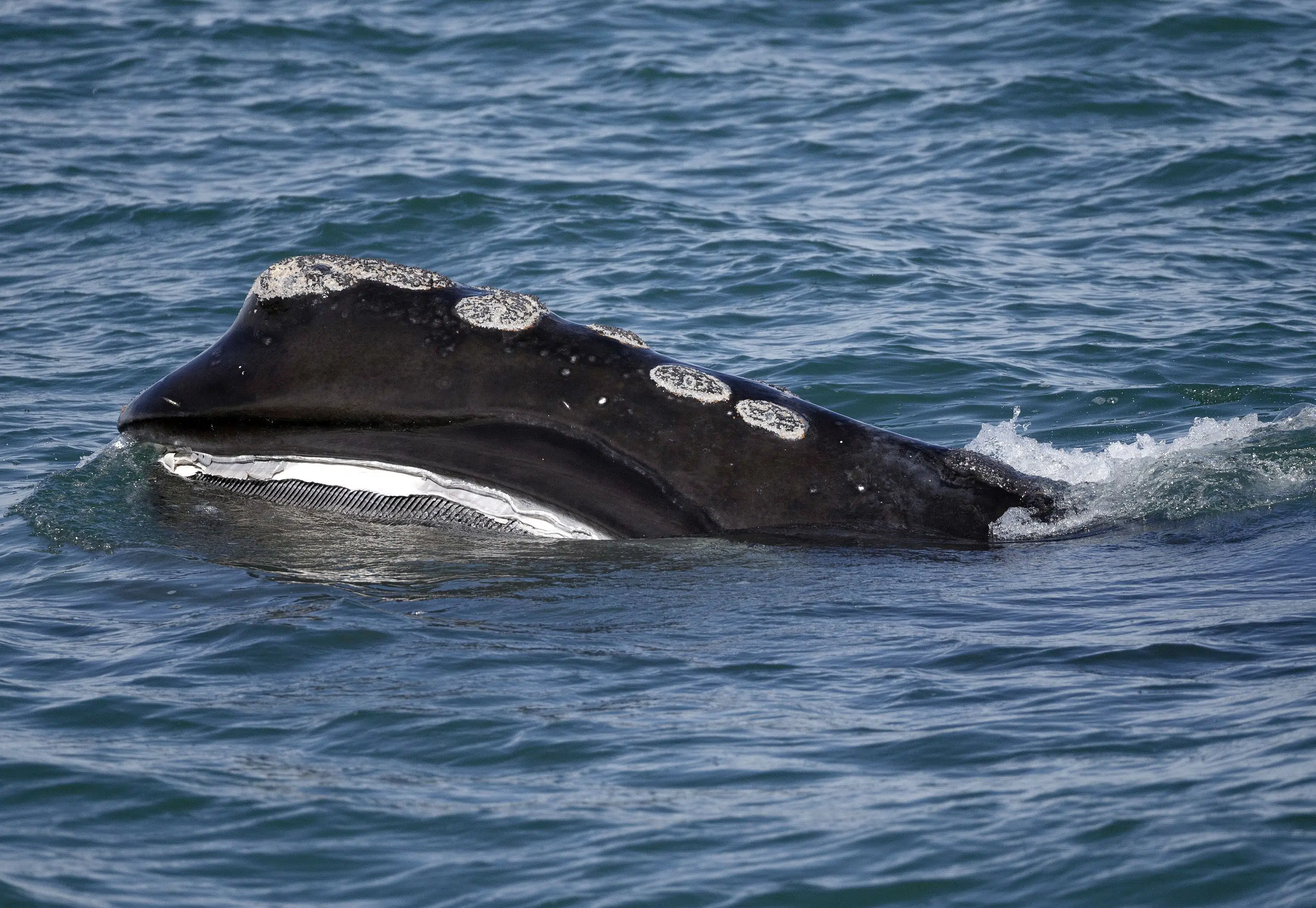
A rare North Atlantic right whale, first spotted off Donegal in Ireland, was later confirmed to have been sighted in Massachusetts Bay, US, highlighting its remarkable travel ability and the importance of international cooperation for its conservation.
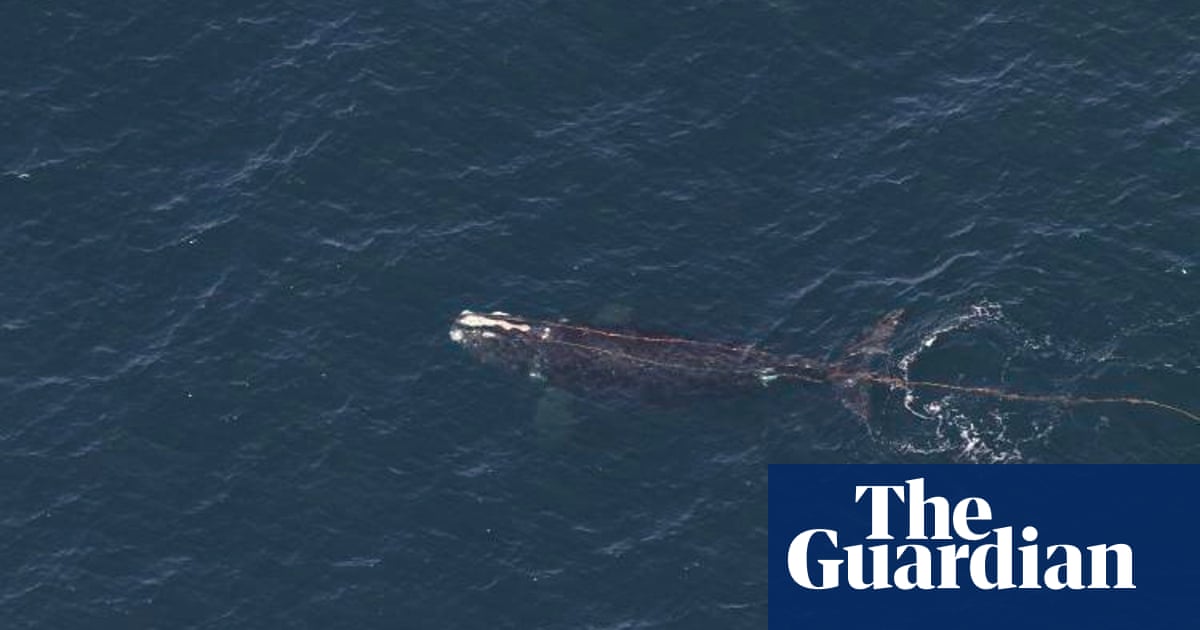
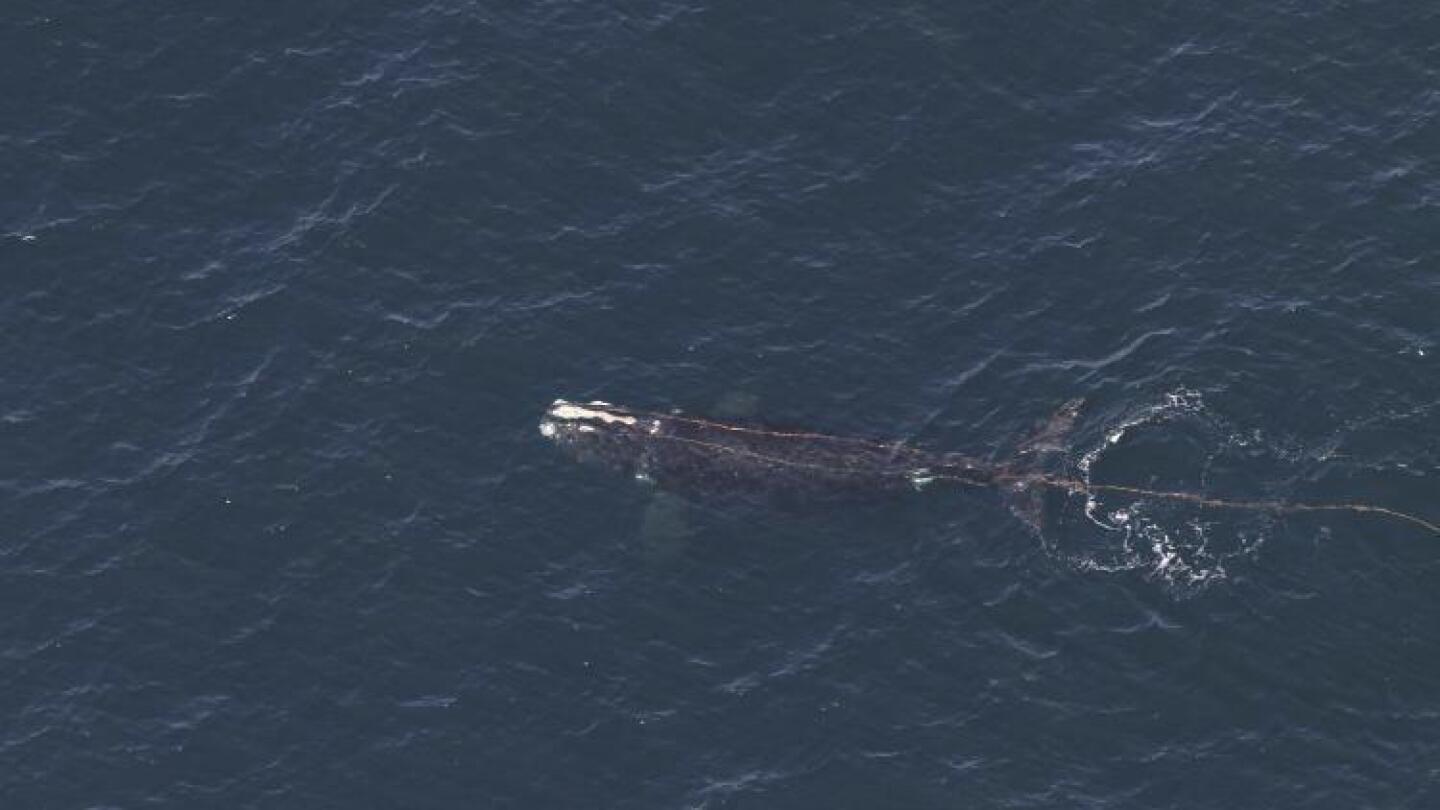
A North Atlantic right whale has been spotted entangled in rope off the coast of New England, adding to the challenges faced by the already endangered species. With less than 360 of these whales remaining, entanglement in fishing gear and collisions with ships pose significant threats. Efforts to rescue the entangled whale have been hindered by its distant location, highlighting the urgent need for stronger protections and regulations to prevent further harm to these majestic creatures, whose population has been slow to recover from the impacts of commercial whaling and now faces additional risks due to climate change.
A North Atlantic right whale has been found entangled in rope off New England, worsening an already devastating year for the species, which numbers less than 360. The entangled whale was spotted off Rhode Island's Block Island, making it difficult for rescuers to help. Several right whales have died this year, and environmental groups fear the species could be headed for extinction. The whales are vulnerable to entanglement in fishing gear and collisions with ships, and there are calls for stricter rules to protect them.
A North Atlantic right whale has been found entangled in rope off New England, adding to a devastating year for the already endangered species. With their population numbering less than 360, the whales are vulnerable to entanglement in fishing gear and collisions with ships. Environmental groups are calling for stricter regulations to protect the whales, as several have died this year and the species faces the threat of extinction.
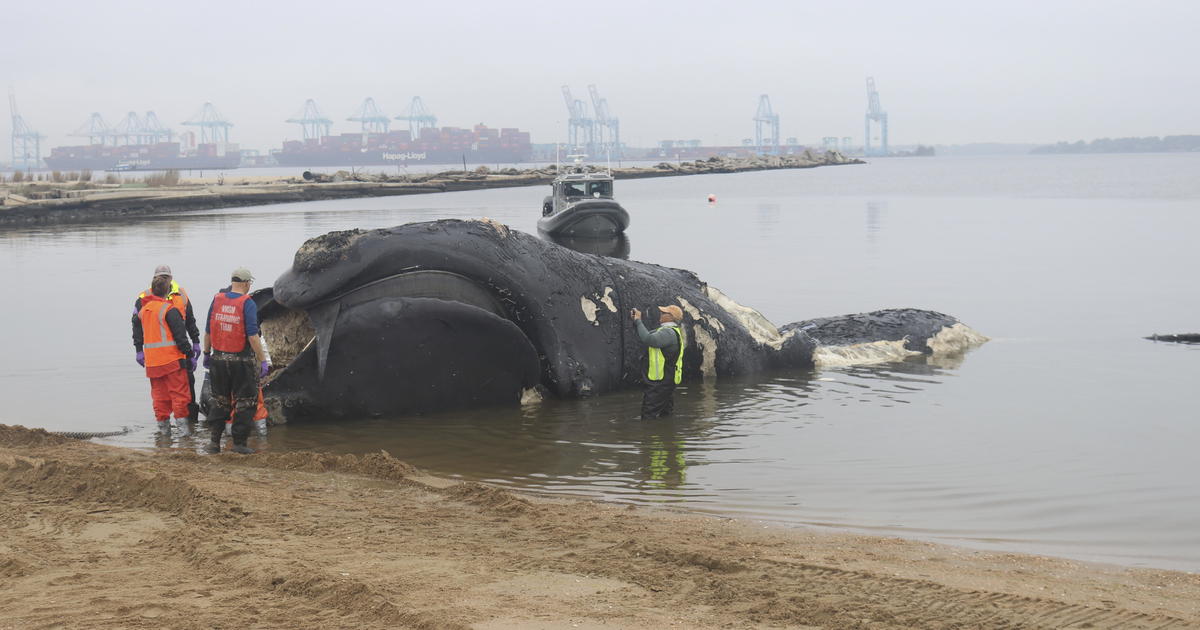
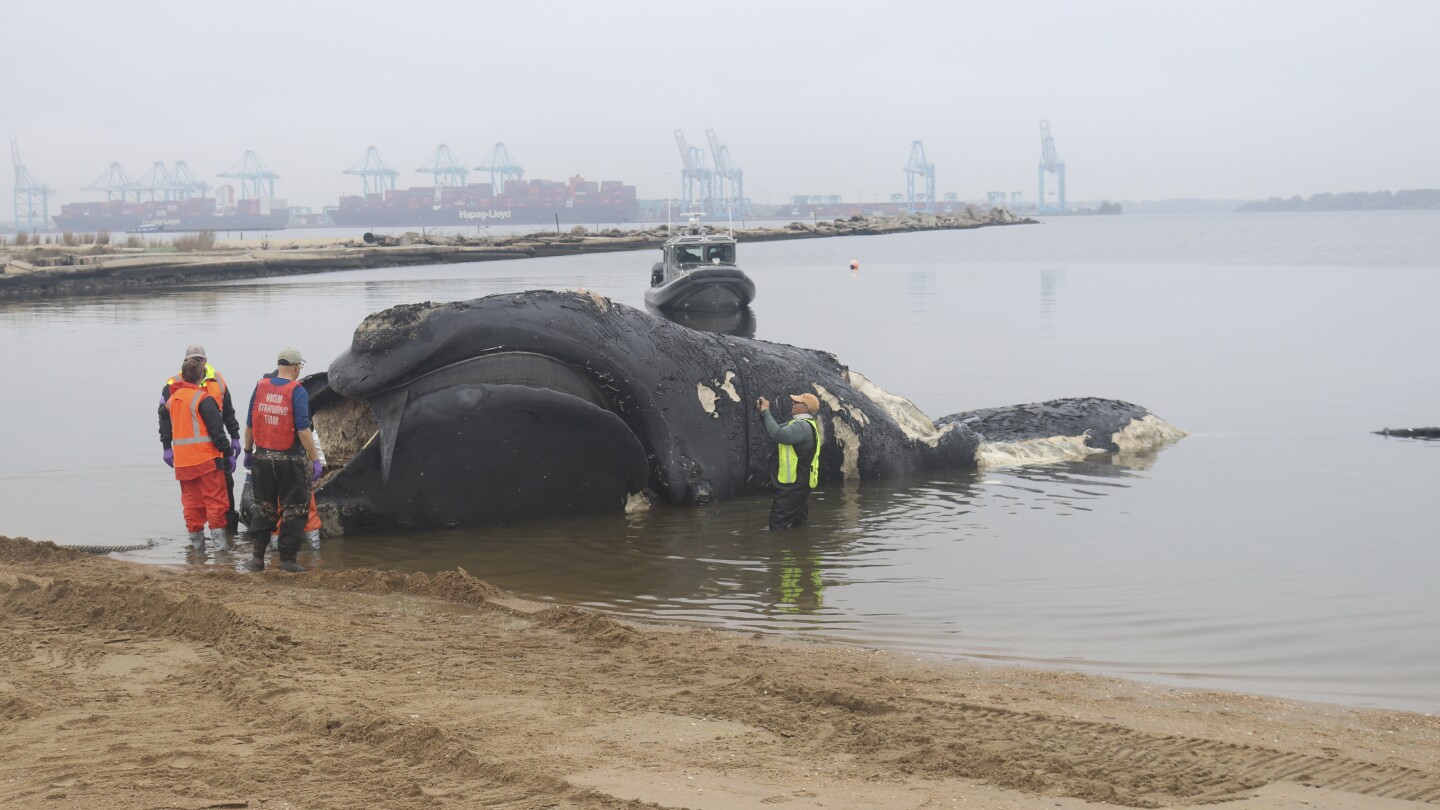
An endangered North Atlantic right whale, one of less than 360 remaining, was found dead off Virginia after suffering blunt force trauma from a ship strike, marking the fourth documented right whale death of 2024. The whale, a mother who gave birth to her sixth calf this season, had catastrophic injuries consistent with a vessel strike. Environmental groups have called for tighter regulations on commercial fishing and shipping to protect the vulnerable species, as human impacts continue to threaten their survival.
Another North Atlantic right whale, an endangered species with a population of less than 360, died after a ship collision off the East Coast, leaving its calf at risk. The species has suffered high mortality due to ship strikes and fishing gear entanglement, with the recent death attributed to blunt force trauma from a vessel strike. Environmental groups are advocating for tighter regulations on commercial fishing and shipping, citing the impact of ocean warming on the whales' food sources and migration patterns. The population decline poses a significant threat to the survival of the species, prompting calls for urgent conservation measures.
The death of a young North Atlantic right whale, entangled in rope from Maine's lobster and crab fishery, has reignited the debate between whale advocates and Maine lobster fishers over the regulation of fishing practices. With only about 70 reproductively active females and approximately 360 individuals left, the loss of this whale underscores the urgent need for action to protect the endangered species. While the fishing industry asserts its commitment to reducing the risk of entanglements, conservation groups are calling for more stringent regulations and the use of remote-controlled fishing gear to prevent further whale deaths.
A rare North Atlantic right whale was found dead off Massachusetts with potential evidence of injury from entanglement in fishing gear, highlighting the pressing threat to the species. With less than 360 individuals remaining, the whales are vulnerable to entanglement and ship collisions, leading to unusually high mortality. Conservation groups are advocating for tighter laws on vessel speed and commercial fishing to protect the whales, while some industries have opposed these measures. The loss of a young female right whale underscores the urgent need for stronger government leadership to prevent further harm to the remaining population.
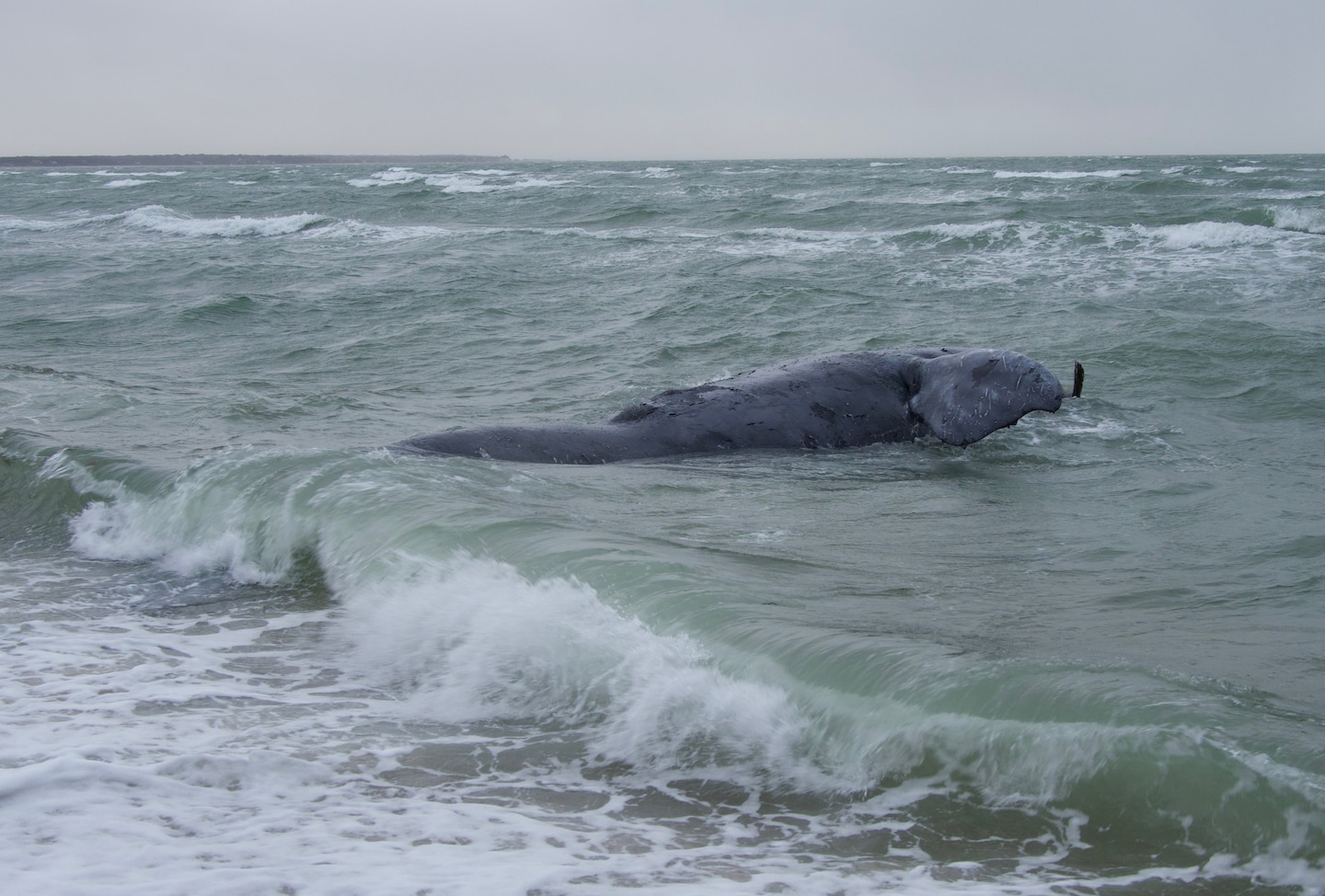
A female North Atlantic right whale was found dead off the coast of Martha’s Vineyard, Massachusetts, with a rope wrapped around it, raising concerns for the critically endangered species of which only about 360 remain. The whale, believed to be a juvenile, had washed ashore with a rope tangled around its peduncle, and its death comes during the four-month period when such whales give birth. With fewer than 70 reproductively active females remaining, entanglements have killed at least nine of the whales and injured 70 others since 2017. Marine experts are waiting for improved weather to determine the cause of death and identify the specific animal.
A rare North Atlantic right whale calf off the coast of South Carolina is expected to die from serious injuries likely caused by a boat propeller, highlighting the ongoing threat of vessel strikes and entanglements in fishing gear to the critically endangered species. Efforts to reduce boat speed limits near the whales' habitat have been unsuccessful, with fewer than 360 of the whales remaining. Conservation groups have urged the federal government to tighten vessel speed rules to protect the whales, emphasizing the preventable nature of these threats. Biologists stress the critical role of North Atlantic right whales in the marine ecosystem, as they help promote the growth of phytoplankton, which forms the foundation of the marine food web.
The population of the North Atlantic right whale, a vanishing species, is in worse shape than previously believed, according to federal ocean regulators. The latest data from the National Oceanic and Atmospheric Administration reveals that 114 of these whales have been documented as dead, seriously injured, or sick since the start of an "unusual mortality event" in 2017. The new estimate highlights the dire situation for these whales, which are vulnerable to ship collisions and entanglement in fishing gear. The decline in their numbers is a result of climate change and human activities, posing a significant threat to marine life.
A federal appeals court has ruled in favor of lobster fishers and the state of Maine, who oppose new fishing restrictions aimed at protecting the North Atlantic right whale. The restrictions would limit where lobster fishers can fish and what kind of gear they can use to prevent the whales from becoming entangled in fishing ropes. The court's ruling could mean that the federal government must take another stab at crafting new rules to protect the whales. Conservationists argue that the trap lines pose too much of a risk to whales, whose populations have declined in recent years.
The Cape Cod Canal in Massachusetts has been closed to escort a female North Atlantic right whale and her calf as they swim through the canal. The canal will not be reopened until the whales are clear of it. The North Atlantic right whale is critically endangered, with an estimated 340 animals remaining, and protected under the federal Endangered Species Act and the Marine Mammal Protection Act.