The upcoming non-farm payrolls report is expected to show modest job growth around +130K, with some indicators like ADP and initial jobless claims suggesting mixed signals. The unemployment rate is forecasted to remain near 4.2%, and overall, the report is considered less critical as the Fed adopts a wait-and-see approach later this year.

Key market events this week include the U.S. non-farm payrolls report, expected to show continued job growth, and the ECB's anticipated rate cut. OPEC+ is likely to extend oil output cuts, while the Bank of Canada is expected to lower rates following slower-than-expected economic growth. Despite recent losses, major U.S. stock indexes ended the month higher, though the Dow transports index signals potential economic slowdown.
European morning trade remains subdued as traders await the US non-farm payrolls release, with the focus on the Federal Reserve's stance on rate cuts. The dollar is marginally lower, while Treasury yields are slightly higher. Tech shares rally, lifting S&P 500 and Nasdaq futures, contributing to a more positive risk mood.
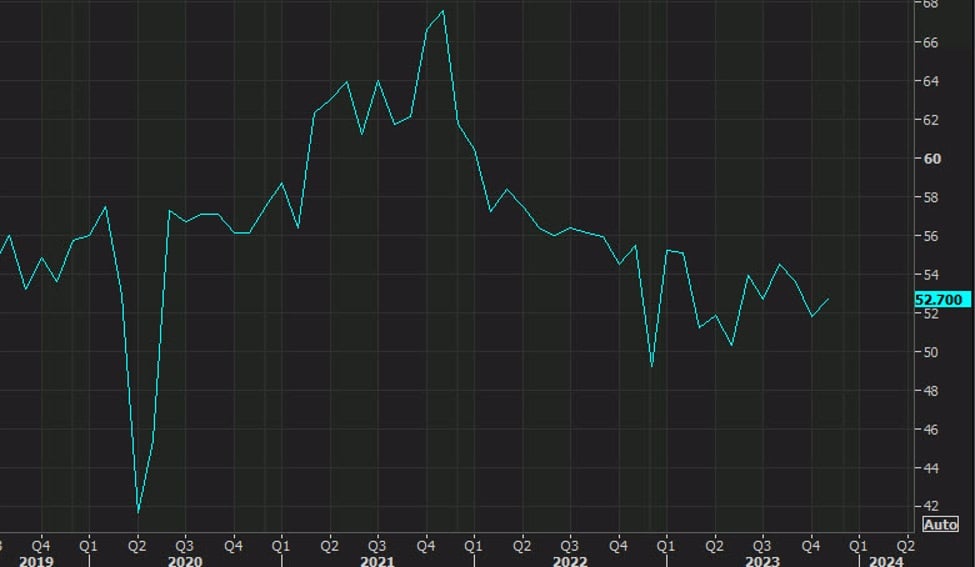
The upcoming ISM services report for December is anticipated to show a slight decrease, which could significantly influence market trends, especially after the recent reversal of the US dollar following the non-farm payrolls data. The report is a leading indicator, with the market closely watching the prices paid and employment figures within it to confirm or contradict the jobs data. The outcome of this report could set the tone for market dynamics for the rest of the month.
The S&P 500 index had its best week of the year, surging 5.85%, driven by a dovish Federal Reserve, declining Treasury yields, and a "Goldilocks" non-farm payrolls report. The tech-heavy Nasdaq Composite and the blue-chip Dow also saw significant gains for the week. All 11 S&P sectors ended in positive territory, except for Energy. The jobs report, which showed an increase of 150K jobs in October and a slight uptick in unemployment, contributed to positive sentiment. Meanwhile, Apple's disappointing holiday quarter guidance weighed on the market, while Expedia and Paramount were among the top gainers, and Fortinet experienced losses due to a weak outlook.
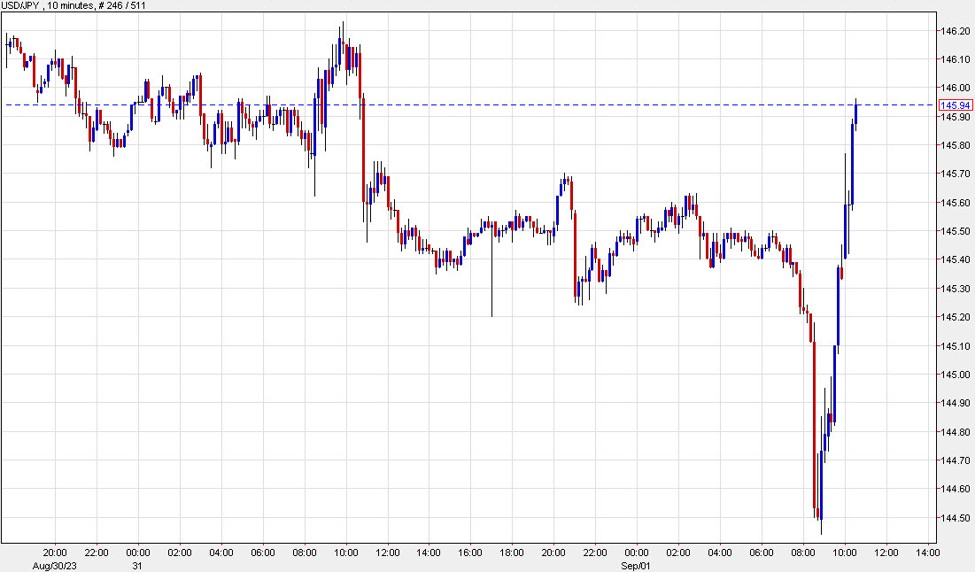
The US dollar is experiencing a sudden surge as Treasury yields rise, despite unclear reasons for the bond market's behavior. Possible factors include flatten trades clearing out, concerns about energy prices impacting the Fed's decisions, or a case of 'buy the rumor, sell the fact'. The dollar's strength is seen across the board, with the Canadian dollar being particularly affected due to a surprising contraction in Canada's Q2 GDP.
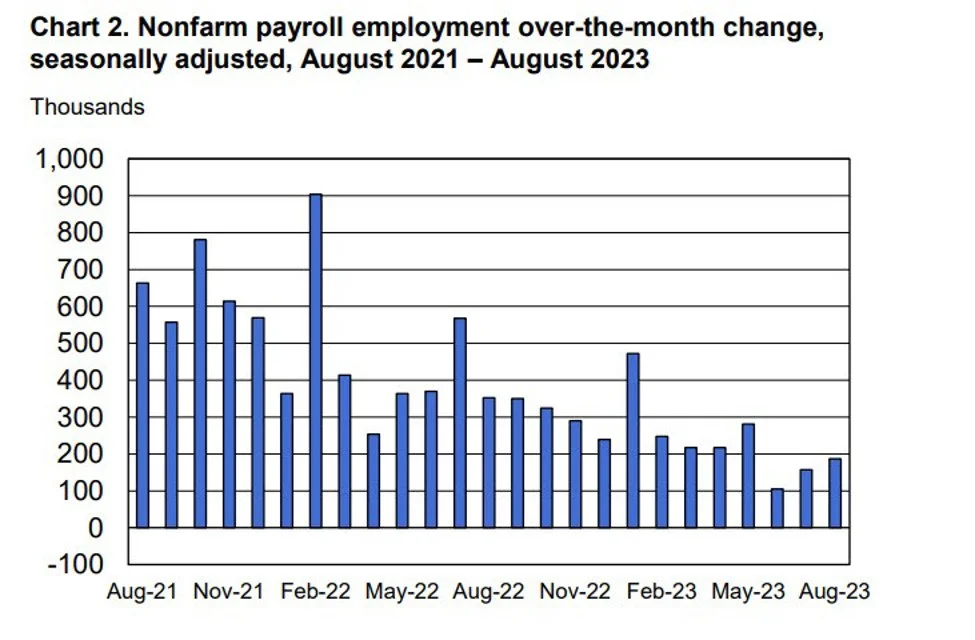
The US August non-farm payrolls report shows a slight beat with 187,000 jobs added, but the unemployment rate increased from 3.5% to 3.8%. The participation rate also rose to 62.8%. The two-month net revision was negative, indicating a downward trend in job growth. Average hourly earnings were slightly lower than expected, suggesting the Federal Reserve may have more room to pause on interest rate hikes. The reaction in the markets sees the US dollar and Treasury yields declining, while equities are rising.
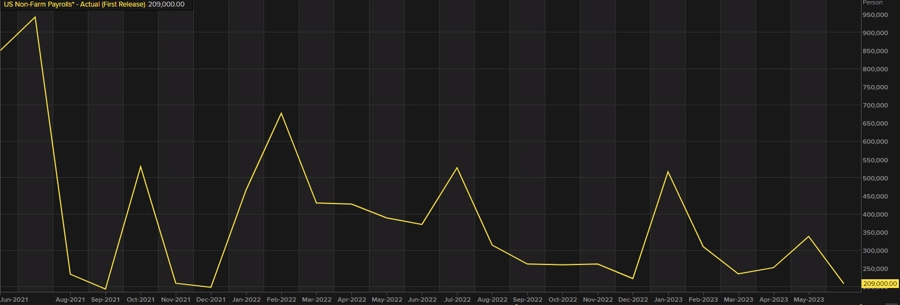
The US non-farm payrolls for June came in at 209,000, slightly below the expected 225,000. The unemployment rate remained steady at 3.6%, while average hourly earnings increased by 0.4% month-on-month, surpassing expectations. Despite the slight miss in job growth, the market remains focused on the strong wage growth, which could draw the attention of the Federal Reserve.
The FX market is quiet due to most of the world being closed for holidays, with the exception of the New Zealand dollar showing some activity. The release of the jobs report during a time when most markets are closed is unusual, but the FX market will remain open. However, bonds will be completely closed. It is advised to avoid trading during this thin market, as a strong or weak non-farm payrolls number is unlikely to have a significant impact.