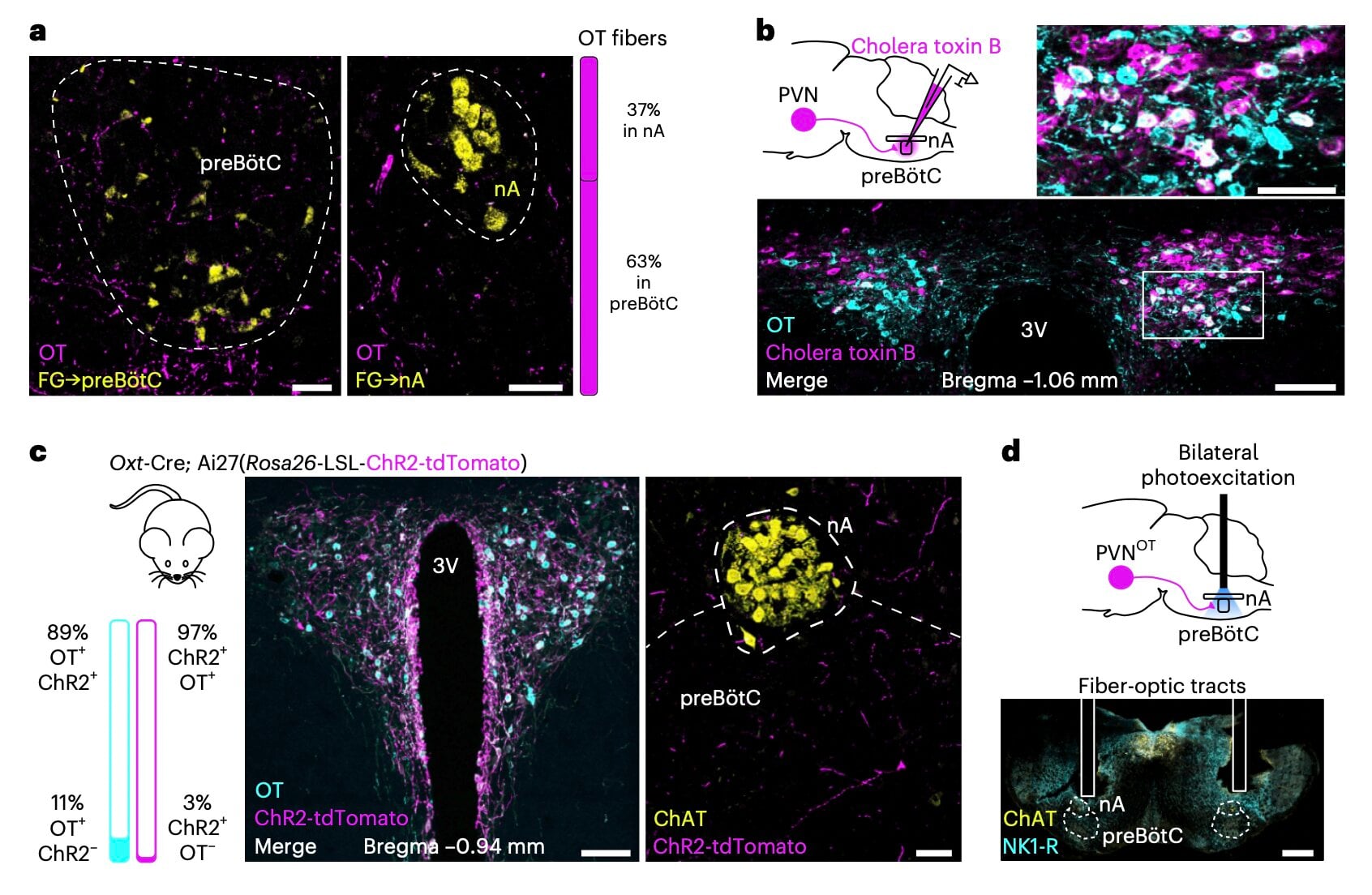
Recent research uncovers a neural pathway involving oxytocin that enhances synchronization between heartbeat and breathing in mice, which could lead to new therapies for stress and anxiety. The pathway links the hypothalamus, brainstem, and heart, and oxytocin plays a key role in regulating RespHRV, especially during calming states.
Research in male mice identifies a stress-sensitive neural pathway between the paraventricular nucleus and lateral hypothalamus that disrupts sleep and impairs memory, suggesting potential targets for treating stress-related cognitive and sleep issues.
Scientists have detailed how addictive drugs like cocaine can hijack the brain's reward system, causing individuals to prioritize drug use over basic needs like food and water. Research on mice has identified a specific neural pathway in the brain's nucleus accumbens that is activated by drugs of abuse, leading to a progressive alteration of the natural reward system and a reduced motivation for essential needs. The study also identified a gene, Rheb, that plays a significant role in allowing drugs to hijack the reward system, and disrupting this gene in lab mice prevented the drugs from overriding their need for food and water. While the findings are based on mice and further research is needed to confirm their applicability to humans, the research provides insights that could lead to better treatments for addiction by targeting specific neural pathways without affecting natural behavior.
Scientists have discovered a new neural pathway connecting the prefrontal cortex and the amygdala that regulates the brain's transition to high-intensity fear responses, crucial for survival. Dysregulation of this pathway can lead to psychiatric illnesses like PTSD and anxiety disorders. The study utilized advanced techniques in mice to uncover and manipulate this pathway, offering potential for therapeutic interventions and a better understanding of fear response mechanisms.
Scientists have discovered a neural pathway involving a group of sensory neurons that connect the heart to the brainstem, shedding light on the causes of fainting. By activating these neurons in mice, researchers observed symptoms similar to human syncope, including rapid pupil dilation and reduced heart rate and blood pressure. The study suggests that understanding this neural pathway could lead to new treatment approaches for cardiac causes of syncope. Additionally, researchers found that inhibiting or stimulating a specific region in the hypothalamus affected the duration of fainting episodes and the subsequent recovery.
Researchers have discovered the neural pathway connecting chronic stress to sleep disturbances and how bright-light treatment can alleviate these issues. The study, conducted on mice, identified the crucial role of the lateral habenula, a brain region sensitive to light signals, in influencing non-REM sleep patterns. Bright-light treatment was found to inhibit certain neurons in the lateral habenula, reducing sleep abnormalities caused by stress. Understanding this pathway can help develop optimal light treatments and potential pharmacological interventions for stress-induced sleep problems.