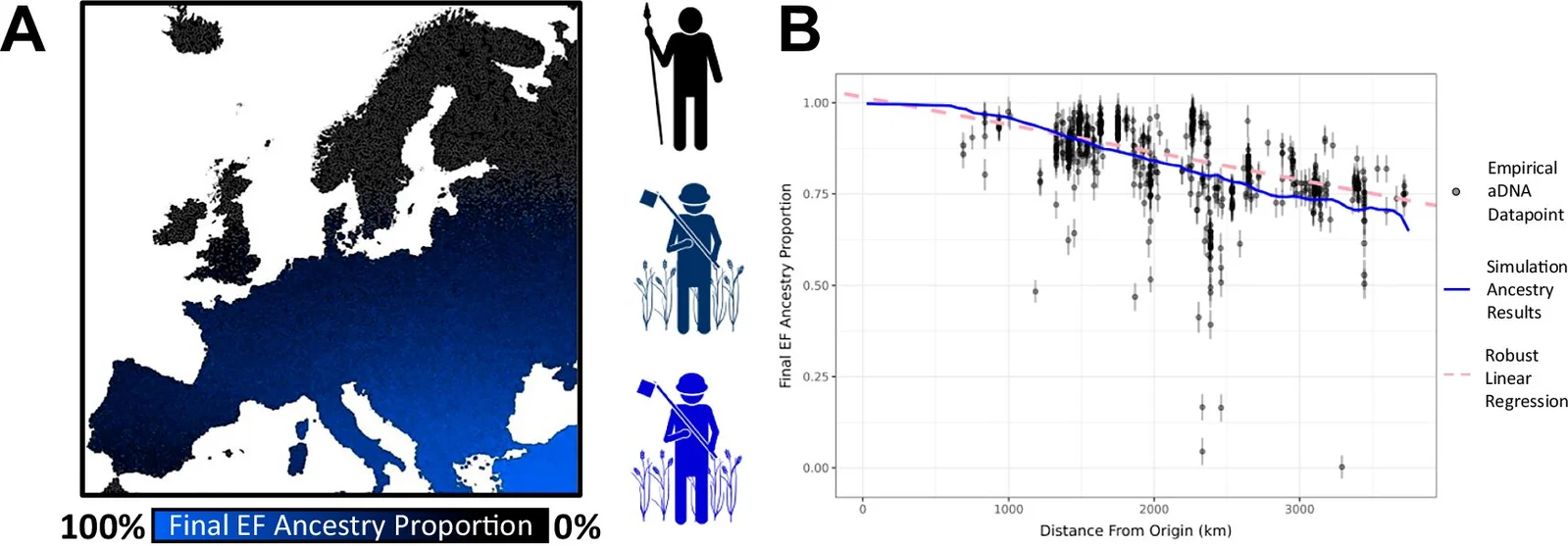
A study published in Nature Communications reveals that the spread of farming in Europe around 10,000 years ago was primarily due to migration of early farmers rather than local adoption, with minimal cultural transmission, leaving a lasting genetic impact on European populations.
New research using ancient DNA and computer models shows that the spread of farming in Europe was primarily driven by migration of farming groups, with minimal influence from cultural adoption by hunter-gatherers, who largely continued their traditional way of life.
A new study published in Nature sheds light on the Neolithization process in western Eurasia, revealing distinct differences in the spread of farming between eastern and western populations. The ancestry of western Europeans was shaped by three major migrations, with the Yamnaya culture's expansion eradicating an invisible boundary. Additionally, genetic analysis suggests that the elevated risk for multiple sclerosis among northern Europeans originated from the Yamnaya nomads, possibly due to environmental and lifestyle factors.
A recent study published in the journal Nature reveals that the Neolithic era in North Africa was shaped by a complex interplay of cultures between African hunter-gatherers, European farmers, and Near Eastern pastoralists. The study, which analyzed genomic data from Neolithic human remains in the Maghreb region, challenges previous theories about the origins of agriculture and livestock in North Africa. The findings suggest that the Neolithic Revolution in this region was the result of a multifaceted process involving cultural exchanges, genetic mixing, and the adoption of new techniques from immigrant groups. This research sheds new light on the diverse origins and shared knowledge of ancient populations in North Africa over 7,000 years ago.