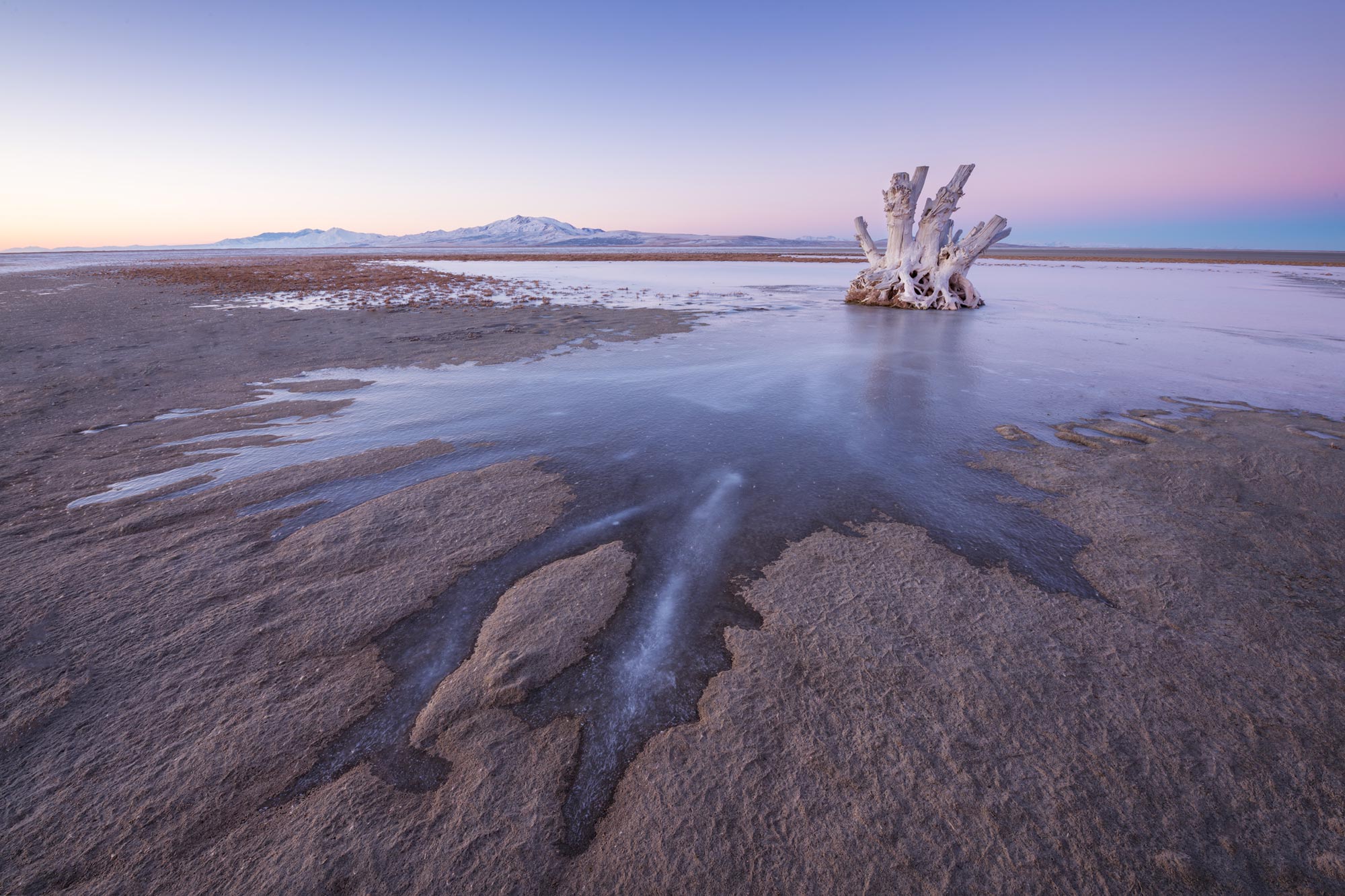
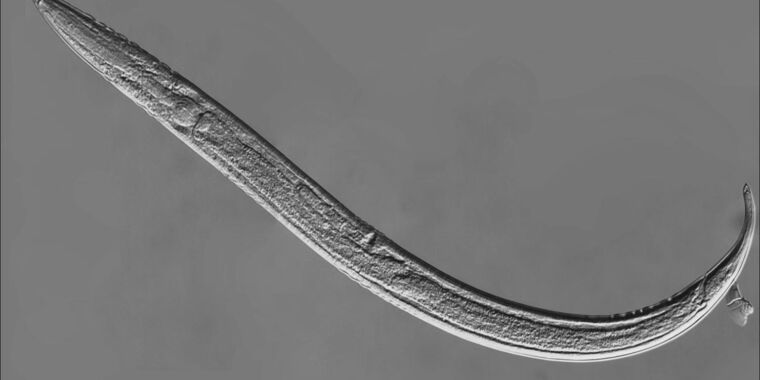
Scientists discovered a new microscopic nematode species, Diplolaimelloides woaabi, in the extreme environment of Utah's Great Salt Lake, challenging previous beliefs about the lake's biodiversity and raising questions about its origins and ecological role.
Scientists have discovered a new species of nematode, Diplolaimelloides woaabi, in the Great Salt Lake, which may be unique to the lake and plays a potentially important ecological role, raising questions about its origin and survival in such an extreme environment.
Researchers have discovered how the carnivorous fungus Arthrobotrys oligospora turns into a killer when it senses a live worm. The fungus synthesizes a worm adhesive and additional trapping proteins to catch its prey, and produces enzymes to break down the worm for consumption. The fungus also increases DNA replication and ribosome biogenesis to create trap cells with specialized adhesive. It down-regulates genes involved in digesting dead matter and up-regulates genes that produce proteases to break down proteins. The fungus also produces proteins that weaken prey and manipulates their cells to take over. This research could potentially lead to the development of improved antifungals.
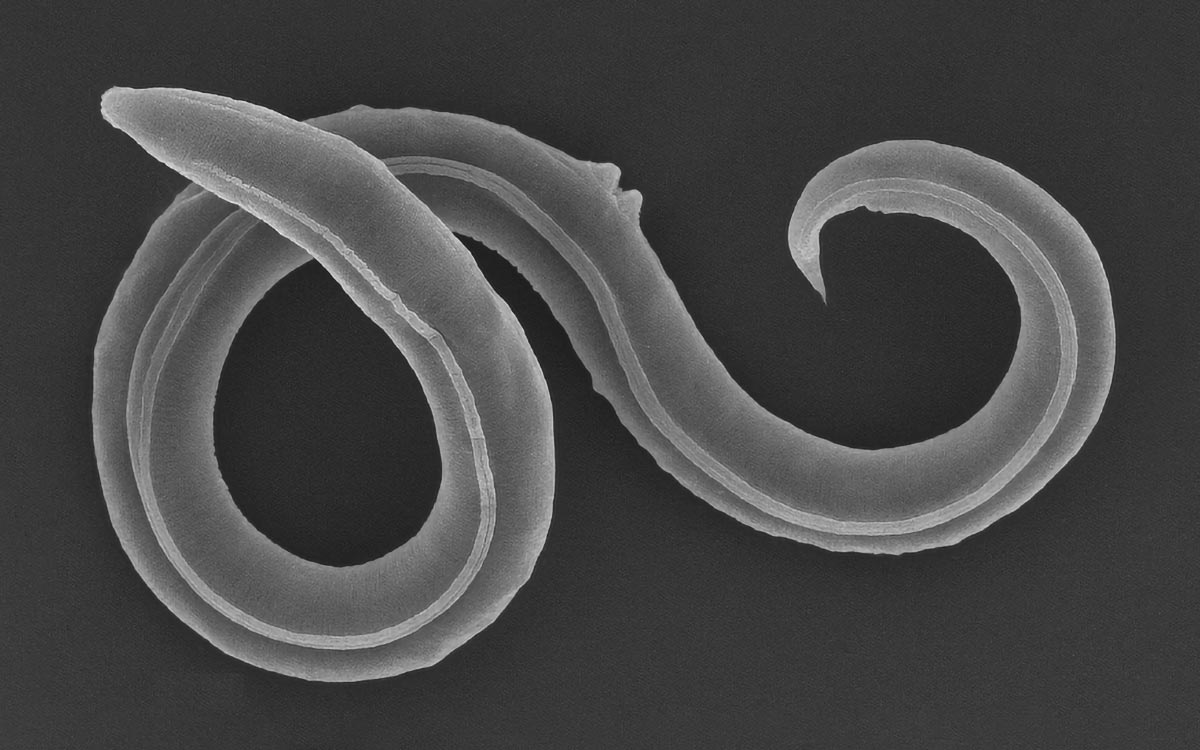
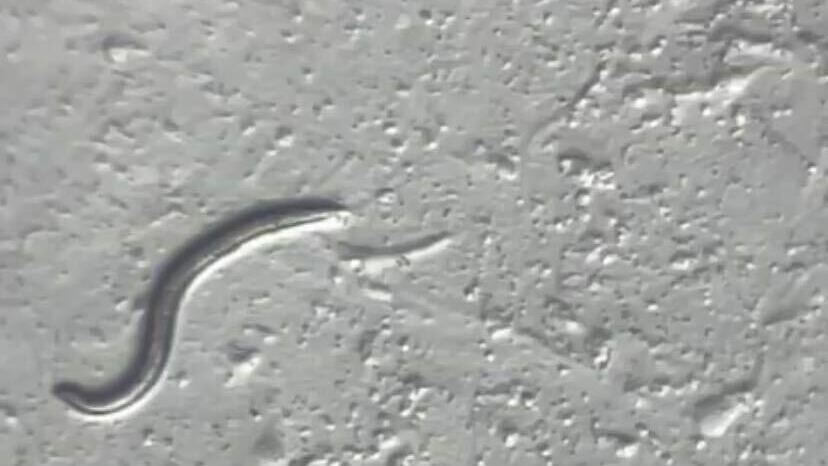
Researchers have successfully reanimated a soil nematode that had been dormant in Siberian permafrost for approximately 46,000 years. The nematode, identified as a new species called Panagrolaimus kolymaensis, shares genes related to survival with the model organism Caenorhabditis elegans. Exposure to mild desiccation before freezing improved the nematodes' survival capabilities, suggesting the potential for long-term dormant survival in extreme conditions. This study extends the known cryptobiosis period in nematodes by tens of thousands of years and highlights the role of environmental fluctuations in determining the duration of cryptobiotic states.
Scientists have discovered a previously unknown species of nematode worm that survived being frozen in Siberian permafrost for 46,000 years. The worm entered a dormant state known as cryptobiosis, during which it didn't eat and lacked a metabolism. This finding is significant because it reveals the ability of certain organisms to adapt and survive in extreme environments. The research could provide insights into genetic adaptations that help animals cope with climate change and protect endangered species.