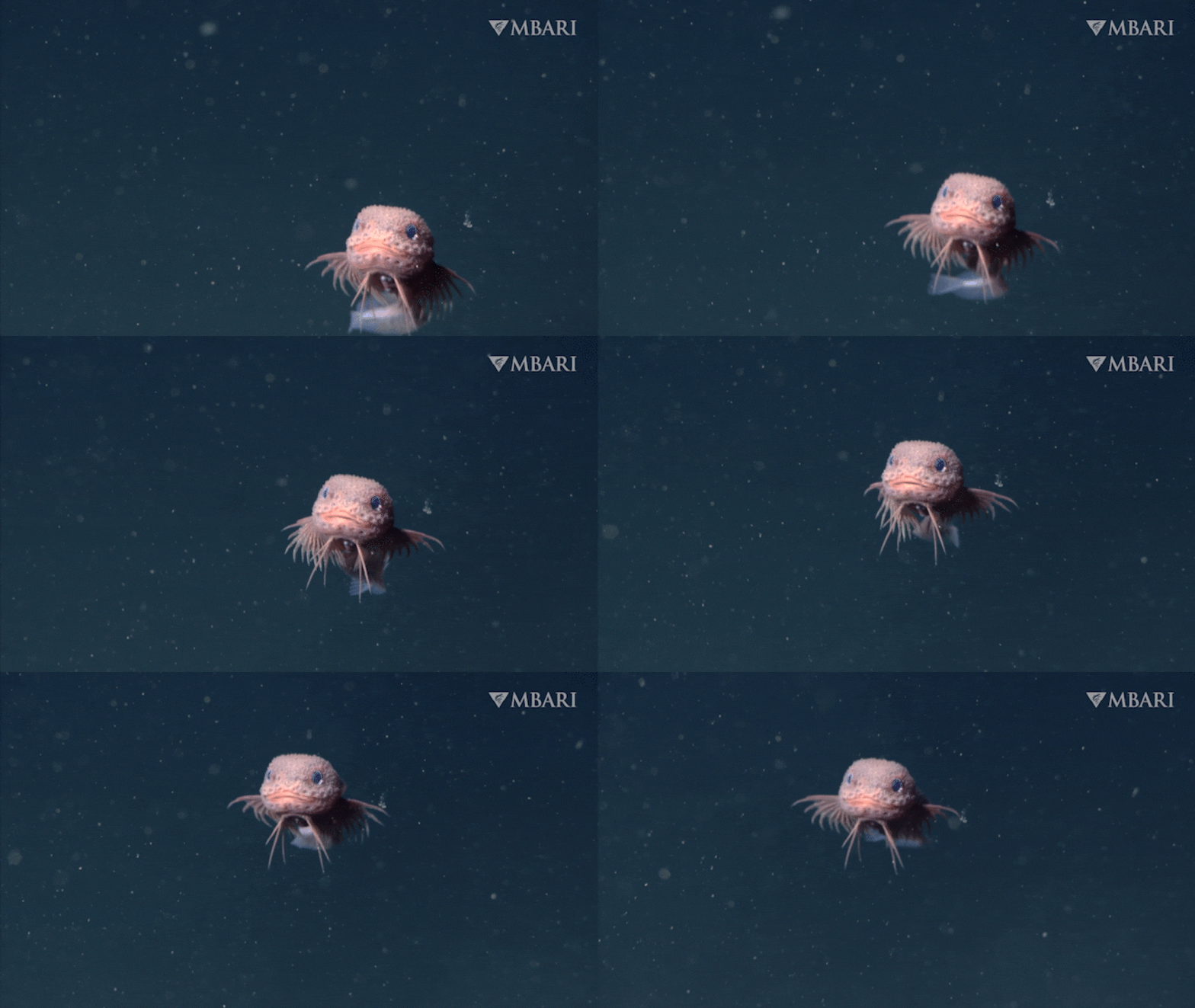
Researchers at MBARI discovered and filmed a new pink, bumpy snailfish species at over 10,700 feet deep in Monterey Canyon, highlighting the rich biodiversity of the deep ocean and the ongoing need for exploration and study of these extreme environments.
Scientists from the Monterey Bay Aquarium Research Institute (MBARI) filmed a super-rare dreamer anglerfish with ultra-black skin in the deep sea off the California coastline. The anglerfish, belonging to the genus Oneirodes, was spotted 2,562 feet below the surface in Monterey Canyon. Its ultra-black skin absorbs almost all light, making it appear like a shadowy silhouette. This is the first dreamer anglerfish seen in Monterey Canyon since 2016 and only the ninth time it has been spotted in the area in the last 36 years. The anglerfish's ultra-black skin helps it remain hidden while hunting prey and evading predators in the deep sea.
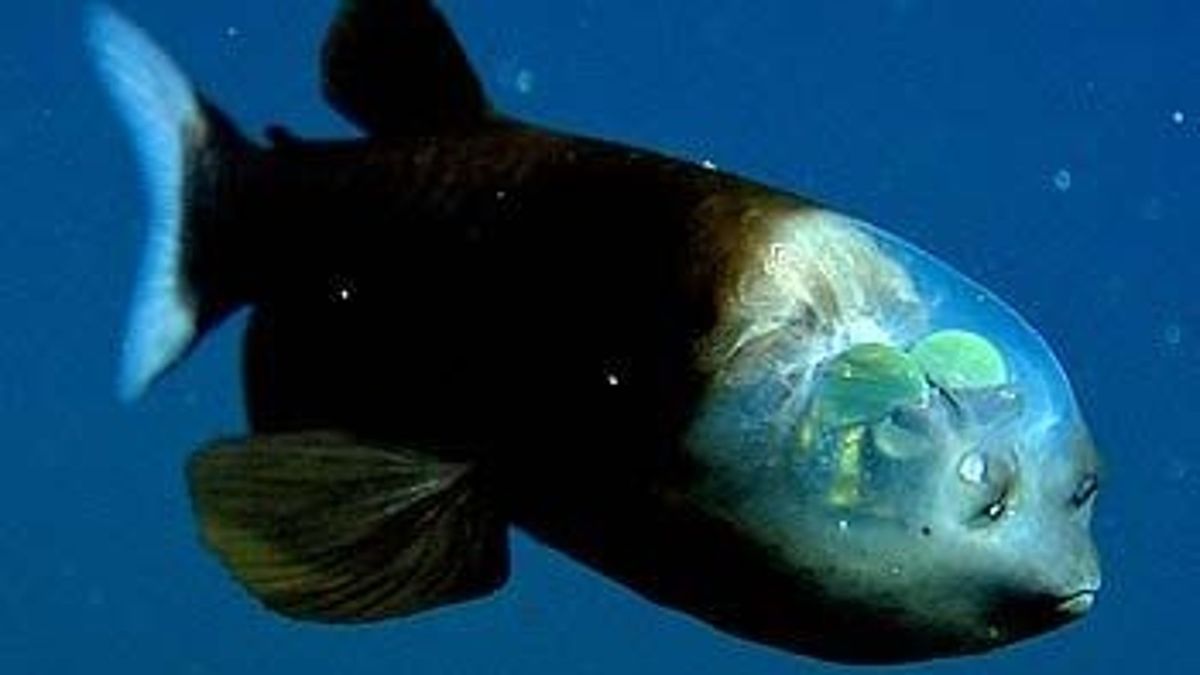
Barreleye fish, also known as Macropinna microstoma, possess unique tubular eyes that can rotate to track prey and are housed in transparent foreheads. These bizarre fish inhabit the Bering Sea and North Pacific Ocean at depths of 2,000 to 2,600 feet. Their eyes are tinted with a yellow pigment, enabling them to distinguish between sunlight and bioluminescence. Barreleyes hover motionless in the dark until they spot potential prey, then dart upward to capture it. Scientists speculate that they feed on crustaceans and larvae caught in the tentacles of siphonophores. The purpose of their transparent heads and other aspects of their lives remain uncertain.
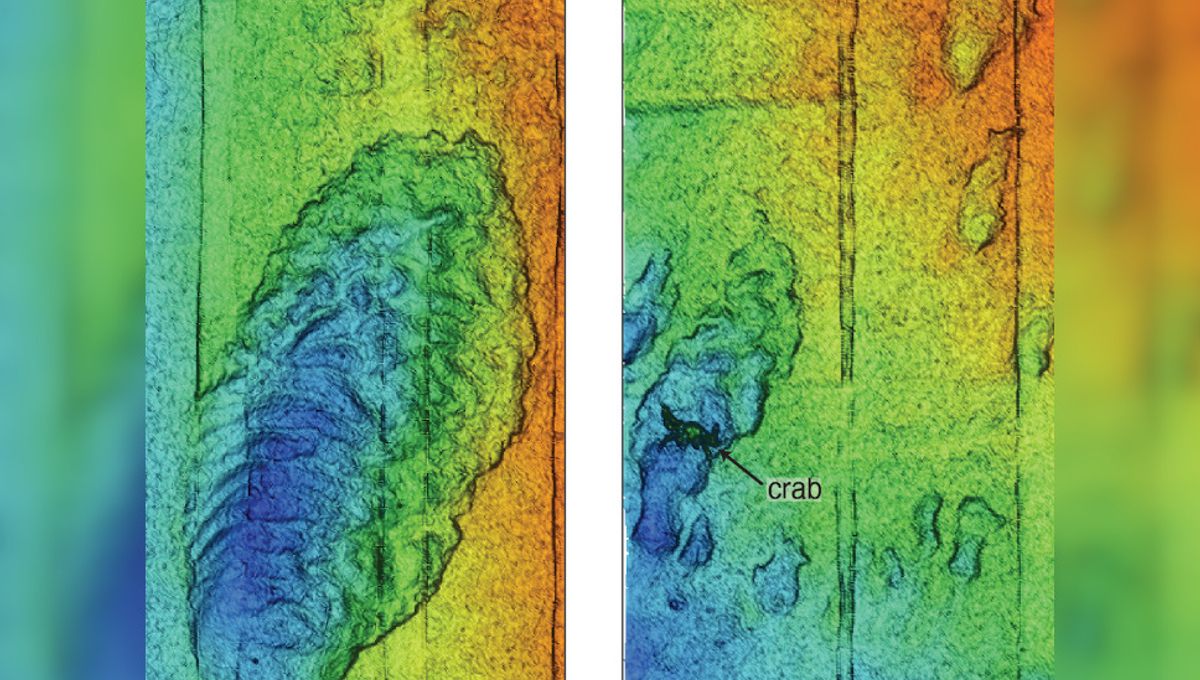
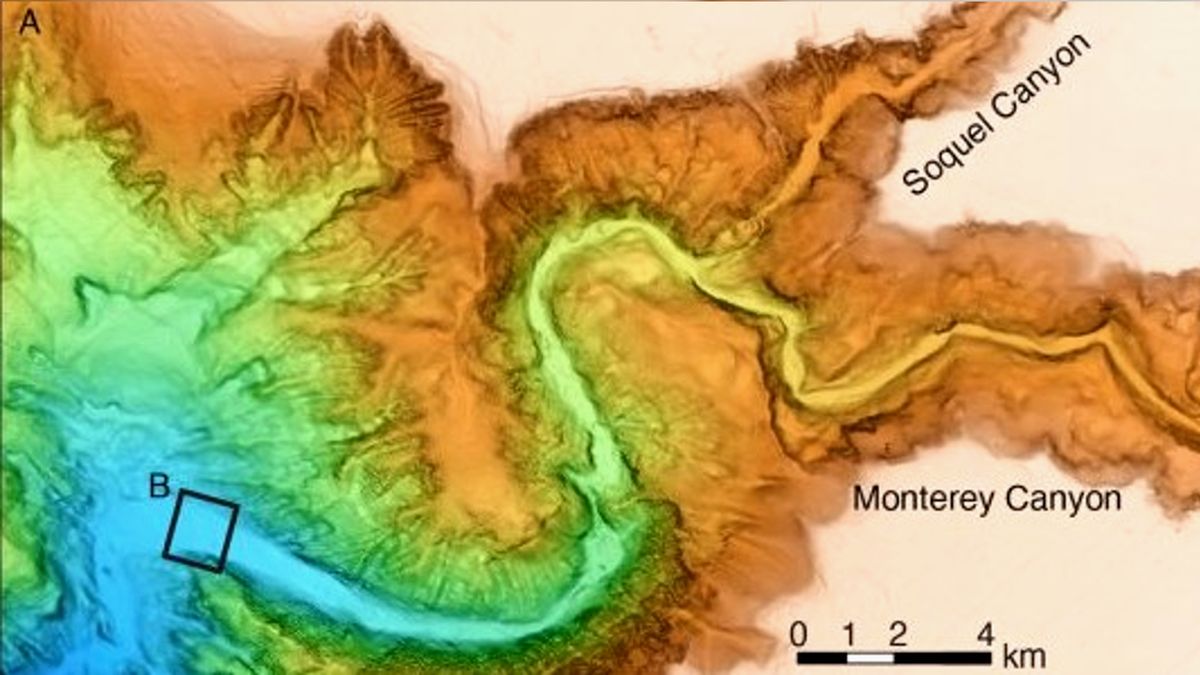
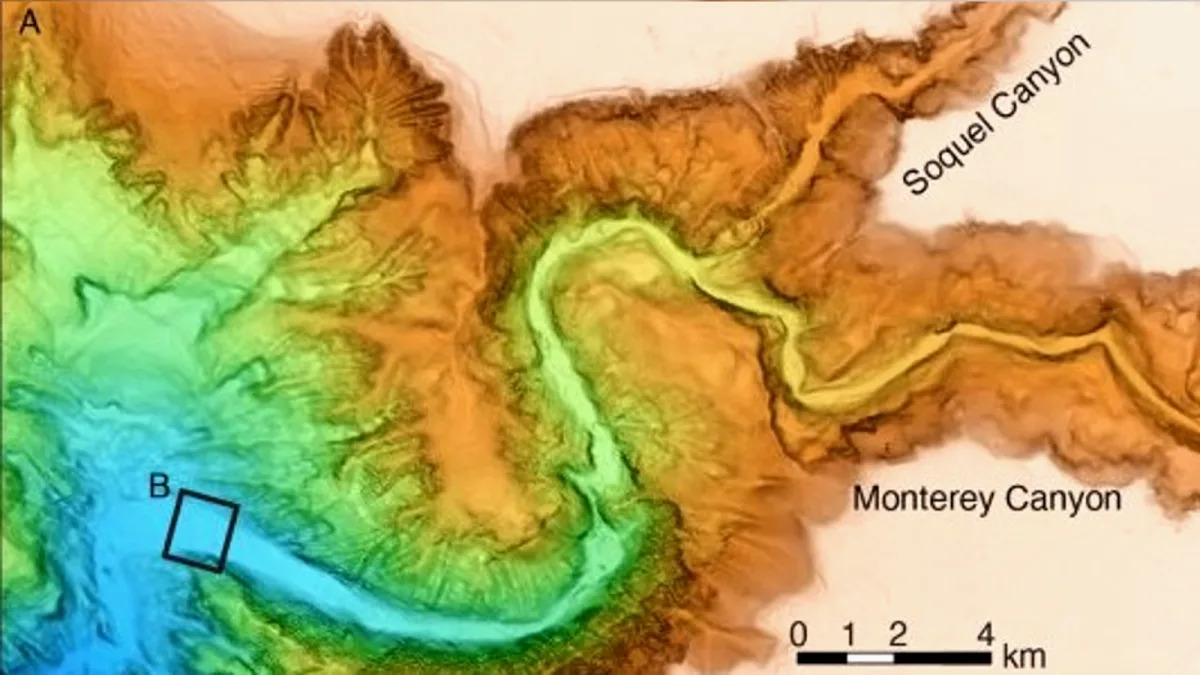
Scientists have successfully mapped the Monterey Canyon, an underwater gorge off the west coast of North America, with unprecedented detail using advanced sensor technology. The canyon, comparable in size and shape to the Grand Canyon, stretches for 153 kilometers (95 miles) and reaches depths of 4 kilometers (2.5 miles). The high-resolution data collected reveals not only the geological and geochemical features of the canyon but also the diverse marine life, including crabs, that inhabit its seafloor. This mapping effort provides valuable insights into the dynamic nature of the canyon and its potential vulnerability to global changes such as the climate crisis.
Researchers have created the clearest-ever maps of the Monterey Canyon, a massive deep-sea ravine off the coast of California. The maps, with centimeter-scale resolution, reveal the constantly changing topography of the underwater valley. The surveys conducted between 2015 and 2017 captured the canyon's seafloor in remarkable detail, providing valuable insights into the processes that shape it. The data showed that fast-moving turbidity currents and tides play a role in sculpting the seafloor, with their effects varying across the canyon. The high-resolution maps could also aid in studying deep-sea ecosystems and threatened species.
Researchers have created the clearest-ever maps of the Monterey Canyon, a massive deep-sea ravine off the coast of California. The maps, with centimeter-scale resolution, reveal the constantly changing topography of the underwater valley, which is comparable to the Grand Canyon. The surveys conducted between 2015 and 2017 captured the canyon's seafloor in remarkable detail, providing valuable insights into the processes that shape it. The data showed the effects of fast-moving turbidity currents and the role of tides in sculpting the seafloor. The researchers believe their new equipment could also be used to study deep-sea ecosystems.