The piece argues that Trump’s national security team has militarized U.S. policy, sidelined the State Department and NSC, and enabled reckless force and domestic deployments, weakening democracy and credibility abroad.
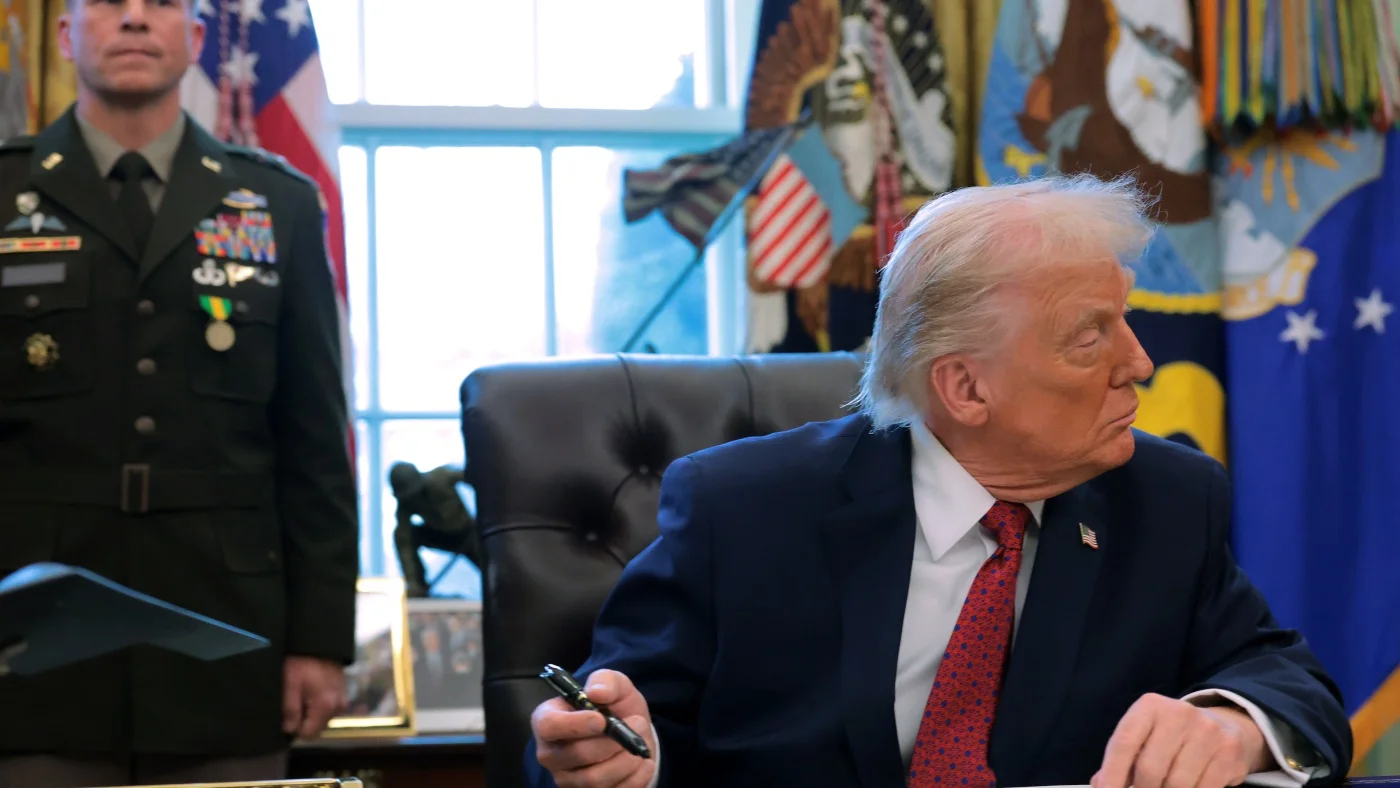
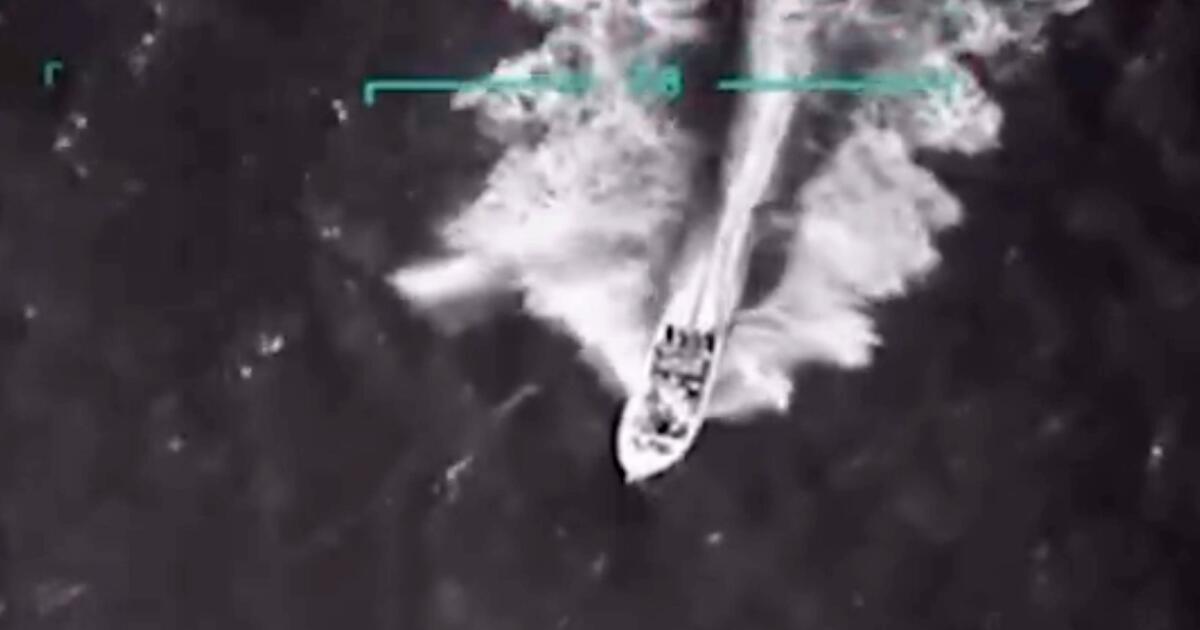
President Trump signed an executive order classifying fentanyl as a weapon of mass destruction, escalating the militarization of the US drug war, including military strikes on suspected drug vessels, though experts question the effectiveness of these measures and criticize the inflated claims about drug-related deaths and threats.
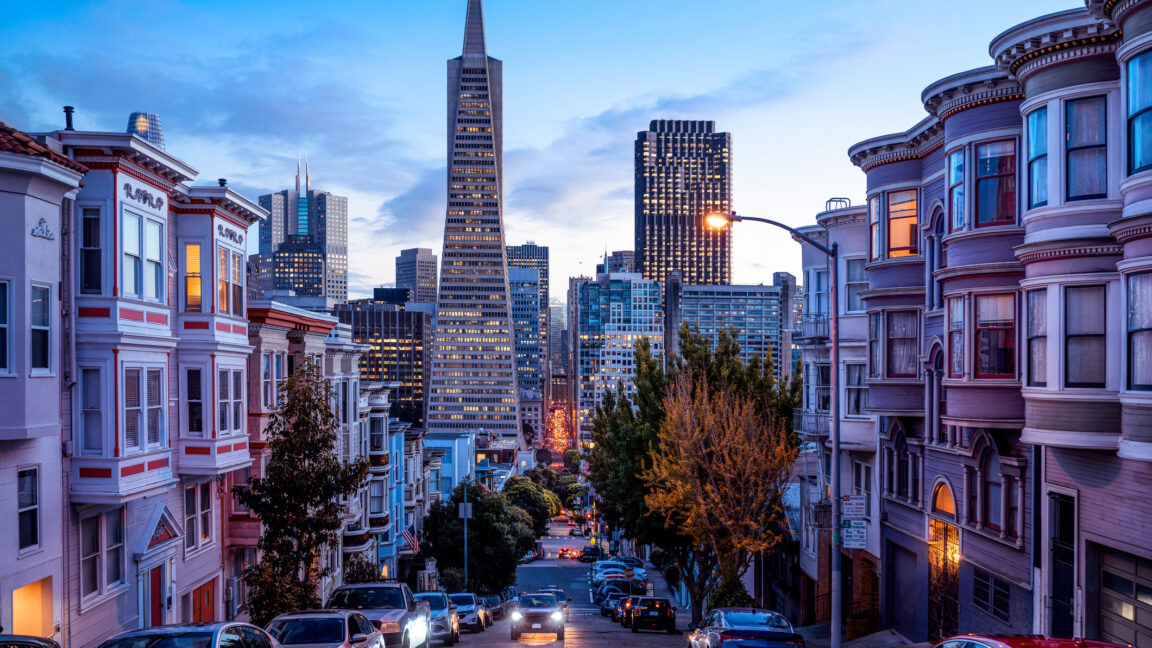
Tech billionaires like Jensen Huang and Marc Benioff have influenced Donald Trump to refrain from deploying troops into San Francisco, highlighting the growing sway of wealthy tech leaders in shaping city security and military decisions amidst concerns over urban safety and stability.
The Trump administration issued an executive order transforming NASA into a national intelligence and security agency, focusing on intelligence and security work rather than space exploration, amid concerns over budget cuts, militarization of space, and reduced scientific research.
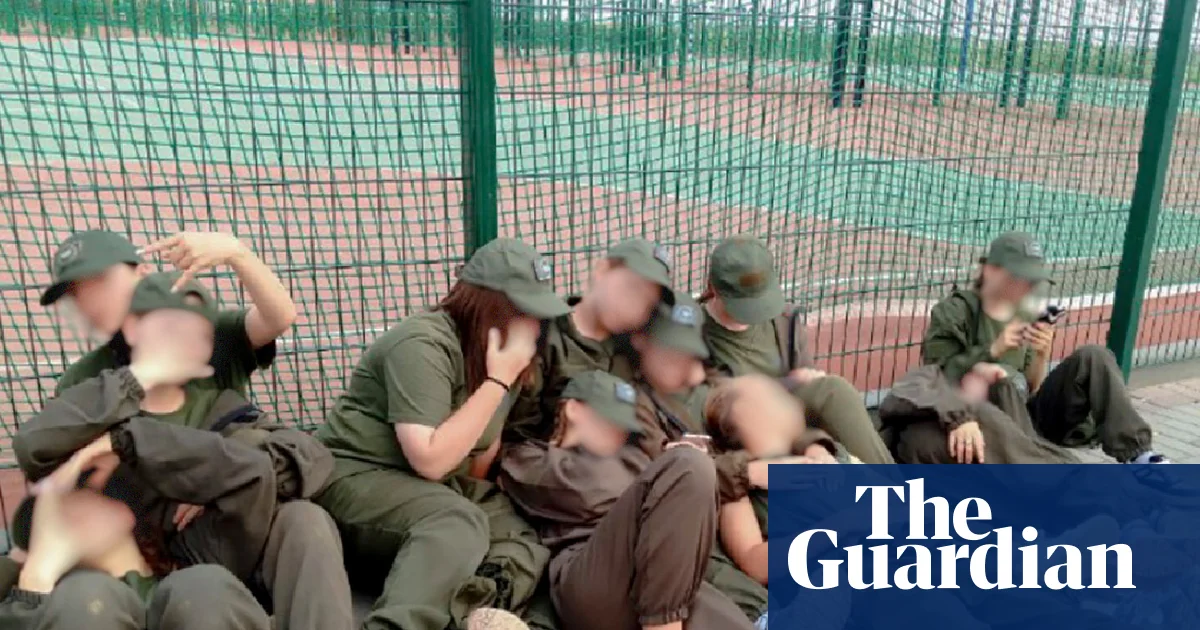
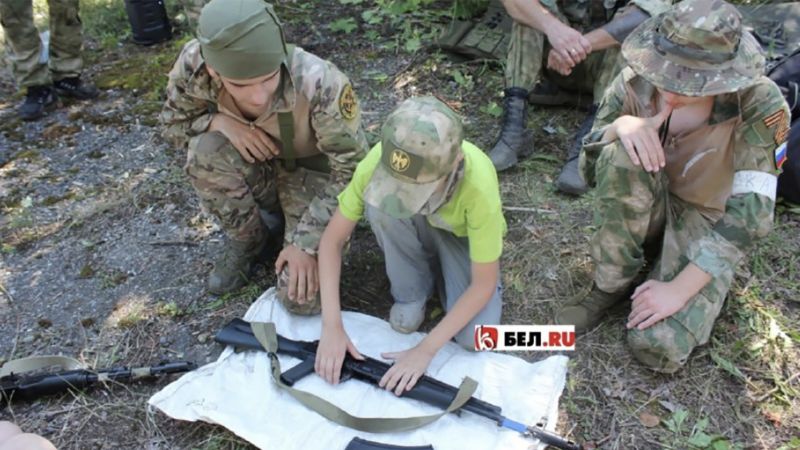
A Yale report reveals Russia operates over 200 camps across Russia and occupied Ukraine to re-educate, militarize, and indoctrinate Ukrainian children, including combat training and pro-Russia propaganda, raising concerns of war crimes and violations of international law.
The Trump administration has increased military actions against drug traffickers, deploying advanced military equipment and designating drug cartels as terrorist organizations, leading to controversial strikes and raising concerns about the militarization of law enforcement and international stability.
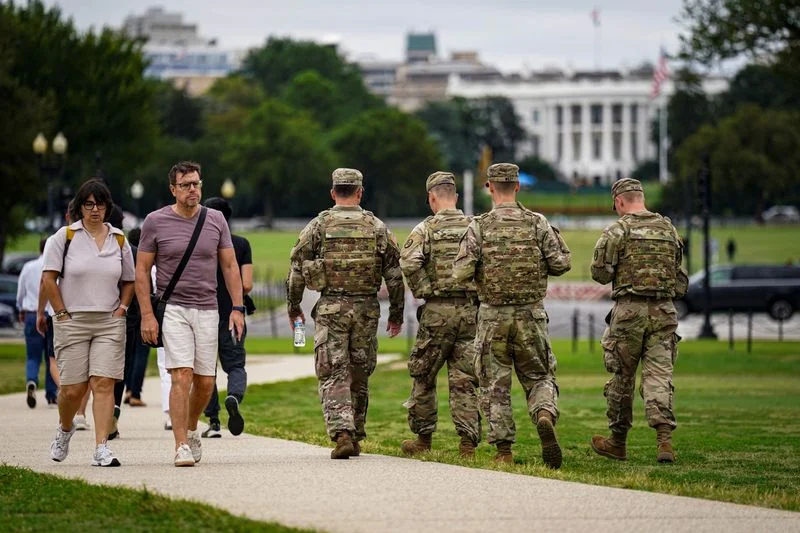
President Trump defended his deployment of National Guard troops in Washington, D.C., amid accusations of authoritarianism, and floated the idea of deploying them elsewhere, including Chicago, while emphasizing his stance against being a dictator. The move has been criticized by Democrats as an attempt to militarize cities, though Trump claims it is for public safety and law enforcement support.
President Trump deployed nearly 2,000 National Guard troops to Washington D.C. for a visible law enforcement presence aimed at addressing a perceived crime epidemic, though crime rates have been declining and critics see the move as politically motivated and a show of power rather than a genuine crime-fighting effort.
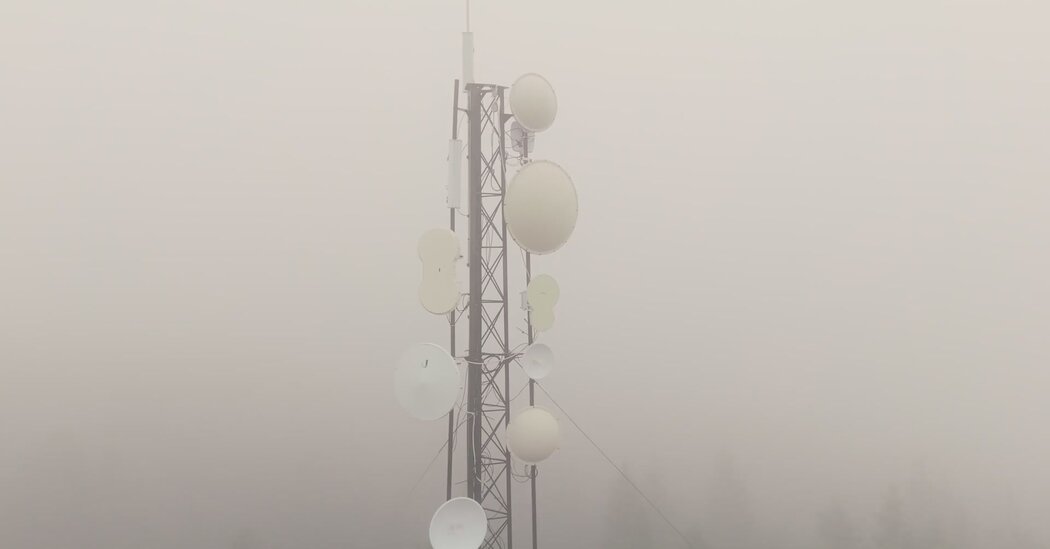
The article explores Canada's Cold War-era radar networks, such as the Pinetree, Mid-Canada, and DEW Lines, which were built to detect Soviet bombers and now stand as rusting relics amid a new era of Arctic militarization driven by geopolitical tensions and U.S. defense initiatives like the Golden Dome shield. It highlights the historical significance of these outposts, their impact on local communities like Chibougamau, and the current strategic shifts in the region.
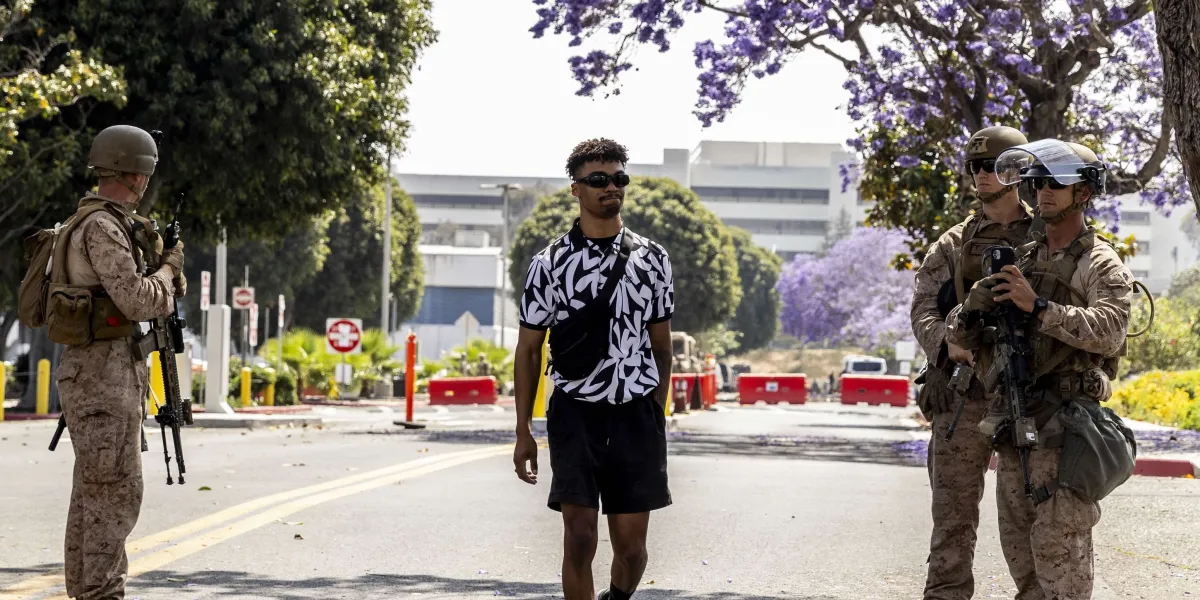
The article criticizes the recent display of militarized police and federal agents at MacArthur Park in Los Angeles, highlighting it as a disturbing example of rising fascism and authoritarianism in the U.S., with broader implications including the detention and mistreatment of immigrants in facilities that resemble concentration camps, reflecting a concerning shift towards repressive policies.
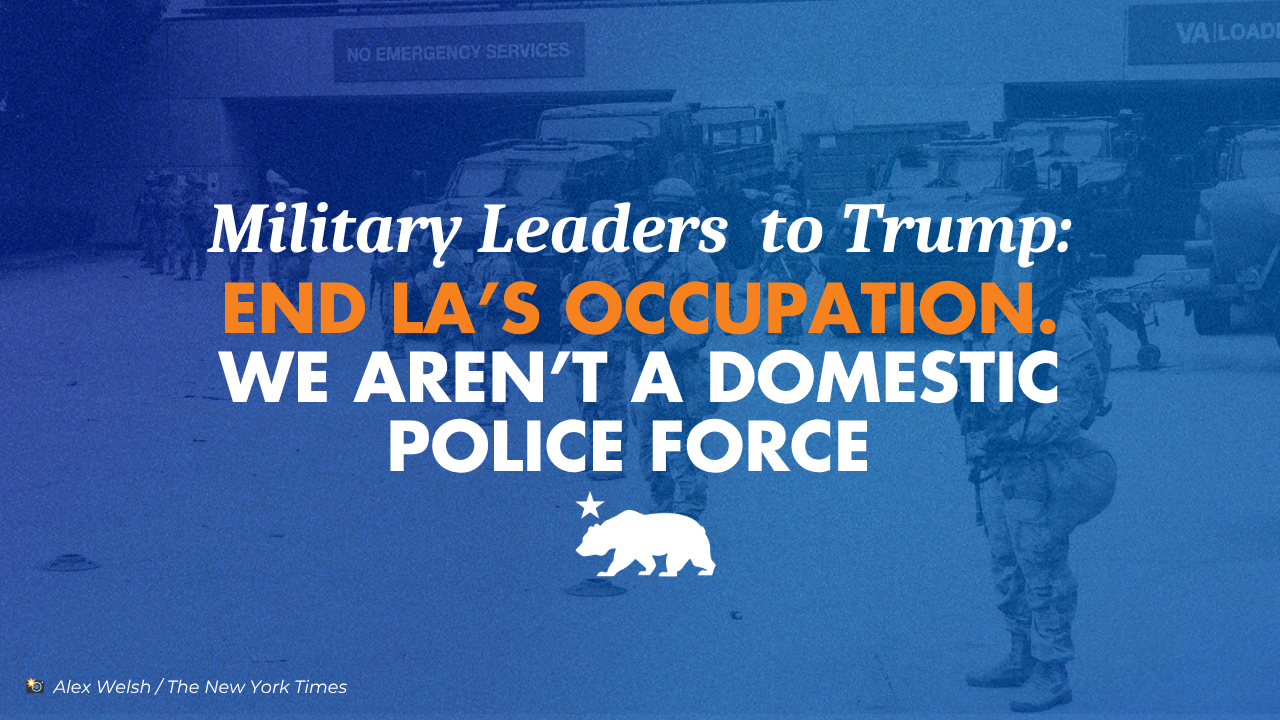
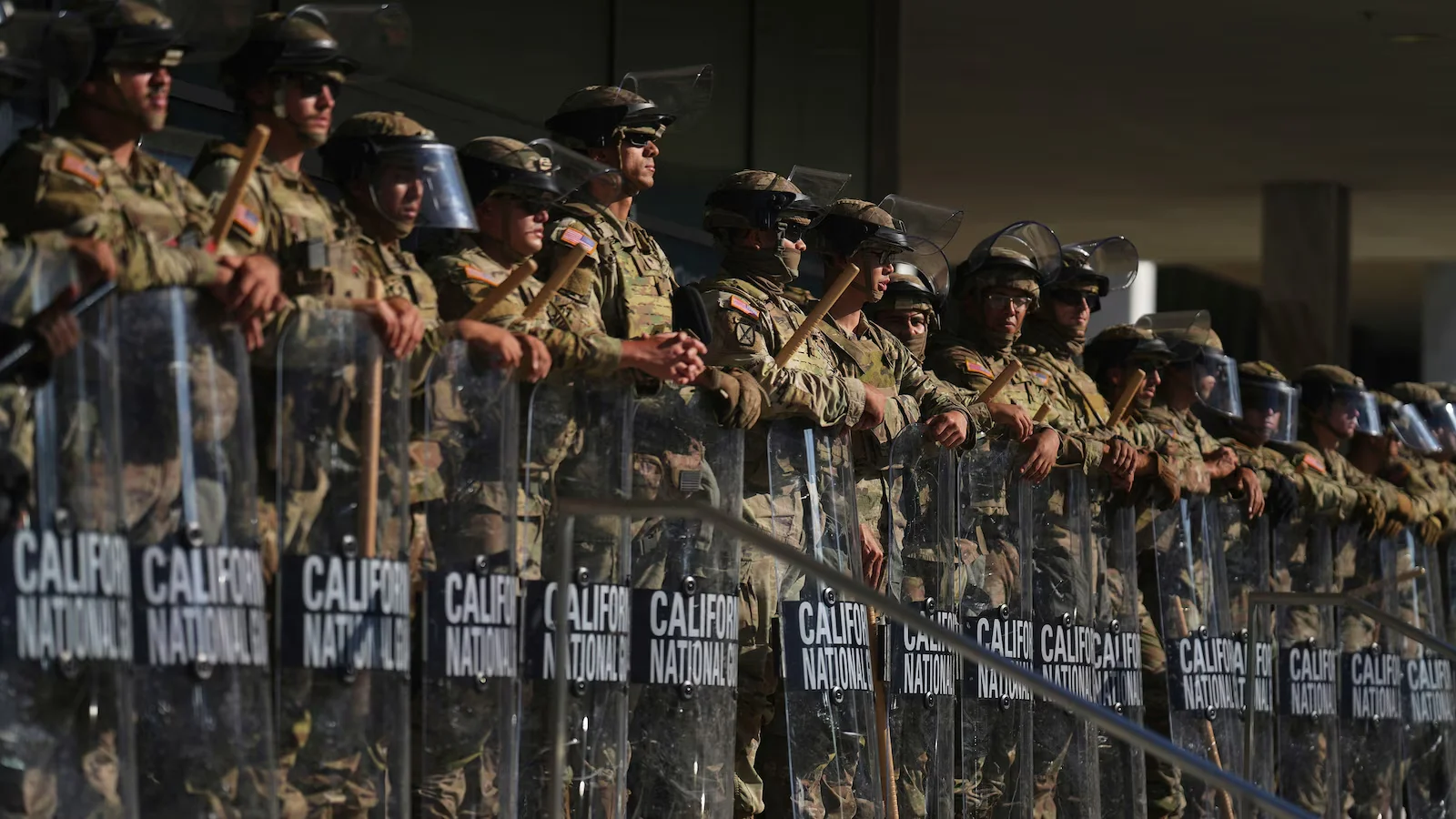
Retired military leaders and California officials oppose Trump's militarization of Los Angeles, arguing it risks national security, endangers servicemembers, politicizes the military, and undermines emergency response and civil liberties, supporting California's legal challenge to revert control of the National Guard to the state.
Nearly 5,000 federal troops deployed to Los Angeles have conducted only one detention amid protests, costing hundreds of millions and sparking criticism over unnecessary militarization and federal overreach, with local officials opposing the deployment.
A federal appeals court delayed an order that would have returned control of the California National Guard to Governor Gavin Newsom, after a lower court temporarily restrained Trump's deployment of troops during protests, citing constitutional and legal concerns about the president's authority and the protests' nature.
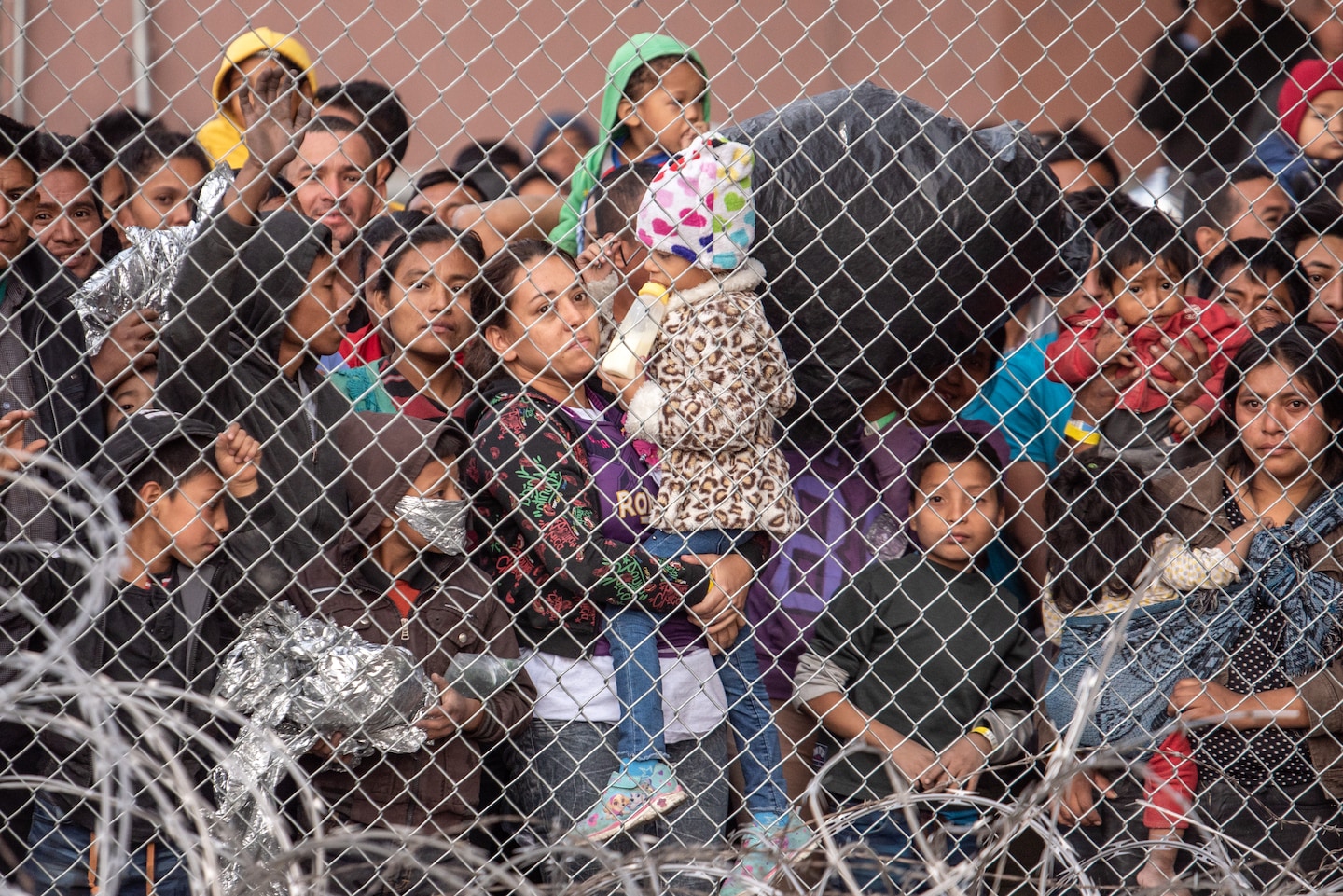
Former President Donald Trump and his allies are planning a militarized mass deportation operation and the construction of detention camps if he is returned to power, aiming to implement the largest deportation effort in American history. Trump's campaign spokeswoman has stated that undocumented immigrants should not get comfortable as they will soon be going home. However, experts and former government officials have raised concerns about the practicality and legality of such a plan, citing significant logistical and operational hurdles, including a shortage of personnel, detention space, and challenges with recalcitrant countries.
Russian schools are undergoing a process of militarization, with children as young as seven or eight receiving basic military training, older kids being taught how to dig trenches and shoot with real ammunition, and the national curriculum being changed to emphasize defense of the motherland. The government in Moscow is driving this effort, with an investment of thousands of "military-patriotic" clubs in schools and colleges, mandatory classes on military-patriotic values, and updated history books that accentuate Russian military triumphs. President Putin has personally led the campaign to inject patriotism into schools, rewriting history and framing the Russian invasion of Ukraine as a "special mission" to protect Russian speakers from "neo-Nazis." The goal is to instill in students an understanding and acceptance of military aesthetics and combat traditions, preparing them for war.