A newly studied ultramassive black hole in Messier 87 challenges existing theories of galaxy and black hole formation, suggesting black holes may have formed before stars in the early universe, as evidenced by its size, age, and overmassiveness compared to its galaxy.
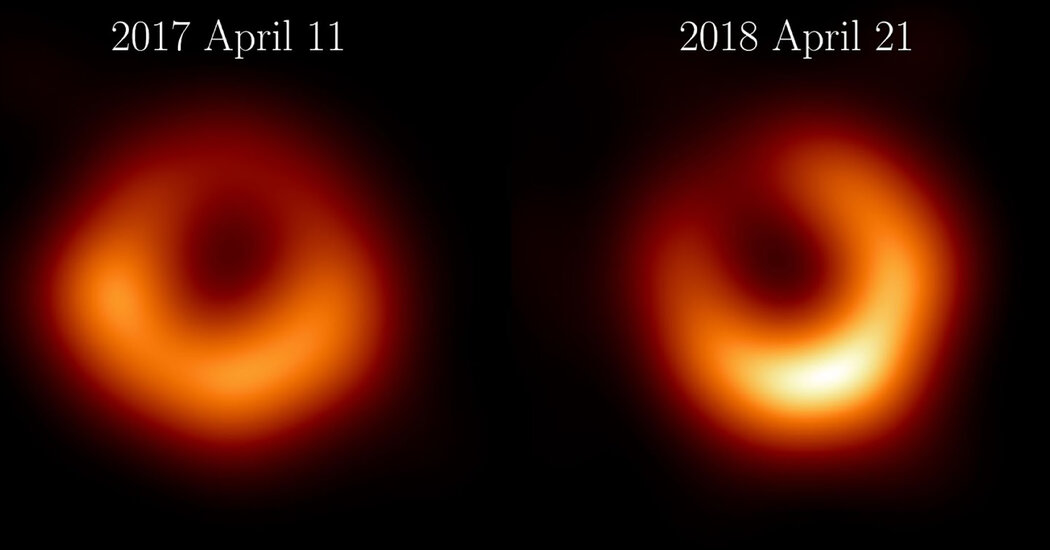
Astronomers have captured new images of the supermassive black hole in the galaxy Messier 87, confirming predictions made by Einstein's theory of general relativity. The images, produced by the Event Horizon Telescope, show a lumpy doughnut of hot gas circling a dark emptiness, consistent with previous observations. The study also revealed a shift in the brightest part of the ring around the black hole, providing valuable insights into the magnetic field and plasma environment. These findings contribute to our understanding of supermassive black holes and their behavior, paving the way for future research and potentially a black hole movie.
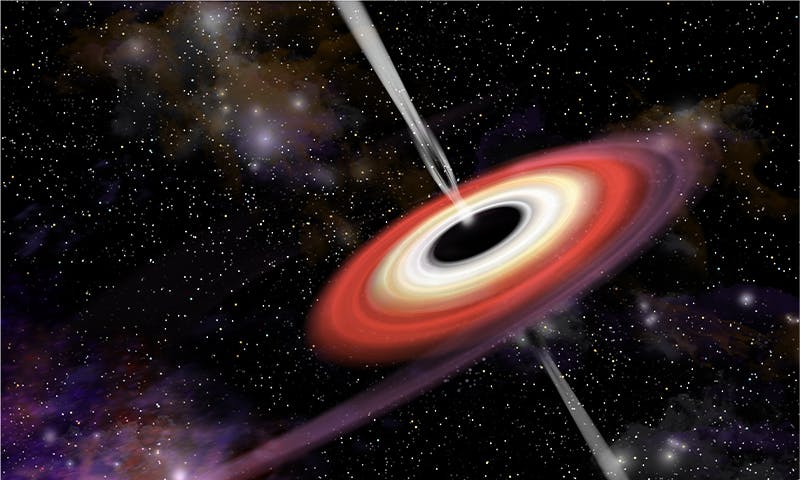
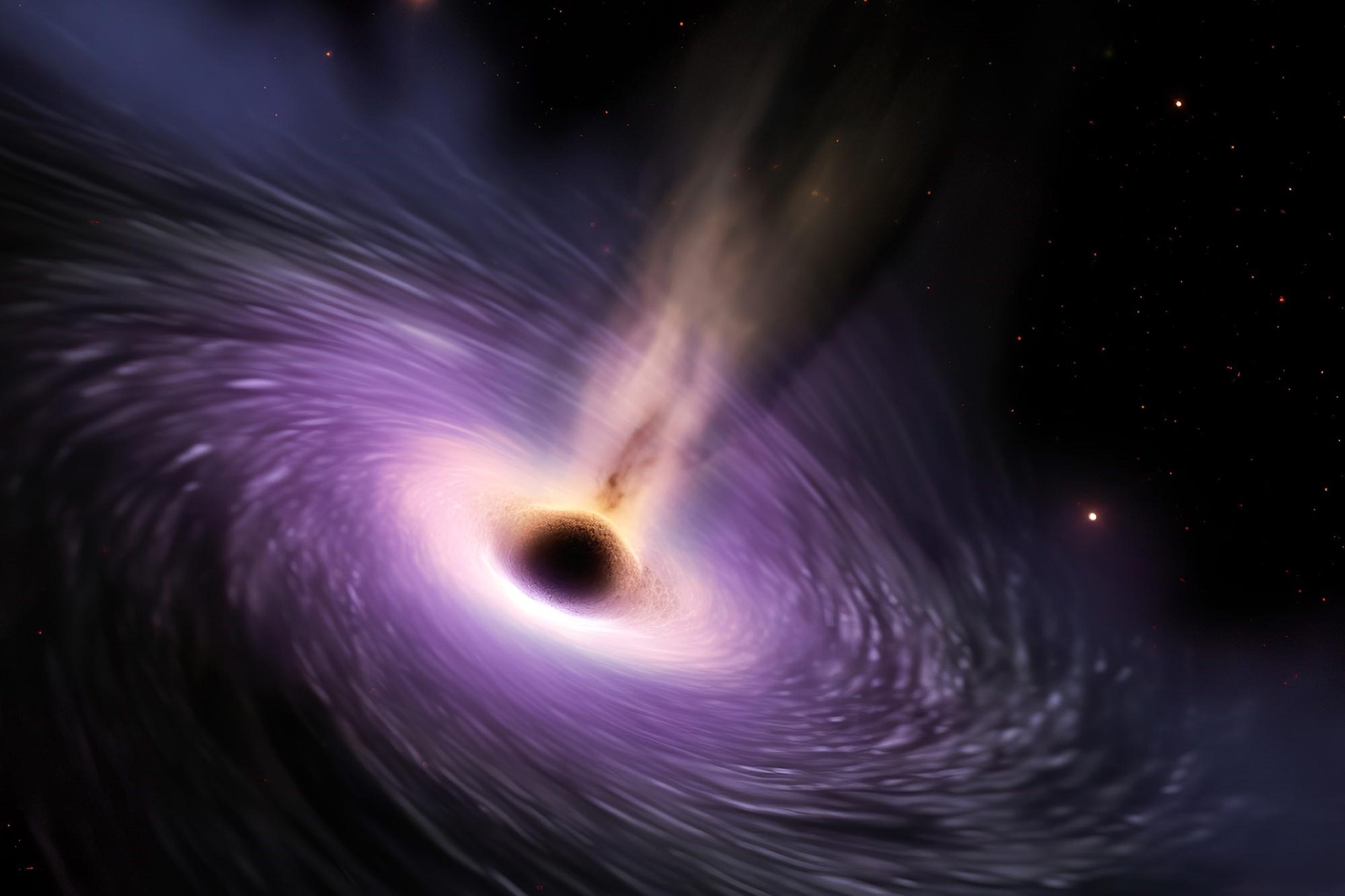
Scientists have observed a wobble in the jet of material being flung out from the center of the galaxy Messier 87, providing evidence that its supermassive black hole is spinning. By examining 22 years of data, researchers found that the innermost portion of the jet twirls around once every 11 years, indicating the rotation of the black hole. The wobbling of the accretion disk, which is connected to the jet, suggests that the plane of its spin is not entirely aligned with the black hole's spin. This finding sheds light on the growth and history of supermassive black holes.
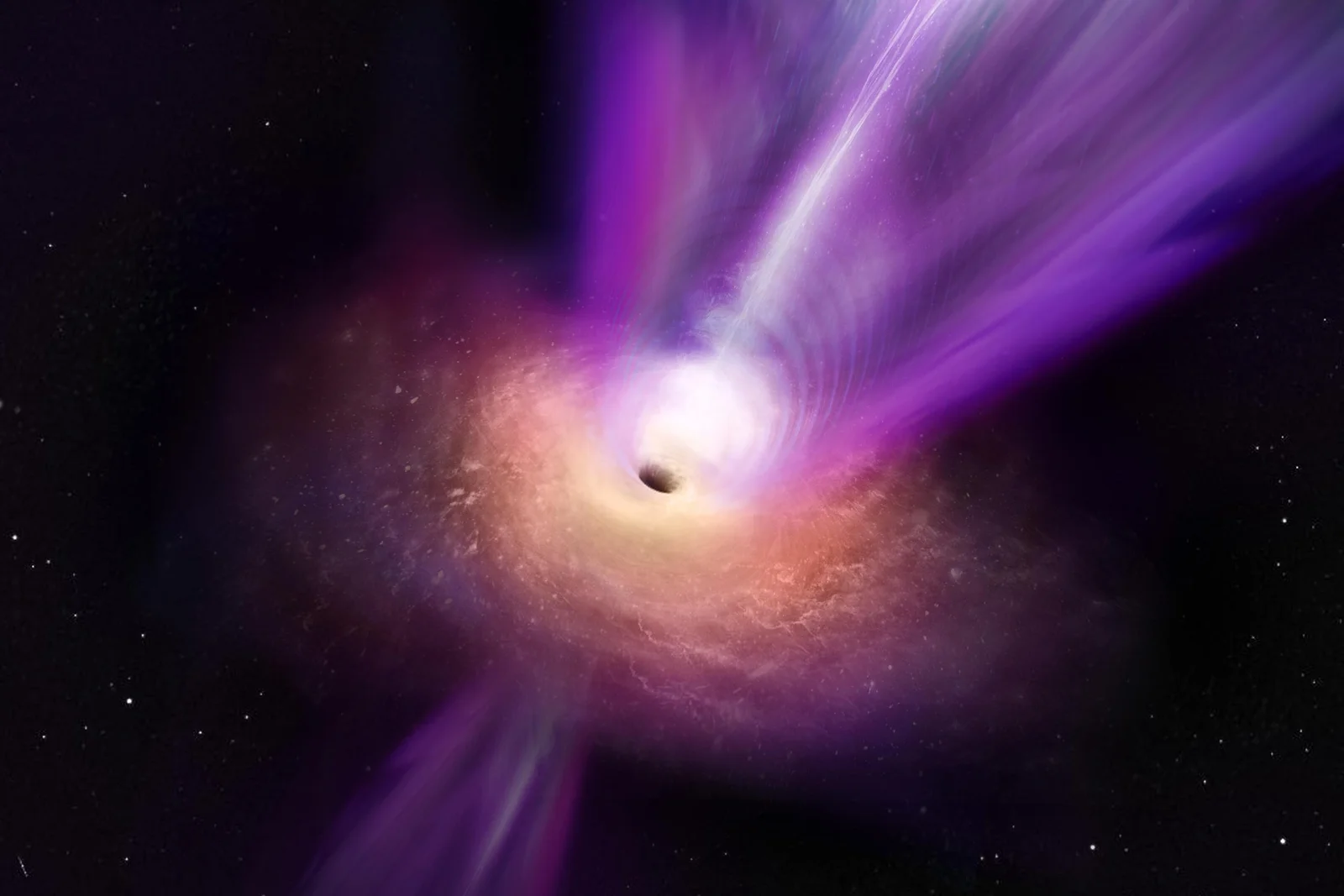
Astronomers have captured the first image of both the accretion ring and relativistic jet of the black hole at the center of the Messier 87 galaxy. Using the Global Millimeter VLBI Array (GMVA), supplemented by the Atacama Large Millimeter/submillimeter Array (ALMA) and the Greenland Telescope (GLT), the image reveals a larger, thicker ring-like structure, indicating observable emission from material falling into the black hole. This breakthrough provides new insights into the physical processes near black holes and the connection between accretion and jet formation.
Researchers at the Shanghai Astronomical Observatory have captured a panoramic image of the black hole and its jet in Messier 87 (M87) at a new 3.5 mm wavelength, revealing more details about the surrounding material and ring-like structure. Surprising findings suggest possible winds causing turbulence around the black hole. The participation of ALMA and GLT in the GMVA observations and the resulting increase in resolution and sensitivity of this intercontinental network of telescopes has made it possible to image the ring-like structure in M87 for the first time at the wavelength of 3.5 mm.
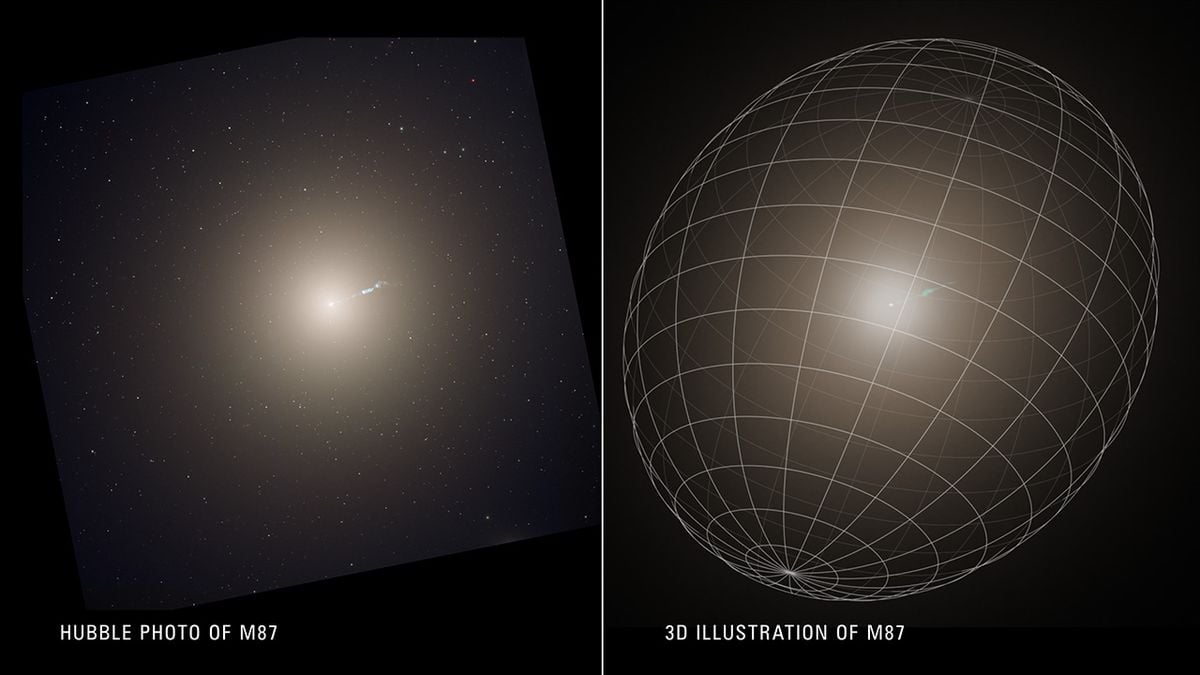
Astronomers have created a 3D map of Messier 87 (M87), one of the largest known elliptical galaxies, using data from the W.M. Keck Observatory and the Hubble Space Telescope. The map revealed that M87 has a triaxial shape, similar to a potato, and is not symmetrical. The team estimated that the supermassive black hole at the center of M87 is about 5.4 billion times more massive than the sun. The map and new estimation of the black hole's mass could help researchers calculate its rotation speed.