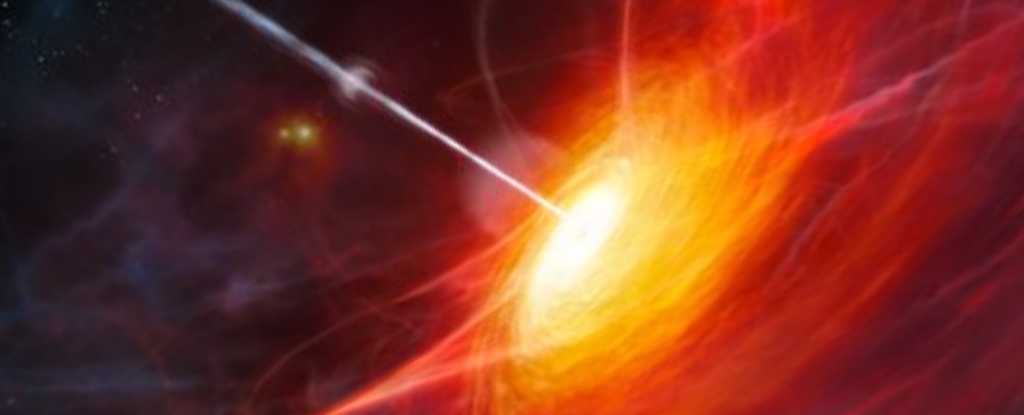
A new study using the GRAVITY+ instrument on the VLT has revised the mass of the brightest known quasar, J0529, from 10 billion to 800 million solar masses by accounting for gas outflows that skewed previous measurements, providing new insights into black hole growth and galaxy formation in the early universe.

Chinese scientists have estimated the mass of the Milky Way to be 805 billion solar masses, using a larger sample of stars than previous studies and taking into account dark matter. The study, which measured the galaxy's rotation curve, was hailed as the most accurate to date by reviewers.
Astrophysicists have used artificial intelligence to improve the estimation of the mass of galaxy clusters, which are the most massive objects in the universe. The AI discovered a simple term that, when added to an existing equation, produced far better mass estimates than before. The improved estimates will enable scientists to calculate the fundamental properties of the universe more accurately. The researchers' symbolic regression program handed them a new equation, which was able to better predict the mass of the galaxy cluster by adding a single new term to the existing equation.