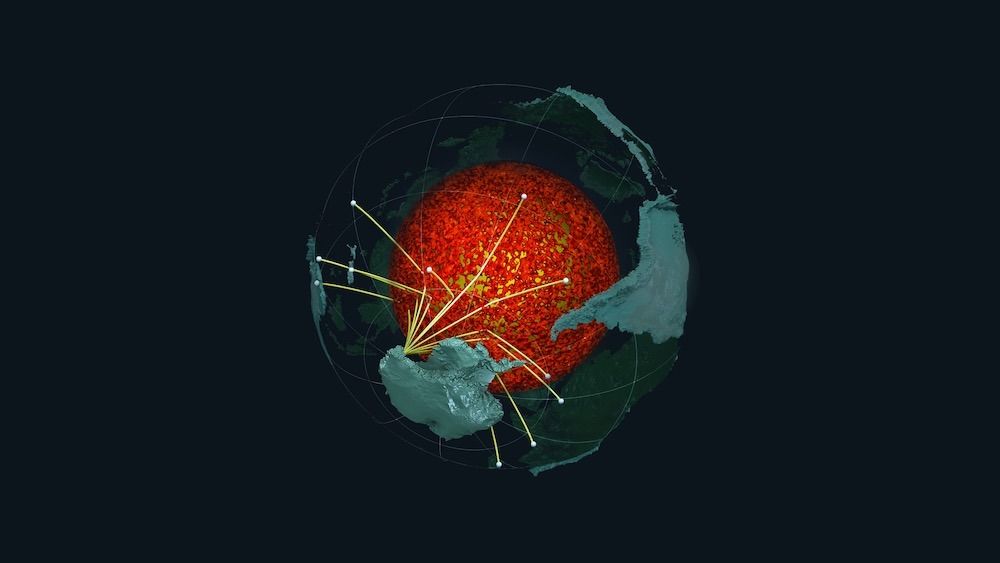
Scientists have discovered massive, branching mantle plumes beneath Earth that have historically shaped and may continue to reshape the planet's continents, including the formation of volcanic hotspots and the potential for future continental reconfigurations over millions of years.
Recent research reveals that mysterious structures called BLOBS in Earth's lower mantle are linked to volcanic eruptions, acting as 'magma highways' that influence mantle plumes and potentially trigger catastrophic eruptions, with these structures possibly shifting over time due to mantle convection.
New research suggests that mysterious structures called 'BLOBS' deep within Earth's lower mantle influence volcanic eruptions by acting as sources of mantle plumes, which can lead to catastrophic eruptions. These BLOBS are located under Africa and the Pacific and may move over time, affecting surface volcanic activity and potentially aiding in mineral discovery. The study enhances understanding of the dynamic processes inside Earth that drive volcanic hazards.
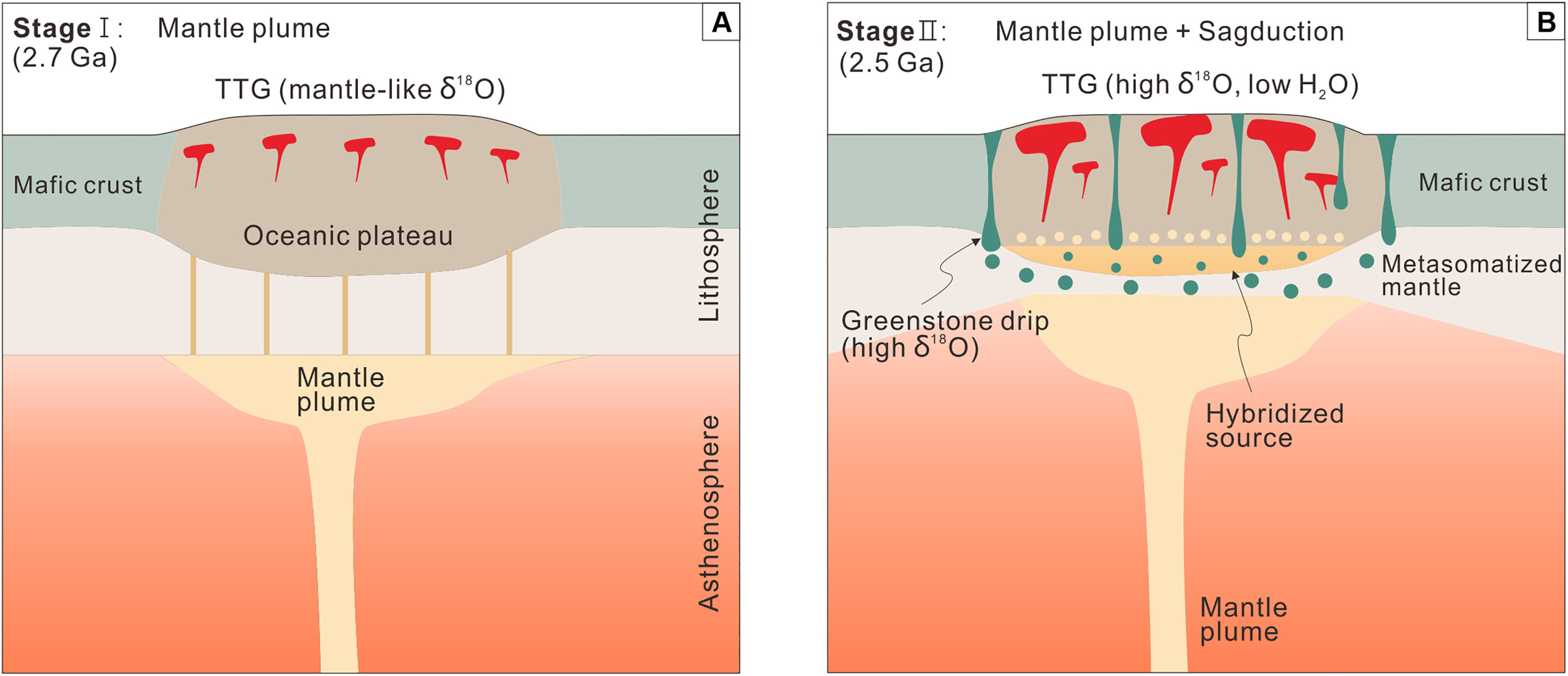
Geologists from HKU have found evidence that Earth's early continents formed primarily through mantle plume activity and sagduction, rather than plate collisions, based on analysis of ancient rocks and isotopic signatures, shedding new light on early Earth's geodynamic processes.
Scientists have accidentally discovered a 'ghost plume' beneath eastern Oman, a mantle plume with no surface volcanic activity, which could reshape understanding of Earth's heat transfer and geologic processes.
Scientists discovered a 'ghost' mantle plume beneath Oman that doesn't cause volcanic eruptions but may have influenced the movement of the Indian tectonic plate during its collision with Eurasia, shedding light on hidden geological processes beneath continental plates.
Recent research has identified a mysterious 'ghost plume' beneath Oman, a column of hot rock rising from Earth's lower mantle without surface volcanic activity, suggesting that heat from the Earth's core may be venting through hidden pathways, potentially altering our understanding of Earth's internal heat distribution and geological processes.
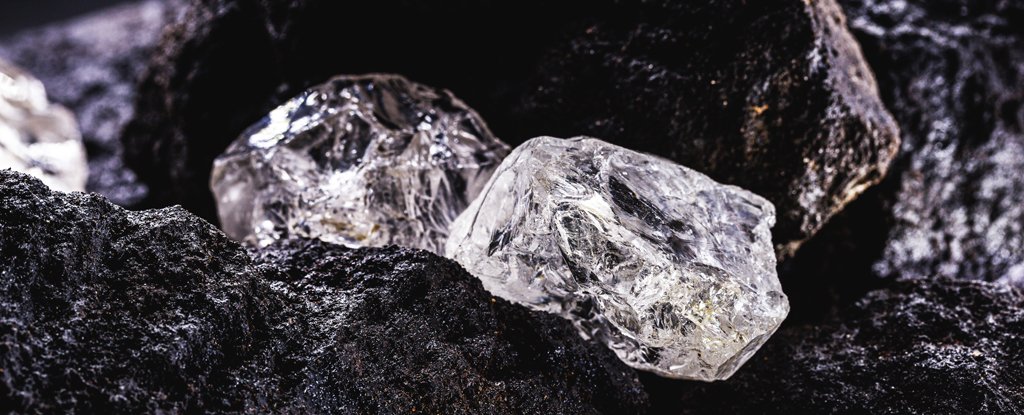
New research suggests that the eruption of diamonds from deep within the Earth's crust is linked to the breakup of tectonic plates. The study found that most kimberlite volcanoes, which carry diamonds to the surface, erupted 20 to 30 million years after the tectonic breakup of Earth's continents. Computer models propose a domino effect, where the breakup of continents leads to the formation of kimberlite magma. This process involves disruptive flows that remove rock from the base of the continental plate, triggering melting and the rise of magma carrying diamonds. The findings could help identify potential locations and timings of past volcanic eruptions, aiding in the discovery of diamond deposits and other rare elements.
A recent study suggests that a giant plume of super-heated rock rising from near Earth's core may be responsible for the mysterious distortions observed in the East African Rift, a network of valleys stretching from the Red Sea to Mozambique. The researchers found that the deformation of the Earth's surface in the rift is not only perpendicular to its length but also parallel to it, which is unusual. They propose that a mushroom-shaped "superplume" of hot rock ascending from the mantle, known as the African Superplume, may be causing these distortions. This study improves our understanding of how continents break apart.
A recent study suggests that a mushroom-shaped superplume of scorching hot rock rising from near Earth's core may be responsible for the mysterious distortions and splitting of Africa. The East African Rift, the largest active continental rift, is experiencing unusual deformations parallel to the rift, in addition to the expected perpendicular deformations. The researchers used GPS technology, seismic instruments, and 3D computer simulations to analyze the underground activity and found that the African Superplume, rising beneath southwest Africa and extending northeast, may be driving the northward mantle flow causing these distortions. This study improves our understanding of how continents break up.
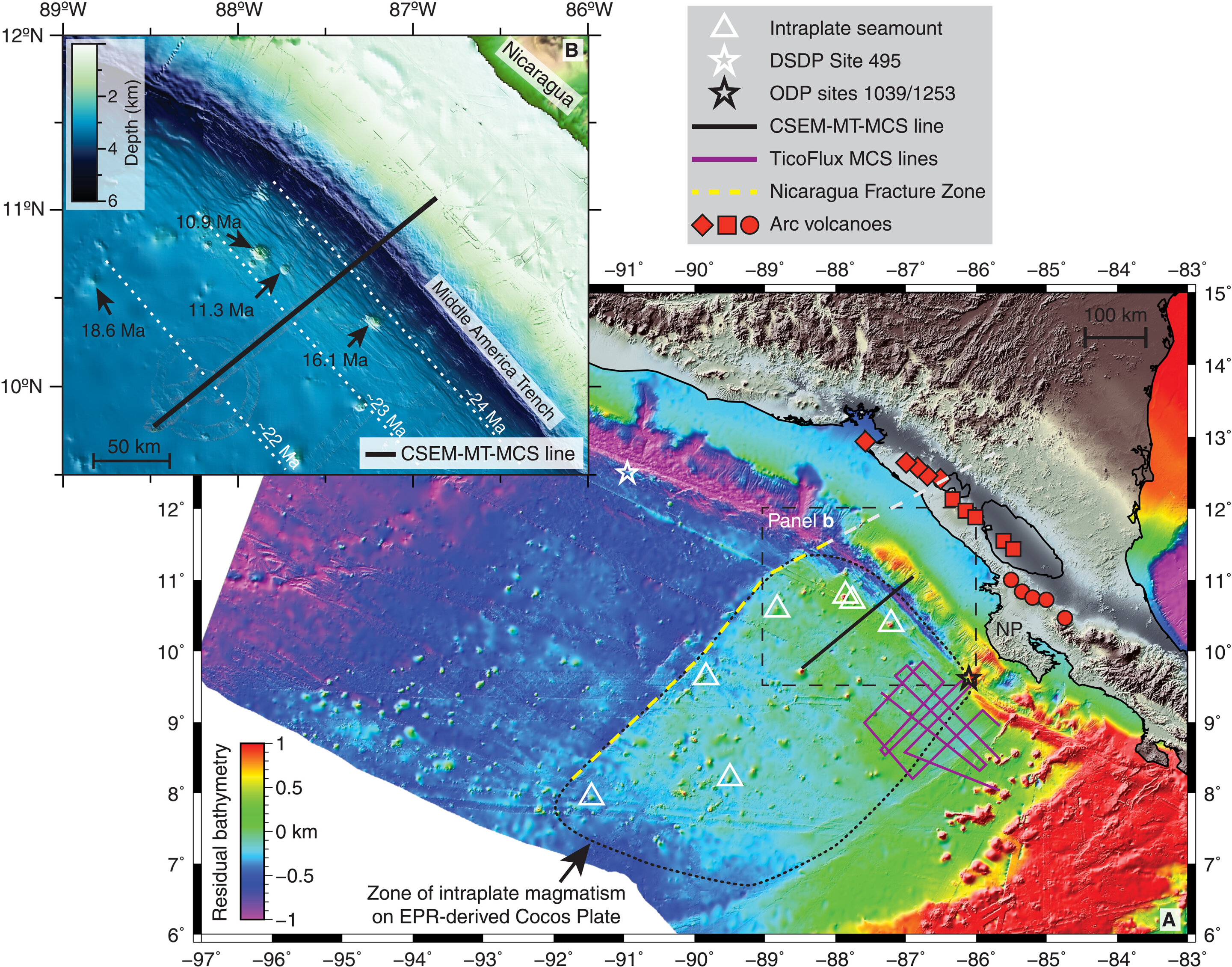
Scientists have discovered a long-lived channel of magma beneath the Cocos Plate, which has been feeding intraplate magmatism for at least 20 million years. The channel is believed to have originated from the Galápagos Plume, over 1,000 kilometers away, and is a widespread and long-lived feature that could be a source for mantle metasomatism. The discovery was made by combining geophysical, geochemical, and seafloor drilling results with seismic reflection data, and could lead to similar discoveries of volcanism elsewhere caused by other mantle plumes.
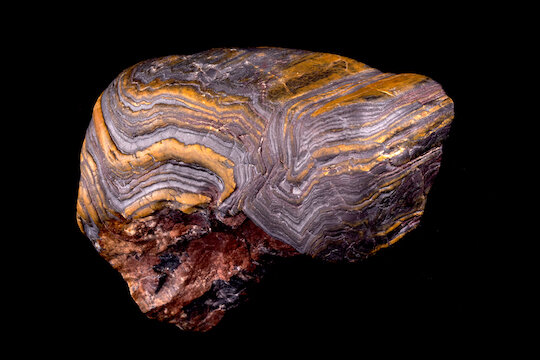
Banded iron formations, sedimentary rocks containing iron oxides, may connect ancient changes at Earth's surface to planetary processes like volcanism and plate tectonics, according to a study from Rice University. The study suggests that subducted chunks of the formations could have settled in the lowest region of the mantle near the top of Earth's core, where they would have undergone profound changes and aided the formation of mantle plumes. The study could reframe scientists' understanding of Earth's early history and provide insight into processes that could produce habitable exoplanets far from our solar system.
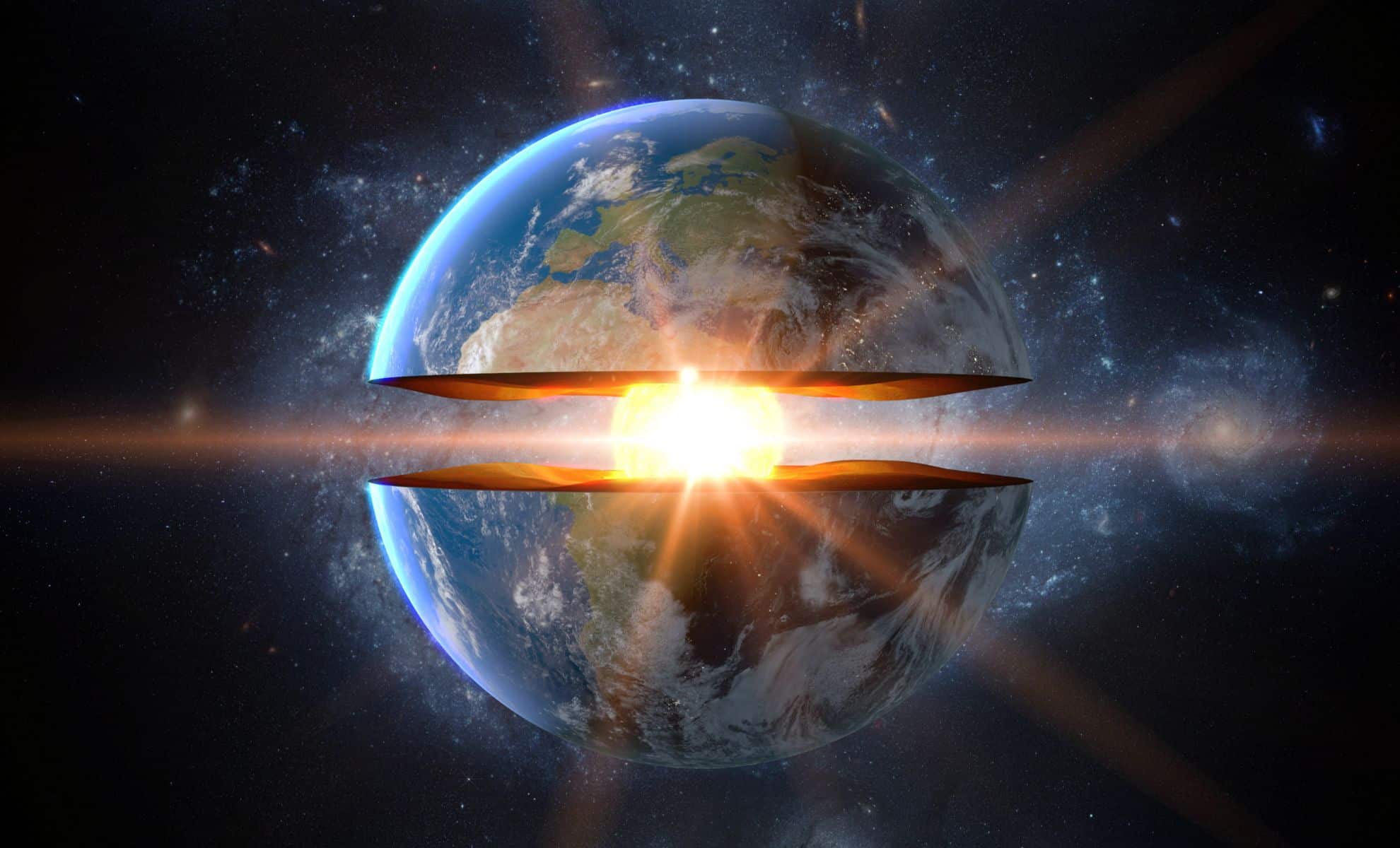
Seismic imaging has revealed that a massive ocean floor, likely surrounding much of Earth's core, is lodged roughly 2,000 miles below the surface, between the core and the mantle. This thin, dense layer may encompass the entire core-mantle boundary and is made up of underground mountains that allow heat to escape from Earth's molten core. The presence of this layer could buffer heat flow across the core-mantle boundary, which is important because the temperature conditions in this portion of the Earth have been shown to strongly impact the planet's magnetic field.
Seismic imaging has revealed that a thin, dense layer of ancient ocean floor likely surrounds much, if not all, of the Earth's core. This layer is lodged roughly 2,000 miles below the Earth's surface, between the core and the mantle, and may encompass the entire core-mantle boundary. The layer likely developed when Earth's tectonic plates shifted, causing oceanic material to be carried into the planet's interior at subduction zones. The ULVZs are essentially "underground mountains" that allow heat to escape from Earth's molten core and could buffer heat flow across the core-mantle boundary, which is important because the temperature conditions in this portion of the Earth have been shown to strongly impact the planet's magnetic field.