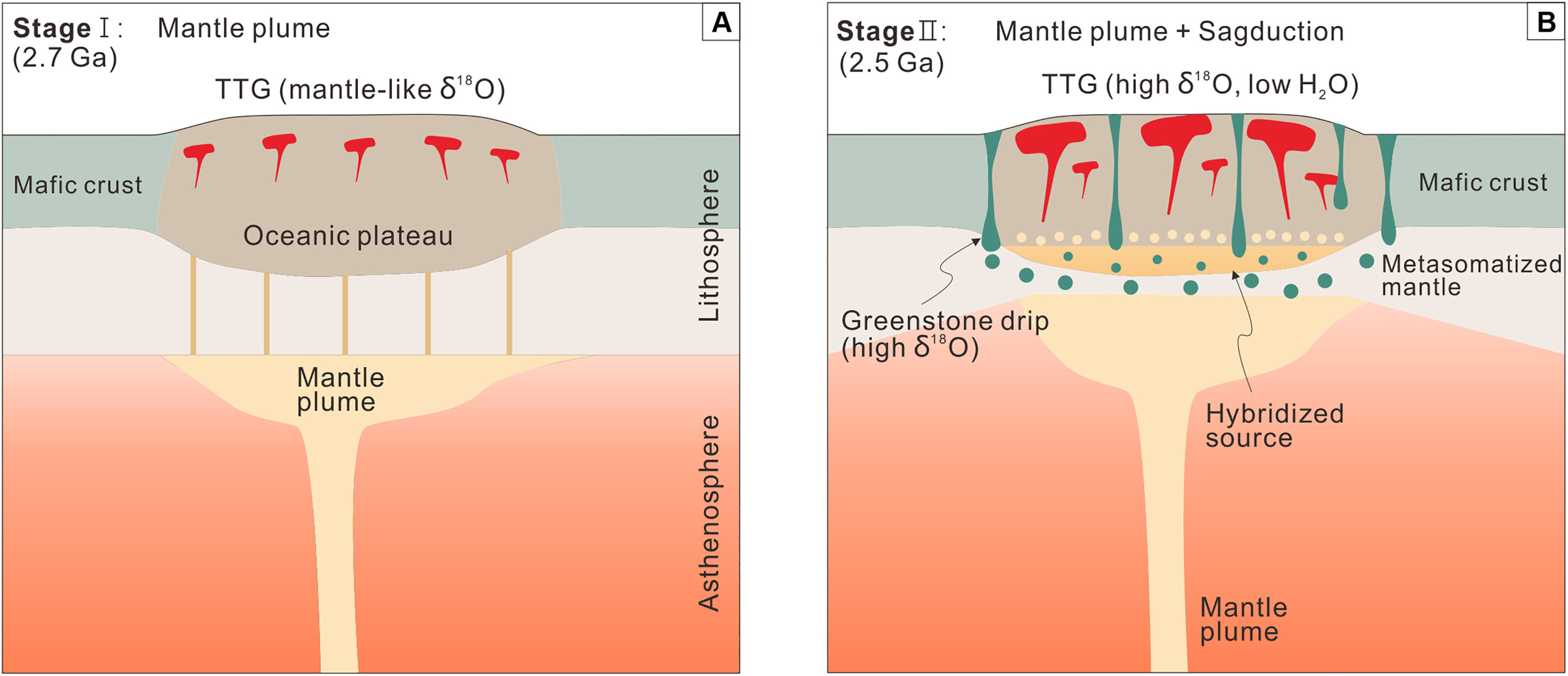
Geologists from HKU have found evidence that Earth's early continents formed primarily through mantle plume activity and sagduction, rather than plate collisions, based on analysis of ancient rocks and isotopic signatures, shedding new light on early Earth's geodynamic processes.
A modeling study reveals that even Earth's oldest and most stable continental crust can disintegrate over time due to tectonic forces like flat-slab subduction and rollback, especially in regions near active subduction zones, challenging the notion that ancient cratons are impervious to geological change.
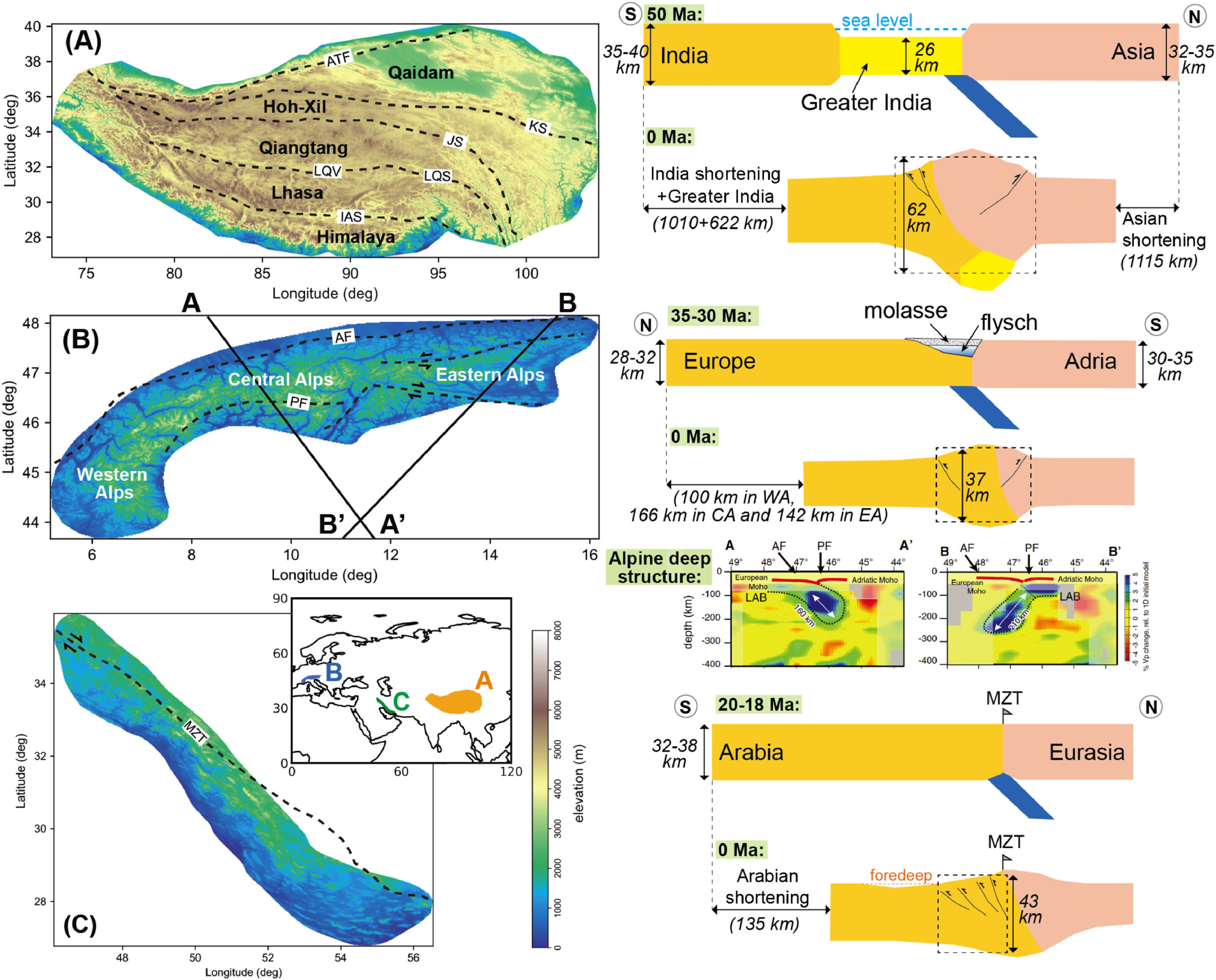
New research indicates that the formation of the Himalaya-Tibetan Plateau, European Alps, and Zagros Mountains has resulted in significant loss of continental crust to the mantle, with at least 30% lost in the Himalayas and up to 50% in the Alps. This crustal loss, primarily through a process called delamination, is double that of surface erosion. The study highlights the impact of deep crustal processes on mountain formation and climate change, suggesting that similar processes have recycled continental materials into the mantle throughout geological history.
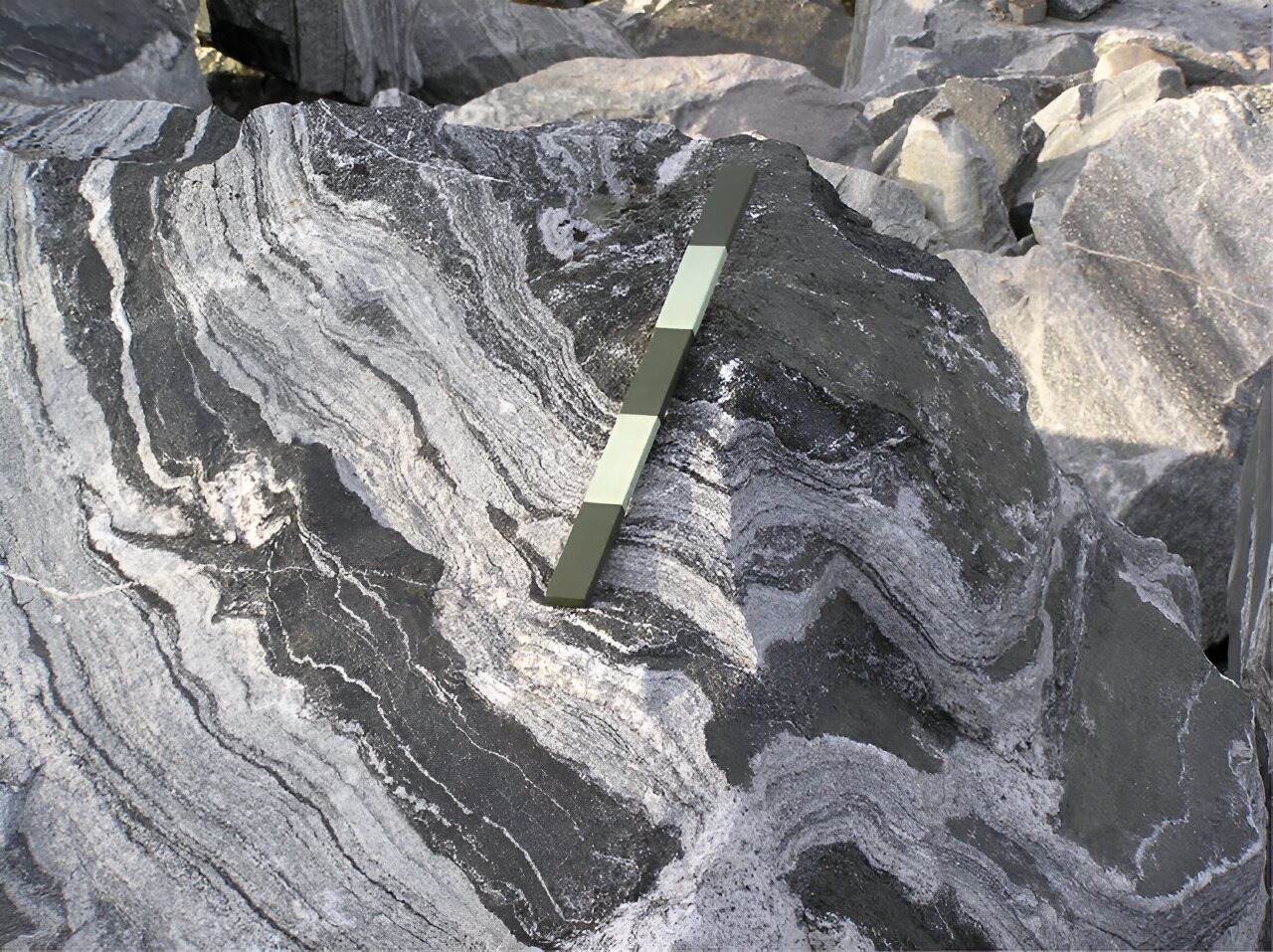
Geoscientists have discovered the source rocks of the first continents, revealing a revised origin story that relies solely on internal geological forces within oceanic plateaus during the Archean Eon. The study, published in Nature Communications, identifies a specific set of trace elements that allowed researchers to trace the melt compositions back to their initial state and source, likely a type of gabbro. This discovery challenges the long-standing theory that Archean granitoid rocks were formed in Earth's first subduction zones and marks the start of plate tectonics, providing a new understanding of how the continents developed.
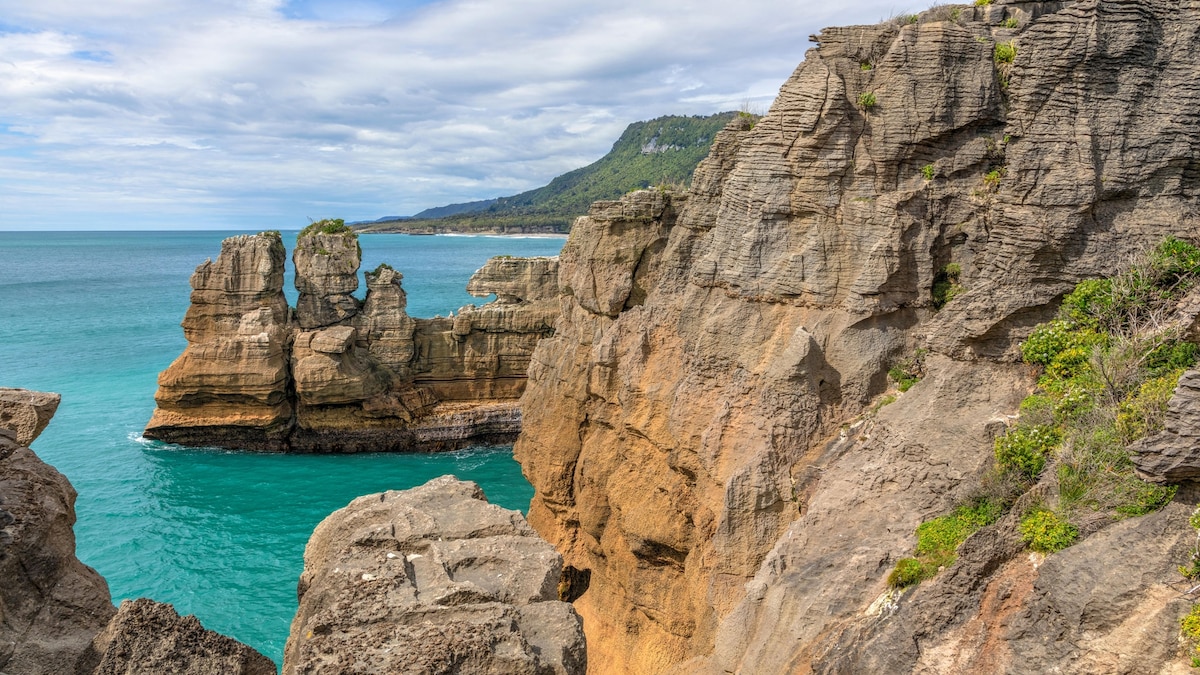
Scientists have completed the first comprehensive mapping of Zealandia, a submerged continent in the South Pacific that was once part of a supercontinent 300 million years ago. By analyzing rock samples and magnetic maps, researchers have outlined the extent of Zealandia, which spans 1.9 million square miles and connects Antarctica and Australia. The study sheds light on how Zealandia formed and split from nearby landmasses, providing insights into Earth's continental evolution over vast timescales.
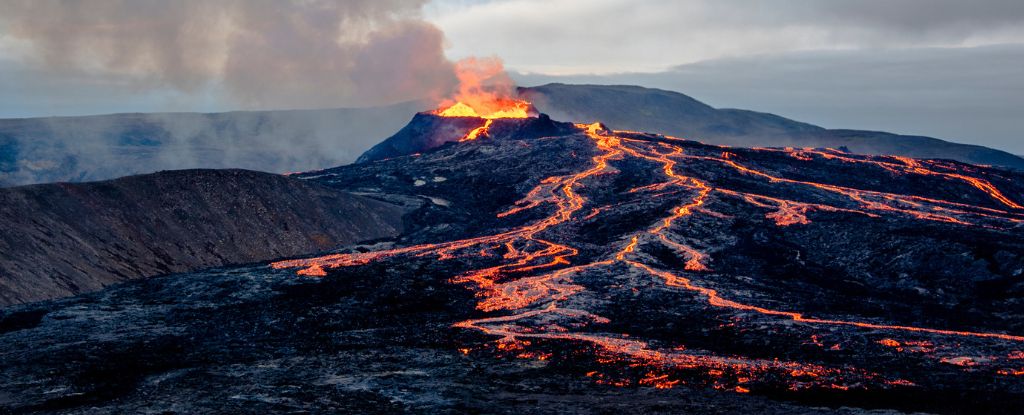
A major hypothesis proposing a source of the volcanic magma that forged the continental crusts has come under scrutiny by scientists in the US. Geologist Elizabeth Cottrell and her colleague Megan Holycross measured the iron and iron oxide levels of simulated continental crust using a piston-cylinder which can press tiny molten rock samples with intense pressures and temperatures to match the conditions of magma chambers in Earth's crust. They found that garnet crystallization is "unlikely to be responsible" for the "iron-depletion trend observed in continental crust."