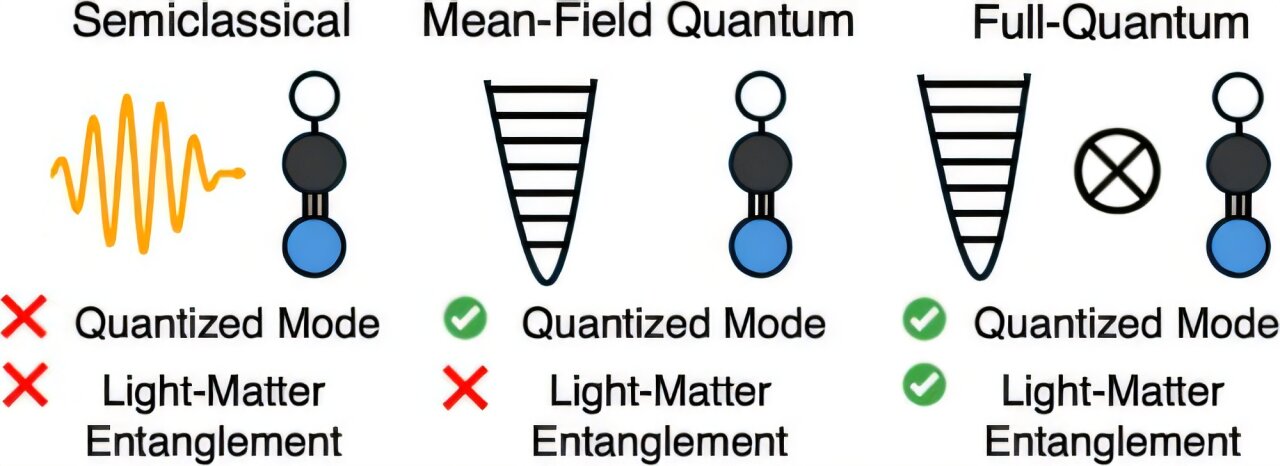
Researchers used advanced simulations to demonstrate quantum entanglement in molecular polariton dynamics, revealing that treating light quantum mechanically uncovers behaviors not seen with classical models, which could impact future quantum technologies.

Physicists in the UK have developed a new model that provides a detailed quantum description of the interaction between light and matter, inadvertently revealing the shape of a photon. This breakthrough, published in Physical Review Letters, offers unprecedented insights into the photon's dual nature and its non-Markovian dynamics, which could enhance future technologies like sensors, photovoltaic cells, and quantum computing.
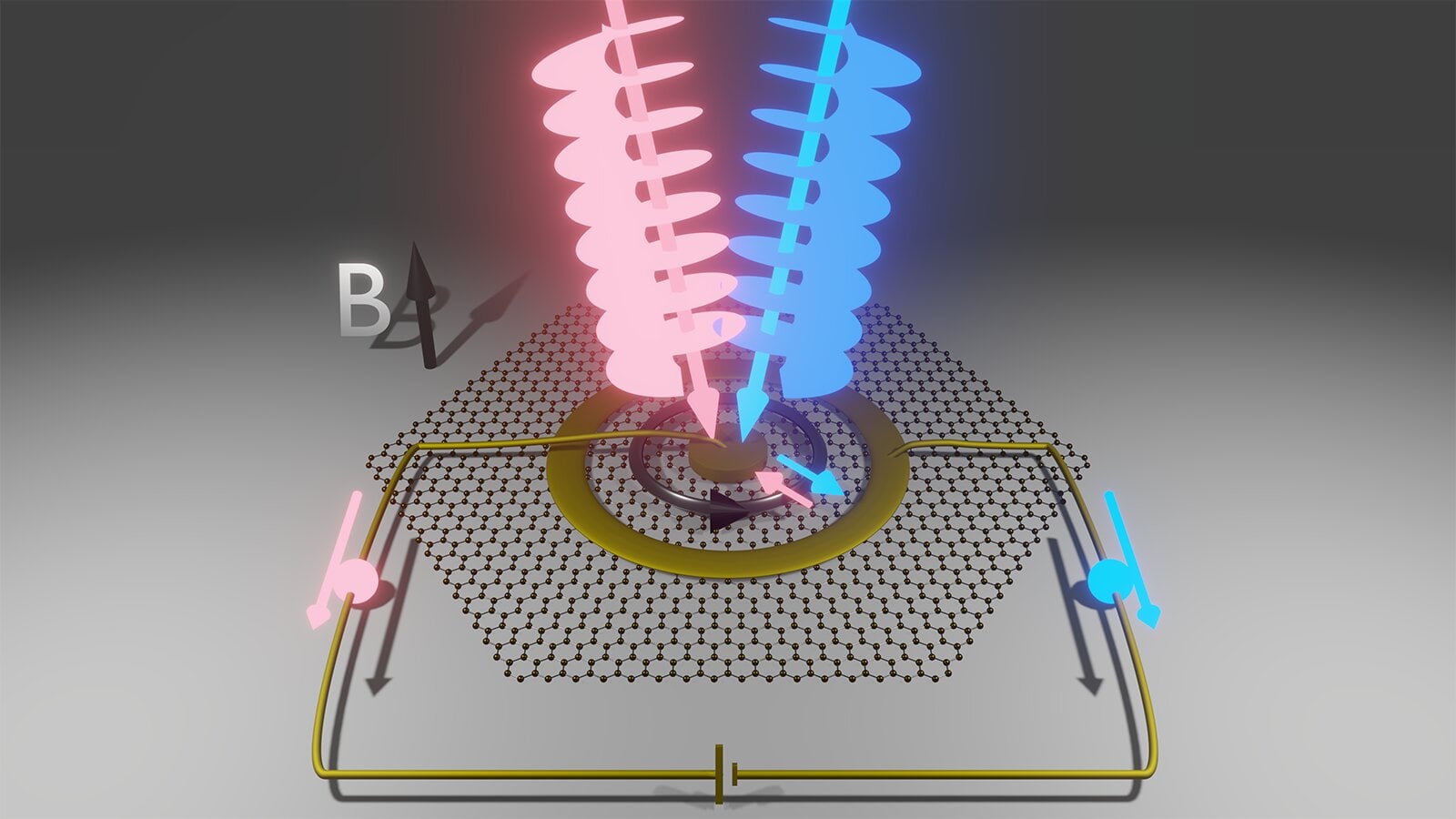
Researchers have developed a novel method to control quantum interactions by using light beams with orbital angular momentum to transfer angular momentum to electrons in graphene. This technique, demonstrated in a recent experiment, allows for precise manipulation of electron movement, creating a measurable current. The findings could have significant implications for quantum computing and sensing, as they offer a new way to control and measure the quantum properties of electrons.
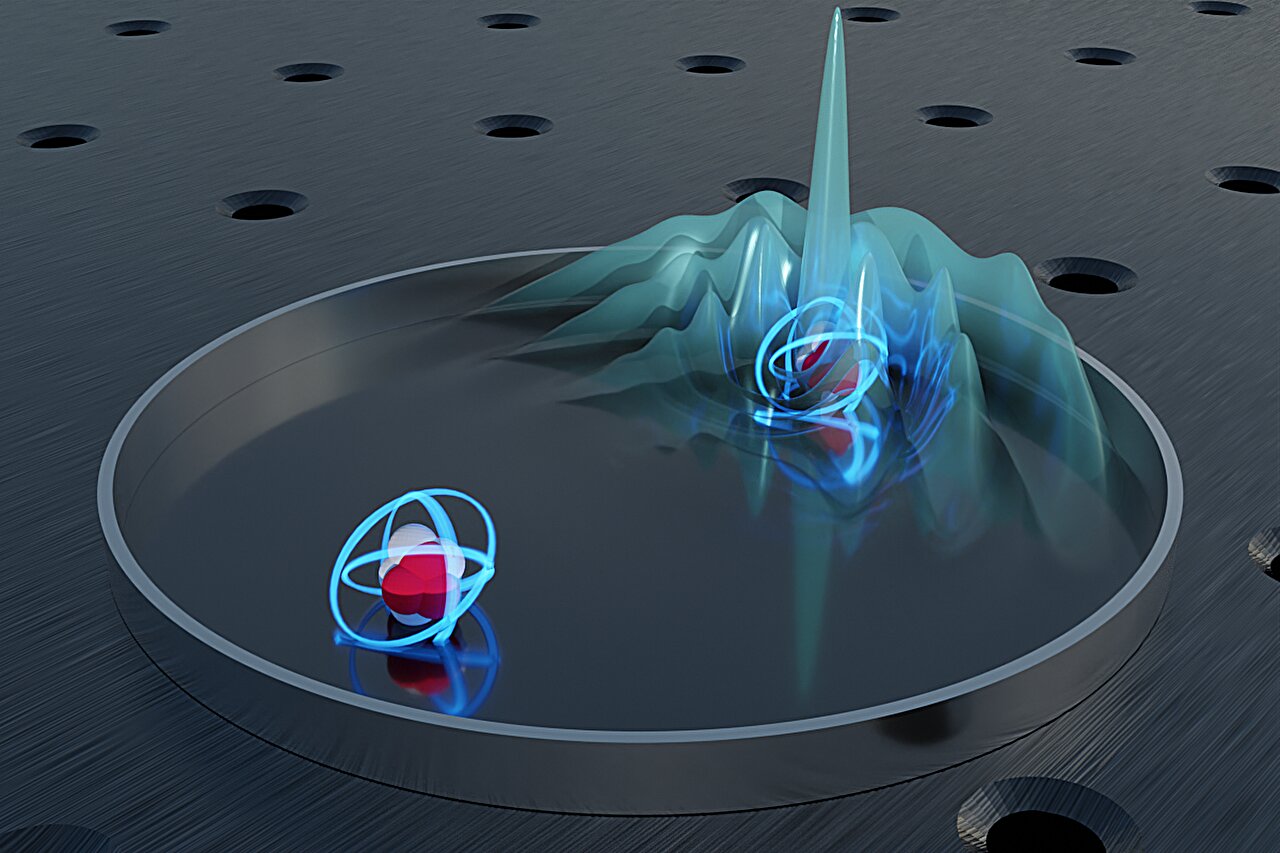
Researchers led by Dr. Benjamin Yuen at the University of Birmingham have defined the precise shape of a single photon for the first time, marking a significant advancement in quantum physics. Published in Physical Review Letters, the study provides a visual representation of a photon and enhances understanding of photon emission and interaction with the environment. This breakthrough could revolutionize nanophotonic technologies, impacting fields like secure communication, pathogen detection, and quantum computing by enabling engineered light-matter interactions.
Researchers at the University of Birmingham have developed a new quantum theory that defines the precise shape of a single photon for the first time, revealing its interactions with atoms and its environment. This breakthrough, published in Physical Review Letters, could revolutionize nanophotonic technologies, enhancing secure communication, pathogen detection, and molecular control in chemical reactions. The study provides a model for understanding photon behavior and energy exchange, paving the way for advancements in quantum computing and improved sensors.
Researchers at the University of Birmingham have developed a model to define the precise shape of a single photon, revealing how photons are emitted and shaped by their environment. This breakthrough allows for a better understanding of light-matter interactions, opening new possibilities for nanophotonic technologies and applications in secure communication, pathogen detection, and molecular-level chemical control. The study, published in Physical Review Letters, provides a foundation for future advancements in quantum computing and energy technologies.
Researchers at the University of Birmingham have developed a new theory that defines the precise shape of a single photon by exploring its interactions with matter at the quantum level. This breakthrough, published in Physical Review Letters, allows scientists to model these complex interactions and visualize photons, opening new research avenues in quantum physics and material science. The findings could lead to advancements in nanophotonic technologies, impacting secure communication, pathogen detection, and molecular-level chemical reactions.
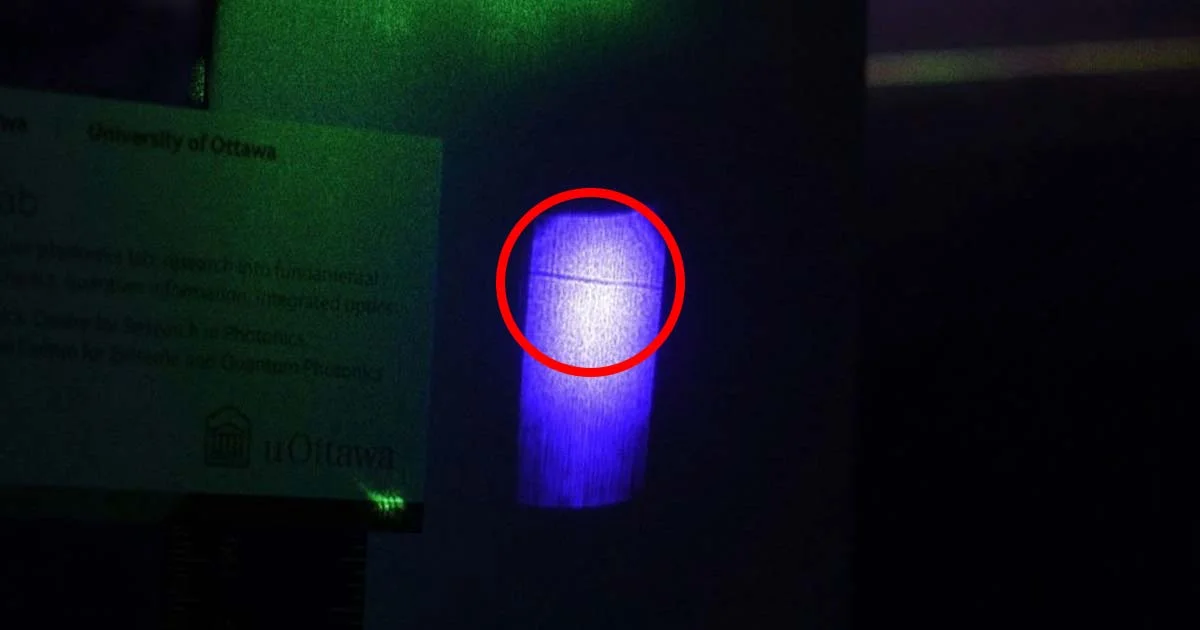
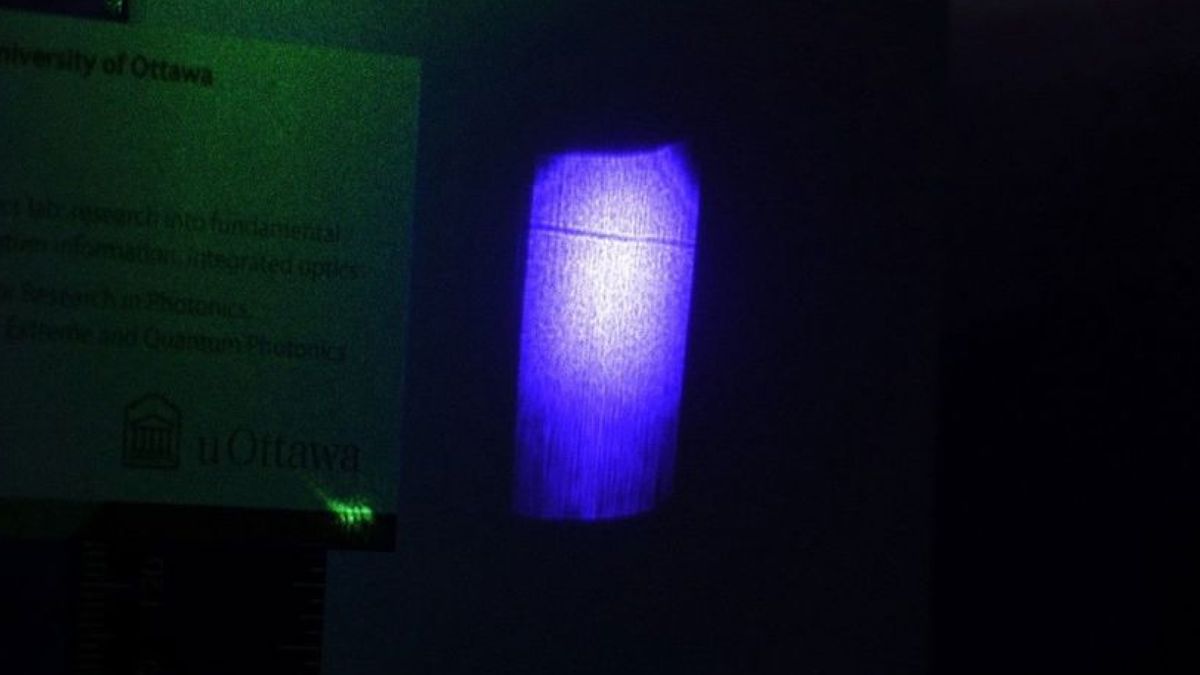
Scientists at Brookhaven National Laboratory have discovered that a narrow green laser beam can cast a shadow when passed through a larger blue laser beam inside a ruby crystal, challenging conventional understanding of light interactions. This phenomenon, attributed to optical nonlinear absorption, could lead to new applications in optical switching and light transmission control. The research, published in Optica, opens up possibilities for further exploration of light-matter interactions using different wavelengths and materials.
Scientists have discovered that laser beams can cast their own shadows under certain conditions, challenging traditional notions of shadows. This phenomenon was observed when a green laser beam blocked blue light in a ruby crystal, creating a visible shadow. The discovery, which arose from a quirk in 3D modeling, highlights new possibilities in light-matter interactions and could have applications in optical technologies.
Researchers at Rensselaer Polytechnic Institute have developed a photonic topological insulator device that operates at room temperature, enabling the study of quantum phenomena without the need for expensive, super-cooled equipment. This advancement could lead to more efficient lasers and broader access to fundamental physics research.
Researchers from TU Wien have theoretically demonstrated that using a special lens, a single photon emitted by one atom can be reabsorbed by a second atom and returned back to the first atom with high precision, resembling a game of ping-pong. By utilizing the concept of the Maxwell fish-eye lens, the team showed that the coupling between the atom and different oscillating modes can ensure the transfer of the photon between atoms. This breakthrough could pave the way for quantum control systems to study effects at extremely strong light-matter interaction.
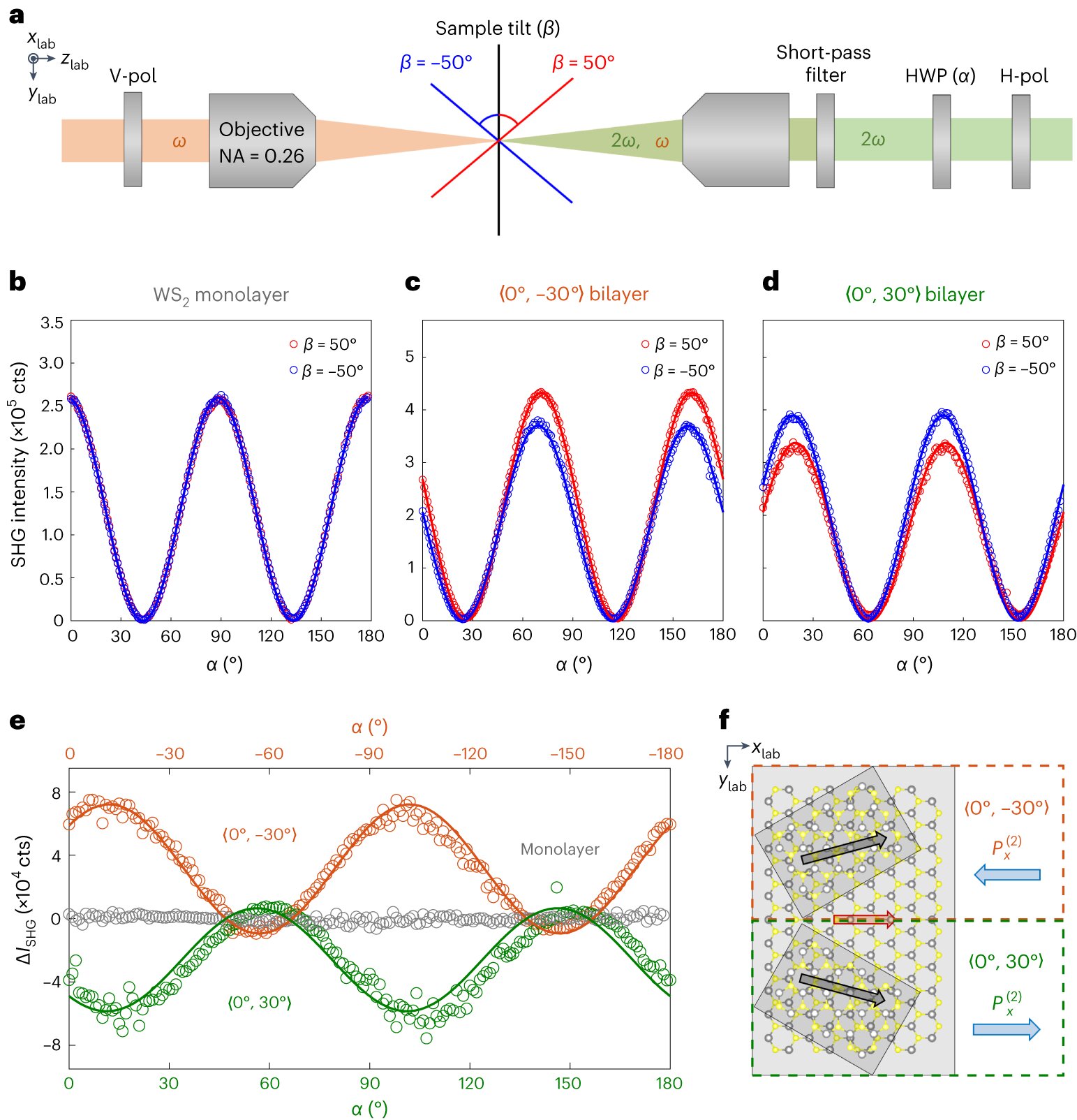
Researchers have developed a new approach to engineer atomic structures by stacking two-dimensional arrays in spiral formations, enabling metamaterials to overcome technical limitations and unlock novel light-matter interactions. By controlling the twist angle between layers of tungsten disulfide (WS2), the researchers created 3D nonlinear optical materials with chiral responses and tunable nonlinear properties. This breakthrough could have significant implications for next-generation lasers, imaging, and quantum technologies.