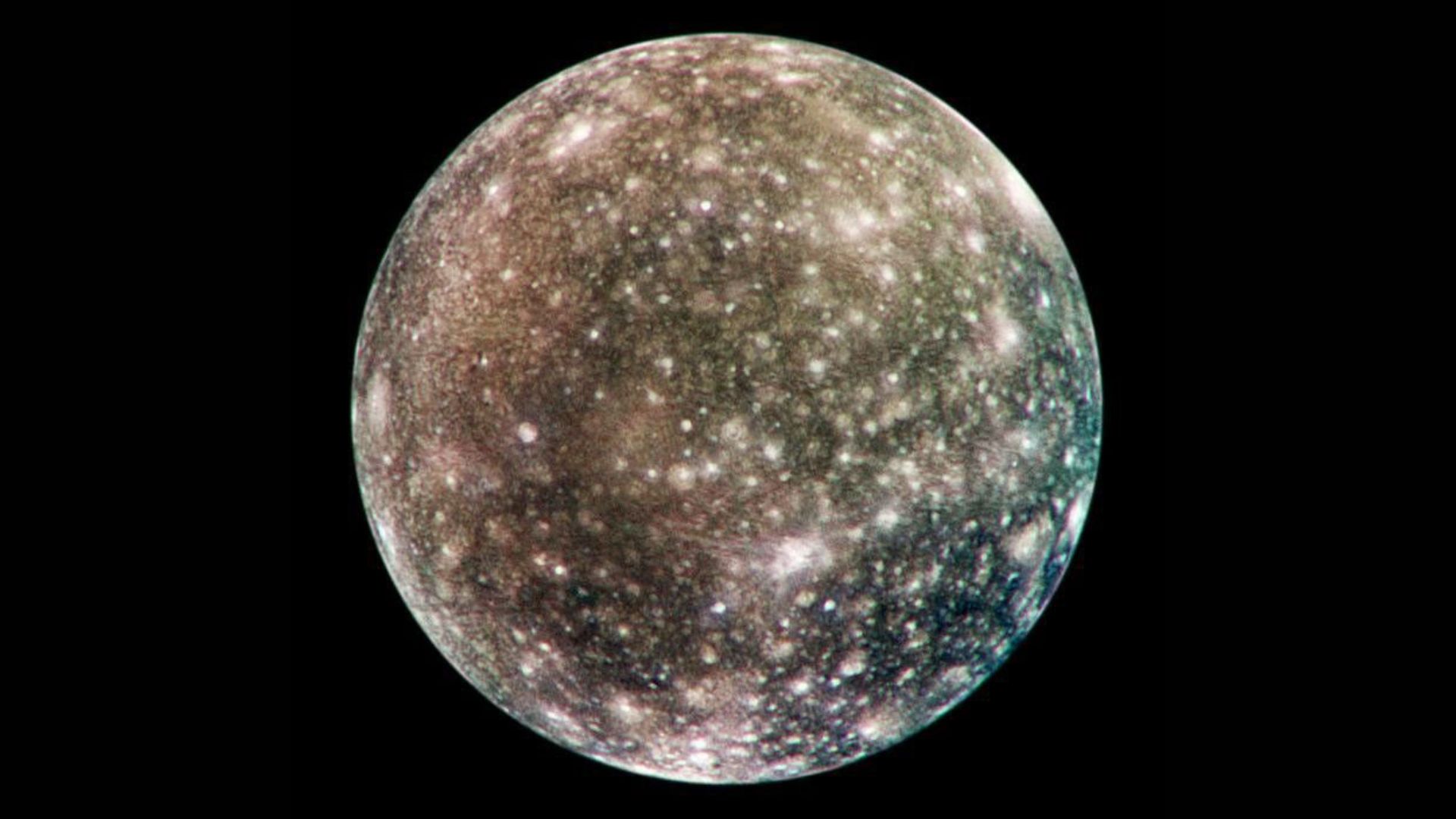
NASA's Juno spacecraft has for the first time detected the auroras of Jupiter's moon Callisto, completing the set of auroral signatures from all four Galilean moons, thanks to a rare shift in Jupiter's auroral oval in September 2019 that allowed clear observation.
Composer Dave Dexter has created "The Galilean Suite," a 67-minute orchestral opus consisting of four "tone poems" dedicated to Jupiter's largest moons. Inspired by his interest in astronomy and classical music, Dexter's suite aims to capture the geology, characteristics, and appearance of these moons. Despite being self-taught in orchestral composition, Dexter's work has gained international recognition and he hopes to collaborate with space agencies for future performances.
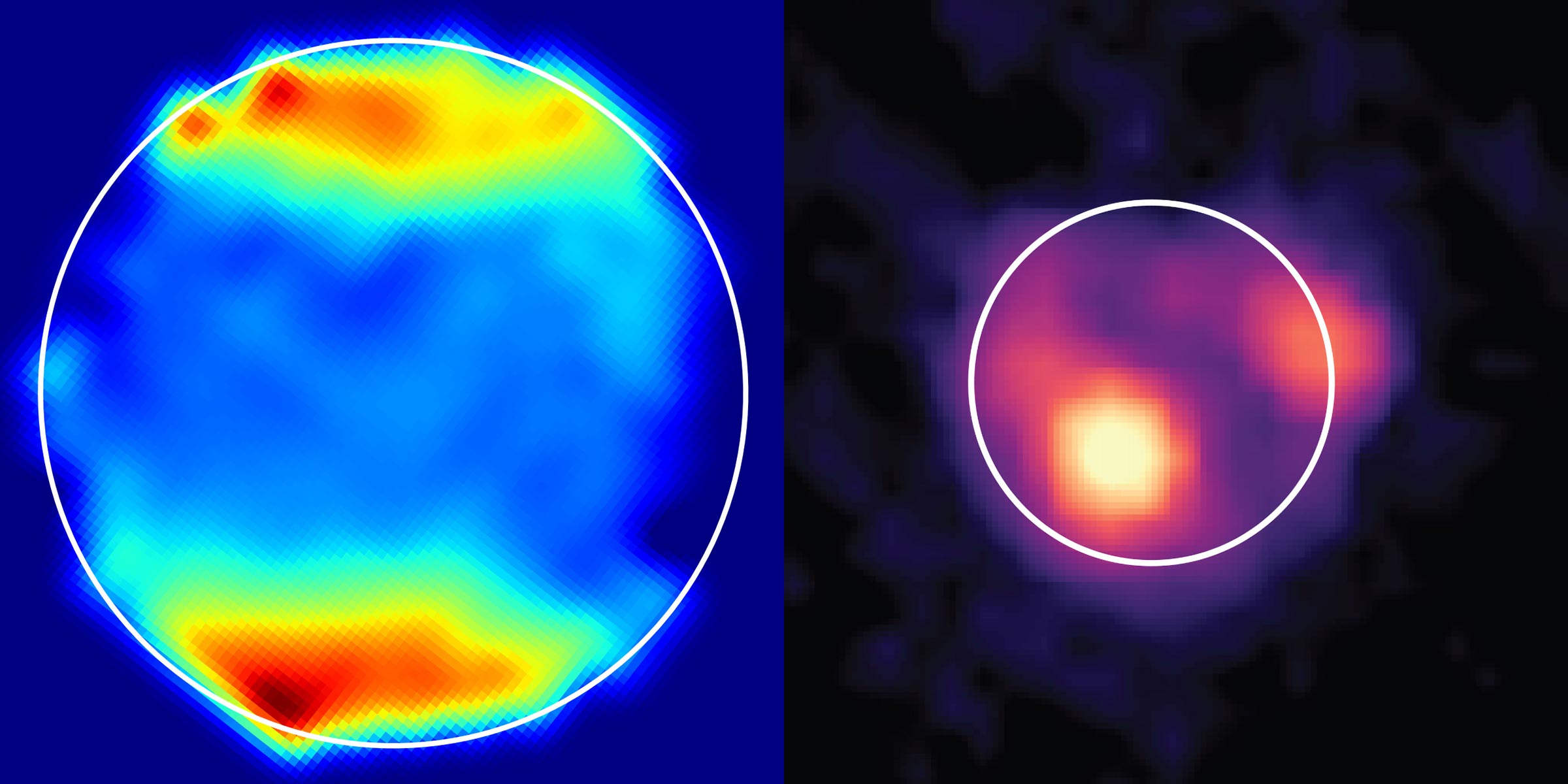
The James Webb Space Telescope (JWST) has made groundbreaking observations of Jupiter's moons, Ganymede and Io, revealing the presence of hydrogen peroxide on Ganymede's poles and ongoing volcanic eruptions on Io. The peroxide on Ganymede is believed to be produced by charged particles impacting the ice on the moon's surface, while the observations on Io have linked a specific emission line of sulfur monoxide (SO) to volcanic activity. These findings enhance our understanding of Jupiter's moons and have implications for the broader solar system.
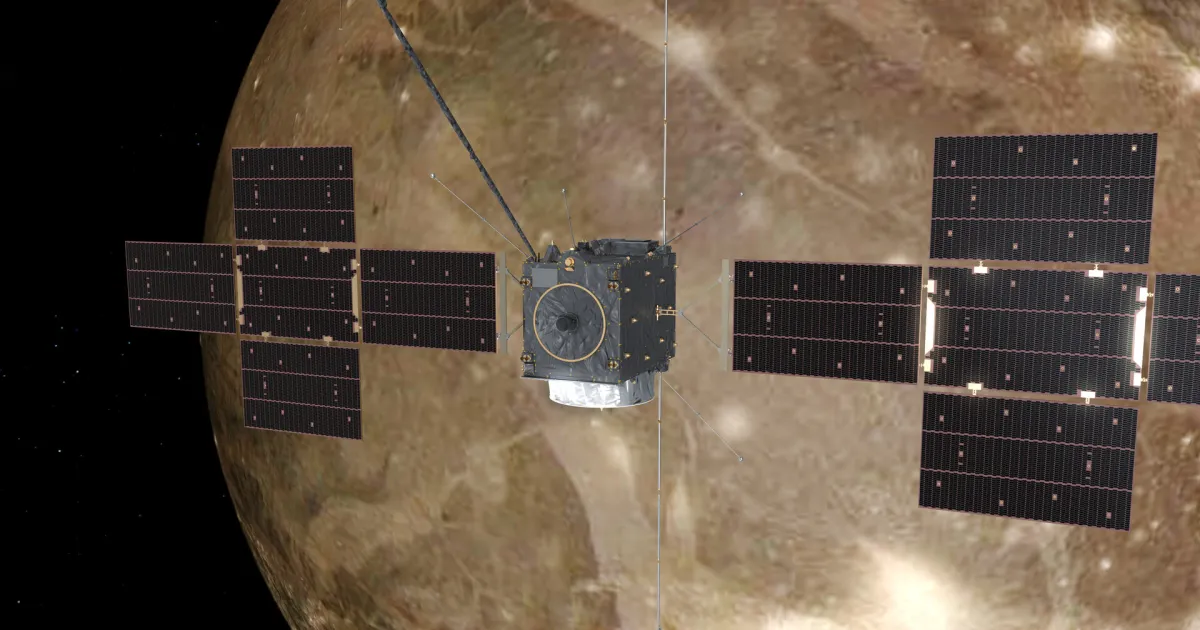
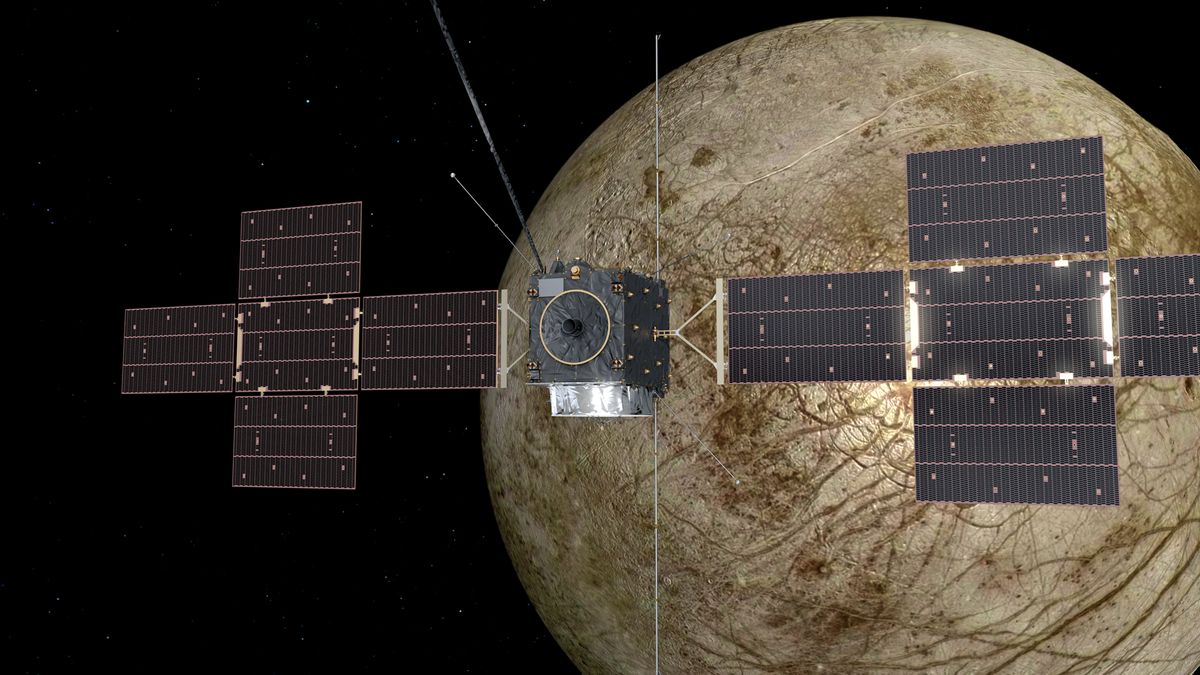
The European Space Agency's Juice spacecraft encountered a problem during deployment when its Radar for Icy Moons Exploration (RIME) antenna failed to deploy properly. After weeks of attempts and troubleshooting, the team discovered a solution: warming up the pin in the sun and firing a nearby actuator to release it. The antenna successfully deployed, allowing Juice to continue its mission to investigate the icy moons of Jupiter.
Europe's Jupiter Icy Moon Explorer (JUICE) mission aims to help scientists understand which of Jupiter's moons possess the right elements to support life. JUICE will study Jupiter's largest moon Ganymede and the distant Callisto, both believed to possess oceans, and make two flybys of Europa. However, JUICE is not designed to detect life, nor its direct signatures. Scientists believe that life, if it exists, would be in the water, which is hard to access. JUICE will provide valuable measurements of these moons, but a mission that might provide the ultimate answer about life on Jupiter's moons may still be a "generation away."