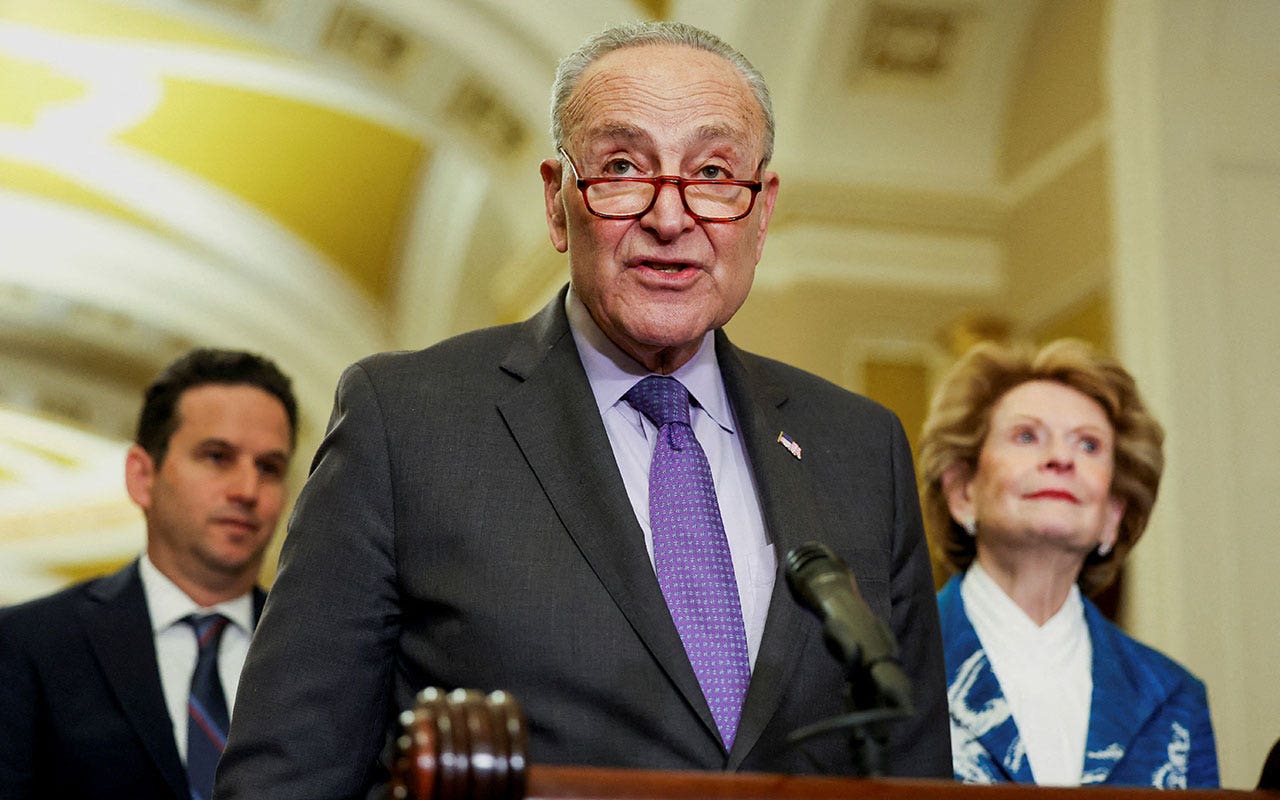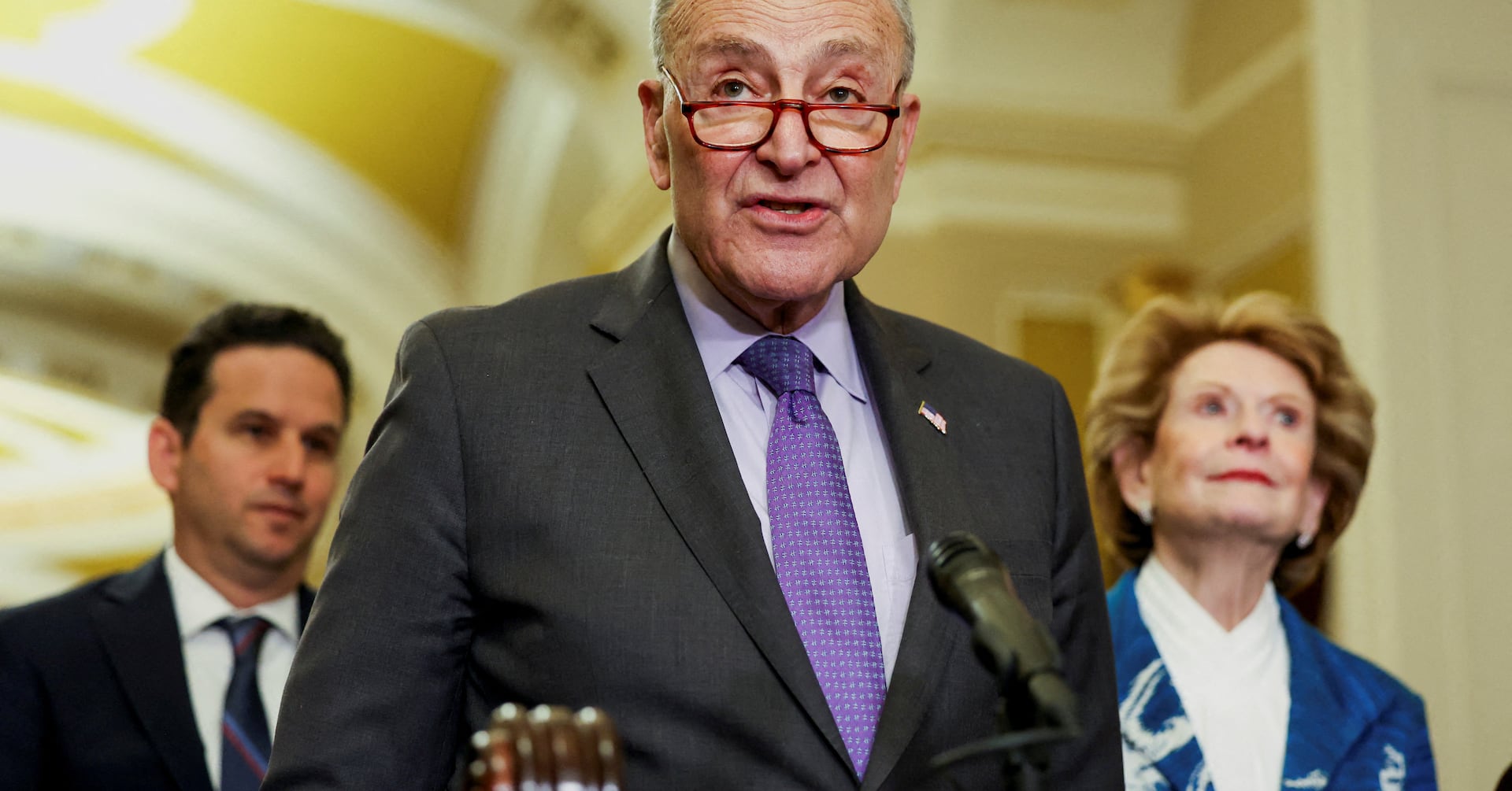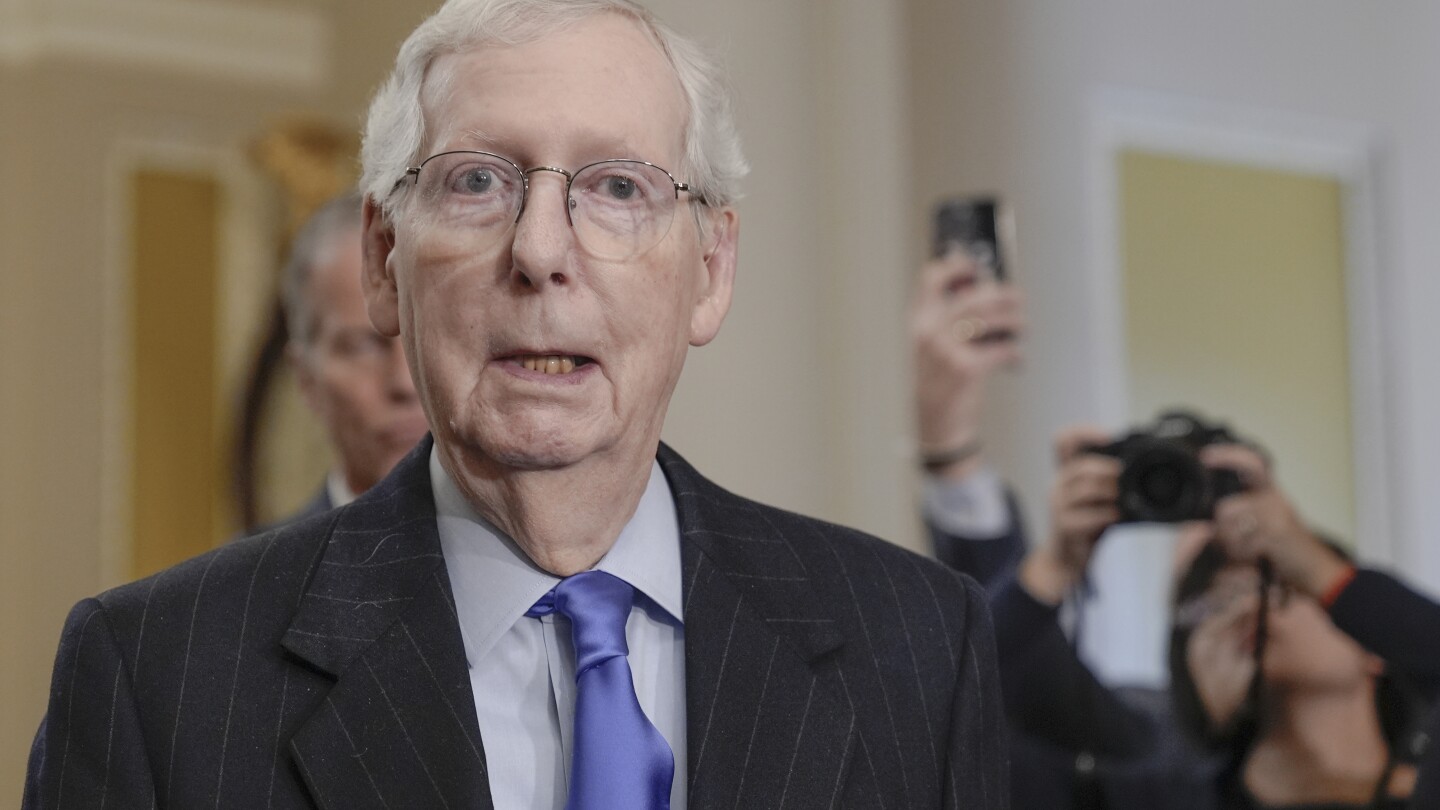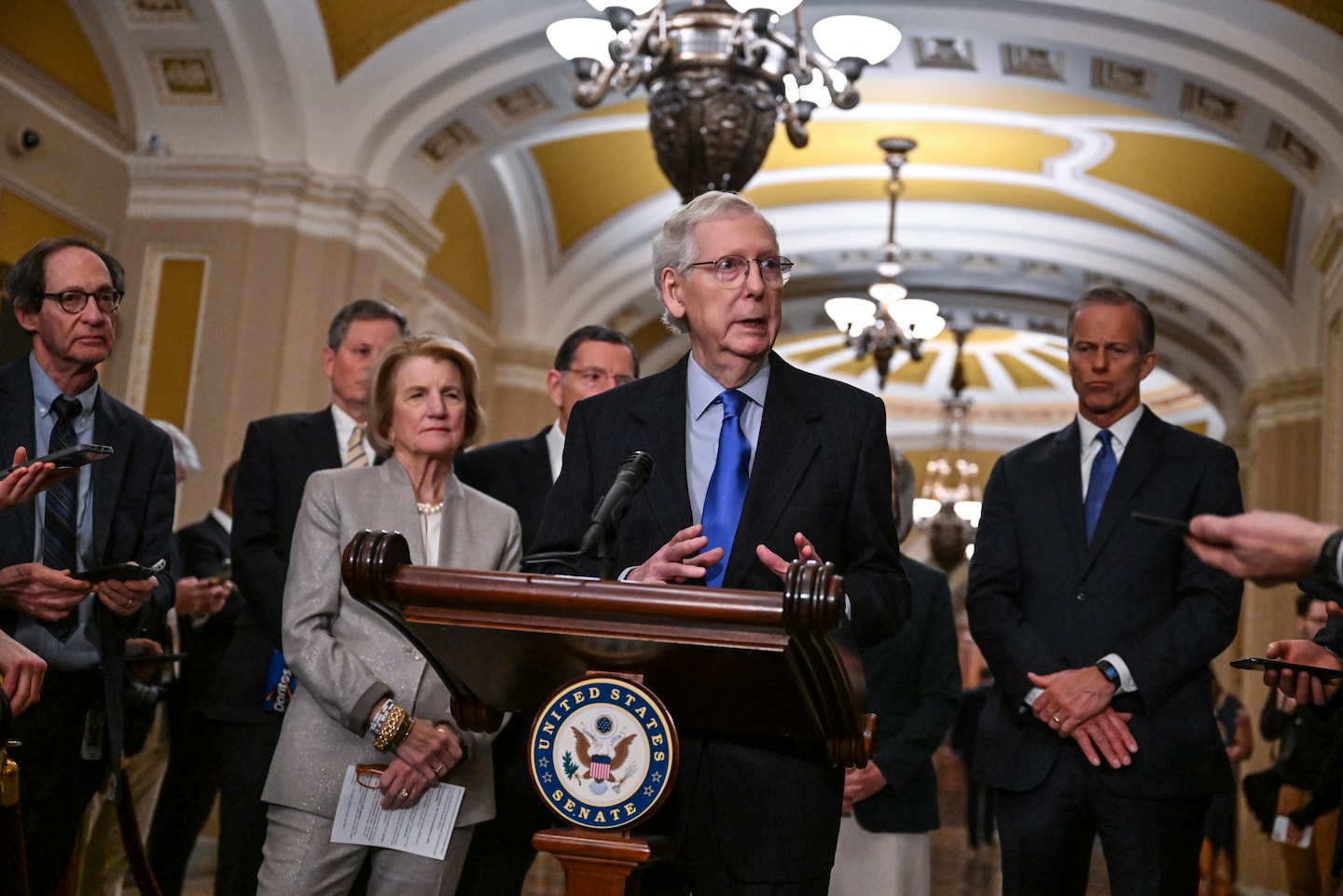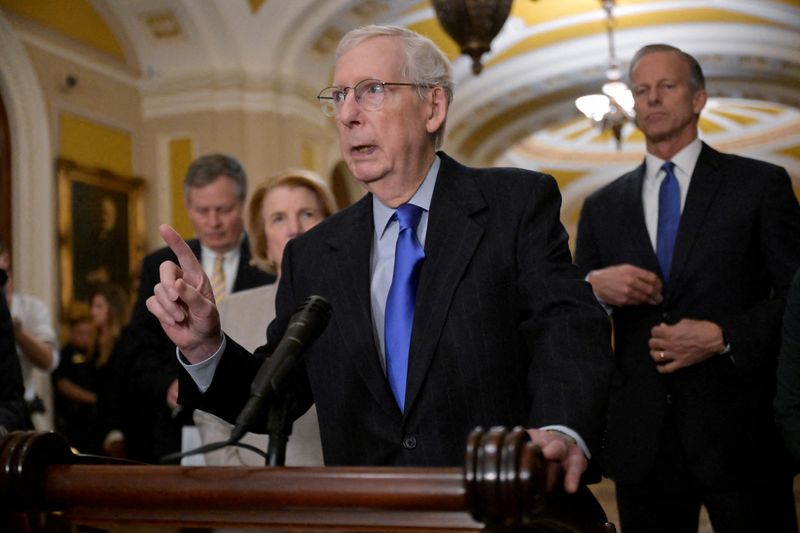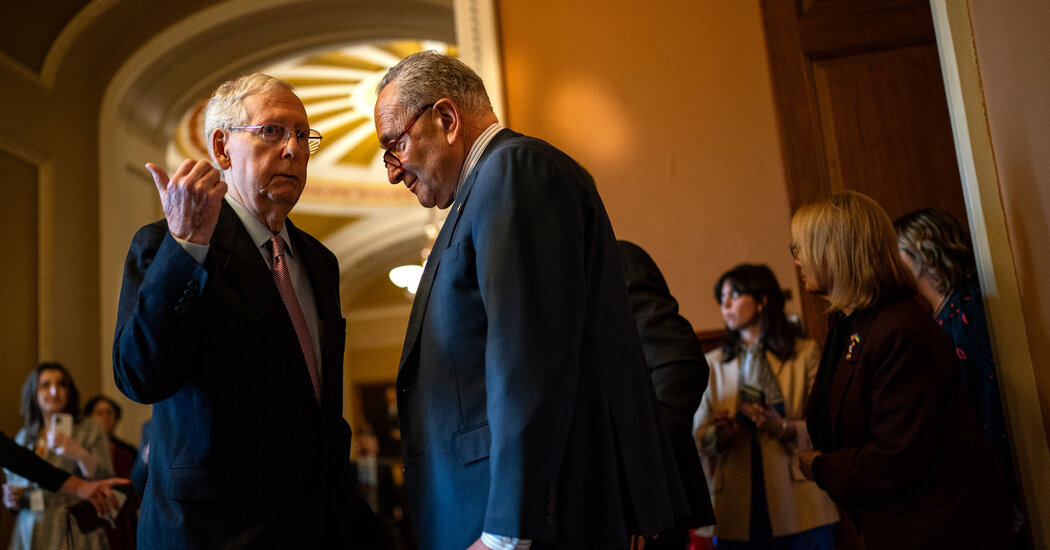
Senators Chuck Schumer and Mitch McConnell are introducing separate bills to address the issue of "judge shopping" in federal courts, where plaintiffs strategically choose sympathetic judges for high-stakes cases. Schumer's bill aims to end the practice by following guidance from the federal judiciary's policymaking body, while McConnell's bill seeks to limit the power of a single district court judge to issue nationwide injunctions and block federal policy across the entire country. Both bills take different approaches to curb the pursuit of sympathetic judges by litigants, but their prospects for becoming law are uncertain as neither has drawn co-sponsors from the opposing party.
A policy aimed at preventing "judge-shopping" in federal courts has sparked a political firestorm, with Republicans and Democrats clashing over its implications. The policy, initially thought to be a done deal, is now facing resistance, with conservative politicians urging judges to reject it and Democrats pushing for its mandatory implementation. The controversy stems from concerns that the policy could impact access to justice in venues favored by conservatives, particularly in cases related to abortion rights and Biden administration policies.
The US Court of Appeals for the Fifth Circuit is facing challenges as parties attempt to move high-profile cases out of its jurisdiction, prompting concerns about judge shopping. The circuit is considering requests to block the transfer of cases involving the Consumer Financial Protection Bureau and Elon Musk's SpaceX. Legal experts note that the bar for an appeals court to reverse a transfer order is high, and the circuit's recent actions may give the impression that it is trying to retain major cases within its jurisdiction. The venue issue has become more visible, with attorneys aggressively pushing for transfers out of the Fifth Circuit. The court's handling of these cases has raised concerns about the message it is sending and the potential impact on future litigation.
The United States District Court for the Northern District of Texas is defying the Judicial Conference's new policy intended to combat "judge-shopping," which allows plaintiffs to choose their own judges. This defiance could render the new policy useless, as the Northern District of Texas is a locus of judge-shopping. The conflict sets up a significant divide between the far-right court and the broader federal judiciary, with implications for US policy. The Supreme Court has heard cases from the Fifth Circuit, known for its loyalty to the MAGA movement, but an alliance between the Court's Democrats and less hardline Republicans may prevent reshaping the nation in MAGA's image. The federal judiciary's non-MAGA Republicans seem to share Democrats' frustration with judges like Matthew Kacsmaryk, a Trump appointee known for implementing right-wing policies. The divide between center-right and far-right judges could become irrelevant if former President Donald Trump appoints more judges, potentially tipping the debate in favor of the far right.
The Chief U.S. District Judge of the Northern District of Texas has rejected a policy aimed at curbing "judge shopping," a practice where cases are filed in specific divisions with favorable judges. This decision came in response to a letter from Democratic U.S. Senate Majority Leader Chuck Schumer. The rejected policy would have required random assignment of judges for cases challenging federal or state laws, disrupting a tactic used by conservative litigants in Texas. The decision not to implement the policy was made after blowback from Senate Republicans and conservative judges, and the court's case assignment process will remain unchanged for now.
The federal court in Texas has decided not to adopt a policy aimed at curbing "judge shopping," a practice favored by conservative litigants. The policy, proposed by the U.S. Judicial Conference, would have required cases challenging federal or state laws to be randomly assigned judges throughout a federal district, disrupting the tactic of filing cases in small divisions with judges appointed by Republican presidents. Chief U.S. District Judge David Godbey of the Northern District of Texas announced the decision in a letter to Democratic U.S. Senate Majority Leader Chuck Schumer, stating that the judges in his district reached a consensus not to change their case assignment process at this time.
The federal judiciary released a revised policy recommending random assignment of judges in civil cases with statewide or national implications, addressing concerns about "judge shopping." The policy is not a mandate and does not apply to criminal or bankruptcy cases. Conservative judges and lawmakers have criticized the change, accusing the Judicial Conference and Democrats of attempting to grab power from conservative jurists in isolated jurisdictions. Some judges have expressed concerns about the practicality of implementing a random-case-assignment policy in geographically large districts.
The U.S. Judicial Conference issued guidance on the federal judiciary's new policy to prevent "judge-shopping," stating that courts have discretion in implementing the policy. The policy aims to randomly assign cases that could impact state or federal policies to a wider pool of district court judges. This move comes after criticism from top Republicans in Congress, who called it an "unforced error" and urged the Judicial Conference to reconsider. The practice of "judge-shopping" has been criticized by Democrats, with Senate Majority Leader Chuck Schumer stating that it allows plaintiffs to target sympathetic judges.
The Judicial Conference of the United States has announced a new rule to curb judge-shopping, aiming to restore the random assignment of cases and prevent plaintiffs from hand-picking sympathetic judges. This move is a response to the issue of conservative plaintiffs strategically filing cases before hard-right judges who issue sweeping decisions with nationwide impact. Chief Justice John Roberts and the Judicial Conference are addressing the problem of nationwide injunctions and the concentration of power in the hands of a few unelected jurists, prompting backlash from some Republican-appointed judges and politicians.
Senate Republicans are pushing back against a new federal courts policy aimed at curbing "judge shopping" in national cases, arguing that it is an "unforced error" and calling for district courts to set their own rules. The policy, adopted by the U.S. Judicial Conference, seeks to assign random judges to cases with national implications, particularly in single-judge divisions where all cases are typically heard by one judge. Republicans, including Minority Leader Mitch McConnell, have criticized the policy, while Democrats have welcomed the change as a step toward restoring public confidence in judicial rulings.
Conservative judges and GOP lawmakers are criticizing a new policy by the Judicial Conference of the United States that would require assigning judges at random in civil cases with statewide or national implications, arguing that it conflicts with federal law. The policy aims to address concerns about "judge shopping," but has sparked opposition and questions about its legality. Senate Minority Leader Mitch McConnell and other Republicans are urging chief judges to continue their current case assignment practices, while legal experts and some judges are raising concerns about the authority of the Judicial Conference to mandate such changes.
US Senate Republicans are urging the federal judiciary to reconsider a new policy aimed at preventing "judge shopping" by conservative litigants. The policy, adopted by the U.S. Judicial Conference, seeks to randomly assign judges to cases challenging federal and state laws. Senate Minority Leader Mitch McConnell criticized the policy, arguing that it would restrict access to conservative judges and not address the issue of single judges issuing nationwide injunctions. The policy change has sparked debate among conservative and liberal judges, with Republicans expressing concerns about the judiciary's procedural independence.
Senate Minority Leader Mitch McConnell criticized the federal judiciary's move to restrict "judge-shopping," a tactic used by conservative lawyers, arguing that it favors Democrats and limits access to justice for conservatives. The new policy aims to assign cases randomly from larger pools of judges, addressing concerns about judge selection bias. McConnell contends that the policy will disproportionately benefit Democrats and hinder access to justice for conservatives, while some conservative judges have also criticized the move.
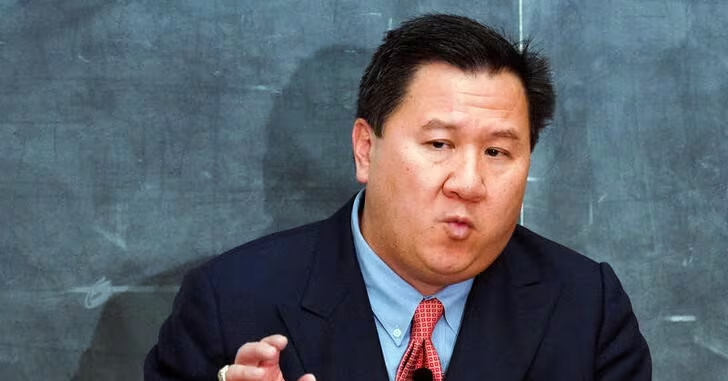
Two conservative federal appeals court judges, James Ho and Edith Jones, criticized the US Judicial Conference for adopting a new rule aimed at curbing "judge shopping" by state attorneys general and activists challenging government policies in sympathetic courthouses. The rule, designed to address a litigation strategy used by conservative litigants, requires lawsuits challenging state and federal laws to be randomly assigned to judges throughout a federal district. The judges argued that the rule conflicted with federal law and was a response to political pressure, while proponents of the rule cited concerns about forum shopping and the need for national policies to be heard by a random judge.
The Judicial Conference of the United States has announced a new policy requiring random assignment of judges in civil cases with statewide or national implications to address concerns about "judge shopping." This move aims to promote impartiality and public confidence in the federal judiciary. The issue gained attention after controversial cases were filed in single-judge divisions. Meanwhile, the Judicial Conference is still reviewing Supreme Court Justice Clarence Thomas's financial reporting practices following accusations of violating federal ethics laws.