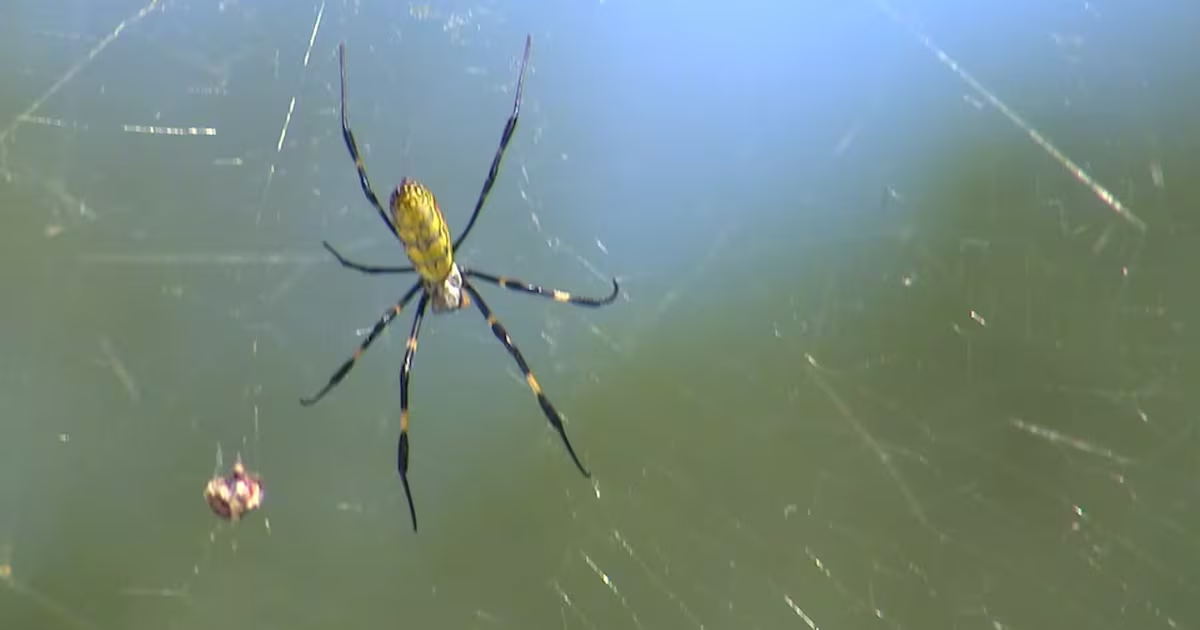
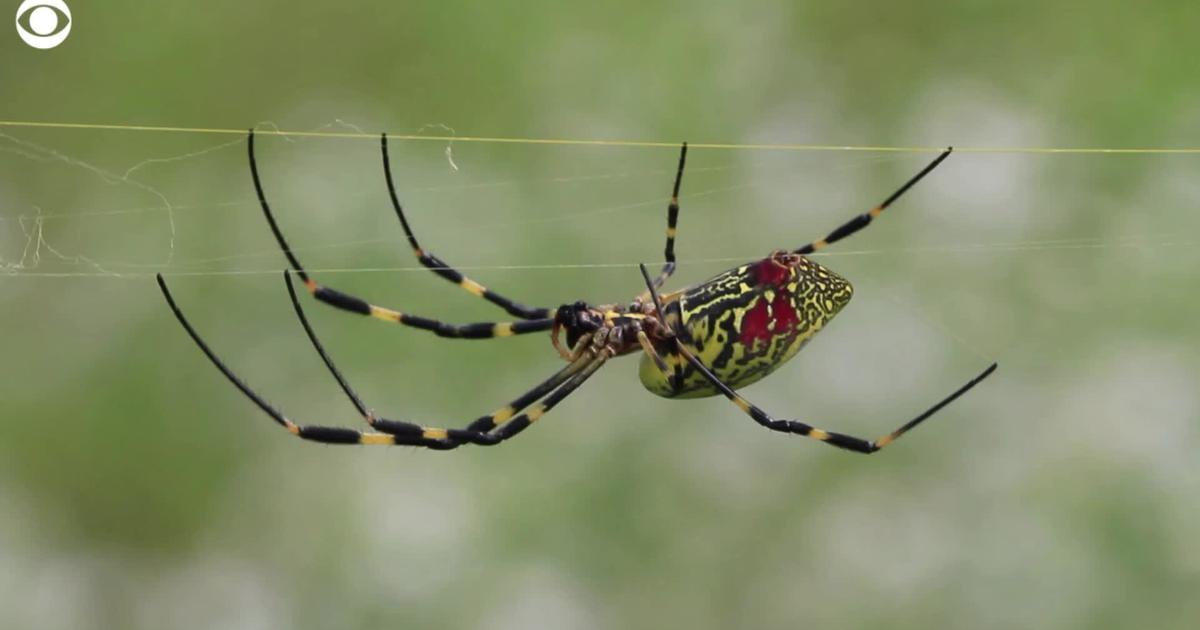
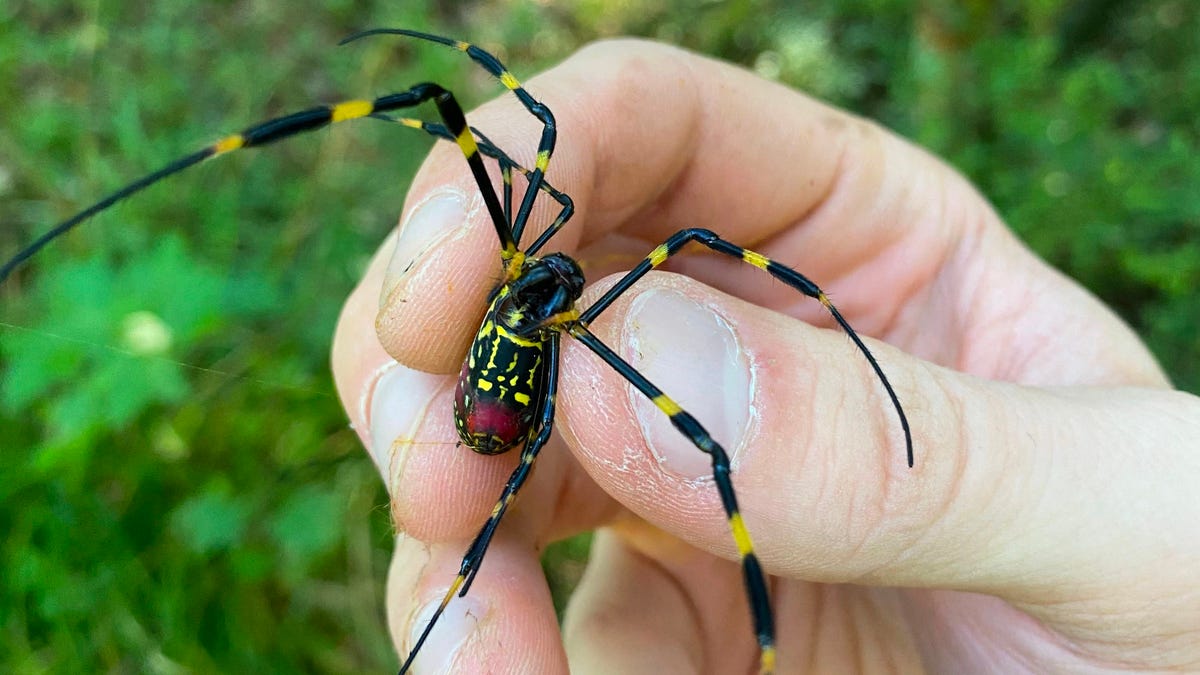
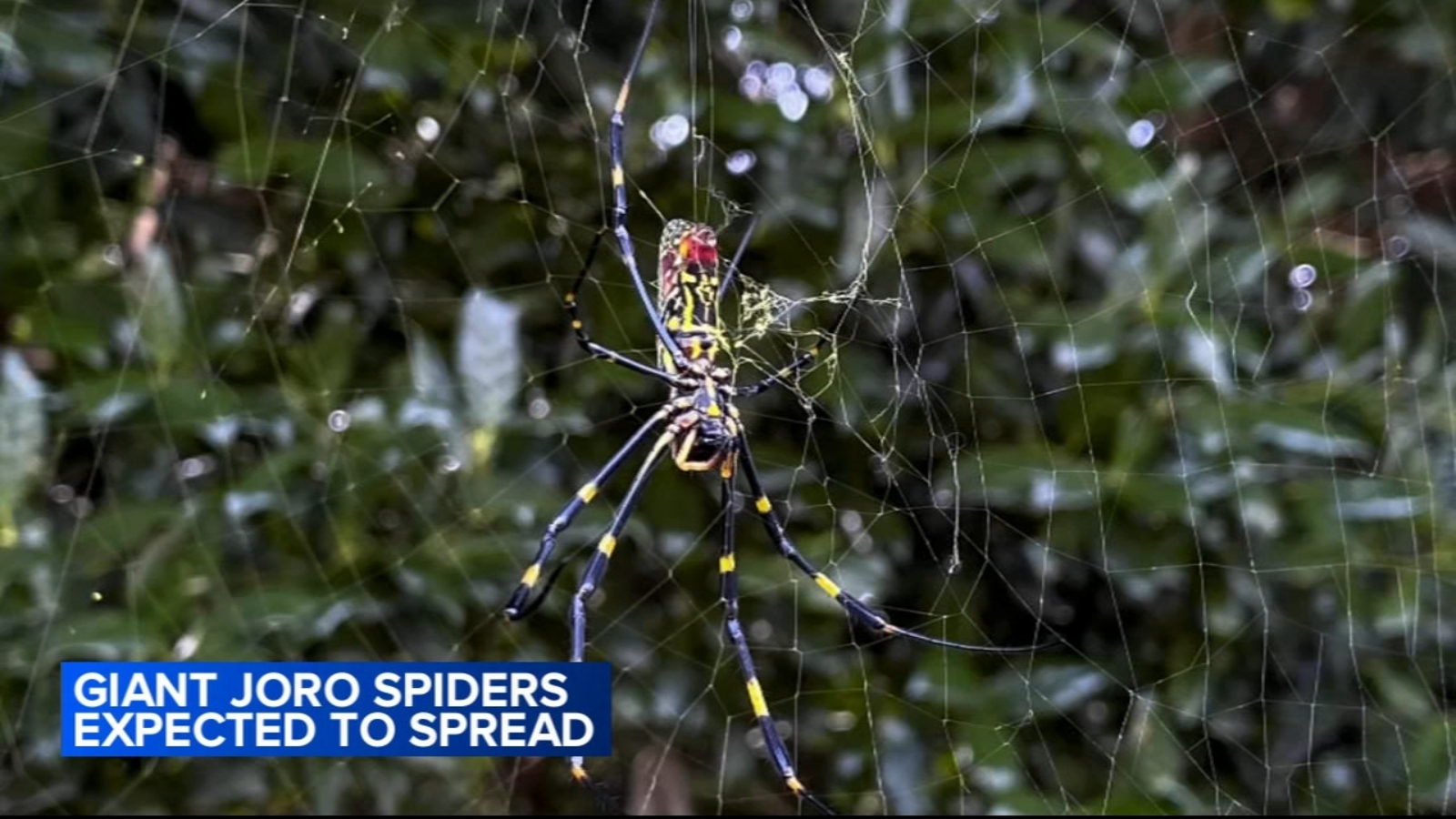
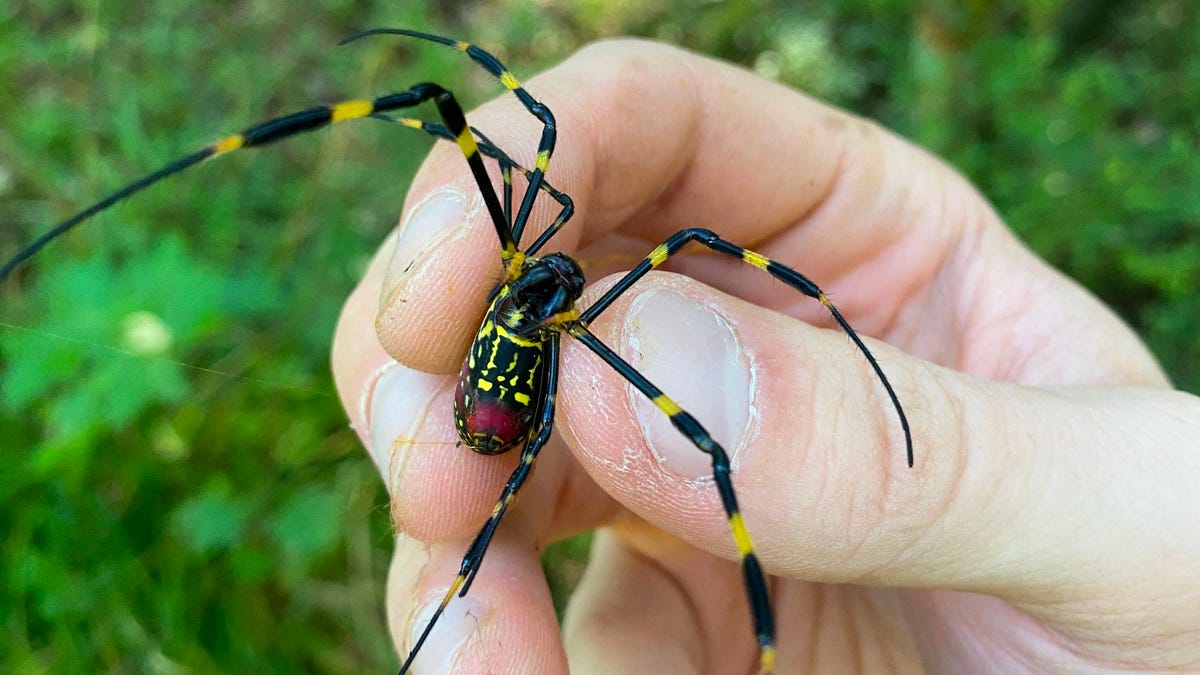
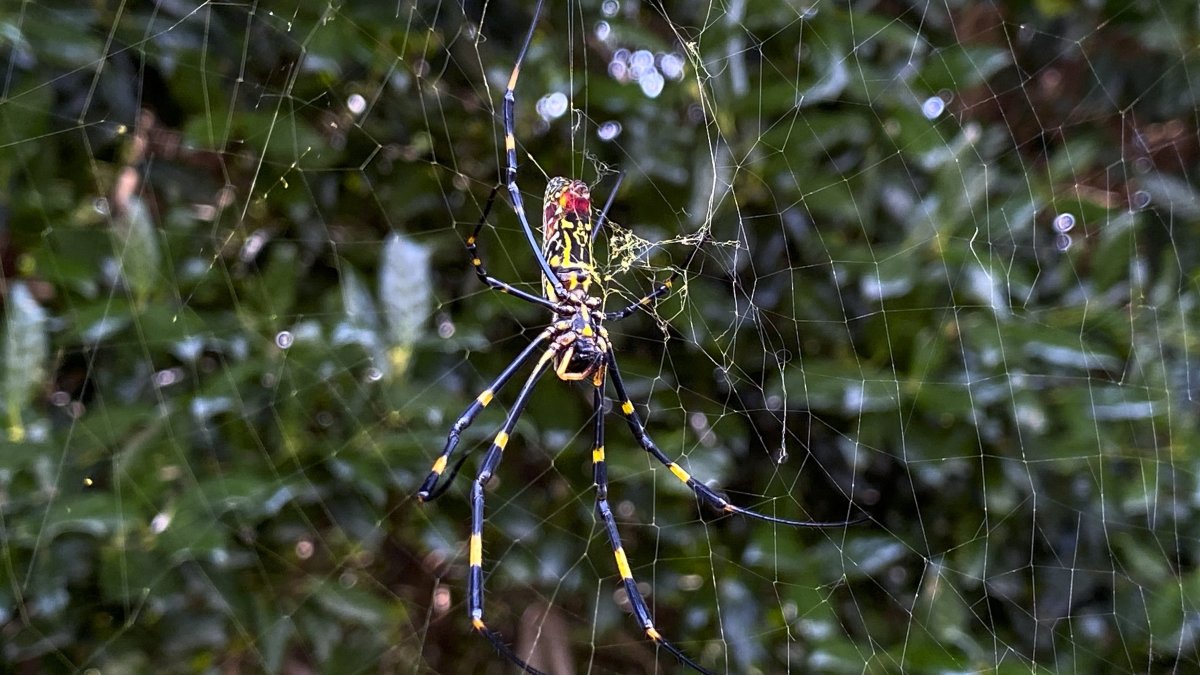
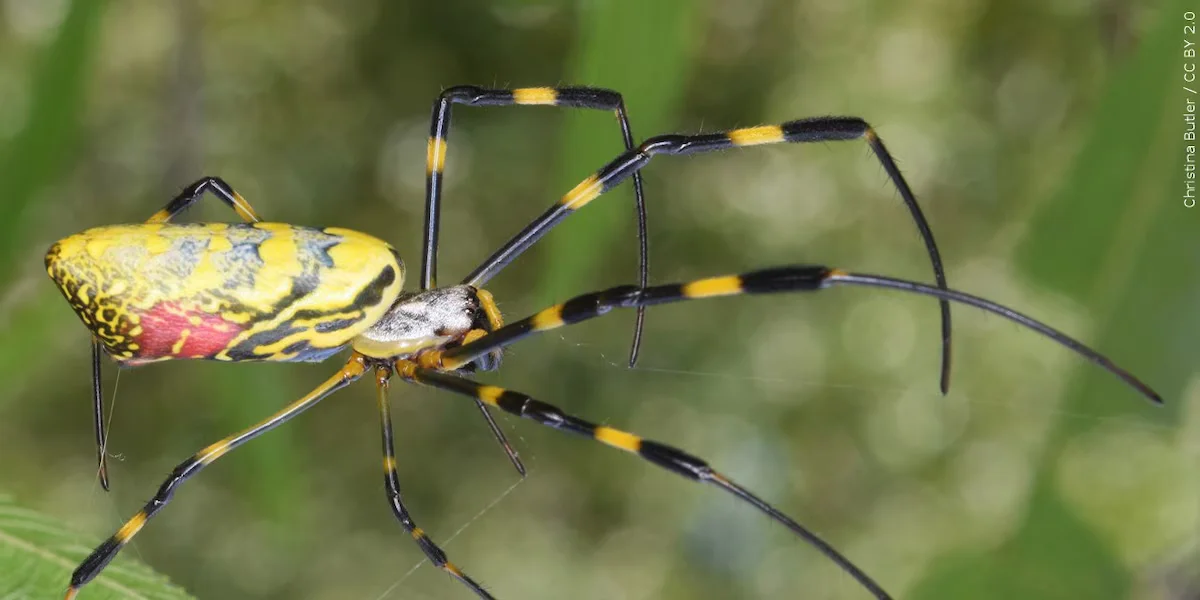
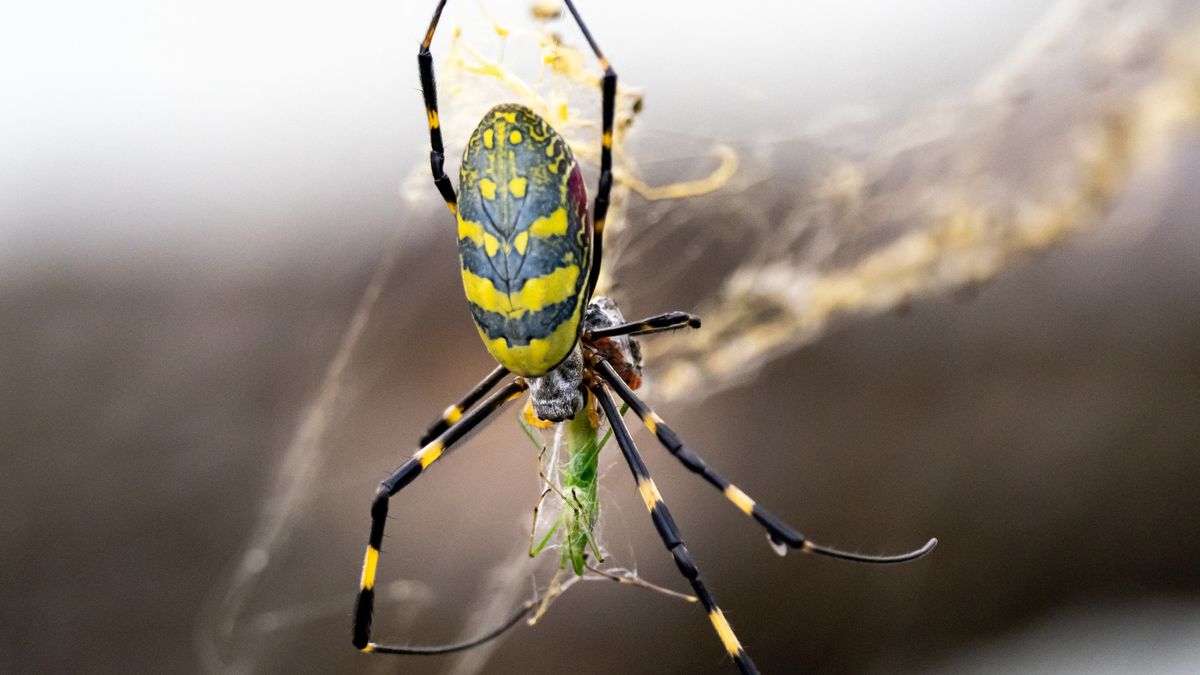
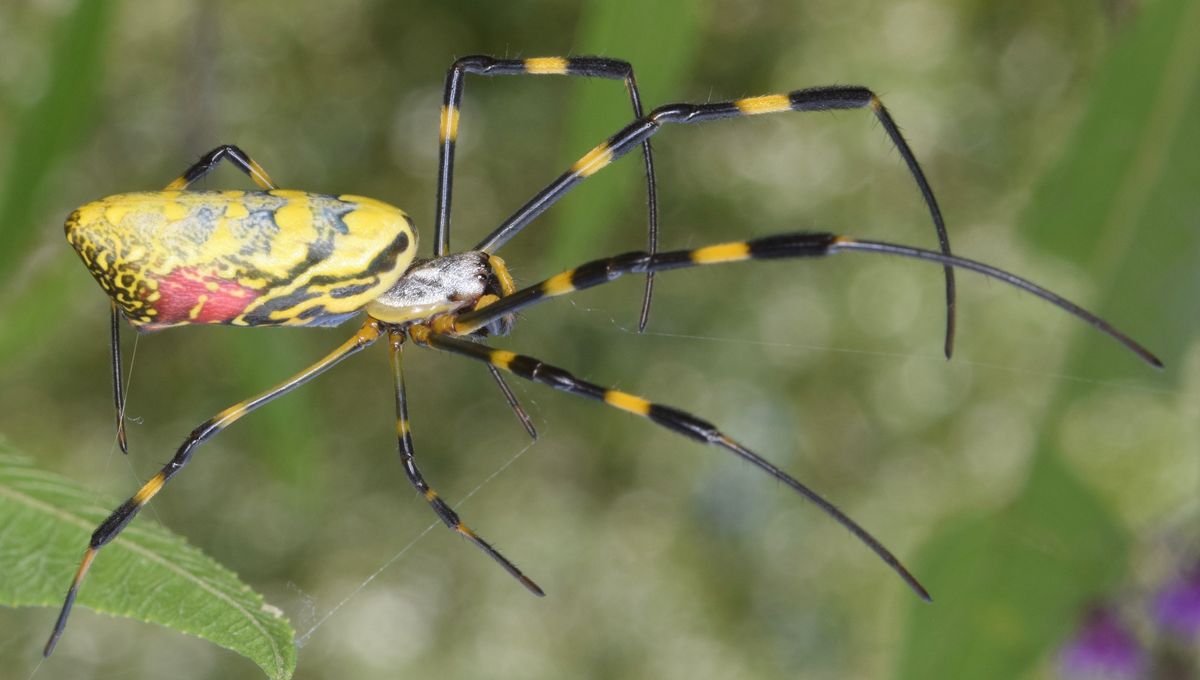
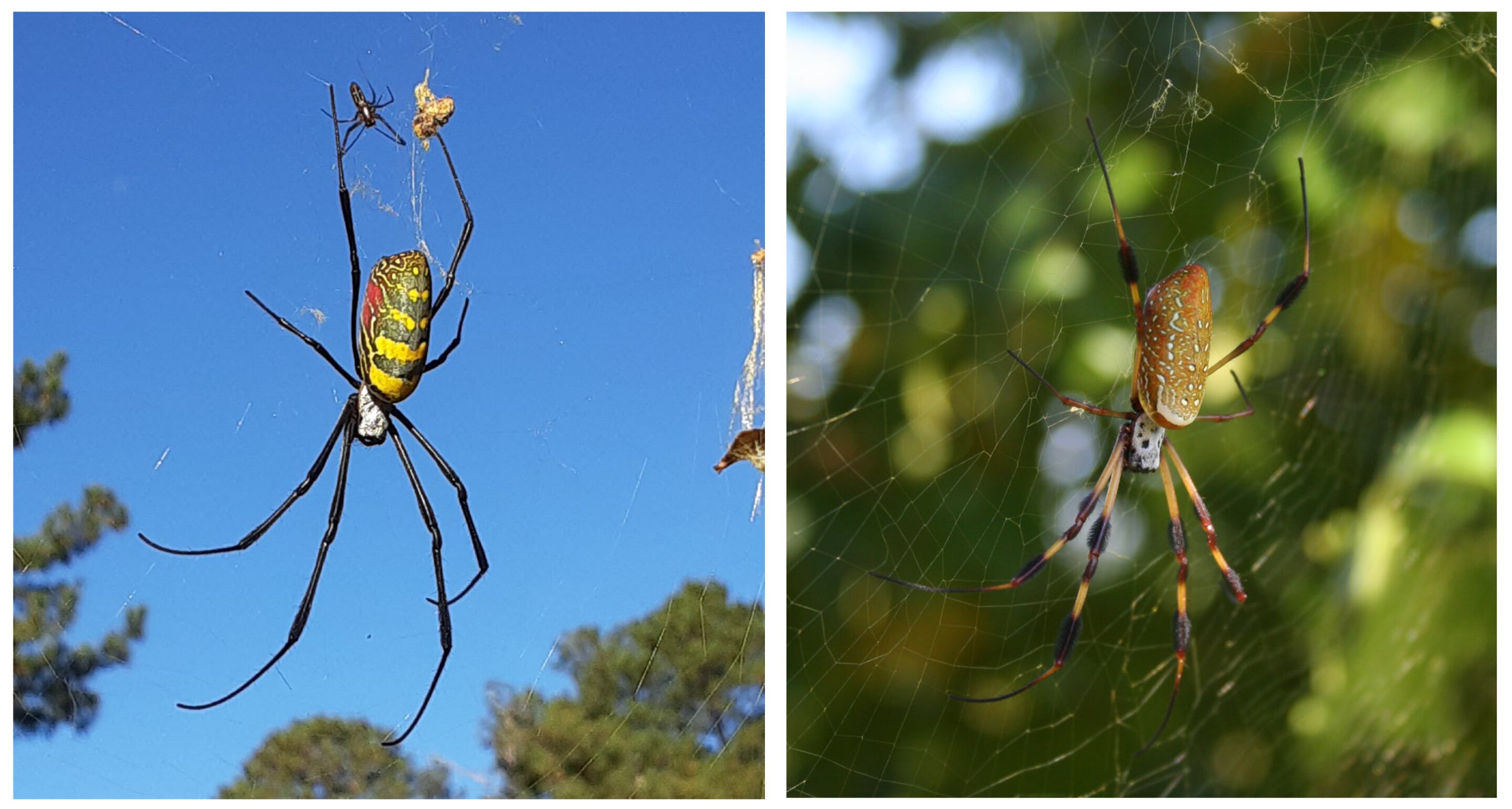
Research by the University of Georgia reveals that the invasive Joro spider in Georgia, previously considered shy, may also exhibit cannibalistic behavior, especially during territorial disputes, challenging previous assumptions about the species.
Joro spiders, an invasive species from East Asia, are spreading across the U.S. East Coast and may eventually cover much of the country. Despite their alarming appearance and ability to "fly" using a technique called ballooning, they pose minimal threat to humans, causing only mild itching from their bites. The spread of invasive species like the Joro spider is exacerbated by global travel, shipping, and climate change.
Joro spiders, an invasive species that arrived in Georgia over a decade ago, are now spreading to the Northeast U.S., with experts noting their ability to travel by "parachuting."
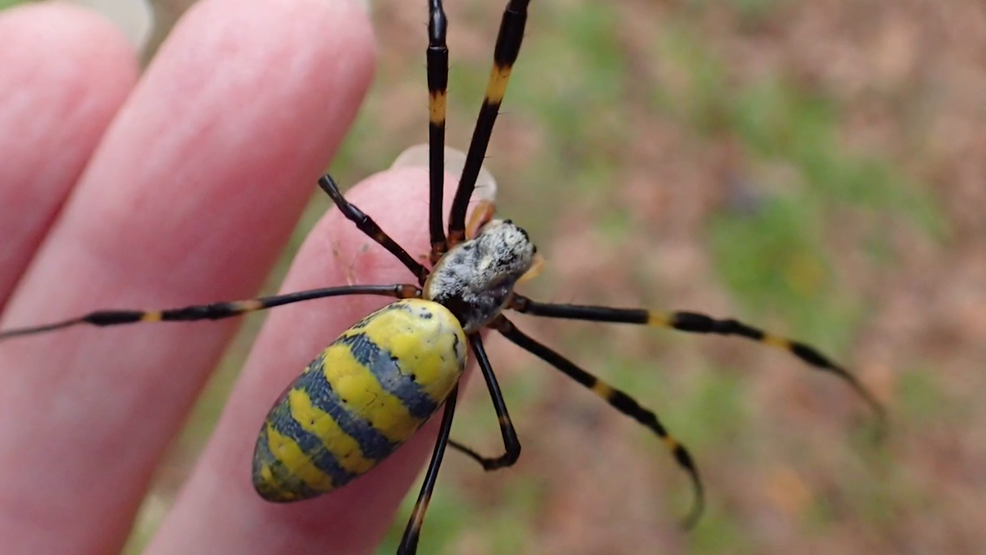
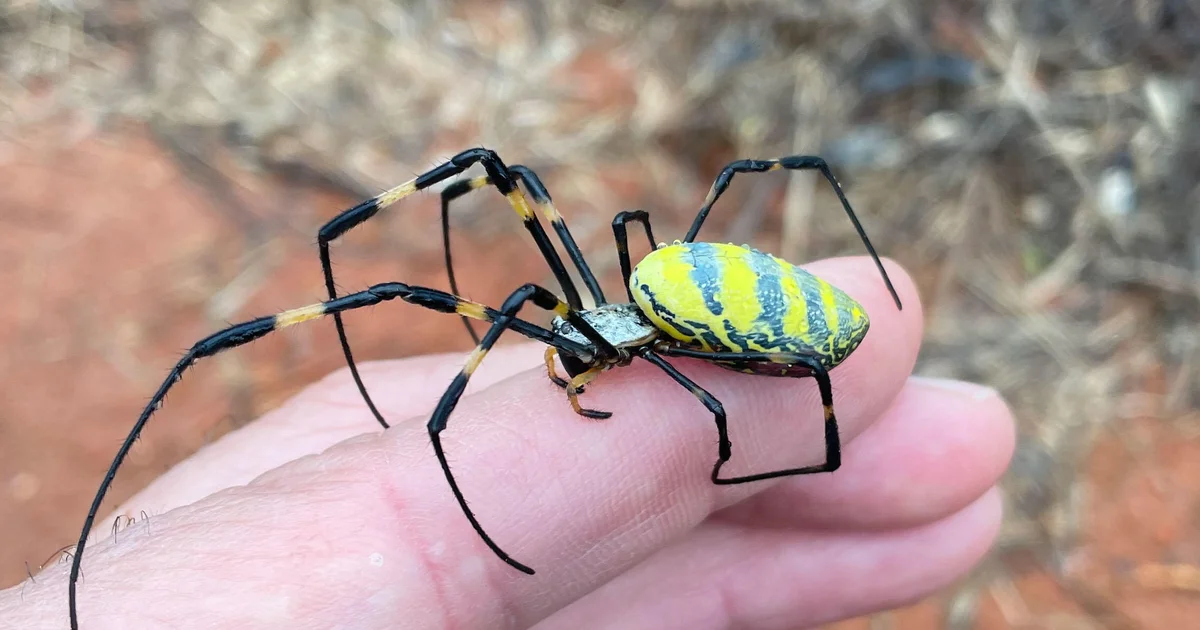
Giant venomous Joro spiders, originally from Japan and first seen in the Southeastern U.S., are expected to invade New York and New Jersey. These spiders, known for their striking yellow and black appearance and ability to "fly" using silk threads, could spread through truck shipments and ports. While there are no definitive ways to eliminate them, residents are advised to knock down webs and seek pest control services. The spiders' adaptability and rapid reproduction suggest they could inhabit much of the eastern U.S.
Venomous Joro spiders, capable of traveling up to 100 miles using a ballooning technique, are expected to spread to New Jersey and possibly Delaware this summer. Although their fangs cannot penetrate human skin, their rapid spread since first being spotted in the U.S. in 2013 has raised concerns among ecologists.
Joro spiders, giant venomous arachnids from Japan, are expected to invade the Northeast US, including New York, after initially spreading in the Southeast. Known for their striking appearance and ability to "balloon" through the air, these spiders could disrupt local ecosystems by preying on native insects. While their venom is not typically deadly to humans, it can cause discomfort and allergic reactions. Pest control experts emphasize the need for education and responsible management to coexist with these invasive spiders.
Giant venomous Joro spiders from Southeast Asia are spreading across the U.S. East Coast, expected to reach New York and New Jersey this summer. Despite their alarming appearance and ability to "fly" using a technique called ballooning, experts say they pose no major threat to humans. However, their impact on native species and the environment remains uncertain, with some researchers noting they displace native spiders and could have negative ecological effects.
Giant venomous Joro spiders from Southeast Asia are spreading across the U.S. East Coast, expected to reach New York and New Jersey this summer. While not harmful to humans, they are displacing native species and expanding rapidly due to their ballooning ability.
Giant venomous Joro spiders with 4-inch legs, known for their ability to "fly" using a technique called ballooning, are expected to spread across the U.S. East Coast, including New York. While they pose no danger to humans, they could impact native spider populations.
Giant, parachuting Joro spiders, native to East Asia and currently spreading from the southeastern U.S., are expected to arrive in New York and New Jersey this summer. Despite their intimidating size, they are relatively harmless to humans and pets, feeding on pests like mosquitoes and stink bugs. However, their presence is displacing native species and causing ecological concerns.
A recent study conducted by Clemson University and Southern Adventist University has found that Joro spiders, large yellow spiders native to Asia, have become invasive in parts of the United States, including South Carolina, North Carolina, and Georgia. The study reveals that Joro spiders are spreading rapidly and are here to stay. Their ability to "parachute" using their web allows them to travel long distances, and their range is expected to expand further north. The presence of Joro spiders is pushing out native species, and their web captures a wide range of prey. While pesticides can be effective, physically removing them is a recommended method of control.
Jorō spiders, an invasive species in the southeastern United States, are not aggressive as previously thought, but rather the "shyest ever documented," according to a new study. Researchers found that Jorō spiders remained motionless for over an hour after a mild disturbance, compared to just one or two minutes for other spiders. The spiders' success in spreading throughout the region is likely due to their incredible reproductive potential rather than aggression. Despite their large size, Jorō spiders are relatively harmless and are unlikely to leave the southeast.
Jorō spiders, an invasive species in the US, are actually some of the most timid spiders encountered, despite their impressive size. Researchers at the University of Georgia found that the spiders have a long-lasting stress response called thanatosis, whereby they freeze for over an hour when exposed to a threat. This response helps them conserve energy in urban environments where they like to colonize. The researchers also discovered that the jorōs' rapid spread is due to their incredible reproductive potential, not because they're displacing native spiders.
A new study from the University of Georgia reveals that the Joro spider, an invasive species in the Southeastern U.S., is actually a timid and gentle spider. The researchers found that Joros freeze for over an hour when disturbed, indicating that they are more afraid of humans than the reverse. Despite their intimidating appearance, Joros are relatively harmless to people and pets. The researchers believe that the spiders' shyness may help them better endure the barrage of noise, vibrations, and visual stimuli they consistently encounter in urban settings.