To sleep well away from home, maintain your bedtime rituals, manage temperature and light, resist the urge to overthink sleep, and take naps if needed, all while understanding that initial sleep disruptions are normal and temporary.
Takeshi Niinami, former Suntory chairman, used CBD supplements purchased in the US to manage jet lag and claims he did not violate Japanese laws as he never possessed the products in Japan, where CBD laws are strict. The authorities are investigating whether the supplements are illegal in Japan.
Iowa State football team is implementing advanced sleep and health strategies, including 'banked sleep,' to combat jet lag and perform well in their season opener against Kansas State in Dublin, Ireland, emphasizing routine and preparation for overseas travel challenges.
Stassi Schroeder shared a video on Instagram of her 4-year-old daughter Hartford drinking Coke to help combat jet lag during their trip to England, defending her decision with a defiant message about parenting choices.
Traveling can disrupt your sleep schedule, especially when crossing time zones, but sleep experts offer tips to maintain good rest. Key strategies include sticking to your usual sleep schedule, listening to relaxing music, engaging in physical activity, exposing yourself to natural light, and creating a comfortable sleep environment. These practices help stabilize your circadian rhythm and improve sleep quality while on the go.
Taylor Swift, after flying from Tokyo to Las Vegas to watch her boyfriend play in the Super Bowl, responded to a question about jet lag with the quip, "Jet lag is a choice." While her air travel experience differs from the average person's, experts recommend strategies like staying hydrated and getting plenty of rest to combat jet lag.
Taylor Swift's comment that "jet lag is a choice" has sparked online discussion, with some pointing out that her use of a private jet makes it easier to manage. However, the article provides tips for beating jet lag, including adjusting to the local time of your destination, staying up until bedtime upon arrival, and planning meals and sleep schedules accordingly. The author also shares personal experiences and strategies for managing jet lag when traveling to different time zones, emphasizing the importance of routine and a comfortable travel experience.
Taylor Swift impressively flew from Tokyo to Las Vegas to support boyfriend Travis Kelce at the Super Bowl, and when asked how she managed to avoid jet lag, she humorously replied, "Jet lag is a choice." Fans found her response amusing and supportive, as she continues her international tour in Australia after celebrating the Chiefs' win.
Taylor Swift revealed her secret to avoiding jet lag after flying from Tokyo to the Super Bowl, attributing it to the belief that "jet lag is a choice." Following her postgame celebration with Travis Kelce, she flew to Los Angeles and then to Las Vegas for the Super Bowl, where she partied until the early hours of the morning. She then jetted back to Los Angeles and continued on to Australia for her Eras tour. Meanwhile, Travis Kelce continued his Super Bowl celebrations at a victory parade in Kansas City, expressing heartbreak over a shooting that occurred during the event. Fans are hopeful that he will join Taylor at some of her international tour dates, as she prepares to release her new album, The Tortured Poets Department, on April 19.
Taylor Swift plans to travel through 17 time zones within 24 hours to make it to the Super Bowl in time to support her boyfriend, Travis Kelce. The long flight from Tokyo to Las Vegas could expose her to health risks such as jet lag, dehydration, disrupted circadian rhythm, and increased risk of blood clots. Sleep deprivation and lack of rest could lead to serious health issues, but with some much-needed rest, she should be fine by the end of it all.
A study led by the University of Bristol has revealed that night shift work, which disrupts the body's biological clock, can lead to changes in appetite. The researchers found that circadian misalignment, similar to jet lag, can significantly alter the brain's regulation of hormones controlling hunger, resulting in an increased desire to eat during the inactive phase of the day. The study suggests that the neuropeptides identified in this research could be potential targets for drug treatments to address eating disorders and obesity. The findings also highlight the importance of maintaining daylight exposure, regular exercise, and regulated mealtimes for night shift workers.
Flight attendants offer tips on how to beat jet lag. Suggestions include staying awake before your flight to ensure you're tired upon arrival, drinking coffee or eating a banana for a quick energy boost, getting outside and doing physical activity to tire yourself out, sticking to one time zone to maintain consistency, and finding strong moral support from travel companions. Ultimately, adjusting to a new time zone may require trial and error to find what works best for you.
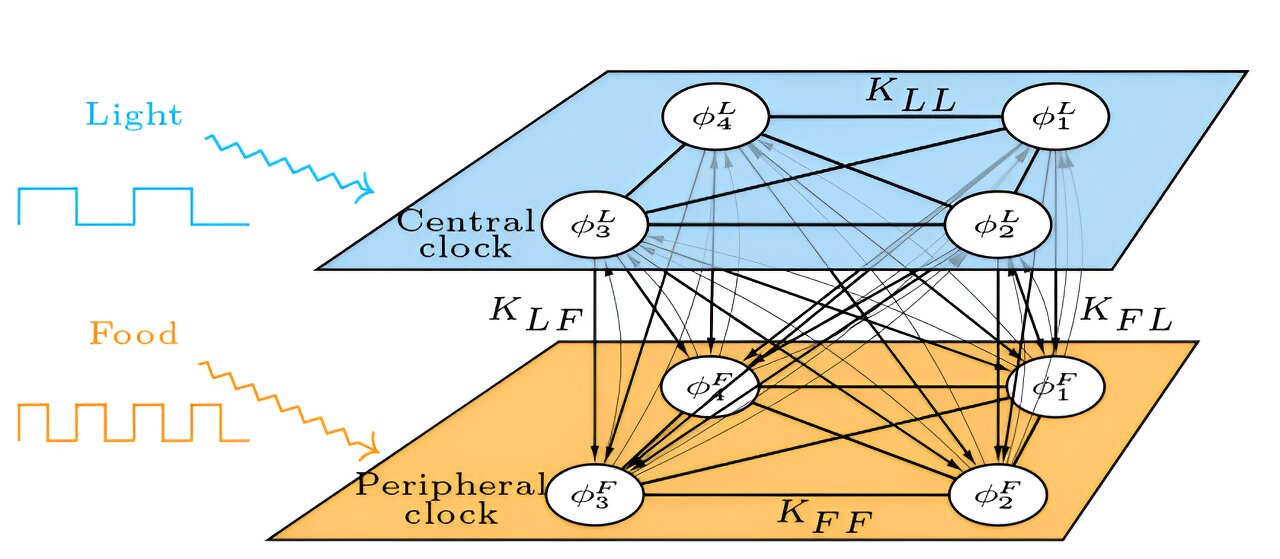
Eating a big breakfast upon arrival at a new destination can help travelers overcome jet lag, according to a new study. Researchers from Northwestern University and the Santa Fe Institute found that starting the day with a hearty breakfast can reset the body's circadian rhythm and aid in adjusting to a new time zone. Constantly shifting meal schedules or eating at night is discouraged, as it can disrupt internal clocks. Older travelers may require additional time to recover from jet lag due to weaker signals between circadian clocks and lower sensitivity to light.
Scientists have discovered that having a larger meal in the early morning of the new time zone can help overcome jet lag and reset the body clock. The study, which modeled circadian rhythms using mathematical equations, found that constantly shifting meal schedules or eating at night can lead to misalignment between internal clocks. The research also revealed that aging can disrupt circadian rhythms, making it more difficult for older individuals to recover from jet lag. Keeping our body clocks in sync is crucial for overall health, as circadian rhythm disturbances have been linked to Alzheimer's disease.
A team of scientists has developed a mathematical model to study the interactions between multiple internal clocks in the body, focusing on the effects of aging and disruptions like jet lag. The model revealed that desynchronization of internal clocks can occur due to conflicting time cues, such as nighttime eating or warm weather during a short photoperiod. The researchers found that aging weakens the signals between circadian clocks and reduces sensitivity to light, making the system more vulnerable to disruptions and slower to recover. They also discovered that having a larger meal in the early morning of a new time zone can help overcome jet lag, while constantly shifting meal schedules or eating at night can lead to misalignment between internal clocks. Further research aims to identify factors that result in more resilient internal clocks, potentially leading to recommendations for preventing jet lag and maintaining a healthy circadian system in old age.